高盛、摩根大通:市场预期经济衰退的可能性上升

币界网Pubblicato 2024-08-14Pubblicato ultima volta 2024-08-14

币界网报道:

作者:Denitsa Tsekova,Bloomberg;编译:陶朱,

上周,市场动荡一度引发华尔街恐慌,金融市场正发出更高的衰退即将到来的可能性信号。

这仍然是一个很小的可能性。但高盛集团和摩根大通的模型显示,从美国债券市场的信号以及对商业周期的起伏极为敏感的股票表现来看,市场隐含的经济衰退可能性已大幅上升。

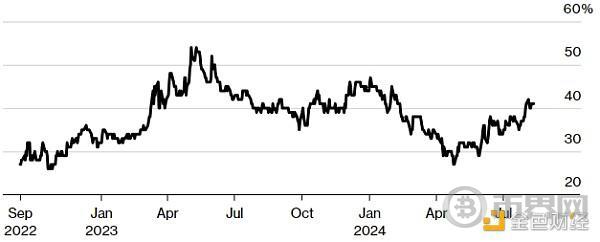
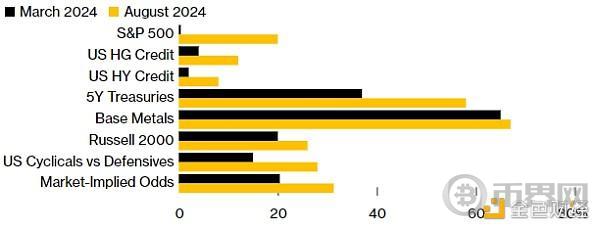
高盛表示,股票和债券市场预计美国经济衰退的可能性为 41%,高于 4 月份的 29%。最新一轮上涨的原因是市场押注美联储将以更激进的步伐降息,以及对商业周期波动极为敏感的股票表现落后。摩根大通的类似模型计算出,由于美国国债大幅重新定价,美国经济衰退的可能性从 3 月底的 20% 上升至 31%。

摩根大通策略师 Nikolaos Panigirtzoglou 表示,该银行模型中的衰退风险反映了自上个月就业报告显示就业增长放缓以来已计入的降息规模。他表示,股市发出的信号表明,经济衰退的可能性只有五分之一,尽管这一概率比今年早些时候股市创下新高时计入的零概率有所上升。

“美国信贷和股票市场看起来与美国利率市场脱节,”他说。“如果下一次 8 月份的美国家庭调查结果与 7 月份的调查结果一样疲软,从而强化了衰退论调,那么股票和信贷市场将需要大幅走弱才能赶上利率市场。”

市场暗示美国经济衰退的可能性正在上升,高盛金融市场模型显示经济放缓的可能性为 41%。

未来一年美国经济衰退的可能性
8 月 2 日公布的就业增长数据低于预期,引发了人们对美联储等待太久才开始放松货币政策的担忧,引发了对经济放缓的担忧。虽然数据显示就业人数减少,但月度就业人数仍高于 10 万,各种经济健康状况指标并未警告经济衰退迫在眉睫。例如,美国小企业乐观情绪在 7 月份升至两年多以来的最高水平。

此外,经济学家的预测并没有实质性增加,自 4 月份以来,共识预测一直保持在 30%,而在 2023 年达到近 70%。

各资产类别陷入衰退的可能性均有所上升
标准普尔 500 指数自 7 月中旬创下历史新高以来仍下跌逾 4%,而科技股占比较高的纳斯达克 100 指数则较峰值下跌逾 8%。

根据高盛和摩根大通的模型,利率市场对经济衰退的预期高于股票。根据高盛的模型,美联储基准利率 12 个月后的隐含变化意味着明年经济衰退的可能性为 92%,而根据摩根大通的数据,五年期美国国债收益率的变化表明经济放缓的可能性为 58%。

不过,信贷和抵押贷款市场仍有很多令人欣慰的信号,风险水平并没有引起太多担忧。

高盛资产配置研究主管 Christian Mueller-Glissmann 表示,尽管其市场模型增加了经济下滑的可能性,但该公司的经济学家仅认为经济下滑的可能性为 25%,“这仍然相对较低”。


Letture associate

North Korean Hackers Loot $500 Million in a Single Month, Becoming the Top Threat to Crypto Security

North Korean hackers, particularly the notorious Lazarus Group and its subgroup TraderTraitor, have stolen over $500 million from cryptocurrency DeFi platforms in less than three weeks, bringing their total theft for the year to over $700 million. Recent major attacks on Drift Protocol and KelpDAO, resulting in losses of approximately $286 million and $290 million respectively, highlight a strategic shift: instead of targeting core smart contracts, attackers are now exploiting vulnerabilities in peripheral infrastructure. For instance, the KelpDAO attack involved compromising downstream RPC infrastructure used by LayerZero's decentralized validation network (DVN), allowing manipulation without breaching core cryptography. This sophisticated approach mirrors advanced corporate cyber-espionage. Additionally, North Korea has systematically infiltrated the global crypto workforce, with an estimated 100 operatives using fake identities to gain employment at blockchain companies, enabling long-term access to sensitive systems and facilitating large-scale thefts. According to Chainalysis, North Korean-linked hackers stole a record $2 billion in 2025, accounting for 60% of all global crypto theft that year. Their total historical crypto theft has reached $6.75 billion. Post-theft, they employ specialized money laundering methods, heavily relying on Chinese OTC brokers and cross-chain mixing services rather than standard decentralized exchanges. Security experts, while acknowledging the increased sophistication, emphasize that many attacks still exploit fundamental weaknesses like poor access controls and centralized operational risks. Strengthening private key management, limiting privileged access, and enhancing coordination among exchanges, analysts, and law enforcement immediately after an attack are critical to improving defense and fund recovery chances. The industry's challenge now extends beyond secure smart contracts to safeguarding operational security at the infrastructure level.

marsbit1 h fa

North Korean Hackers Loot $500 Million in a Single Month, Becoming the Top Threat to Crypto Security

marsbit1 h fa

Circle CEO's Seoul Visit: No Korean Won Stablecoin Issuance, But Met All Major Korean Banks

Circle CEO Jeremy Allaire's recent activities in Seoul indicate a strategic shift for the company, moving away from issuing a Korean won-backed stablecoin and instead focusing on embedding itself as a key infrastructure provider within Korea’s financial and crypto ecosystem. Despite Korea accounting for nearly 30% of global crypto trading volume—with a market characterized by high retail participation and altcoin dominance—Circle has chosen not to compete for the role of stablecoin issuer. Instead, Allaire met with major Korean banks (including Shinhan, KB, and Woori), financial groups, leading exchanges (Upbit, Bithumb, Coinone), and tech firms like Kakao. This approach reflects a broader industry transition: the core of stablecoin competition is shifting from issuance rights to systemic positioning. With Korean regulators still debating whether banks or tech companies should issue stablecoins, Circle is avoiding regulatory uncertainty by strengthening its role as a service and technology partner. The company is deepening integration with trading platforms, building connections, and promoting stablecoin infrastructure. This positions Circle to benefit regardless of which entity eventually issues a won stablecoin. Allaire also noted the potential for a Chinese yuan stablecoin in the next 3–5 years, underscoring a regional trend of stablecoins becoming more regulated and integrated with traditional finance. Ultimately, Circle’s strategy highlights that future influence in the stablecoin market will belong not necessarily to the issuers, but to the foundational infrastructure layers that enable cross-system transactions.

marsbit1 h fa

Circle CEO's Seoul Visit: No Korean Won Stablecoin Issuance, But Met All Major Korean Banks

marsbit1 h fa

Trading

Spot
Futures
活动图片