一文了解Berachain的流动性证明(PoL)共识机制

marsbitPubblicato 2024-08-13Pubblicato ultima volta 2024-08-14

共识机制是确保区块链网络安全并实现其功能的关键。虽然权益证明 (PoS) 是一种可靠的方法,可确保强大的安全性和运营效率,但它并非没有局限性。Berachain 是一种与以太坊虚拟机 (EVM) 兼容的第 1 层区块链,它引入了一种独特的替代方案:流动性证明 (PoL)。

本文深入探讨了 Berachain 的创新机制,探索了它的起源、独特的三代币模型,以及 Chorus One 通过“BeraBoost”优化这种方法的技术实力。

权益证明的约束

Berachain 的流动性证明 (PoL) 共识机制解决了权益证明 (PoS) 系统固有的几个限制。在 PoS 中,验证者和用户锁定大量原生代币以保护网络。这些质押资本在确保网络安全的同时,仍处于闲置状态,不会为生态系统的流动性做出贡献。因此,这些代币不能用于 DeFi 应用程序、交易或其他链上活动。尽管 PoS 是一种实现共识和保护区块链网络的弹性方法,但以高比例的质押代币为目标可能会抵消生态系统内的流动性需求。

流动性质押的开发是为了通过为质押代币创造流动性来缓解这些担忧,并且它已在许多生态系统中被证明是成功的。然而,Berachain 的 PoL 模型旨在超越流动性质押。PoL 可以简单地描述为“通过流动性实现安全”,这意味着保护链的唯一方法是提供流动性。鉴于 Berachain 主要关注 DeFi,这种模式尤其重要。但 PoL 在 Berachain 上究竟是如何运作的呢?

Berachain 的起源

Berachain 的创新之旅始于“Bong Bears” NFT 项目——一个让 DeFi 社区着迷的奇特系列。通过这项创造性的努力,创始人认识到了一个关键的差距:需要协调流动性供应与网络安全。这一洞察力促成了 Berachain 的诞生,旨在利用流动性作为其安全模型的基石。在 Framework Ventures、Brevan Howard、Polychain Capital 和 Samsung Next 等知名投资者的大力支持下,Berachain 完全有能力重新定义区块链共识。

Berachain 的 Tri-Token 模型

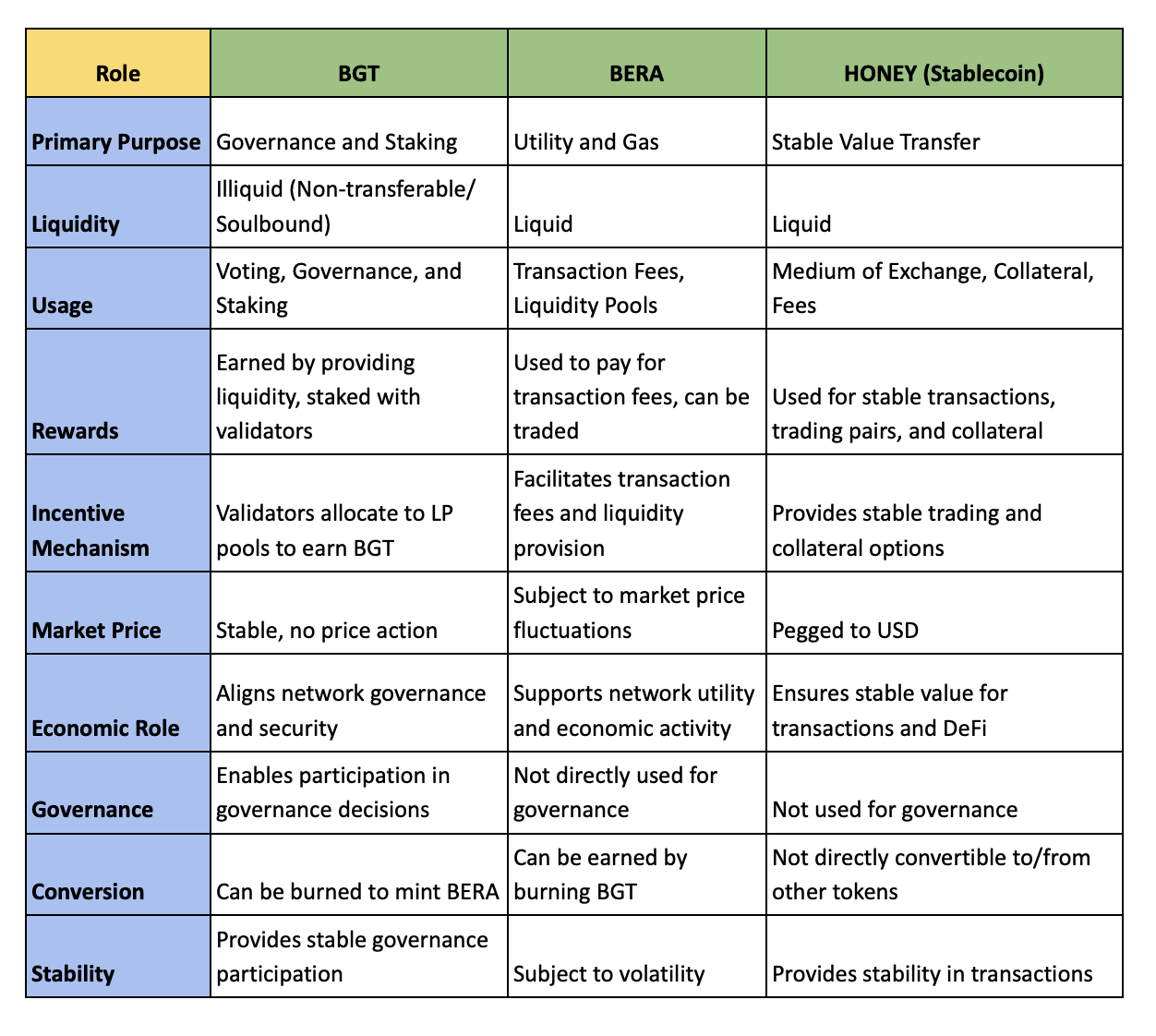
Berachain 生态系统的核心是其三代币模型,包括 BERA、BGT 和 HONEY。每个代币都有不同的用途,确保网络能够实现其安全、治理和高效交易处理的目标,同时为去中心化金融 (DeFi) 活动维持稳定的经济环境:

$BERA (流动代币)

  • 功能:用于网络内的交易费用和一般用途。
  • 流动性:完全流动性且受市场价格波动影响。
  • 作用:促进区块链上的经济活动和互动。

$BGT(治理和权益代币)

  • 功能:主要用于治理和质押。
  • 流动性:不可转让,通过提供流动性获得。
  • 角色:影响网络治理并通过质押确保区块链的安全。

$HONEY (稳定币)

  • 功能:在生态系统内提供稳定的价值转移。
  • 流动性:完全流动性并与美元挂钩。
  • 角色:充当交换媒介、抵押品和费用支付机制。

让我们更深入地了解一下他们各自的角色:
流动性证明

Berachain 如何运作?

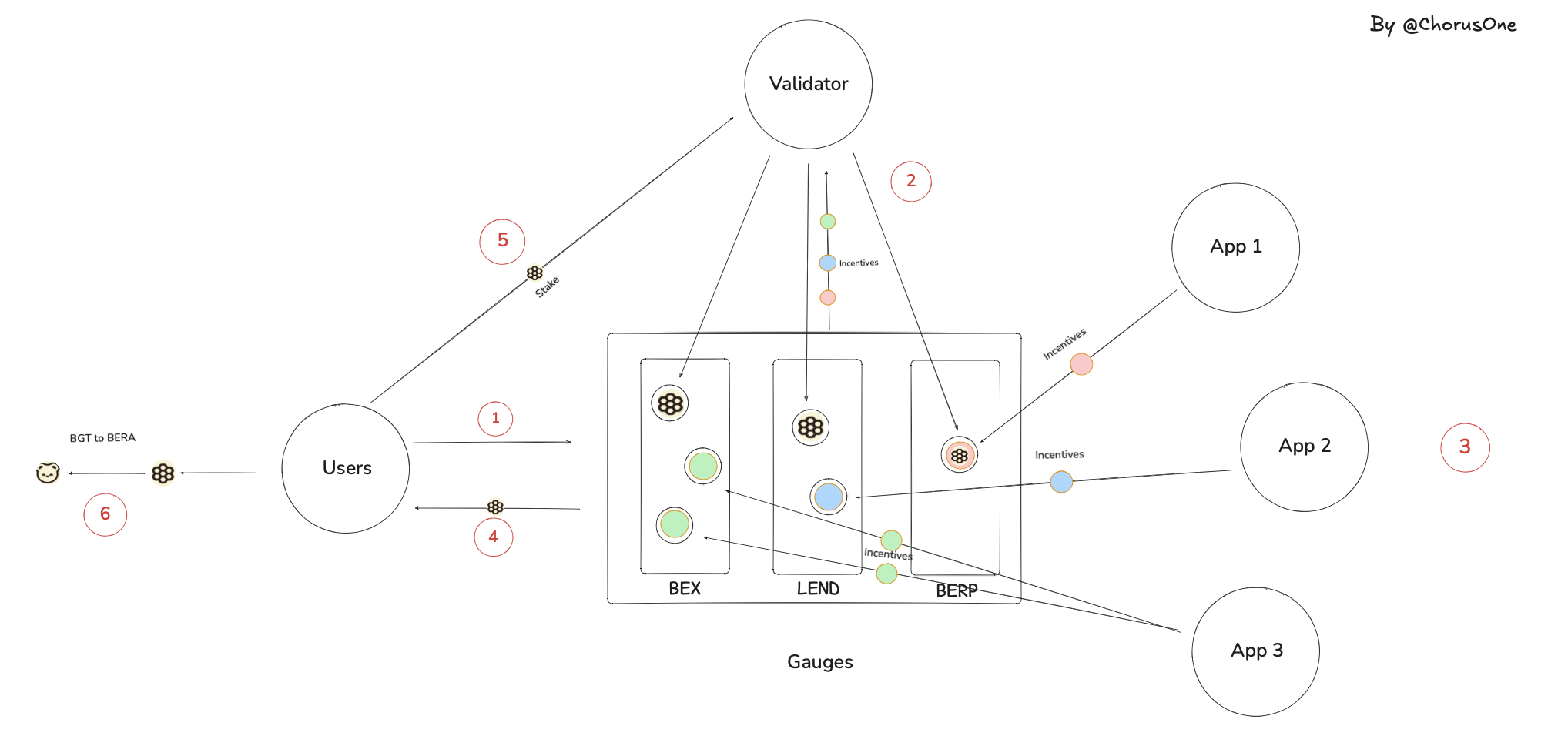
流动性证明

  1. 用户将其符合流动性证明 (PoL) 条件的数字资产质押到 Gauges 中以获得 $BGT 奖励。Gauges 是获得 $BGT 奖励的唯一方法,因此在进入 PoL 生态系统方面发挥着至关重要的作用。
  2. 验证者生成区块,并根据自由裁量策略将部分 $BGT 发行量分配给特定计量单位。这些策略旨在最大化其质押者的收益。验证者从 $BGT 发行量中收取佣金。
  3. 应用程序可以向验证者提供激励,鼓励他们将 BGT 奖励直接转给他们,通常以协议原生代币形式的奖励来换取。
  4. 参与 PoL 的流动性提供者将获得 $BGT 的收益,减去验证者的佣金。
  5. 流动性提供者可以向符合其策略并参与治理的验证者质押 $BGT。
  6. 收到 $BGT 的流动性提供者可以选择销毁 $BGT 以 1:1 的比例获取 $BERA 代币。

通过 BeraBoost 优化 PoL 性能

在底层,PoL 要求验证者将激励直接导向链上资金池,即“奖励金库”。我们致力于通过一种名为“BeraBoost”的算法以科学的方式处理这一过程 - 它将是开源软件,并在公共仪表板上运行。Beraboost 将通过跟踪委托人的 LP 头寸并将激励直接导向相关池来分配激励,以便 Chorus One 的委托人获得最大奖励。

质押 BGT

Berachain 目前处于测试网阶段,尚未启用质押功能。我们与 Berachain 团队密切合作,并将支持所有机构和个人用例以支持 BGT。

Letture associate

On the Eve of X Money's Launch, Musk Dismantles the Referee First

"X Money Launches After Dismantling Regulator: Musk's 9-Day Power Play" In February 2025, a team from the "Department of Government Efficiency" (DOGE), led by Elon Musk, entered the Consumer Financial Protection Bureau (CFPB) headquarters. Shortly after, the CFPB was effectively dismantled—its funding frozen, activities suspended, and nearly 90% of staff laid off. This move came just nine days after X announced a partnership with Visa and as X Money prepared to launch. The article contrasts this with the decade-long regulatory battles faced by companies like Coinbase and PayPal. Coinbase spent over $75 million in political contributions and endured a major SEC lawsuit to operate legally. PayPal complied with strict state and federal rules for its stablecoin PYUSD, including 100% reserve requirements and monthly audits. However, Musk’s approach was different. After the CFPB introduced a rule placing large digital payment apps under federal oversight, Musk tweeted "Delete CFPB." Within months, the rule was revoked by Congress. Meanwhile, DOGE operatives gained "god-tier" access to CFPB databases, potentially obtaining sensitive competitive information from rivals like Apple, Google, and PayPal. The article also highlights a "suspicious exemption clause" in the GENIUS Act, which allows private companies like X to issue stablecoins with fewer restrictions. Senator Elizabeth Warren questioned whether Musk, who was a senior presidential advisor during the Act’s drafting, influenced this clause. X Money offers a 6% APY on deposits, despite FDIC warnings that stablecoin users are not insured. As X Money launches to 600 million monthly users, the article questions the fairness of a system where Musk can bypass regulations that others spent years and millions to comply with. The dismantling of the CFPB and the alleged regulatory advantages raise concerns about the future of equitable rule-making in the U.S. financial system.

marsbit5 min fa

On the Eve of X Money's Launch, Musk Dismantles the Referee First

marsbit5 min fa

Three Frameworks for Ordinary People to Achieve AI Capability Leap: Say Goodbye to the Dilemma of 'Repeating Inputs Every Day'

Summary: This article outlines three frameworks for maximizing AI efficiency, moving beyond basic prompt usage. 1. **Three-Layer Evolution**: Users progress from (1) **Prompt** (one-off instructions, reset each session), to (2) **Project** (context-aware within a specific project), to (3) **Skill** (permanent, auto-applied knowledge). Most users stagnate at the first layer, repeating the same instructions daily with no cumulative improvement. Skills transform the AI from a chat tool into a personalized work system. 2. **Transaction vs. Compound Interest Mindset**: Using prompts is a linear transaction—effort and output are 1:1, and stopping resets progress. Investing time in building Skills is compound interest; a small initial time investment pays continuous dividends, as each Skill permanently elevates the AI's baseline performance. 3. **Thin Harness, Fat Skills**: The system architecture should prioritize thick, well-defined Skills (90% of the value—containing processes, standards, and domain knowledge) and a thin "harness" (the minimal technical environment). Avoid over-engineering the toolchain while neglecting the AI's actual knowledge. Skills are permanent assets that automatically improve with model updates. The key takeaway: Identify tasks you repeat, encode them into Skills (using tools like Claude's Skill Creator), and shift focus from daily prompting to building a compounding, self-improving AI system.

marsbit57 min fa

Three Frameworks for Ordinary People to Achieve AI Capability Leap: Say Goodbye to the Dilemma of 'Repeating Inputs Every Day'

marsbit57 min fa

Trading

Spot
Futures
活动图片