从五个经典案例看代币迁移与合并的策略与影响

币界网Pubblicato 2024-08-12Pubblicato ultima volta 2024-08-12

币界网报道:

作者:panadol girl 来源:@cornergirl999 翻译:善欧巴,

如果你是一个项目创始人,想要升级或迁移旧代币、与其他代币合并、赋予其“第二次生命”,并重新设计代币经济学和实用性,那么这篇文章可能对你有帮助。

有些人可能会说,项目只有一次机会正确地发行代币(我同意,在所有条件都完美的情况下),但事实是,市场和叙事会变化,团队的战略和愿景也会改变,甚至社区的期望也会随着时间的推移而改变。

在这种情况下,代币的品牌和市场定位可能需要不断演变以保持相关性,代币的实用性也会相应变化。只要有正当理由,经过深思熟虑并获得社区同意,创始人和团队应该有这样的选择权。

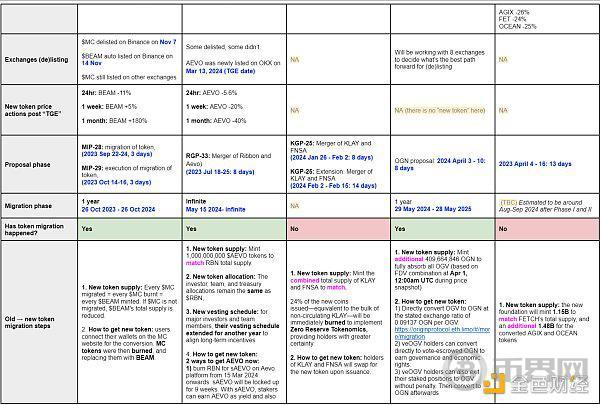
我和@karmen_lee 花了数小时深入研究了5个代币迁移和合并的案例,以便更全面地了解关键的考量因素、转换机制、时间线、价格表现和社区反应。

我们还提出了一个高层次的蓝图,可能对那些创始人和建设者有帮助(我会在另一篇帖子中分享这个蓝图)。本文将重点介绍我们从5个案例研究中发现的内容以及我个人的一些看法:

  • MC -> BEAM

  • RBN -> AEVO

  • AGIX, FET, OCEAN -> ASI

  • KLAY, FNSA -> PDT

  • OGV -> OGN

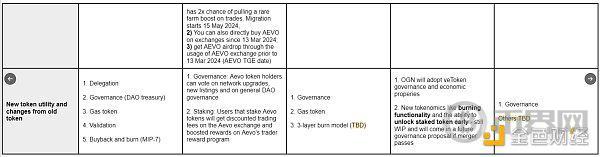
我将首先总结关键考量因素:

让我们深入探讨一下。

1、MC -> BEAM

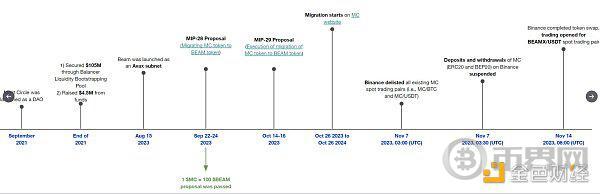
Merit Circle迁移到Beam可能是最成功且经过验证的代币迁移案例之一。这是一个项目如何演变为区块链的良好示例,并且在此过程中,项目进行了清晰且一致的社区沟通和提案流程。详细时间线如下:
为什么升级?

  • 更好地对齐代币品牌与底层网络。

  • 增强代币的实用性。

  • 提升市场定位、品牌认知度和影响力。

  • 提高时间效率——这是一个快速使内部和外部各方的关注点和知识与BEAM的新愿景对齐的方法。

为什么不直接进行代币空投?

  • BEAM旨在取代MC代币,而不是与其共存。

  • 由于MC代币在不断易手,难以进行公平和准确的空投。

  • 空投成本高昂(包括交易成本)。

价格影响

  • 在迁移后的六周内,BEAM的价值上涨了约200%,表明市场强力支持。

  • 自2023年10月26日开放迁移以来,MC的价格也上涨了超过三倍。

2、RBN -> AEVO

在去中心化金融(DeFi)领域,Ribbon Finance与Aevo(基于OP的L2非托管交易所)的合并是一个有趣的案例,该过程还集成了自动质押机制。

两个不同的产品,一个RBN代币 -> 一个统一的产品,一个新的AEVO代币。时间线如下:
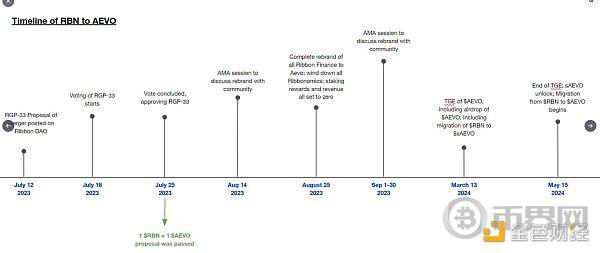
为什么合并:

  • 解决DeFi期权扩展性问题,Ribbon在扩展方面面临困难。

  • 产品提供上的协同效应。

  • UI/UX的技术优势:Aevo的L2 Rollup旨在为用户提供零交易费的解决方案,减少订单延迟,增加订单处理能力,活跃的做市商等。

  • 方向和目标的演变:新的AEVO代币基于一个明确的、演变后的目标:成为一个高性能的衍生品交易平台,并在一个品牌下提供更多产品。

质押机制:

  • 转换后的AEVO代币有2个月的锁定期。AEVO代币被转换为sAEVO(质押的AEVO),然后锁定 --> 避免立即抛售导致价格波动。

3、AGIX, FET, OCEAN -> ASI

今年最热门的合并案例之一是三个高市值人工智能(AI)代币的合并:Fetch.ai(AI代理)、SingularityNET(AI开发与集成的研发)和Ocean Protocol(数据共享和货币化)。当消息在三月份首次传出时,我们团队与Singularity进行了电话会议,以了解他们的理由和机制。

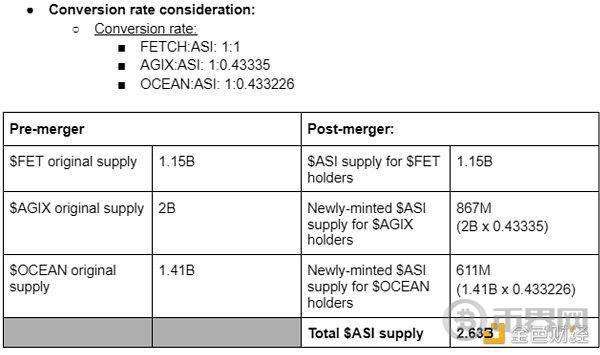
从这个案例中学到的关键是他们对转换率的考量,以及为什么他们没有在代币估值上应用任何类型的溢价或折扣。

为什么合并:

  • 整合流动性——流动性成本高昂。

  • 创建AI研发领域最大的独立参与者。

转换率考量:

  • 兑换比例基于公告前15天的平均价格。

  • 为减少估值谈判中的障碍,团队只根据相同的市场条件对代币进行估值,没有根据流动性/交易量的差异应用溢价/折扣。

  • FET被选为基准代币,因此以1:1的比例兑换ASI。

4、KLAY, FNSA -> PDT

今年,韩国最资深的两个代币也决定合并——一个由Kakao支持,另一个由LINE支持,这两者是韩国最大的两大即时通讯应用。他们的愿景是利用其2.5亿以上的钱包用户基础、240多个Dapps和服务,成为亚洲第一的区块链。

这个案例研究的关键点是他们的燃烧机制,其中:

  • 新PDT代币总供应量的约22.9%将被燃烧。

  • 100%的非流通量将被移除。

  • 目的:减少通货膨胀,控制供应。

5、OGV -> OGN

目的: 整合Origin的所有产品套件及其相关的影响力,统一为一个治理和收益积累代币OGN,并整合流动性。

这个案例研究中的启示是催化剂:团队意识到OGV的市值/锁仓价值(TVL)比率比其他竞争对手低得多,可能被低估了。

总结:

代币迁移或合并并不能保证立即或长期的正面价格走势。因此,务必确保你有强有力的理由和扎实的逻辑来支持“为何迁移/合并”。你应该为正确的理由、为正确的社区去做这件事。

代币迁移并不是一次性事件,它只是开始。沟通、透明性和治理提案不应该在此之后停止。这也是为什么我相信某些案例研究比其他案例更成功的原因。

这5个案例中的大多数尚未完成其迁移期,因此还需要密切关注其整体产品与生态系统的进展以及代币表现,以判断“这次迁移/合并是否成功”。


Letture associate

Idle Macs Can Also Make Money? An Overview of Eigen Labs' Decentralized AI Inference Network Darkbloom

AI inference is becoming a crucial layer of internet infrastructure, yet it remains largely dependent on costly, capacity-limited centralized systems with potential security risks. Meanwhile, millions of powerful computers sit idle globally. Eigen Labs' Darkbloom network aims to utilize this idle capacity by enabling distributed AI inference on Mac computers, specifically those with Apple Silicon chips. Darkbloom's architecture consists of three components: users who send inference requests, a coordinator (operated by Eigen Labs) that routes these requests, and providers (Mac owners) whose machines run the models and return outputs without being able to see the request content. The system prioritizes privacy through a hardened provider process, software integrity checks, and hardware-supported attestation based on Apple's security architecture to ensure verifiable privacy. Economically, Darkbloom differs from traditional models. It leverages existing hardware, with marginal costs primarily driven by electricity, allowing it to offer pricing roughly 50% lower than major API aggregators. Providers keep 100% of the inference revenue, and the project does not rely on token subsidies; earnings come solely from real AI inference demand. However, early-stage earnings are modest, with top providers currently earning under $6 per day, influenced by factors like hardware specs, uptime, and network demand. The network currently supports models like Google's Gemma 4 and OpenAI's GPT-OSS via OpenRouter. To participate as a provider, users need an Apple Silicon Mac running macOS 14 or later, must install the Darkbloom provider software, and keep the machine online with a stable internet connection.

marsbit5 min fa

Idle Macs Can Also Make Money? An Overview of Eigen Labs' Decentralized AI Inference Network Darkbloom

marsbit5 min fa

Which Crypto Sectors Have Been "Eaten" by AI Agents?

The article examines which crypto sectors have been increasingly dominated by AI Agents and which remain human-centric. In certain high-speed, efficiency-driven areas, AI Agents have taken clear control. This includes derivatives/perpetuals trading, where bots outperform humans significantly (e.g., a contest showed 0% of AI Agents were liquidated vs. 43% of humans), arbitrage/MEV extraction, and yield optimization (with ~68% of new DeFi protocols in Q1 2026 featuring autonomous AI Agents). Spot trading and portfolio optimization are also seeing heavy Agent adoption. However, the shift is not universal. In "battleground" sectors, both Agents and humans coexist. In prediction markets, Agents dominate short-term arbitrage, but humans still outperform in long-term, nuanced judgment calls. In DeFi lending, while liquidation is automated, core deposit/borrow decisions remain largely human-driven. Sectors still firmly led by human activity include stablecoin payments and card-based spending (driven by real-world economic activity and remittances) and wallets, which serve as the crucial human-verification and approval layer. The rise of Agents increases the need for robust human-Agent verification layers. Projects like World/AgentKit, t54, Self Protocol, and Kite AI are building infrastructure to create trust, security, and accountability by binding Agents to verified human identities. In conclusion, while AI Agents have decisively "eaten" speed and optimization-focused crypto sectors, human judgment, trust, and real-world context remain dominant in areas that create broad economic value, such as payments and identity. The future likely involves a symbiotic relationship where Agents require human verification and oversight to operate effectively.

Foresight News11 min fa

Which Crypto Sectors Have Been "Eaten" by AI Agents?

Foresight News11 min fa

After Rising 11 Times in a Year, Micron's Earnings Report Becomes a Stress Test for the AI Memory Market

**Micron's Upcoming Earnings: A Crucial Test for the AI Memory Rally** Investors in AI memory stocks face a critical moment on June 24th, when Micron Technology reports quarterly earnings. The stock, having surged approximately 11-fold from $103 to $1,134 over the past year, carries immense market expectations. Wall Street consensus forecasts a staggering ~932% year-over-year jump in EPS to around $19.72 and ~270% revenue growth to ~$345 billion, largely driven by sold-out HBM (High Bandwidth Memory) capacity through 2026. Analysts have aggressively revised estimates upward over the last 90 days, with EPS expectations rising 68%. This creates a high bar: even strong results risk a sell-off if they fail to meet these elevated projections. Notably, price forecasts from institutions like Citi (predicting ~200% DRAM price increases in 2026) are already among the most bullish on Wall Street, not conservative. The key metric to watch is gross margin, guided to a record ~81%. Such peak profitability raises questions about sustainability in the historically cyclical memory sector. While management has signaled continued strength, the stock's direction post-earnings will likely hinge more on forward guidance for the next quarter and details on HBM capacity expansion for 2027, rather than the already-anticipated stellar past results. The report represents a major pressure test for the high-flying AI memory trade.

marsbit15 min fa

After Rising 11 Times in a Year, Micron's Earnings Report Becomes a Stress Test for the AI Memory Market

marsbit15 min fa

Trading

Spot
Futures
活动图片