Санкции Казначейства работают и в DeFi

cryptonews.ruPubblicato 2024-08-09Pubblicato ultima volta 2024-08-09

Федеральный резервный банк Нью-Йорка опубликовал отчет о влиянии санкций на Tornado Cash, крипто-микшер, внесенный в черный список Министерства финансов США в 2022 году. Санкции в целом работают даже в децентрализованных финансах, говорится в отчете.

Выводы отчета также применимы к Ethereum. Сопротивление сети Ethereum цензуре и сотрудничеству показывают ее «хрупкость», говорится в отчете.

Какие санкции имеют значение для протокола смарт-контракта

Управление по контролю за иностранными активами Министерства финансов (OFAC) 8 августа 2022 года ввело санкции в отношении адресов, связанных с так называемым крипто-микшером Tornado Cash. Этот шаг стал ответом на крупномасштабные операции по отмыванию денег, которым способствовал микшер, скрывая движение криптовалютных средств. Это был первый случай, когда компьютерный протокол подвергся санкциям.

В отчете говорится, что использование Tornado Cash после введения санкций значительно сократилось, но постепенно восстановилось. В криптосообществе последовала реакция: биржи и другие платформы запретили Tornado Cash, а отраслевые группы встали на защиту микшера.

Механизм консенсуса в блокчейне Ethereum перешел от доказательства работы к доказательству доли сразу после введения санкций против Tornado Cash. В Ethereum валидаторы получают блоки транзакций от разработчиков.
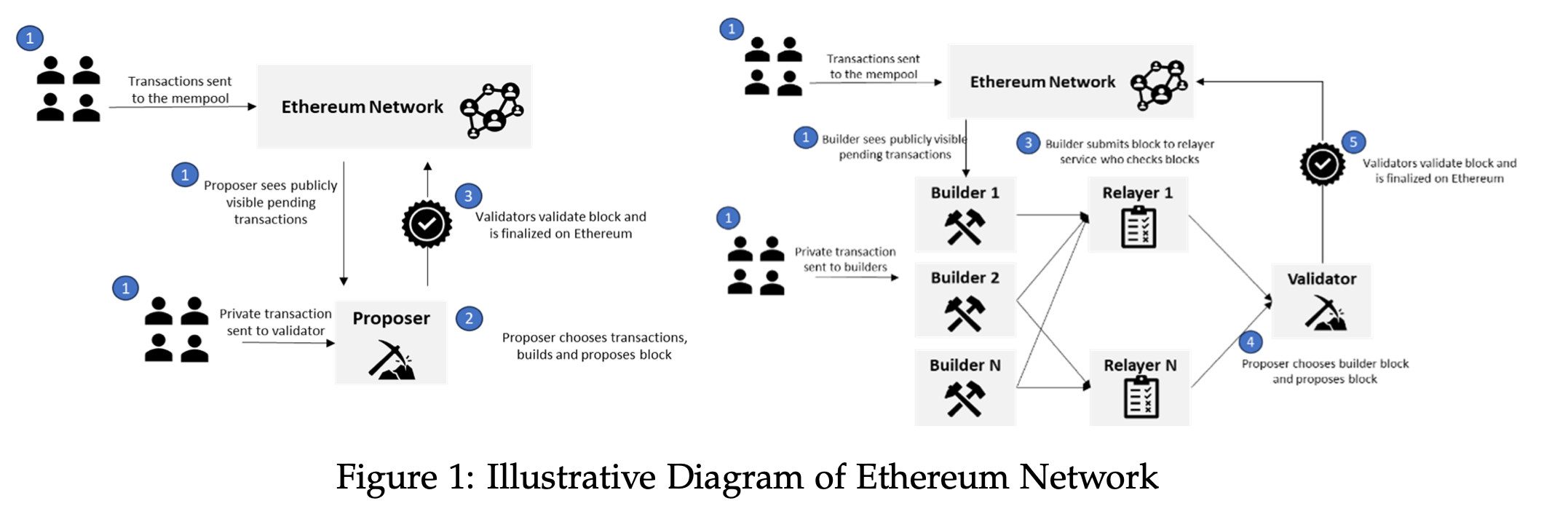
Схема сети Ethereum. Источник: Федеральный резервный банк Нью-Йорка.

Согласно отчету ФРБ Нью-Йорка, обычные пользователи склонны соблюдать санкции в отношении Tornado Cash. Крупные трейдеры также соблюдали санкции, но в несколько меньшей степени. Те, кто отказывается соблюдать санкции, делают это по убеждению, а не из мотивов получения прибыли. Поведение валидаторов осталось практически неизменным, хотя в докладе отмечается, что они могли бы разобраться с блоками, не отвечающими санкциям.

Какое значение санкции имеют для блокчейнов

Наблюдения, приведенные в отчете, раскрывают факты об Ethereum:

«Наши результаты показывают, что сопротивление цензуре хрупко. Несмотря на то, что различные варианты дизайна Ethereum были выбраны для поощрения децентрализации, мы обнаруживаем справедливый уровень концентрации в цепочке расчетов и высокую зависимость от небольшого числа участников, что способствует включению транзакций Tornado Cash».

Tornado Cash продолжает работать, и наблюдается сильное возрождение микшера в этом году. Разработчик протокола Алексей Перцев был признан виновным в отмывании денег в Нидерландах в мае. Роману Шторму и Роману Семенову, другим разработчикам Tornado Cash, Министерство юстиции предъявило обвинения в сговоре с целью отмывания денег, сговоре с целью нарушения санкций и сговоре с целью ведения нелицензионного бизнеса по переводу денег.
Источник: Crypto News от crypto.news.

Шторм находится под стражей, и в настоящее время над ним идет суд. Тем временем Семенов остается на свободе.
Letture associate

Token FOLD Auction Imminent, What is The Interfold, Supported by Vitalik?

**Title:** FOLD Token Auction Approaches: What is The Interfold, Supported by Vitalik? **Summary:** The Interfold, a "confidential coordination infrastructure" previously known as Enclave, is launching its functional token FOLD via a Uniswap Continuous Clearing Auction (CCA) starting July 8th. Endorsed by Ethereum co-founder Vitalik Buterin in May, the protocol tackles the core problem of governance bribery in decentralized voting (e.g., on platforms like Votium) by enabling multiple parties to compute a verifiable result without exposing their private input data. Its core technology, the Encrypted Execution Environment (E3), uses a distributed network of "Ciphernodes" that perform computations on fully encrypted data using Fully Homomorphic Encryption (FHE), with process integrity verified by Zero-Knowledge (ZK) proofs and decryption keys managed via Decentralized Threshold Cryptography (DTC) to eliminate a single point of trust. The primary application is CRISP (Coercion-Resistant Impartial Selection Protocol) for DAO governance, which ensures encrypted voting, "receipt-free" votes to prevent bribery, and verifiable tallying. The Interfold, developed by the Gnosis Guild team (creators of the Zodiac DAO tooling), positions itself as a focused solution to make on-chain voting truly un-buyable, realizing the vision of Vitalik's earlier MACI (Minimal Anti-Collusion Infrastructure) framework without its reliance on a single trusted coordinator. FOLD tokens will be used for Ciphernode staking, paying for computation requests, and protocol governance. Following the 48-hour auction, there is a 40-day cooling period where tokens can only be staked, with the official Token Generation Event (TGE) expected around August 19th.

Foresight News5 min fa

Token FOLD Auction Imminent, What is The Interfold, Supported by Vitalik?

Foresight News5 min fa

Bridging Traditional Funds and DeFi: Who Will Capture the Next Decade's RWA Dividends?

Bridging Traditional Funds and DeFi: Who Will Capture the RWA Decade's Value? Tokenization of real-world assets (RWA) is merging the 24/7, permissionless world of DeFi with the time-bound, regulated world of traditional finance. While the complexity is immense, the infrastructure layer enabling this fusion holds significant value. The total value of on-chain tokenized real-world assets now exceeds $33 billion. While tokenized U.S. Treasuries dominate, their share has fallen from 55% to under 45% in a year as other assets like institutional and private credit grow. The key differentiator for on-chain assets is *composability*, allowing capital to be recycled across multiple yield-generating strategies simultaneously. However, tokenized funds remain regulated products with daily NAV updates, KYC requirements, and redemption windows. Bridging these to DeFi requires solving core conflicts: pricing assets between NAV updates, enforcing compliance without stifling DeFi activity, and maintaining accurate accounting during cross-chain transfers. Solutions like the Centrifuge V3 architecture, in collaboration with LayerZero, propose a hub-and-spoke model. A single authoritative hub chain manages NAV, compliance, and accounting, while LayerZero's messaging layer syncs this data to spokechains where tokens can be freely composed in DeFi. This creates a high-barrier, essential middleware layer. The major incentive for institutions is the potential for recursive yield strategies—for example, depositing into a tokenized Treasury fund, borrowing stablecoins against it, and redeploying those funds into another yield-bearing asset, amplifying returns. Yet, risks remain: mismatches between on-chain instant redemptions and off-chain fund limits (as seen in recent private credit fund runs), pricing arbitrage due to NAV lags, and cross-chain settlement failures. Infrastructure must solve these while maintaining regulatory compliance. Just as SWIFT and Visa captured immense value as financial plumbing, the entities that build the robust middleware connecting traditional finance and DeFi are positioned to capture the next decade's value in the RWA space.

Foresight News29 min fa

Bridging Traditional Funds and DeFi: Who Will Capture the Next Decade's RWA Dividends?

Foresight News29 min fa

Trading

Spot
活动图片