本轮周期区块链行业到底发生了什么

币界网Pubblicato 2024-08-07Pubblicato ultima volta 2024-08-07

币界网报道:

关于VC

- 上个周期节奏正常的VC都赚钱了。

- 这些VC在本周期都3-10倍扩大了基金规模再次融资,导致手上资金过多。

- 但好项目又不够多,为了花出去钱,只好增加轮次融资抬高估值,甚至拿到并不需要的资金。

- 三年前已经失败的老项目也能出来重新融资。

- 这大幅提高了好项目的VC成本和币民心理预期。

- VC和项目方都不傻,本质变成了割LP的游戏。项目投完后发不出币,开会时尴尬不已。

- 好不容易有一个好项目发币了,赶紧PR,6个月或12个月后解锁即卖币,未解锁也得套现。

- 总之,VC不赚钱,LP最惨。

关于新项目

- 成熟创始人做小项目或大项目投入的时间相同,卖币也是一样卖,所以他们只做大项目。

- 大项目 = 高估值 = 基础设施(infra)。

- 基础设施项目扎堆出现,但没有应用或收入,只能自补刷量。

- 自己的钱从VC那里来,反正是免费的。

- 明白了上币开盘Playbook,目标是开盘卖币,高估值开盘卖出最少的币,换来最多的钱。

- 开盘买盘枯竭,但还是要卖币,不卖币不可能。

- 一个币开盘后买盘结束只能跌,通常1-3天,基本撑不过三天。

- 之后制造波动继续卖币。如果市场好,偶尔上涨,然后继续卖币。

- 总之,做项目的第一性原理是卖币,极少部分项目创造价值或靠协议收入。

- 部分刷量项目实际上是假用户项目,上线即归零,没有任何交易量,市值毫无意义。

关于老项目

- 死透的项目用三年前投的优质Cap table再次融资,大部分用KOL round,少部分找基金接盘。

- 为了上市,继续融资刷数据,但没有真用户和真用例。

- 无法上交易所,只能贿赂其他交易所或DEX上币。

- DEX上币=归零,贿赂交易所=归零(贿赂的钱需通过卖币赚回来)。

- 总之,这类项目只能归零,因为他们大概率不会认真做了。

关于头部交易所

- 交易所为项目方提供链上池子服务。

- 给一个币加池子对项目是好事,所以项目肯定会给交易所钱,这是商业常识。

- 交易所需取悦的大户,符合大户利益的项目需要上线,所以LRT项目都得上。

- 符合自己利益的项目也要上,有用户的、新东西的、能竞争其他交易所的项目都得上。

- 因为流动性为王,上交易所成为做项目最重要的一环。

- 交易所起到了用户教育和流动性提供的重要作用,应该获得重要地位和匹配的利润。

- 那你的本金他就默默收下了。

综上,做项目变成了创造一个虚幻的东西,不用做实事,只要能卖币即可。VC币和meme币没有区别。

关于ETH

- 大户改变思路,变成POS,反正不是POW,也不是炒币思路,更不是入金买单思路,就是白嫖思路。

- 大户不参与真正的建设,不对ETH币价有直接正面影响,包括但不限于,做memecoin、拉盘优质memecoin、创造独特的ETH文化等。他们不作为。

- ETH本周期唯二的买入理由是再质押和ETF,但这与散户无关,所以ETH没有强有力的买入理由。

- ETH依然有最多的开发者、节点和生态项目,是最健壮的区块链。

- 但ETH上的项目都心怀鬼胎,想把空气币卖给散户,只为自己赚钱。

- 总之,ETH上散户难赚钱。

关于SOL

- 大户抱团,有大格局,了解散户的想法。

- 大户的量级是40w-2mil SOL,他们花1w SOL做个邪教memecoin或找人做memecoin,轻松无比。

- 抱团拉盘meme,做一堆小池子的memecoin,送到100-500mil。

- 散户看到这么多memecoin眼花缭乱并疯狂FOMO。

- KOL通过喊单赚取注意力,完成财富转移,这些币还真涨。

- KOL形成梯度和喊单区间,Hsaka、Ansem等顶流一档,一些100k followers一档,其他一档(主要是KOC),分别喊不同市值范围的币,500mil+、100-500mil、10-100mil以及10mil以下的彩票选手。

- 这样增加了SOL的生态系统活力,让散户给他们的SOL抬轿子。

- 因为散户都持有SOL,自然形成SOL maxi军团,SOL flip ETH情绪高涨,忘记了SOL的回滚风险及memecoin本质是空气。

- SOL进入正反馈循环阶段,main character喊单,散户继续FOMO。

- 什么时候结束?不知道。当大家对memecoin反感时结束。

- 总之,SOL成为本周期最好的赌场和筹码,所有人都需要SOL。

判断

- memecoin supercycle成立,前百市值币中出现20个memecoin,大量memecoin在100-300mil之间,主要在SOL上。

- 成功的memecoin专注CEX出现。

- 项目继续高市值开盘,但开盘估值显著下调,PR稿称项目方估值合理化,格局大,爱惜羽毛。

- VC下一轮只能找web2融资,他们对行业很眼红,但与LP汇报会很痛苦。

- 不向VC过度融资(甚至完全不融资)的高质量真用例项目开始出现,使用其他更为体面的方式进行利益输送。

- 真正创造价值的审计/安全公司慢慢受到重视,优质审计成为行业的重要部分:BlockSec、Hexagate、Hypernative。

- 对于非meme项目,市场回归对有真实收入、垄断性、用例项目的青睐(希望他们能创新性地将代币和业务关联起来)。

Letture associate

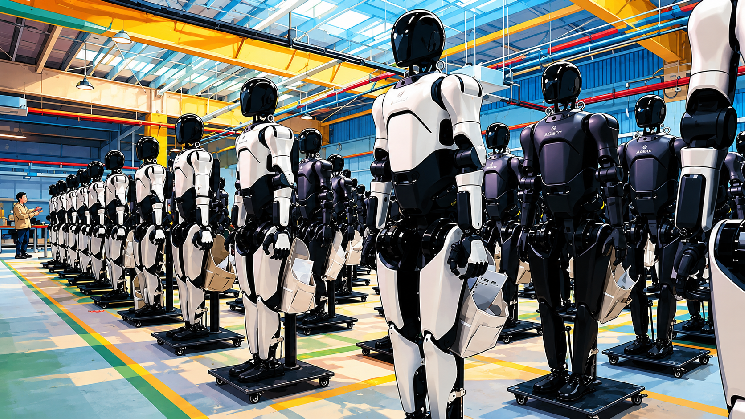
China Monopolizes the Humanoid Market: The U.S. Is Forced to Defend Itself

China's Humanoid Robot Market Domination and US Response According to a report by Smart Analytics Global (SAG), Chinese manufacturers supplied over 97% of the global humanoid robot shipments (approximately 19,100 units) in the first half of 2026, a 272% year-on-year increase. Shanghai-based AGIBOT led with a 44% market share, followed by Unitree Robotics with 31%. Together, these two firms accounted for about 75% of global shipments. China itself represented over 85% of global demand for these devices, with industrial and commercial applications now comprising more than 70% of shipments. Key factors driving China's leadership include strong state support, abundant funding, expanding production capacity, IPO waves for developers, and a vast manufacturing ecosystem for rapid testing and deployment. Furthermore, over 90% of key components for humanoid robots are now sourced domestically. In response, the US Federal Communications Commission (FCC) banned federal agencies and subsidy recipients from purchasing or using foreign "advanced robotic devices," including humanoid and quadruped robots, citing national security concerns in July 2026. SAG forecasts global shipments to approach 60,000 units for full-year 2026, with industry revenue around $1.6 billion, projecting 500,000 units by 2030. The analysis notes potential challenges for Chinese expansion, such as reputational risks from alleged ties to China's defense sector and the precedent of trade disputes seen in solar panels and batteries, potentially triggered by the current low average robot price.

cryptonews.ru7 min fa

China Monopolizes the Humanoid Market: The U.S. Is Forced to Defend Itself

cryptonews.ru7 min fa

What's New in Ethereum's Roadmap: Privacy, Quantum Security, Native Rollup?

On August 10, 2024, Ethereum co-founder Vitalik Buterin revealed an updated technical roadmap, highlighting significant changes in priorities and new focus areas. Key new additions include: - **Strong Privacy Protection**: Elevated to a top-tier protocol concern. Proposals like EIP-8250 (keyed nonces for concurrency), EIP-8272 (recent roots for verification), and EIP-8182 (shared protocol-level privacy pools) aim to enable private transfers of ETH and ERC-20s, moving toward default private accounts. - **Quantum Resilience**: Priority increased. The plan addresses risks to ECDSA/BLS signatures, KZG commitments, and ZK systems, exploring solutions like leanSPHINCS signatures, STARK proofs (considered quantum-resistant), and streamlined verification processes. A full L1 upgrade is tentatively targeted for ~2029. - **Native Rollups**: A novel concept where rollups could reuse Ethereum's core validation infrastructure via a new EXECUTE precompile (EIP-8079 draft). This aims to reduce custom code and enhance security for certain L2s, while specialized chains will continue to exist. - **Protocol Simplification & Formal Verification**: Leveraging AI tools to make full-protocol formal verification feasible, aiming for more rigorous and machine-verifiable specifications. Other notable shifts: - State storage is evolving from Verkle trees to a Partitioned Binary Tree (PBT, EIP-8347 draft). - Some 2023 items like VDFs and certain EVM improvements were deprioritized. - Long-term discussions include blob/gas futures and non-EVM instruction sets (e.g., RISC-V). The "Strawmap" outlines potential upgrades through ~2029 but is a directional guide, not a firm timeline. Key milestones to watch include the Glamsterdam (Q4 2026) and Hegotá (2027) forks. Many proposals remain in draft or research phases.

marsbit28 min fa

What's New in Ethereum's Roadmap: Privacy, Quantum Security, Native Rollup?

marsbit28 min fa

Hyperliquid Trading Volume Soars, So Why Are Profits Falling?

Hyperliquid, a leading decentralized perpetuals trading platform, has seen its open interest surge to a record high above $11 billion, capturing roughly 9% of the global market share. Trading volume remains robust, nearing $178 billion over 30 days, driven largely by the explosive growth of third-party markets offering tokenized real-world assets (RWAs) like stocks and commodities. Despite this growth, the platform's protocol revenue has declined for four consecutive quarters, falling 43% from its Q3 2025 peak of $357 million to approximately $202 million in Q2 2026. This divergence is primarily attributed to the HIP-3 governance proposal, which allows external developers to launch their own markets and keep up to half of the generated fees. These third-party markets now account for nearly 50% of total volume. Consequently, the share of revenue redistributed to developers, market makers, and the treasury has tripled from 6% to 18% in a year. This directly reduces the funds allocated to the platform's buyback-and-burn mechanism for its native HYPE token, weakening a key price support. HYPE's price has fallen 28% from its all-time high. The platform's growth is also heavily concentrated, with a single entity, Trade.xyz, responsible for over 90% of HIP-3 open interest, introducing systemic risk. Additionally, the ecosystem lacks diversity beyond HYPE, faces ongoing token unlocks adding sell pressure, and is encountering increased regulatory scrutiny and new competition from platforms like Robinhood Chain. While still a major revenue generator in crypto, Hyperliquid's model of sharing fees to fuel expansion is currently compressing its own earnings and token economics.

marsbit28 min fa

Hyperliquid Trading Volume Soars, So Why Are Profits Falling?

marsbit28 min fa

Trading

Spot
活动图片