美股大逃杀!辉达苹果重挫近5%..联准会急安抚:经济没有衰退啊

币界网Pubblicato 2024-08-06Pubblicato ultima volta 2024-08-06

币界网报道:

近期由于美国失业率攀高,触发预示经济衰退的「萨姆规则」,美股连续几日遭遇重挫,灾情周一更影响日本、韩国以及台湾等亚洲股市。

昨晚美股开盘后继续延续跌势,美股四大指数再受重挫,具体来看:

  • 道琼工业指数:下跌2.6% 或1,033.99,报38,703.27 点

  • 标准普尔指数:下跌3% 或160.23,报5,186.33 点

  • 那斯达克指数:下跌3.43% 或576.08,报16,200.08 点

  • 费城半导体指数:下跌1.92% 或88.31,报4,519.45 点

美股七雄比惨

个股方面,素有美股七雄之称的七大科技巨头跌幅更甚,相继比惨:

  • Alphabet:下跌4.45%,报159.25 美元

  • 苹果:下跌4.82%,报209.27 美元

  • 亚马逊:下跌4.1%,报161.02 美元

  • 微软:下跌3.27%,报395.15 美元

  • 辉达:下跌4.82%,报209.27 美元

  • 特斯拉:下跌4.23%,报198.88 美元

  • Meta:下跌2.54%,报475.73 美元

Lii8Ot83VmrBU2T70fDTeNKcB8WtTVPaCzssDWEu.png

另外,芝加哥期权交易所的波动率指数(VIX)也飙涨64.90%,达到38.57,一度创下1990 年以来的最大升幅,表明市场恐慌情绪似乎还在加剧。

IDoCiavnXOSiuwqCm4gbyZ42wFSZuhnrdf5CzLyH.png

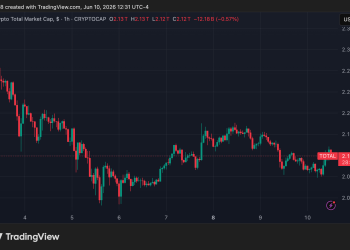
不过加密货币市场方面,比特币反而强弹

Fed 官员:尚未陷入经济衰退

不过,面对如此股灾和市场恐慌情绪,2024 年FOMC 会议票委、旧金山联准会主席戴利昨晚受访时表示,劳动力市场的疲软并不会加剧,联准会(Fed)所面临的风险正趋于平衡:

7 月份的就业数据为我们提供了一些信心,表明我们的通膨正在放缓,但经济尚未陷入衰退。

我不认为劳动力市场的疲软会加剧,下一个就业市场报告是否将反映出相同的趋势,或出现逆转,值得我们密切关注。如果我们仅仅对一个数据点做出反应,那几乎总是错的。

《金融时报》昨日也发布一篇〈Everyone calm down〉的文章,列举经济依然很坚挺的证据,比方说上周五非农就业报告意外显示就业市场大幅放缓,但7 月份因飓风等恶劣天气而无法上班和工作的人就是比较多。

另外,美银证券经纪团队也发布报告表示,Fed 在9 月降息几乎可说是板上钉钉,但并没有必要采取激进的行动:

7 月的失业率上升几乎全部来自于裁员,这表明劳动力市场只是暂时疲软。 8 月的报告中,就业率可能会出现反弹,失业率也可能下降。没有裁员,美国就不会出现经济衰退,而目前的裁员率仍然较低。

降息周期将从9 月开始,每个季度降息25 个基点,直到2026 年中期达到3.25%~3.5% 的终端利率。 50 个基点或以上的激进降息是在紧急情况下进行的,但我们还没到那一步。
Letture associate

Uniswap v4 Hook Analysis: Architecture Design, Common Vulnerabilities, and Protection Practices

Uniswap v4's Hook mechanism is a major innovation, enabling custom logic injection into liquidity pool lifecycle events like swaps and liquidity provisioning. This transforms the AMM into programmable infrastructure, shifting the security model from protocol-level to pool-level, as each pool's safety now depends on its bound Hook contract. The core architecture revolves around the singleton PoolManager contract, which manages all pools via a flash accounting system. State changes are tracked in transient storage and must be settled by the end of a transaction. Hook contracts are permanently bound to pools via a PoolKey, with their permissions encoded directly into their address via specific low-order bits. This design introduces unique security considerations and challenges for future upgrades. Key vulnerabilities and best practices identified include: - **Access Control Gaps:** Early versions of the BaseHook abstract contract only protect `unlockCallback()`, leaving other lifecycle functions (`beforeSwap`, `afterSwap`, etc.) exposed unless explicitly secured by developers. - **Unrestricted Pool Binding:** The `initialize()` function does not validate if a Hook "consents" to a new pool. Hooks must implement their own whitelisting in `beforeInitialize` to prevent unauthorized pool creation. - **Async/Custom Curve Hooks:** These high-risk Hooks can completely replace Uniswap's swap logic. Their security depends entirely on their own implementation, as they operate outside the native protocol's pricing safeguards. - **Delta Accounting Risks:** The system ensures final balance (NonzeroDeltaCount == 0) but cannot guarantee the *correctness* of intermediate delta states, which attackers could manipulate. - **Token Confusion:** Protocols must implement semantic validation for tokens in user-created markets, not just interface checks, to prevent cross-market confusion attacks. The article emphasizes that Hook auditing requires a "sub-protocol" approach due to extended interaction chains, highlighting a significant shift in security methodology for the v4 ecosystem.

marsbit48 min fa

Uniswap v4 Hook Analysis: Architecture Design, Common Vulnerabilities, and Protection Practices

marsbit48 min fa

Chips, Open-Source Models, and $50 Trillion: Joe Tsai Reassesses Alibaba Once Again

Alibaba Executive Chairman Joe Tsai recently outlined the company's comprehensive AI strategy in a public discussion. He believes AI represents a massive opportunity, estimating its potential economic impact at up to $50 trillion, stemming from the automation of human intelligence and productivity. Tsai detailed Alibaba's four-layer investment approach across the AI stack: starting from the chip level, moving to cloud infrastructure (Alibaba Cloud), then the model layer with its open-source Qwen model, and finally applications within its vast digital ecosystem (e-commerce, logistics, etc.). The company avoids the energy layer due to China's efficient infrastructure. This broad strategy is designed to ensure Alibaba captures value regardless of where it ultimately concentrates in the AI value chain. He dismissed concerns about an AI investment bubble, pointing to the enormous $50 trillion opportunity. While acknowledging U.S. cloud giants' higher capital expenditure, he argued Chinese firms, including Alibaba (funded by its cash-generative e-commerce core), need to invest more in AI infrastructure. A key theme was technological sovereignty. Tsai positioned open-source models like Qwen as a solution for companies, especially in Europe, seeking independence from proprietary U.S. models and greater data privacy control. He contrasted this with the trend of U.S. giants keeping their models closed-source. Tsai highlighted Alibaba's collaborations with European manufacturers like Bosch and Siemens, using AI for design and quality control. He concluded with an optimistic vision of AI agents enhancing productivity, ultimately freeing up human time for leisure, family, and experiences like live entertainment.

marsbit1 h fa

Chips, Open-Source Models, and $50 Trillion: Joe Tsai Reassesses Alibaba Once Again

marsbit1 h fa

Trading

Spot
Futures
活动图片