Coinbase 前 CTO:10 张图看懂美国经济现状,除了印钞机别无选择

链捕手Pubblicato 2024-07-23Pubblicato ultima volta 2024-07-23

作者: Balaji Srinivasan , Coinbase 前 CTO 

编译: 0xjs ,金色财经


任何选举都无法偿还美国 175 万亿美元的债务。只有印钞机可以。

因为正如马斯克、达利欧和其他人意识到的那样……西方世界正走向一场比 2008 年更严重的主权债务危机。就像他们一直在撒谎说拜登老年痴呆一样,他们也在撒谎说经济状况如何。所以他们会印很多钱。

看看数据,你自己就能判断。

1、紧急贷款比 2008 年还多

首先,你知道美联储在 2023 年发放的紧急贷款比 2008 年金融危机期间还多吗?由于美国政府首先向金融机构出售数十亿美元的债券,然后通过意外加息使其贬值,银行系统得以维持生命。

看看美联储的这张图表就知道了。左下方的蓝色凸起是 2008 年危机时的贷款。紫色是 COVID 。右边的巨型橙色 / 蓝绿色怪物代表 2023 年银行业危机。看看它比 2008 年高多少?

2、借款额超过新冠疫情

第二,你知道吗?在「拜登繁荣」期间,美国的借款额比新冠疫情期间还多?暂且不论新冠疫情是否应该被视为金融危机。至少新冠疫情期间的借款利率约为 0%。但如今,美国政府在和平时期借入了历史性的巨额资金……而且利率高达 5%!这是一个绝望的人用信用卡刷爆账单的行为。

3、利息支出超过国防支出

第三,你是否知道所有这些借款已使国债利息支出成为政府最大的单项支出?超过国防、社会保障或其他任何支出。截至 2024 年,所有税收(和印刷美元)的首要用途是支付给债券持有人。即便如此,过去几年购买美国国债(或其他债券)的任何人都快消失了。对于所有战争和所有福利来说,都是先买后付。从图表中可以看出,付款的时间到了。

4、美元进一步贬值

第四,你知道吗,美元在短短四年内贬值了至少 25%?你可能从通货膨胀的亲身经历中知道这一点。但拉里·萨默斯估计,购买力的下降幅度甚至比这还要大,如果算上利率上升导致的贷款还款大幅增加,年均数字将达到 18%。四年内,这一贬值数字将远远超过美元价值的 25%。

5、中国进一步抛售美国国债

接下来,你知道吗,中国(美国国债最大的外国买家)一直在加速抛售美国国债?这有点技术性,但中国是美国的「外部投资者」,就像投资你的科技公司的新风险投资家是外部投资者一样。即使只购买你 5% 的股权(或在这种情况下是债务),他们也会为其他所有人设定价格。并表明外部需求强劲,而这些需求来自那些不必购买的人。但现在外部需求正在崩溃:

6、金砖国家购买更多黄金

但美元不是价值储存手段吗?如果不购买美国国债,其他国家还会购买什么呢?中国是美国以外大部分国家的领头羊。这些国家已经开始囤积历史性数量的黄金,而西方国家一直在抛售黄金。请看:

7、比以往任何时候都更加去美元化

好吧,那么美元作为交易媒介怎么样?好吧,中国——如果你不知道的话,它是目前世界上大多数国家的头号贸易伙伴——刚刚转向以人民币进行跨境外汇交易。

8、制裁效力比以往任何时候都低

好吧,但美元难道不能继续用作制裁武器吗?各国难道不需要进入美国金融系统吗?事实上,不需要。对俄罗斯的所有制裁实际上对欧洲的伤害大于对俄罗斯的伤害。欧洲需要俄罗斯的石油和天然气,但俄罗斯还有其他客户。因此,根据世界银行(不是俄罗斯消息来源!)的数据,俄罗斯刚刚超越日本,成为按购买力平价计算的 GDP 排名第四的全球经济体。

9、和平时期债务逼近二战

但美国军方怎么办?它最终难道不能发动战争来保护美元吗?这是一个很长的话题,但请看下面的图表。今天,美国表面上处于「和平时期」。但它的债务与二战时期相当:
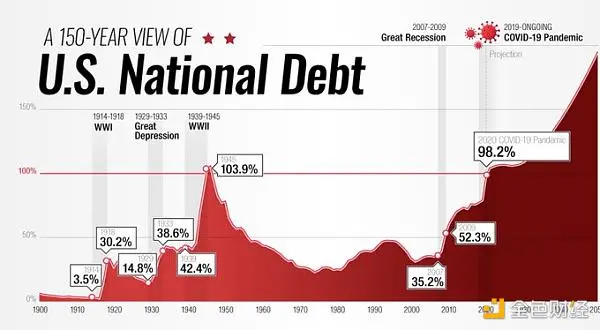
同样,这是另一个话题,但美国既没有资金,也没有制造基础来对中国这样的对手发起持续的军事行动。你无法与你的工厂作战——尤其是在你没钱的时候。

10、真实债务超过历史上任何帝国

最后,也许整个话题中最重要的数字是 175.3 万亿美元。当你把社会保障和医疗保险等所有福利都考虑在内时,这实际上是美国的真正债务。而且这个数字本身也在迅速增加。不要相信我的话,要相信美国政府 2024 年 2 月的财务报告:

175.3 万亿美元与 Druckenmiller 一直使用的约 200 万亿美元的数字相符, Druckenmiller 将一切因素都考虑在内,用于表示美国政府全部负债。当然,目前我们处于垄断货币领域,因为:

a ) 整个联邦政府去年只收入了约 2 万亿美元 

b ) 这个数字本身就受到赤字支出的影响

c ) 自 2020 年以来,美元实际下跌了约 25% 

d ) 如果清算,资产价值中的「177 万亿美元」会暴跌 

e ) ...或者如果发生金融危机,或者两者兼而有之,

那么 175 万亿美元的债务是无法偿还的。美国政府几乎没有足够的钱来偿还所欠的债务。它向所有人(从盟友到退休人员)做出了承诺,但根本无法兑现。在这种失职中继续掌权,将变得非常糟糕,大多数人无法真正理解。

美元正变得不那么重要

简而言之:我还没有开始。我可以展示更多的图表,还有更多来自世界各地债券、房地产和科技领域投资者的视频,他们看到了正在发生的事情。

但如果你诚实的话,美元的地位正在迅速下降。它根本不再是以前不可或缺的资产。总结一下:

a )中国不需要美元来交易,他们使用人民币而不是美元。

b )金砖国家不需要美元来储蓄,他们购买黄金而不是美国债券。

c )俄罗斯不需要美元来生存,他们是被美国经济拒之门外的第四大经济体。

d )然而,美国需要尽可能多的国家接受美元,因为它的借款水平超越了新冠疫情、二战和历史上任何帝国。

那么,接下来会发生什么?我有一些想法,但首先我们需要就正在发生的事情达成一致。

Letture associate

One Vote Could Make SOL's Daily Burn Rate Soar 14 Times

Solana's first formal on-chain governance vote concluded on August 27th, coinciding with SOL hitting a yearly high. Three key proposals aimed at reshaping the network's tokenomics were decided. Solana's core challenge is a massive usage-to-value capture gap. Despite processing 120x more transactions than Ethereum and leading in DEX volume, its fee revenue is significantly lower due to its fee structure. Currently, most fees (priority fees) go to validators, with only a small base fee partially burned. This results in high net inflation (approx. 6k SOL issued vs. ~650 burned daily). The three proposals seek to address this: **SGP-0001** establishes the formal governance framework. **SGP-0002** (Double Deflation Acceleration) proposes doubling the annual reduction rate of new SOL issuance from 15% to 30%, aiming to reach the terminal inflation rate by 2029 instead of 2032, reducing issuance by an estimated 18.9 million SOL. **SGP-0003** (Resource & Entry Fee Restructuring) would split the base fee into a fixed "entry fee" for block producers and a variable, fully burned "resource fee." This could increase daily SOL burns by ~14x to 7,500-9,000. Major stakeholders like Helius, Jupiter, and Jito support the changes. However, opposition exists, notably from Solana Company (HSDT), whose revenue is 99.4% from staking. They argue rapid changes could disrupt institutional adoption. Critics also highlight a potential conflict where validators can vote against reduced staking yields using delegated SOL without explicit voter consent. The outcome of these votes provides a directional mandate. If passed, they represent a significant step towards aligning Solana's immense network activity with tangible economic value for SOL holders.

marsbit19 min fa

One Vote Could Make SOL's Daily Burn Rate Soar 14 Times

marsbit19 min fa

Chinese Venture Capital Is Shifting from 'Selecting People' to 'Selecting Cities'

Chinese Venture Capital: Shifting from "Picking Founders" to "Picking Cities" The article discusses a significant shift in China's venture capital (VC) landscape. Historically, VC investments heavily focused on the individual founder's vision, track record, and capability, as seen in early internet-era successes like Wang Xing (Meituan), Li Bin (Nio), and Li Xiang (Li Auto). The belief was that betting on exceptional people was the key to success. However, the rise of hard tech startups—in fields like semiconductors, robotics, AI, and biotech—has changed this calculus. These industries depend heavily on deep, localized ecosystems: specialized talent pools, established supply chains, manufacturing bases, and application scenarios. A city's industrial "resume" now significantly impacts a startup's chances. Examples include Shenzhen's dominance in robotics, Beijing's concentration of AI firms, Suzhou's biotech cluster, and Hefei's successful bet on semiconductor giant ChangXin. This shift is further driven by changes in funding sources. Government-guided funds and state-owned capital now dominate VC limited partners (LPs). These "patient capital" investors prioritize local economic development, job creation, and industrial chain growth alongside financial returns. Their early bets signal viability to other investors. Ultimately, the VC logic remains about managing risk and increasing the odds of success. In the hard tech era, a supportive city ecosystem provides crucial resources—talent, suppliers, R&D, and policy stability—that a single founder cannot easily assemble. The investment due diligence process has thus expanded from evaluating just the founder to also evaluating the founder's city. Consequently, capital is concentrating in a few regions with strong, focused industrial foundations, challenging other cities to build compelling, credible ecosystems to attract investment.

marsbit1 h fa

Chinese Venture Capital Is Shifting from 'Selecting People' to 'Selecting Cities'

marsbit1 h fa

Trading

Spot
活动图片