Taiwanese Crypto Exchange Founder Charged With Money Laundering And Fraud

bitcoinistPubblicato 2024-04-10Pubblicato ultima volta 2024-04-11

Introduzione

David Pan, the founder of the Taiwanese crypto exchange ACE, alongside six other suspects, has been charged by prosecutors with...

David Pan, the founder of the Taiwanese crypto exchange ACE, alongside six other suspects, has been charged by prosecutors with fraud and money laundering. According to the official press release, a court ruled the confiscation of Pan’s assets.

Crypto Fraud Investigation Ends With Indictment And Seizing Of Assets

In January 2024, news broke of one of the largest crypto exchanges in Taiwan being under police investigation for alleged fraud. The investigation unveiled a “well-organized” scheme by ACE exchange founders David Pan and Lin Nam to “deceive” victims into investing in worthless virtual currencies.

The police raided over 15 locations, including ACE headquarters, and arrested 14 individuals, including Pan and Lin, as part of the investigation. Additionally, over NT$200 million, worth $6.4 million, were seized during the raids.

The investigation of the suspected money laundering and fraud of ACE and its investee company, Fu Hai Digital Innovation Company, continued. As a result, the Taichung District Attorney’s Office prosecutors indicted Pan and six other suspects with criminal charges this week.

The defendants are accused of violating the Organized Crime Prevention Ordinance, aggravated fraud, and money laundering. The press release states that 162 victims were affected, and the money lost in the fraud amounts to over NT$340 million, worth around $10.7 million.

The prosecutors asked the Taiwanese court to consider that the “circumstances of the crime are significant, and the malice is grave.” As a result, a judge approved the seizing of property of the seven individuals accused.

Around NT$3.48 million in crypto was seized, alongside NT$ 27.5 million in real estate properties, NT$140,000 in deposits, and NT$485,000 in cash. The total amount seized reaches over NT$31.6 million.

Web of Lies And ACE’s Response

Prosecutors found that the defendants engaged in “offline and over-the-counter transactions of virtual currencies through the ‘Alfred Wallet’ App.”

According to the press release, Fu Hai created the Alfred Wallet and offered the A+Card, which was used for fraud. The virtual currency stored-value cards were sold in cooperation with fake investment online groups that promoted them.

With the help of social media groups, the fraudsters promoted and hyped investing in virtual currencies, as crypto “could yield considerable returns.” Moreover, they promoted the purchase of TIDE tokens from specific dealers.

Per the investigation, the accused took advantage of the broad belief that physical stores are more trustworthy. As a result, they urged the victims to purchase their tokens at local stores authorized to operate Fu Hai’s Alfred Wallet.

Personnel in the store would aid the victims in using the A+Card to store their tokens in the Alfred Wallet. However, the defendants used the “operation mode” of the app to manage the wallets. Using this method, the “transfer of currency flows could not be publicly queried in the blockchain ledger.”

Subsequently, the system was used to manipulate the addresses of users’ wallets and control the funds from the backend. When victims tried withdrawing their funds, the members of the fraudulent group would find excuses like “wrong orders” and “account problems” or refuse to give reasons.

Following the indictment, ACE published a statement distancing itself from its founder. The crypto exchange clarified that the Alfred Wallet was not an ACE product, as it “was developed by a third party commissioned by the former director Pan.”

Finally, the exchange reassured users that its trading and operating conditions were normal, guaranteeing the safety of its users’ assets.
BTC, BTCUSDT, Bitcoin , Crypto

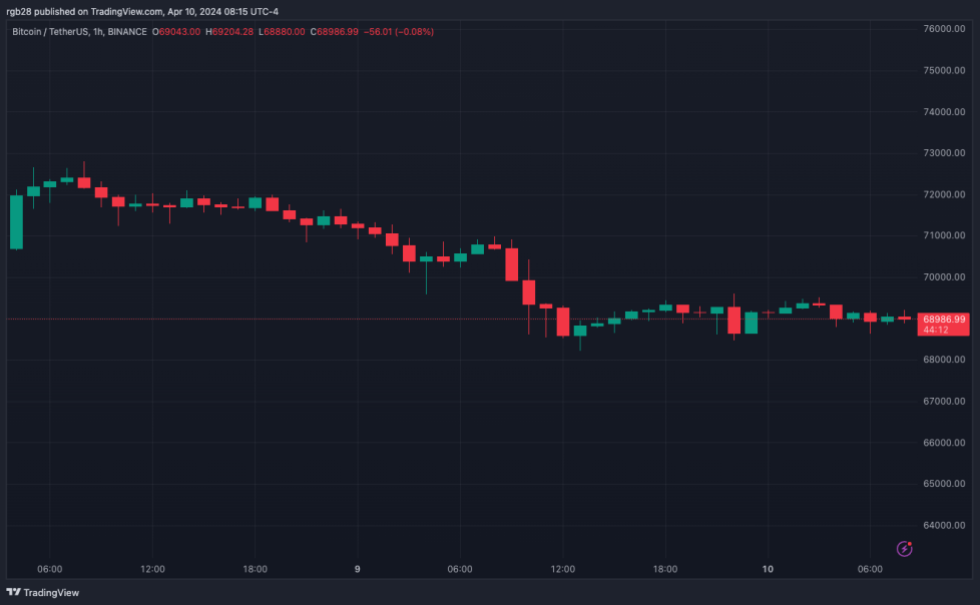
Bitcoin price performance in the 1-day chart. Source: BTCUSDT on Tradingview
Featured Image from Unsplash.com, Chart from TradingView.com
Rubmar Garcia

Rubmar Garcia

Rubmar is a crypto enthusiast who likes learning and improving constantly. She enjoys reporting on the latest news and developments in the crypto industry. Rubmar also enjoys scrapbooking, crafting, simulation games, and watching football.

Letture associate

US Stocks Suffer Worst Plunge Since 2025: Three Triggers Ignite Tech Stock Valuation Reset

The US stock market experienced its most severe sell-off since the 2025 tariff crisis on June 5th, 2025. The Nasdaq Composite plummeted 4.18%, the S&P 500 fell 2.64%, and the Dow Jones dropped 695 points. The panic stemmed from three converging factors. First, Broadcom's earnings report ignited fears of a slowdown in AI growth. While its AI chip revenue surged 143% YoY to $10.8B, its Q3 AI revenue guidance of $16B fell short of the $17.2B consensus. This triggered a massive sector-wide sell-off, with the Philadelphia Semiconductor Index crashing 10.26% and semiconductor stocks losing roughly $1.3 trillion in market value in a single day. Second, a shockingly strong May jobs report crushed hopes for Federal Reserve rate cuts. Non-farm payrolls added 172,000 jobs, doubling expectations. This robust data, combined with persistently high oil prices above $92/barrel due to the ongoing Iran war and blockade of the Strait of Hormuz, drastically increased market expectations for a potential Fed rate hike instead of a cut. Higher interest rates compress the valuations of growth-heavy tech stocks. Third, the prolonged Iran conflict continues to fuel inflationary pressures, complicating the Fed's policy decisions and undermining the "inflation is tamed" narrative. Together, these events challenged the twin pillars of the market rally: the "limitless AI growth" story and expectations for imminent monetary easing. The sell-off spread globally, impacting Asian and European markets and cryptocurrencies. The article posits this is likely a severe "valuation repricing" rather than the end of the AI story. The underlying demand for AI remains strong, but investor expectations for growth speed and the prices they are willing to pay are being recalibrated. Key upcoming factors include the June FOMC meeting, future AI company earnings, and developments in the Iran conflict.

marsbit2 h fa

US Stocks Suffer Worst Plunge Since 2025: Three Triggers Ignite Tech Stock Valuation Reset

marsbit2 h fa

From Madison Square Garden to Kalshi: Prediction Markets Break into the NBA Finals

From Madison Square Garden to Kalshi: Prediction Markets Break into the NBA Finals Prediction markets are playing a significant role in the 2026 NBA Finals, particularly around the New York Knicks' unexpected 2-0 series lead. Platforms like Kalshi and Polymarket have seen massive trading volumes, exceeding hundreds of millions of dollars on championship and related markets. Their influence extends beyond online trading. Kalshi's official partnership with Madison Square Garden has given it prominent physical branding at the arena. Furthermore, local businesses like The Jeffrey bar are using prediction market contracts to hedge the risk of game-result-based promotions, turning potential losses into manageable costs—a concept similar to the famous "Mattress Mack" strategy from traditional sports betting. These markets differentiate themselves by offering a wider, more entertainment-focused range of "event contracts" beyond typical game outcomes, such as predicting celebrity attendance. They also have broader accessibility across the U.S. compared to age- and location-restricted traditional sportsbooks. However, their rapid integration into sports raises regulatory and ethical questions. The NBA is cautiously engaging, discussing integrity frameworks with regulators like the CFTC. While the league permits minor investments like Giannis Antetokounmpo's stake in Kalshi, it advocates for strict rules to prevent insider trading. Many fans express concern on platforms like Reddit, fearing that the close ties between prediction markets, the league, and players could compromise the game's integrity. The NBA Finals has thus become a high-stakes testing ground, showcasing prediction markets' commercial potential while challenging traditional boundaries between financial trading, entertainment, and gambling.

marsbit4 h fa

From Madison Square Garden to Kalshi: Prediction Markets Break into the NBA Finals

marsbit4 h fa

Recursive Self-Improvement AI Gains Traction, Google Pours Cold Water, While DeepSeek and Others Approach the Fringes

The term "recursive self-improvement" (RSI), where AI improves itself autonomously, is gaining momentum in the AI industry. Startups like Recursive Superintelligence and projects such as Andrej Karpathy's Auto-Research aim to create systems where AI designs, implements, and validates its own research, moving toward superintelligence. While Google CEO Sundar Pichai cautions that such exponential acceleration is not yet a reality, progress is evident. For instance, Anthropic reported its Claude Code writes nearly 100% of the team's code, though it still lacks true self-direction. Analysts frame RSI development in stages: "adequacy" (systems functioning without humans), "parity" (matching human research quality), and "supremacy" (exceeding human-AI collaboration). Reaching parity could trigger rapid, unpredictable advancement due to AI's continuous operation. In China, companies like DeepSeek and Baidu incorporate self-optimization techniques without explicitly branding them as RSI, focusing on algorithmic efficiency and reinforcement learning. However, challenges remain, including "model collapse" from training on AI-generated data and the immense computational and open-collaboration requirements. Ultimately, RSI represents a trend of increasing automation in AI development, potentially reducing human oversight in the creation process itself.

marsbit4 h fa

Recursive Self-Improvement AI Gains Traction, Google Pours Cold Water, While DeepSeek and Others Approach the Fringes

marsbit4 h fa

Trading

Spot
Futures

Articoli Popolari

Come comprare ACE

Benvenuto in HTX.com! Abbiamo reso l'acquisto di Fusionist (ACE) semplice e conveniente. Segui la nostra guida passo passo per intraprendere il tuo viaggio nel mondo delle criptovalute.Step 1: Crea il tuo Account HTXUsa la tua email o numero di telefono per registrarti il tuo account gratuito su HTX. Vivi un'esperienza facile e sblocca tutte le funzionalità,Crea il mio accountStep 2: Vai in Acquista crypto e seleziona il tuo metodo di pagamentoCarta di credito/debito: utilizza la tua Visa o Mastercard per acquistare immediatamente FusionistACE.Bilancio: Usa i fondi dal bilancio del tuo account HTX per fare trading senza problemi.Terze parti: abbiamo aggiunto metodi di pagamento molto utilizzati come Google Pay e Apple Pay per maggiore comodità.P2P: Fai trading direttamente con altri utenti HTX.Over-the-Counter (OTC): Offriamo servizi su misura e tassi di cambio competitivi per i trader.Step 3: Conserva Fusionist (ACE)Dopo aver acquistato Fusionist (ACE), conserva nel tuo account HTX. In alternativa, puoi inviare tramite trasferimento blockchain o scambiare per altre criptovalute.Step 4: Scambia Fusionist (ACE)Scambia facilmente Fusionist (ACE) nel mercato spot di HTX. Accedi al tuo account, seleziona la tua coppia di trading, esegui le tue operazioni e monitora in tempo reale. Offriamo un'esperienza user-friendly sia per chi ha appena iniziato che per i trader più esperti.

60 Totale visualizzazioniPubblicato il 2024.12.10Aggiornato il 2026.06.02

Come comprare ACE

Discussioni

Benvenuto nella Community HTX. Qui puoi rimanere informato sugli ultimi sviluppi della piattaforma e accedere ad approfondimenti esperti sul mercato. Le opinioni degli utenti sul prezzo di ACE ACE sono presentate come di seguito.

活动图片