Blast开启“超级加倍”活动,手把手带你完成任务

PanewsPubblicato 2024-06-27Pubblicato ultima volta 2024-06-27

Introduzione

尽早交互,拒绝稀释。

作者:Azuma,Odaily 星球日报
Blast开启“超级加倍”活动,手把手带你完成任务


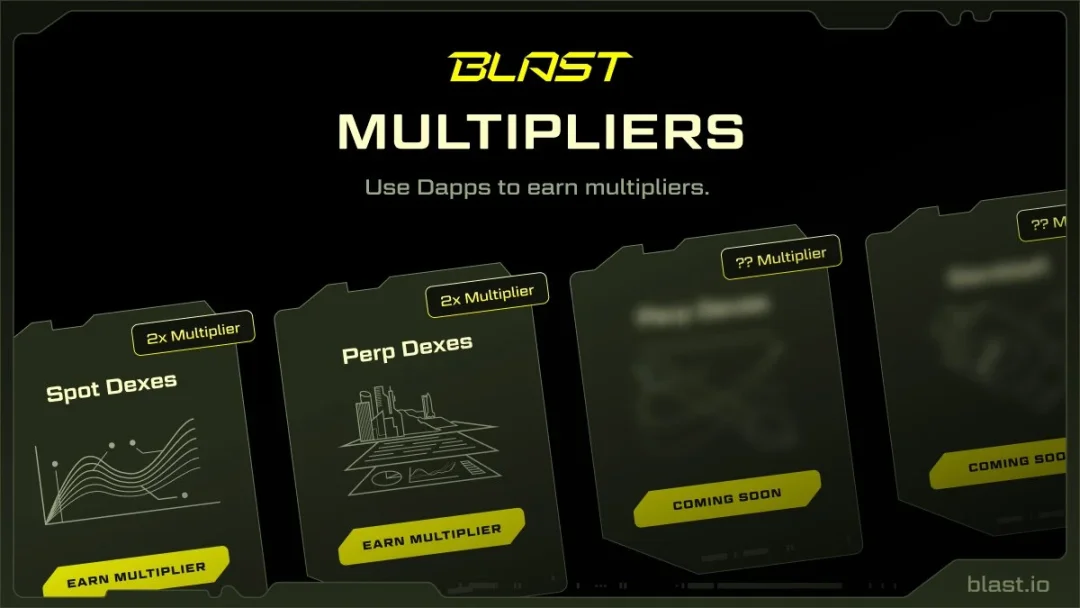
4 月 2 日,生息型 Layer 2 网络 Blast 正式启动了「积分加成」活动。
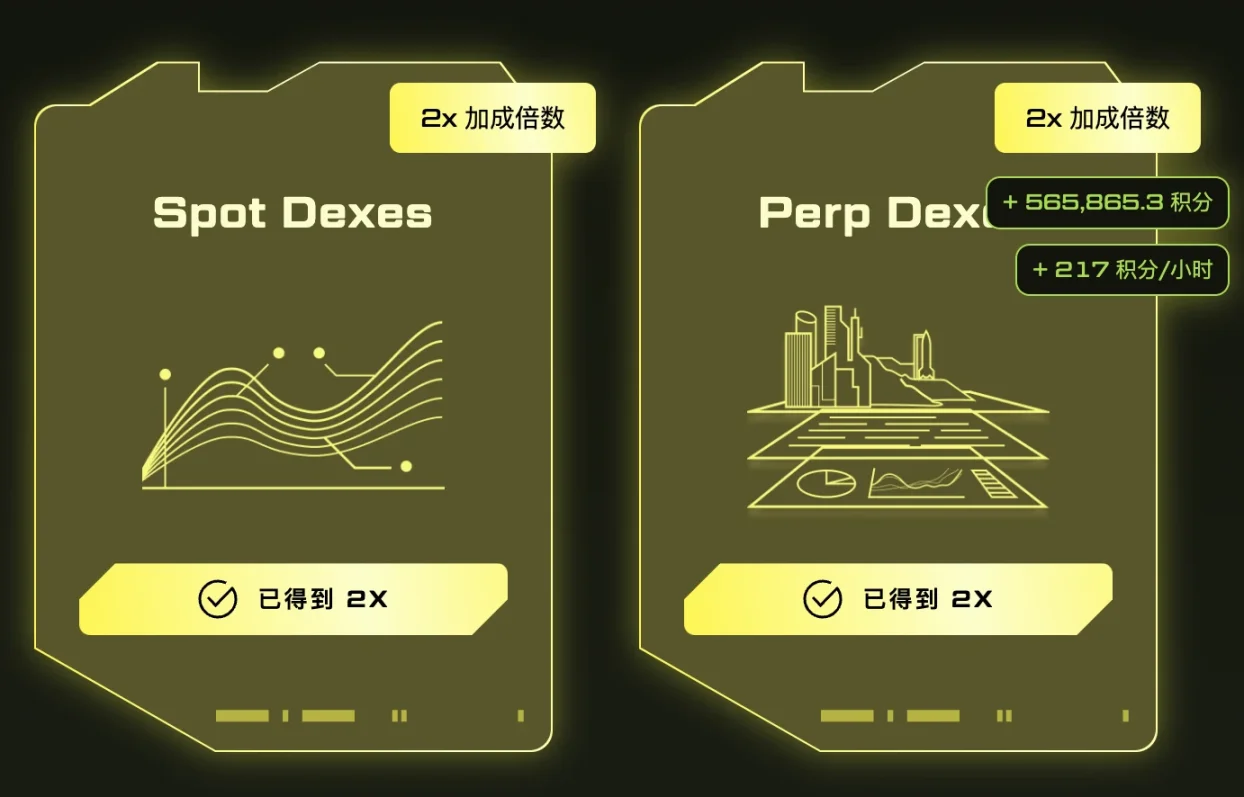
根据 Blast 的官方披露,「积分加成」活动总计将涵盖 12 个任务板块,而当前暂时仅开放了「现货交易所」及「衍生品交易所」等两大板块,其余板块预计将在后续逐步开放。
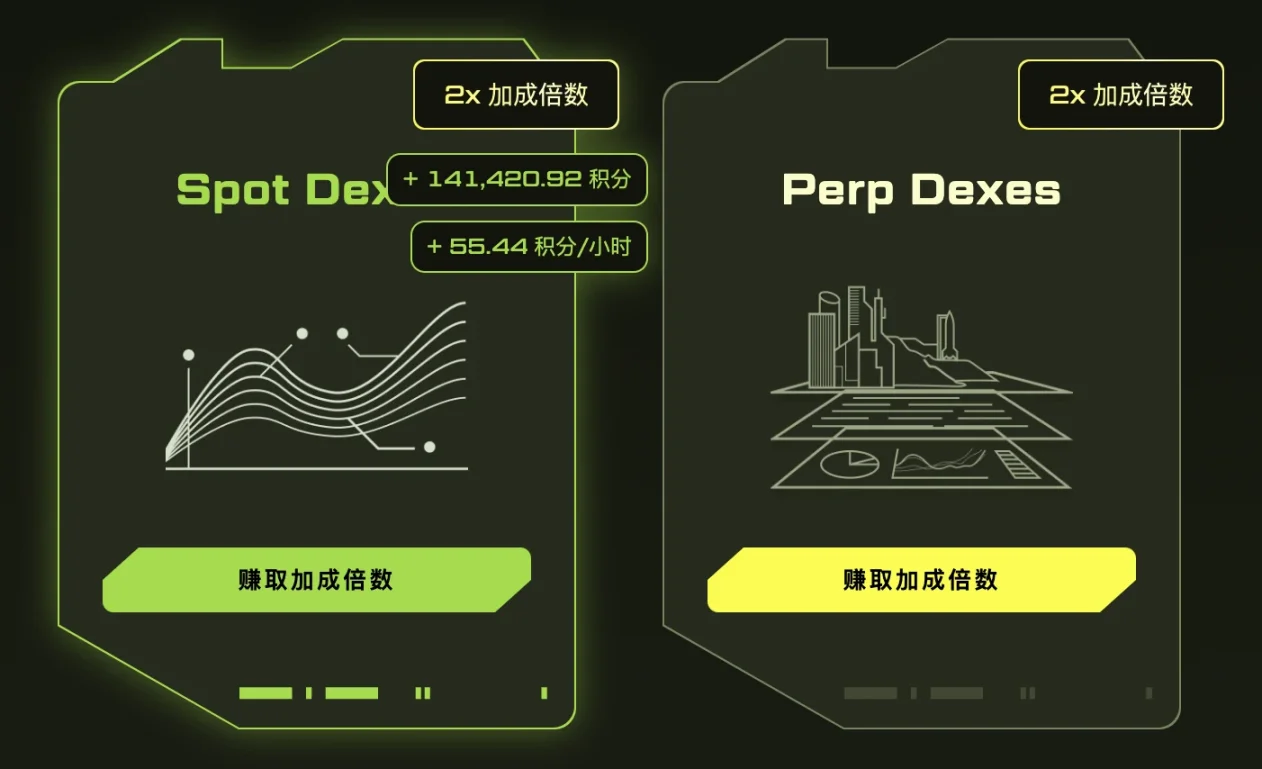
当前阶段,用户可通过官网内的「加成倍数」主页处的 「现货交易所」及「衍生品交易所」板块交互指定项目,继而一次性获得大量积分,并激活后续的积分增长倍率加成 —— 以笔者当前 75 万的总积分以及 55/h 的增长速率为例,完成任一板块任务后便可一次性获得 14 万积分(约占总积分的 18.8% ),并将积分增长速度翻倍。
Blast开启“超级加倍”活动,手把手带你完成任务


  • 在「现货交易所」任务板块下,Blast 共计列出了五家指定项目,分别为 Ring Protocol、Ambient、Mangrove、Thruster Finance 以及 BladeSwap。
  • 在「衍生品交易所」任务板块下, Blast 共计列出了七家指定项目,分别为 BFX、SynFutures、Wasabi、Particle、DTX、Bloom 以及 Blitz。

根据 Blast 的说明,交互上述指定项目即可完成「积分加成」任务,具体的交互金额则未设限制,所以我们大可以用小额资金来进行交互。此外经笔者实测,用户也无需交互所有指定项目,每个板块内仅交互其中一家即可完成任务。
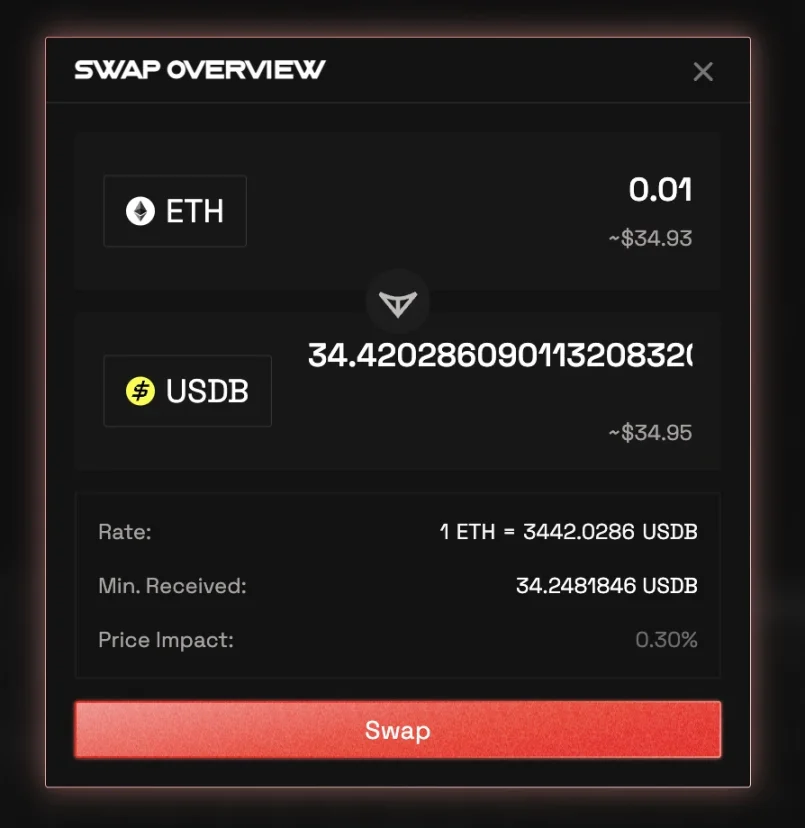
「现货交易所」中,以 Blast 生态最常用的 Thruster Finance 为例,只需在 ETH 和 USDB 之间小额互换一笔,即可完成任务要求。
Blast开启“超级加倍”活动,手把手带你完成任务


「衍生品交易所」中,我们则可以选择该生态主流交易所之一的 BFX,或是近期刚刚完成天使轮融资的 DTX 来进行交互。
以 BFX 为例,我们首先需要向该交易所账户内(其实是个新的合约地址)存入一定数额的资金,比如我们上一步从 Thruster Finance 处换取的 USDB。
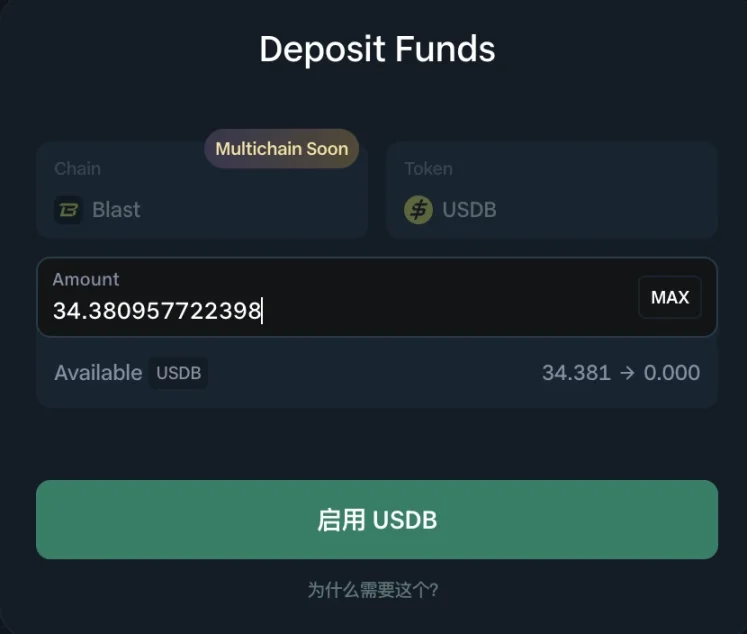
Blast开启“超级加倍”活动,手把手带你完成任务


存款完成后,即可使用该资金进行合约开单,为了尽可能避免交互损耗,我们可以选择较低的杠杆倍率。
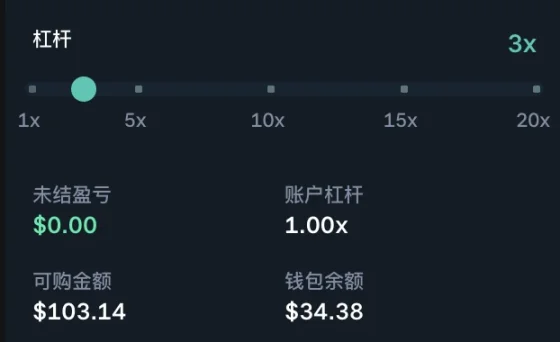
Blast开启“超级加倍”活动,手把手带你完成任务


之后,我们便可以在基于对市场走势的理解选择多、空方向的开单操作,之后关闭仓位,提出 USDB 即可。
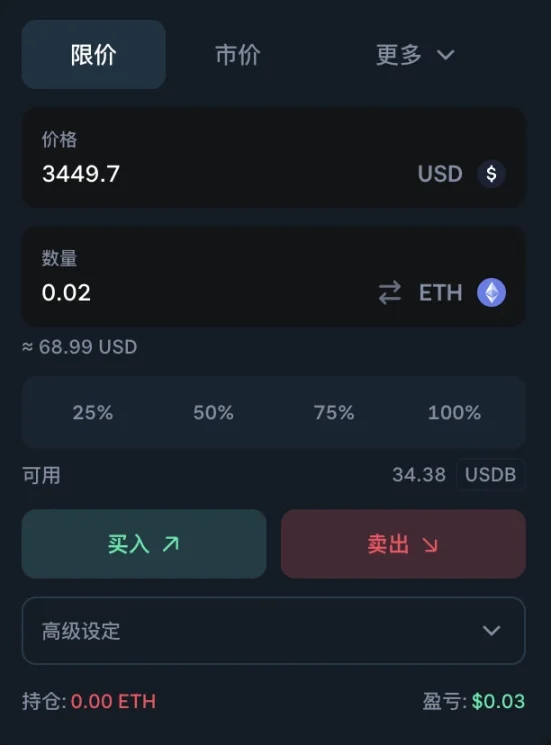
Blast开启“超级加倍”活动,手把手带你完成任务


再之后我们回到主任务界面来看,可以发现两项任务均已完成。

Blast开启“超级加倍”活动,手把手带你完成任务


值得一提的是,前文提到过,以笔者个人 75 万的总积分以及 55/h 的增长速率为例,完成任一板块任务后便可一次性获得 14 万积分(约占总积分的 18.8% ),并将积分增长速度翻倍。
但实际完成两项任务后你会发现,一次性积分足足增长了约 42 万,而非 28 万(14 万乘以 2),这或许是因为 Blast 在计算第二项任务的积分奖励时,已将我们完成第一项任务后得到的积分和倍率计入了计算基础,但具体的算法暂时未知。

Blast开启“超级加倍”活动,手把手带你完成任务


此外,完成两项任务后的积分「总倍数」将变为 4 倍 —— 这里不太清楚 Blast 在用「两轮 2 倍」来计算「总倍数」时用的究竟是乘法还是加法(乘法的话可就离大谱了…一共 12 轮呢) —— 但无论如何,如果当前用户不去选择做交互任务,前期所积累的积分必会大幅稀释。

Blast开启“超级加倍”活动,手把手带你完成任务


最后需要特别强调的一点是,考虑到 Blast 生态的安全性隐忧,本次「积分加成」活动支持用户通过非常用地址进行交互,但奖励仍会释放至常用地址内,具体操作为,在主页内通过指定窗口链接其他非常用地址,将所有地址纳入至同一账户内,继而共享奖励加成。


Crypto di tendenza

Letture associate

IOSG: U.S. Bonds, AI, and Inflation Can't All Be Had. Which Side Should BTC Bet On?

**Title: IOSG: Can't Have It All – Treasury Bonds, AI, and Inflation. Where Should BTC Bet?** **Core Thesis:** Washington is likely to prioritize stabilizing the Treasury market and sustaining the AI investment cycle, accepting higher inflation for longer as the trade-off. This creates sustained tailwinds for both gold and Bitcoin by injecting liquidity and shifting duration risk away from private balance sheets. **Key Issue:** The critical macro price is no longer the Fed funds rate, but the yield investors demand to hold long-term US Treasuries. Recent surges in 10-year and 30-year yields stem from a combination of persistent inflation risks, heavy fiscal supply, thinning demand for duration, and new competition for capital from massive AI infrastructure investments. **The Trilemma:** The US faces a difficult choice between controlling inflation, maintaining Treasury market stability, and fostering the AI growth cycle. Political pressure suggests inflation control is the most likely sacrifice. **Treasury's Response:** Measures by Treasury Secretary Besant focus on defending the bond market: supporting the Yen to prevent forced Japanese Treasury sales, increasing long-end liquidity via repos (effectively shortening government debt maturity), and a potential shift toward more short-term bill issuance. This could generate significant liquidity, reigniting "currency debasement" trades. **Gold's Role:** Gold's ~90% surge since mid-2024 is not just an inflation hedge but a bet on monetary debasement as a politically viable path out of the debt cycle, driven by declining dollar trust. **Bitcoin's Positioning:** Bitcoin has historically failed to correlate with gold during "debasement" rallies. However, its recent strong performance alongside Treasury's liquidity actions suggests the market may be treating it as a "stealth QE" trade—a scenario where crypto assets typically thrive amid expanding global liquidity. For BTC to firmly join the "debasement hedge" category, this correlation needs to persist. **Conclusion & Risks:** The framework suggests that preserving market stability and the AI cycle will likely mean shorter debt maturity,常态化 liquidity backstops, and tolerance for higher inflation—favorable for gold and BTC. This outlook would be undermined if inflation falls toward 2%, a credible fiscal path emerges, AI becomes self-funding, or private demand absorbs debt without higher term premiums. The key question is which corner of the trilemma breaks first; accelerated "duration transfer" by the Treasury would mean a longer tailwind for Bitcoin.

marsbit17 min fa

IOSG: U.S. Bonds, AI, and Inflation Can't All Be Had. Which Side Should BTC Bet On?

marsbit17 min fa

How 5G Will Be Launched in Russia: The Digital Ministry's Proposal and the Roadmap to 2035

Russia's Ministry of Digital Development has proposed a plan for launching 5G networks. It allows the "Big Four" mobile operators (Beeline, Megafon, MTS, T2) to deploy 5G on existing 4G/LTE base stations and frequencies, and will allocate them the new 4.63–4.99 GHz band. A key element is "technological neutrality," permitting the use of foreign equipment until September 2026. The new 4.63–4.99 GHz band is intended for more advanced services and industrial applications. However, a phased transition to Russian-made base stations will begin in 2027, with a target of at least 50% domestic equipment by 2030. The rollout timeline aims for 5G in cities with over 1 million people by the end of 2027, expanding to 84 cities by 2035. Initial "5G Ready" service, operating over existing infrastructure, will offer minimal speed improvements. Significant speed gains (4-10x over LTE) will require the new band and corresponding equipment. The plan addresses long-standing regulatory delays, including the military's hold on the global standard 3.4–3.8 GHz band. This forced Russia to adopt the 4.63–4.99 GHz range, overlapping with a Chinese band, making Chinese equipment a potential transitional solution. The success of the rollout will depend on equipment supply and the pace of production localization, while a challenge lies in smartphone compatibility with this non-standard frequency band.

cryptonews.ru2 h fa

How 5G Will Be Launched in Russia: The Digital Ministry's Proposal and the Roadmap to 2035

cryptonews.ru2 h fa

The Federal Reserve Bank of Dallas Announces a Colossal $700 Billion Allocation! How Will This Affect Bitcoin?

The Federal Reserve Bank of Dallas warns that the growing adoption of tokenized deposits in the banking sector could pose unforeseen risks to the financial system. Tokenized deposits, which transfer traditional bank deposits to blockchain infrastructure, offer features like instant settlement and programmable payments. While issued by regulated banks and maintaining deposit characteristics, they could enable customers to move funds between banks much faster in search of higher yields. This would significantly weaken banks' liquidity management and lending capacity. The Fed's analysis estimates that an increase in deposit interest rate sensitivity by 10% could reduce the interest rate risk banks can bear by approximately $700 billion over ten years. Similarly, a 10% shortening of the average deposit maturity could reduce the banking system's capacity to convert deposits into loans by about $580 billion. This acceleration of deposit movement could force banks to rely on more expensive wholesale funding, increasing borrowing costs for consumers and businesses and potentially making traditional banks resemble non-bank financial institutions. While the report does not directly address Bitcoin, the described shifts could have long-term implications. Firstly, the tokenization of deposits by banks could promote institutional adoption of blockchain-based financial infrastructure, indirectly legitimizing digital asset classes like Bitcoin. Secondly, faster-moving deposits and resulting higher funding costs could increase the price of liquidity in the financial system. This could create near-term headwinds for risk assets, including Bitcoin, due to tighter financial conditions and potential selling pressure. The report concludes that widespread adoption of this technology could impact many areas, from payment systems to monetary policy transmission mechanisms.

cryptonews.ru3 h fa

The Federal Reserve Bank of Dallas Announces a Colossal $700 Billion Allocation! How Will This Affect Bitcoin?

cryptonews.ru3 h fa

Trading

Spot

Articoli Popolari

Come comprare BLAST

Benvenuto in HTX.com! Abbiamo reso l'acquisto di Blast (BLAST) semplice e conveniente. Segui la nostra guida passo passo per intraprendere il tuo viaggio nel mondo delle criptovalute.Step 1: Crea il tuo Account HTXUsa la tua email o numero di telefono per registrarti il tuo account gratuito su HTX. Vivi un'esperienza facile e sblocca tutte le funzionalità,Crea il mio accountStep 2: Vai in Acquista crypto e seleziona il tuo metodo di pagamentoCarta di credito/debito: utilizza la tua Visa o Mastercard per acquistare immediatamente BlastBLAST.Bilancio: Usa i fondi dal bilancio del tuo account HTX per fare trading senza problemi.Terze parti: abbiamo aggiunto metodi di pagamento molto utilizzati come Google Pay e Apple Pay per maggiore comodità.P2P: Fai trading direttamente con altri utenti HTX.Over-the-Counter (OTC): Offriamo servizi su misura e tassi di cambio competitivi per i trader.Step 3: Conserva Blast (BLAST)Dopo aver acquistato Blast (BLAST), conserva nel tuo account HTX. In alternativa, puoi inviare tramite trasferimento blockchain o scambiare per altre criptovalute.Step 4: Scambia Blast (BLAST)Scambia facilmente Blast (BLAST) nel mercato spot di HTX. Accedi al tuo account, seleziona la tua coppia di trading, esegui le tue operazioni e monitora in tempo reale. Offriamo un'esperienza user-friendly sia per chi ha appena iniziato che per i trader più esperti.

271 Totale visualizzazioniPubblicato il 2024.12.11Aggiornato il 2026.06.02

Come comprare BLAST

Discussioni

Benvenuto nella Community HTX. Qui puoi rimanere informato sugli ultimi sviluppi della piattaforma e accedere ad approfondimenti esperti sul mercato. Le opinioni degli utenti sul prezzo di BLAST BLAST sono presentate come di seguito.

活动图片