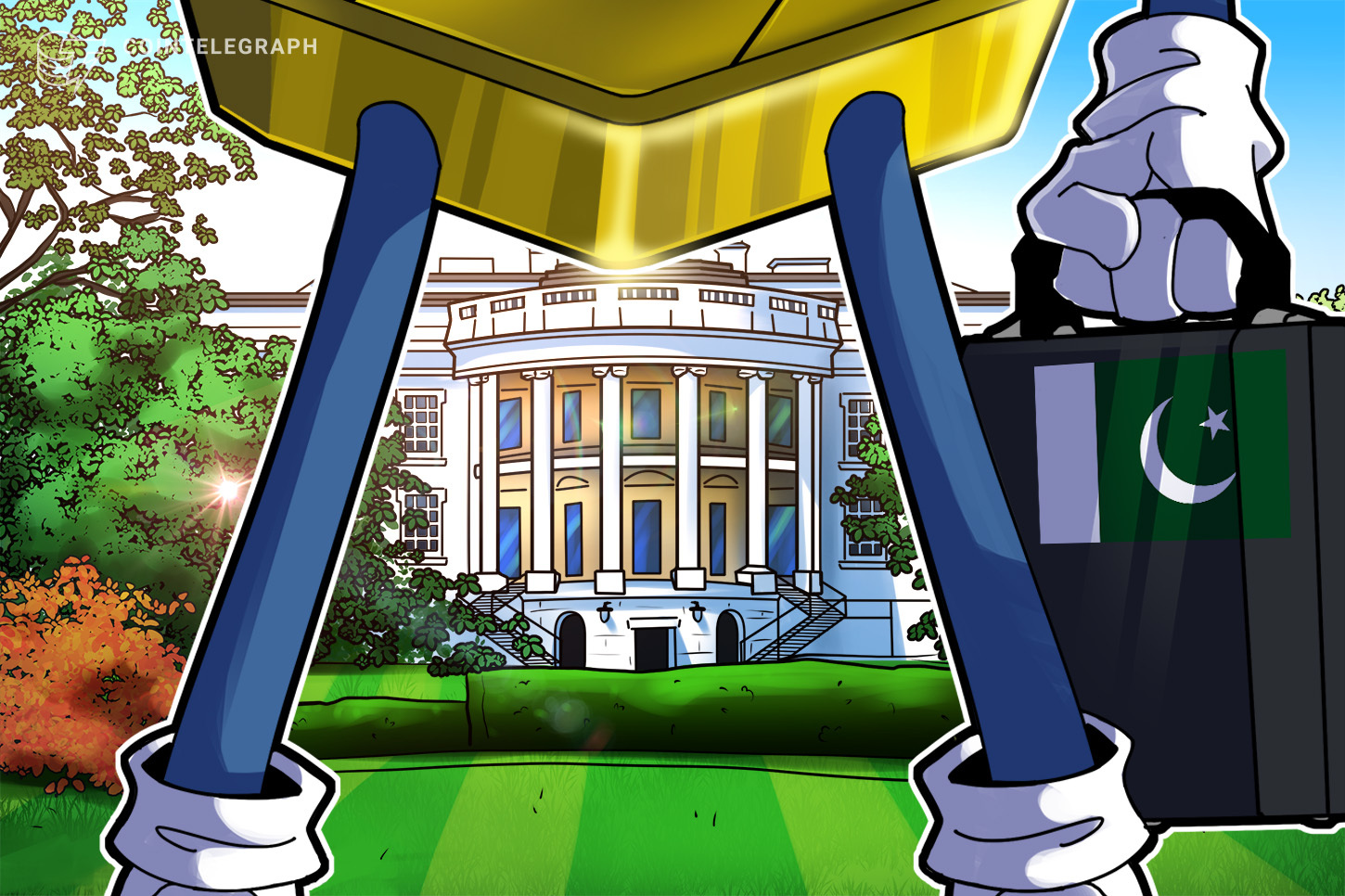
Tornado Cash Dev Roman Storm Moves to Dismiss Indictment Over Crypto-Laundering Allegations

CoinDeskPolicyPubblicato 2024-03-30Pubblicato ultima volta 2024-03-30

  • Tornado Cash developer Roman Storm's legal team filed a motion Friday to dismiss a criminal indictment alleging he conspired to commit money laundering and violate sanctions.
  • Storm was arrested last year over his work with Tornado Cash, which has been used by North Korean hackers and other groups to launder funds.
  • Storm did not work with these groups, but rather just published code that anyone can use, the filing said.
30.4K

Building Tornado Cash, a tool that can be used to obscure the origin and destination of cryptocurrency transfers, is not the same as laundering money, said a motion to dismiss the criminal indictment against developer Roman Storm.

Storm and fellow developer Roman Semenov were indicted last summer on charges of conspiring to commit money laundering, conspiring to operate an unlicensed money transmitter and conspiring to violate the International Emergency Economic Powers Act (in other word, to violate U.S. sanctions). Storm was arrested and released on bail. The U.S. Department of Justice, alleged that Tornado Cash facilitated the laundering of over $1 billion by groups like North Korea's Lazarus. Tornado Cash has been sanctioned by the U.S. Treasury Department multiple times now.

"Storm is a developer, and his only agreement, together with the members of his U.S-based company, was to build software solutions to provide financial privacy to legitimate cryptocurrency users," Friday night's filing in the Southern District of New York said. "This is not a crime."

Advertisement
Advertisement

The motion defines Tornado Cash, describing it as a "set of non-custodial smart contracts in which users maintain complete ownership and control over their assets without the need to rely on any service provider or other intermediary," as opposed to custodial mixing services. The filing also disputed the idea that Tornado Cash is a mixer or a service.

It took aim at how the indictment described the Tornado Cash setup and Storm's ability to influence it by the time period the indictment focuses on, saying that Storm did not have the ability to control Tornado Cash or prevent its use by Lazarus and similar entities.

Moreover, the filing said, Tornado Cash does not fit the definition of a "financial institution" because users maintain control over their funds and the protocol "did not charge any fee but was a free and open-source software tool."

Storm couldn't have conspired to launder funds or operate a money transmitter if there wasn't a Tornado Cash enterprise for him to have done these with, the filing said.

The filing also argued that Storm and other developers at Peppersec – the company set up by the developers – never made an agreement with "alleged bad actors," saying the U.S. DOJ was "conflating the agreement to develop and publish Tornado Cash code with a (non-existent) agreement to engage in purported concealment money laundering."

The charges against Storm are similar to those against fellow Tornado Cash developer Alexey Pertsev, who was arrested in August 2022 and went on trial this past week on money laundering charges. A verdict will be announced in May. Friday's filing noted that the law in the Netherlands, where Pertsev was arrested and tried, is different from the U.S. in terms of the specific charges.

Advertisement
Advertisement

Friday's motion to dismiss came shortly after Storm's legal team filed motions to have the DOJ produce certain pieces of evidence and suppress federal agents' efforts to seize Storm's crypto holdings through a search warrant.

The motion to compel asks for a judge to order the DOJ to share any communications between U.S. authorities and Dutch authorities, as well as any communications from the Treasury Department's Office of Foreign Asset Control or Financial Crimes Enforcement Network tied to Storm.

The motion to suppress argued that a search warrant was not the appropriate tool for the FBI to seize "any and all cryptocurrency" found in Storm's home. While the warrant "allows for the seizure of 'any and all cryptocurrency,'" this is "overbroad" and an affidavit does not "establish probable cause to believe that any and all cryptocurrency found would constitute evidence of a crime."

Letture associate

Wall Street Morning Report: Philadelphia Semiconductor Index Falls Nearly 3%, Nvidia's 'Circular Financing' Concerns Trigger Tech Stock Correction, Optical Communication and Chip Stocks Plunge

Wall Street Morning Report: The Philadelphia Semiconductor Index fell nearly 3%, and concerns over Nvidia's "revolving financing" sparked a tech stock pullback, with optical communications and chip stocks declining sharply. U.S. stocks retreated from record highs on Monday amid geopolitical tensions and AI financing doubts. The Dow fell 0.11%, the Nasdaq 0.32%, and the S&P 500 was nearly flat. Hopes for reopening the Strait of Hormuz dimmed after Trump demanded war reparations from Iran, pushing Brent crude above $87 and WTI above $82. Spot gold broke above $4400/oz. Treasury yields rose, with the market pricing in a ~54% chance of a September Fed hike. The semiconductor and AI infrastructure sectors were hit hard. The Philly Semiconductor Index dropped nearly 3%, with the semiconductor ETF down 2.28%. Optical communication was the worst-performing AI sub-sector, with Coherent plunging over 14%. The sell-off centered on Nvidia, which fell 2.86% on reports it is collaborating with major financial institutions to mobilize over $500 billion in third-party capital for AI infrastructure. Market concerns focused on whether this creates a circular financing loop and if future AI facilities can generate sufficient cash flow. Other notable moves: Intel dropped over 4% on a new share offering. Microsoft rose 1.21% on plans for its next-gen Maia 300 chip. The software sector outperformed, with Palantir up 1.85%. Energy stocks rallied nearly 4.7% on geopolitical risks. Key upcoming events include the RBA rate decision on Aug 11 and earnings from Lumentum, CoreWeave, and Super Micro Computer after the close on Aug 12, which will test the real demand for AI infrastructure.

marsbit37 min fa

Wall Street Morning Report: Philadelphia Semiconductor Index Falls Nearly 3%, Nvidia's 'Circular Financing' Concerns Trigger Tech Stock Correction, Optical Communication and Chip Stocks Plunge

marsbit37 min fa

Podcast Notes | VanEck Digital Asset Research Head: Current AI Infrastructure Rally Not a Bubble; Crypto Market Quiet Due to Institutional Disappointment in L1s

In this podcast, VanEck's Head of Digital Asset Research Matthew Sigel discusses the current market dynamics. He argues the ongoing AI infrastructure boom is not a bubble, contrasting it with the 19th-century railroad mania. Unlike railroads funded by speculative land grants and government bonds, today's AI data centers are backed by long-term private contracts and significant customer prepayments, making the investment cycle more sustainable. Sigel notes a recent market shift: companies with high capital expenditures (capex) were rewarded in early 2024 but are now being punished. Cryptocurrencies, categorized as software assets, have suffered alongside the broader software sector. His NODE ETF has outperformed Bitcoin by nearly 100 percentage points over 15 months, largely by betting on Bitcoin miners transitioning into AI data centers. He highlights the value of miners' key assets—power and land—and their new ability to fund growth through debt instead of diluting shareholders. Regarding the crypto market's weakness, Sigel points to institutional disappointment with major Layer-1 (L1) blockchains like Ethereum and Solana. Post-election rallies lacked breakout applications, and regulated entities are increasingly building their own private, permissioned chains (e.g., by Circle, Stripe, Wells Fargo), diluting the "winner-takes-all" potential of public L1s. He believes a regulatory catalyst like the CLARITY Act, which would enforce disclosure standards, could trigger a significant relief rally for some tokens, but remains cautious until then. He also views proposals by ETH, Solana, and NEAR to reduce token inflation as a positive, necessary adjustment for the maturing sector.

marsbit42 min fa

Podcast Notes | VanEck Digital Asset Research Head: Current AI Infrastructure Rally Not a Bubble; Crypto Market Quiet Due to Institutional Disappointment in L1s

marsbit42 min fa

Shenzhen Competing for 'Tsinghua Faction' Talent

Shenzhen is actively attracting Tsinghua University-affiliated technology ventures, as highlighted during the "X-Day" Xili Lake Roadshow held in Nanshan. The event featured six startup projects from Tsinghua alumni, spanning semiconductors, AI, materials, and healthcare. The showcased companies include: Zhichen Semiconductor, developing edge AI chips; Guangsu Evolution, creating AI-powered home security systems; Qingli Technology, commercializing "self-superlubricating" technology; Shu Yu Technology, offering an AI Agent for analog chip design; Heyi Intelligent Control, providing AI-driven building management systems; and Shengshengyi, applying AI to assisted reproductive medicine. These ventures represent a trend of deep-tech innovation closely linked to academic research. The roadshow series, initiated a year ago, underscores a strategic shift in Shenzhen's investment landscape. Venture capital is moving earlier into the innovation cycle, seeking projects directly from laboratories and research papers. Tsinghua University serves as a key source for such early-stage, technology-intensive startups. Over the past two years, Tsinghua alumni projects have accounted for nearly 30% of the approximately 280 billion RMB in early-stage deep-tech funding in Shenzhen. The "X-Day" platform has facilitated significant growth. To date, its 19 roadshows have connected companies with investors thousands of times, leading to over 3.3 billion RMB in equity financing for 58 firms. Past participants like Kuaiwei Intelligent (recently valued over 10 billion RMB after a Series B round) and Lingcifang (securing four funding rounds in 18 months) exemplify the successful trajectory from this ecosystem. The activity underscores Shenzhen's, particularly Nanshan District's, role in bridging academic research from institutions like Tsinghua with industrial application and venture capital.

marsbit43 min fa

Shenzhen Competing for 'Tsinghua Faction' Talent

marsbit43 min fa

Trading

Spot
活动图片