2025 Bitcoin Market Forecast Review: Why Institutions Collectively Crashed and Burned

marsbitPubblicato 2025-12-15Pubblicato ultima volta 2025-12-15

Introduzione

In early 2025, Bitcoin was widely expected by major institutions—including VanEck, Standard Chartered, and Tom Lee—to reach $150,000 or higher by year-end, driven by post-halving cycles, ETF inflows, and favorable U.S. policy under Trump. However, BTC plummeted over 33% from its October high of $126,000, stabilizing around $92,000 by December. Most forecasts failed due to several critical misjudgments: ETF inflows were overestimated and even reversed to outflows; historical cycle models ignored drastically different macro conditions, including sustained Fed hawkishness; and institutional analysts had structural conflicts of interest, often promoting over-optimistic targets to align with business incentives. The episode underscores that consensus predictions often become traps, especially in a complex, macro-sensitive asset like Bitcoin. It highlights the importance of independent analysis, attention to contrarian views, and prioritizing risk management over speculative price targets.

At the beginning of 2025, the Bitcoin (BTC) market was filled with fervent optimism. Institutions and analysts collectively bet that the price would soar above $150,000 by year-end, even heading straight for $200,000+ or higher. But reality staged a "contrarian" drama: BTC plummeted over 33% from its peak of around $126,000 in early October, entered a "bloodbath" mode in November (a 28% single-month drop), and stabilized around the $92,000 range on December 10th.

This collective crash and burn deserves an in-depth review: Why were the predictions so consistent at the beginning of the year? Why were almost all mainstream institutions wrong?

I. Initial Predictions vs. Current Reality

1.1 The Three Pillars of Market Consensus

At the beginning of 2025, the Bitcoin market was permeated with unprecedented optimism. Almost all mainstream institutions gave year-end target prices above $150,000, with some aggressive forecasts pointing directly to $200,000-$250,000. This highly uniform bullish expectation was built on three "certain" logics:

Cyclical Factor: The Halving Curse

Price peaks have historically occurred 12-18 months after the previous halvings. After the 2012 halving, the price rose to $1,150 in 13 months; after the 2016 halving, it broke $20,000 in 18 months; after the 2020 halving, it reached $69,000 in 12 months. The market generally believed that the supply-side contraction effect would manifest with a lag, and 2025 was right in this "historic window."

Capital Flow Expectations: The ETF Flood

The approval of spot ETFs was seen as the opening of the "floodgates for institutional capital." The market expected cumulative net inflows to exceed $100 billion in the first year, with traditional funds like pensions and sovereign wealth funds making large-scale allocations. Endorsements from Wall Street giants like BlackRock and Fidelity made the "Bitcoin mainstreaming" narrative deeply convincing.

Policy Tailwinds: The Trump Card

The Trump administration's friendly attitude towards crypto assets, including discussions on strategic Bitcoin reserve proposals and expected SEC personnel adjustments, was seen as long-term policy support. The market believed regulatory uncertainty would be significantly reduced, clearing obstacles for institutional entry.

Based on these three logics, the average year-end target price from mainstream institutions reached $170,000, implying an expected annual gain of over 200%.

1.2 Panorama of Institutional Predictions: Who Was Most Aggressive?

The table below summarizes the initial predictions from 11 mainstream institutions and analysts, with the deviation from the current price ($92,000) clear at a glance:

Institution/Analyst 2025 Year-End Prediction (USD) Brief Reason Deviation from Current (92k基准)
VanEck 180,000 - 250,000 ETF inflows + BTC market cap reaching half of gold's (~$13T), Jan ChainCheck report reiterated $180k target +95% ~ +170%
Tom Lee (Fundstrat) 150,000 - 250,000+ Rate cuts + Institutional adoption + Pension fund allocation; +65% ~ +175%
InvestingHaven 80,000 - 151,000 Cycle mean + Fibonacci retracement -13% ~ +64%
Flitpay Avg 106,000 (Bull 133k / Bear 72k) Macro + Global adoption +15%
CoinDCX 100,000 - 150,000 ETF recovery + Macro +9% ~ +63%
Standard Chartered 200,000 ETF + Institutional buying +115%
Finder Average 138,300 Expert panel vote +50%
MMCrypto (X Analyst) Q3 crash, low of 70-80k, Q4 enters bear market Leverage bubble + Cycle end Deviation <5%
AllianceBernstein 200,000 (Sept) Bull cycle + ETF +115%
Bitwise >200,000 New ATH + ETF driven +115%+
JPMorgan Low 94,000, High 170,000 Fair value + Macro +2% ~ +85%

Prediction Distribution Characteristics:

  • Aggressive Camp (8 institutions): Target price $150k+, average deviation over 80%, represented by VanEck, Tom Lee, Standard Chartered
  • Moderate Camp (2 institutions): JPMorgan gave a range prediction, Flitpay provided bull/bear scenarios, reserving downside space
  • Contrarian Camp (1 entity): Only MMCrypto explicitly warned of crash risk, becoming the only accurate predictor

Notably, the most aggressive predictions came from the most well-known institutions (VanEck, Tom Lee), while the accurate prediction came from a relatively niche technical analyst.

II. Roots of Misjudgment: Why Institutional Predictions Failed Collectively

2.1 The Consensus Trap: When "Good News" Loses Marginal Effect

9 institutions unanimously bet on "ETF inflows," forming a highly homogeneous prediction logic.

When a factor is fully recognized by the market and reflected in the price, it loses its marginal driving force. At the beginning of 2025, the expectation of ETF inflows was already fully priced in—every investor knew this "good news," and the price had already reacted in advance. The market needed "better-than-expected," not "as expected."
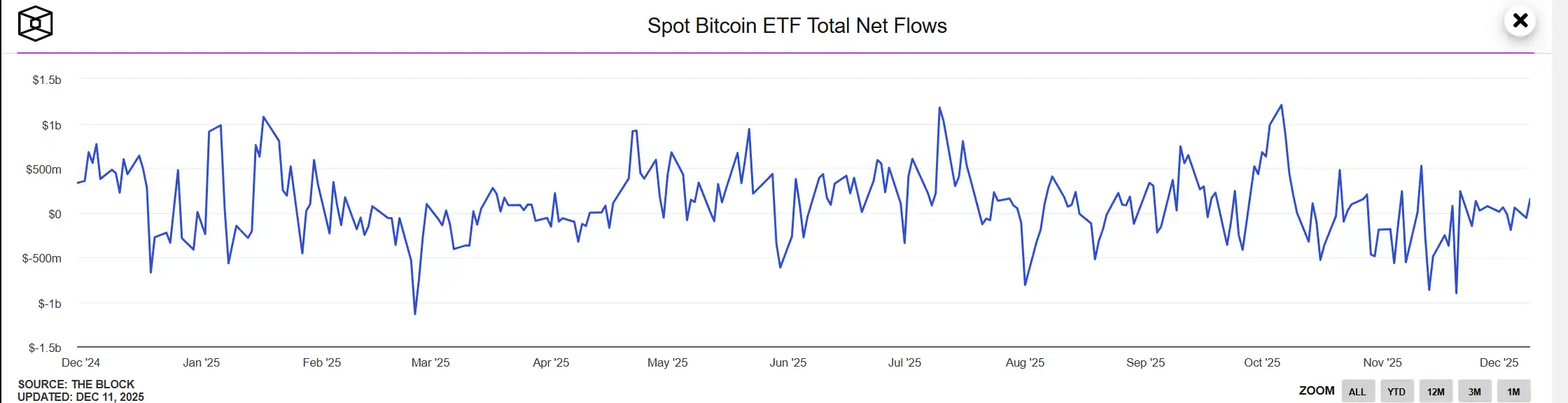
ETF inflows for the full year fell short of expectations, with a net outflow of $3.48-$4.3 billion in November. More critically, institutions overlooked that ETFs are a two-way channel—when the market turns, they not only fail to provide support but become a highway for capital flight.

When 90% of analysts are telling the same story, that story has already lost its alpha value.

2.2 Cycle Model Failure: History Doesn't Simply Repeat

Institutions like Tom Lee and VanEck heavily relied on the historical pattern of "price peaks 12-18 months post-halving," believing the cycle would automatically materialize.

Radically Changed Environment: The macro environment in 2025 was fundamentally different from historical cycles:

  • 2017: Global low interest rates, easy liquidity

  • 2021: Pandemic stimulus, central bank money printing

  • 2025: Aftermath of the most aggressive hiking cycle in 40 years, Fed maintaining a hawkish stance
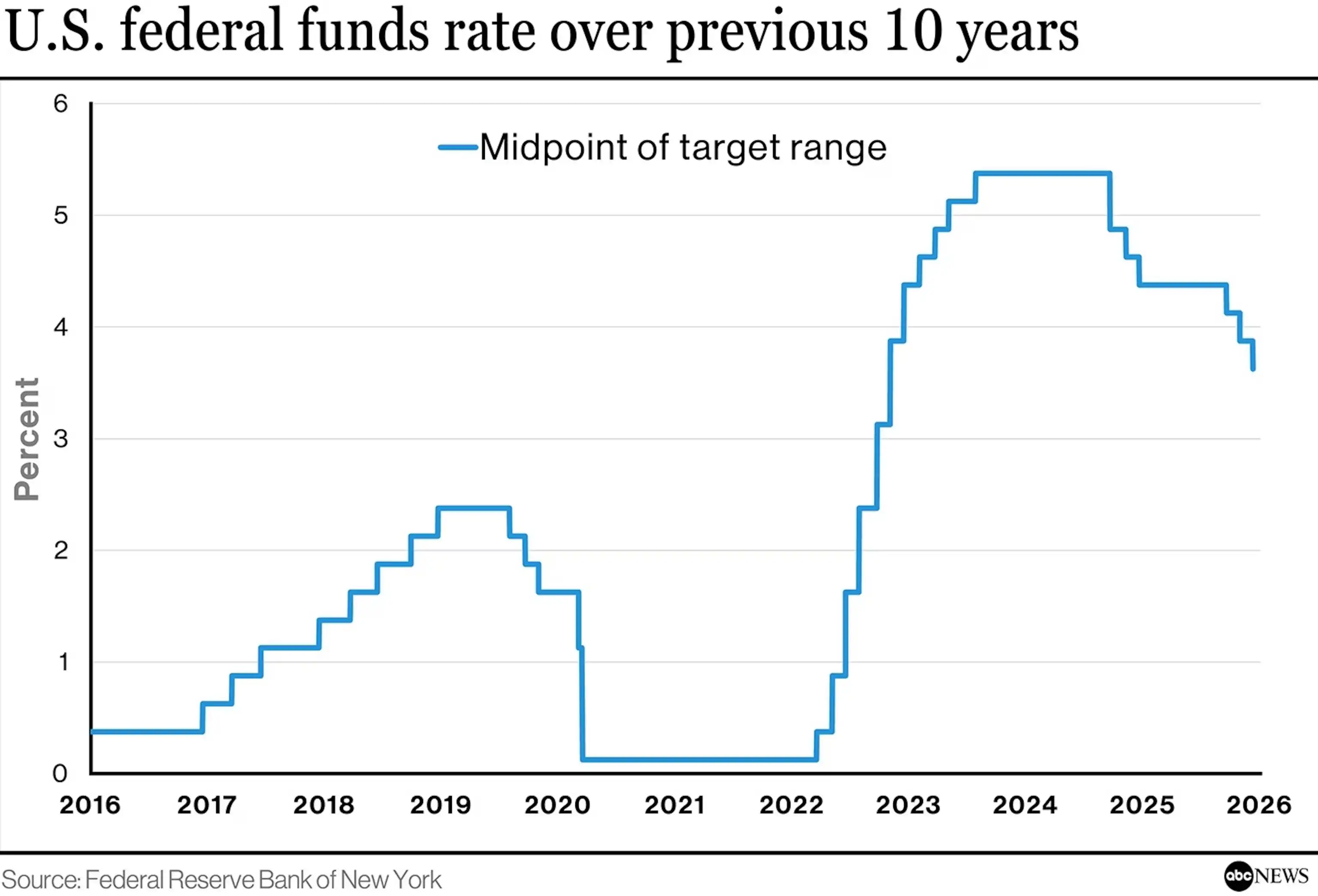
Market expectations for Fed rate cuts plummeted from 93% at the start of the year to 38% in November. This kind of abrupt monetary policy shift had never occurred in previous halving cycles. Institutions treated the "cycle" as a deterministic rule, ignoring that it is essentially a probability distribution highly dependent on the macro liquidity environment.

When environmental variables change fundamentally, historical models inevitably fail.

2.3 Conflict of Interest: Structural Bias of Institutions

Top institutions like VanEck, Tom Lee, and Standard Chartered had the largest deviations (+100%+), while niche players like Changelly and MMCrypto were the most accurate. Institution size often correlates negatively with prediction accuracy.

Root Cause: These institutions are stakeholders themselves:

  • VanEck: Issues Bitcoin ETF products
  • Standard Chartered: Provides crypto asset custody services
  • Fundstrat: Serves clients holding crypto assets
  • Tom Lee: Chairman of Ethereum treasury BMNR

Structural Pressures:

  • Being bearish equals sabotaging their own business. If they publish bearish reports, it's tantamount to telling clients "our products aren't worth buying." This conflict of interest is structural and unavoidable.
  • Clients need "$150k+" targets to justify their holdings. The clients served by these institutions mostly entered the market at mid-bull cycle highs, with cost bases in the $80,000-$100,000 range. They need analysts to provide "$150k+" targets to prove their decisions were correct and to provide psychological support for holding or even adding to positions.
  • Aggressive predictions get more media coverage. Headlines like "Tom Lee Predicts Bitcoin at $250k" obviously get more clicks and shares than conservative predictions. The exposure from aggressive predictions directly translates into brand influence and business traffic for the institution.
  • Famous analysts find it hard to reverse their historical stance. Tom Lee gained fame for accurately predicting Bitcoin's rebound in 2023, building a public image as a "bullish standard-bearer." In early 2025, even if he had reservations internally, it would be difficult to publicly reverse his optimistic stance.

2.4 Liquidity Blind Spot: Misjudging Bitcoin's Asset Attributes

The market has long been accustomed to analogizing BTC as "digital gold," believing it is a hedge against inflation and currency devaluation. But in reality, Bitcoin behaves more like Nasdaq tech stocks, being extremely sensitive to liquidity: When the Fed maintains a hawkish stance and liquidity tightens, BTC's performance is closer to high-beta tech stocks than safe-haven gold.

The core contradiction lies in the inherent conflict between Bitcoin's asset characteristics and a high-interest-rate environment. When real rates remain high, the appeal of zero-yield assets systematically declines. Bitcoin generates cash flow nor pays any interest; its value relies entirely on "someone being willing to buy it at a higher price in the future." In a low-rate era, this wasn't a problem—money in the bank earned little anyway, so why not take a gamble.

But when the risk-free rate reaches 4-5%, the opportunity cost for investors rises significantly, and Bitcoin, as a zero-yield asset, lacks fundamental support.

The most fatal misjudgment was that almost all institutions presupposed "the Fed's rate-cutting cycle is about to begin." The market pricing at the start of the year was for 4-6 rate cuts annually, totaling 100-150 basis points. But the November data gave the complete opposite answer: rekindled inflation risks, a complete collapse of rate cut expectations, the market pivoting from expecting "rapid cuts" to pricing in "higher for longer." When this core assumption collapsed, all the optimistic predictions built on "easy liquidity" lost their foundation.

Conclusion

The collective crash and burn of 2025 tells us: Precise prediction is itself a false proposition Bitcoin is influenced by multiple variables including macro policy, market sentiment, and technicals. No single model can easily capture this complexity.

Institutional predictions are not worthless—they reveal the market's mainstream narrative, capital expectations, and sentiment direction. The problem is, when predictions become consensus, consensus becomes a trap.

The true wisdom of investing lies in: Use institutional research reports to understand what the market is thinking, but don't let them dictate what you should do. When VanEck, Tom Lee, and others are collectively bullish, the question you need to ask is not "Are they right?" but "What if they are wrong?" Risk management always takes precedence over return prediction.

History repeats, but never simply copies. The halving cycle, ETF narrative, policy expectations—these logics all failed in 2025, not because the logic itself was flawed, but because the environmental variables fundamentally changed. Next time, the catalyst will have a different name, but the essence of market over-optimism will not change.

Remember this lesson: Independent thinking is more important than following authority. Contrarian voices are more valuable than mainstream consensus. Risk management is more critical than precise prediction. This is the moat for long-term survival in the crypto market.

Data for this report was compiled and edited by WolfDAO. Please contact us with any questions for updates;

Author: Nikka / WolfDAO ( X : @10xWolfdao )

Domande pertinenti

QWhat were the three main pillars of the consensus logic that led to the overly optimistic Bitcoin price predictions for 2025?

AThe three main pillars were: 1) The 'halving curse' or cyclical factor, expecting a price peak 12-18 months post-halving. 2) The 'ETF flood' or capital flow expectation, anticipating massive institutional inflows from newly approved spot ETFs. 3) Policy tailwinds from the perceived crypto-friendly Trump administration, which was expected to reduce regulatory uncertainty.

QWhich institution was the most accurate in its 2025 Bitcoin price prediction and what was its forecast?

AMMCrypto, a technical analyst on X (Twitter), was the most accurate. They predicted a Q3 crash with prices falling to $70,000-$80,000 and the market entering a bear phase in Q4, which closely aligned with the actual price of $92,000 (a deviation of less than 5%).

QAccording to the article, why did the 'ETF inflow' narrative fail to drive the price up as predicted?

AThe 'ETF inflow' narrative failed because the expectation was already fully 'priced in' by the market at the beginning of the year, meaning it lost its marginal driving force. Furthermore, ETFs are a two-way channel; when the market turned, they became a 'highway for capital flight,' with significant net outflows recorded in November ($34.8-43 billion).

QWhat fundamental change in the macroeconomic environment caused the historical 'halving cycle' model to fail in 2025?

AThe fundamental change was the aggressive monetary policy of the Federal Reserve. Unlike the low-interest, high-liquidity environments of previous cycles (2017, 2021), 2025 was characterized by the aftermath of the most aggressive rate-hiking cycle in 40 years, with the Fed maintaining a hawkish stance. This caused market expectations to shift from predicting multiple rate cuts to pricing in 'higher for longer' interest rates, which Bitcoin, as a zero-yield asset, is highly sensitive to.

QWhat structural biases and conflicts of interest does the article identify as reasons for the inaccurate predictions from large, well-known institutions?

AThe article identifies several structural biases: 1) Direct business interests (e.g., VanEck issuing a Bitcoin ETF, Standard Chartered offering crypto custody services). 2) The pressure to provide bullish targets to justify their clients' existing high-cost holdings. 3) The incentive to make radical predictions to gain media attention and brand visibility. 4) The difficulty for prominent analysts to publicly reverse their previously established bullish stances.

Letture associate

a16z: AI's 'Amnesia', Can Continuous Learning Cure It?

The article "a16z: AI's 'Amnesia' – Can Continual Learning Cure It?" explores the limitations of current large language models (LLMs), which, like the protagonist in the film *Memento*, are trapped in a perpetual present—unable to form new memories after training. While methods like in-context learning (ICL), retrieval-augmented generation (RAG), and external scaffolding (e.g., chat history, prompts) provide temporary solutions, they fail to enable true internalization of new knowledge. The authors argue that compression—the core of learning during training—is halted at deployment, preventing models from generalizing, discovering novel solutions (e.g., mathematical proofs), or handling adversarial scenarios. The piece introduces *continual learning* as a critical research direction to address this, categorizing approaches into three paths: 1. **Context**: Scaling external memory via longer context windows, multi-agent systems, and smarter retrieval. 2. **Modules**: Using pluggable adapters or external memory layers for specialization without full retraining. 3. **Weights**: Enabling parameter updates through sparse training, test-time training, meta-learning, distillation, and reinforcement learning from feedback. Challenges include catastrophic forgetting, safety risks, and auditability, but overcoming these could unlock models that learn iteratively from experience. The conclusion emphasizes that while context-based methods are effective, true breakthroughs require models to compress new information into weights post-deployment, moving from mere retrieval to genuine learning.

marsbit1 h fa

a16z: AI's 'Amnesia', Can Continuous Learning Cure It?

marsbit1 h fa

Can a Hair Dryer Earn $34,000? Deciphering the Reflexivity Paradox in Prediction Markets

An individual manipulated a weather sensor at Paris Charles de Gaulle Airport with a portable heat source, causing a Polymarket weather market to settle at 22°C and earning $34,000. This incident highlights a fundamental issue in prediction markets: when a market aims to reflect reality, it also incentivizes participants to influence that reality. Prediction markets operate on two layers: platform rules (what outcome counts as a win) and data sources (what actually happened). While most focus on rules, the real vulnerability lies in the data source. If reality is recorded through a specific source, influencing that source directly affects market settlement. The article categorizes markets by their vulnerability: 1. **Single-point physical data sources** (e.g., weather stations): Easily manipulated through physical interference. 2. **Insider information markets** (e.g., MrBeast video details): Insiders like team members use non-public information to trade. Kalshi fined a剪辑师 $20,000 for insider trading. 3. **Actor-manipulated markets** (e.g., Andrew Tate’s tweet counts): The subject of the market can control the outcome. Evidence suggests Tate’sociated accounts coordinated to profit. 4. **Individual-action markets** (e.g., WNBA disruptions): A single person can execute an event to profit from their pre-placed bets. Kalshi and Polymarket handle these issues differently. Kalshi enforces strict KYC, publicly penalizes insider trading, and reports to regulators. Polymarket, with its anonymous wallet-based system, has historically been more permissive, arguing that insider information improves market accuracy. However, it cooperated with authorities in the "Van Dyke case," where a user traded on classified government information. The core paradox is reflexivity: prediction markets are designed to discover truth, but their financial incentives can distort reality. The more valuable a prediction becomes, the more likely participants are to influence the event itself. The market ceases to be a mirror of reality and instead shapes it.

marsbit2 h fa

Can a Hair Dryer Earn $34,000? Deciphering the Reflexivity Paradox in Prediction Markets

marsbit2 h fa

Trading

Spot
Futures

Articoli Popolari

Cosa è BITCOIN

Comprendere HarryPotterObamaSonic10Inu (ERC-20) e la sua posizione nel mondo delle criptovalute Negli ultimi anni, il mercato delle criptovalute ha assistito a un aumento della popolarità delle meme coin, catturando l'interesse non solo dei trader, ma anche di coloro che cercano coinvolgimento comunitario e valore di intrattenimento. Tra questi token unici c'è HarryPotterObamaSonic10Inu (ERC-20), un progetto intrigante che mescola riferimenti culturali nel tessuto delle criptovalute. Questo articolo esplora gli aspetti chiave di HarryPotterObamaSonic10Inu, analizzando i suoi meccanismi, l'etica guidata dalla comunità e il suo coinvolgimento con il panorama crittografico più ampio. Che cos'è HarryPotterObamaSonic10Inu (ERC-20)? Come suggerisce il suo nome, HarryPotterObamaSonic10Inu è una meme coin costruita sulla blockchain di Ethereum, classificata secondo lo standard ERC-20. A differenza delle criptovalute tradizionali che possono enfatizzare l'utilità pratica o il potenziale investimento, questo token prospera grazie al valore di intrattenimento e alla forza della sua comunità. Il progetto mira a creare un ambiente in cui gli utenti coinvolti possono riunirsi, condividere idee e partecipare ad attività ispirate a diversi fenomeni culturali. Una caratteristica notevole di HarryPotterObamaSonic10Inu è la zero tassa sulle transazioni. Questo elemento allettante tende a incoraggiare il trading e il coinvolgimento della comunità, privo di costi aggiuntivi che possono scoraggiare i trader di piccole dimensioni. L'offerta totale della moneta è fissata a un miliardo di token, un numero che segna la sua intenzione di mantenere una circolazione sostanziale all'interno della comunità. Creatore di HarryPotterObamaSonic10Inu (ERC-20) Le origini di HarryPotterObamaSonic10Inu sono avvolte in un certo mistero; i dettagli sul creatore rimangono sconosciuti. Lo sviluppo di questo token non presenta un team identificabile o un piano esplicito, cosa non rara nel settore delle meme coin. Invece, il progetto è emerso organicamente, con il suo progresso fortemente dipendente dall'entusiasmo e dalla partecipazione della sua comunità. Investitori di HarryPotterObamaSonic10Inu (ERC-20) Per quanto riguarda investimenti esterni e finanziamenti, HarryPotterObamaSonic10Inu rimane ambiguo. Il token non elenca alcuna fondazione di investimento conosciuta o un sostegno organizzativo significativo. Invece, la linfa vitale del progetto è la sua comunità di base, che informa la sua crescita e sostenibilità attraverso azioni collettive e coinvolgimento nello spazio crittografico. Come funziona HarryPotterObamaSonic10Inu (ERC-20)? In quanto meme coin, HarryPotterObamaSonic10Inu opera principalmente al di fuori delle strutture tradizionali che governano spesso il valore degli asset. Ci sono diversi aspetti distintivi che definiscono il funzionamento del progetto: Transazioni senza tasse: Senza costi fiscali sulle transazioni, gli utenti possono comprare e vendere liberamente il token senza preoccuparsi di costi nascosti. Coinvolgimento della comunità: Il progetto prospera sull'interazione della comunità, sfruttando le piattaforme social per creare entusiasmo e facilitare il coinvolgimento. Discussioni, condivisione di contenuti e coinvolgimento sono elementi cruciali che aiutano ad espandere la sua portata e a favorire la lealtà tra i sostenitori. Nessuna utilità pratica: Va notato che HarryPotterObamaSonic10Inu non offre un'utilità concreta all'interno dell'ecosistema finanziario. Piuttosto, è classificato come un token principalmente per attività di intrattenimento e comunitarie. Riferimento culturale: Il token incorpora astutamente elementi della cultura pop per attirare interesse, collegandosi a appassionati di meme e seguaci delle criptovalute. HarryPotterObamaSonic10Inu esemplifica come le meme coin operino in modo diverso rispetto ai progetti di criptovalute più tradizionali, entrando nel mercato come costrutti sociali innovativi piuttosto che come asset utilitari. Cronologia di HarryPotterObamaSonic10Inu (ERC-20) La storia di HarryPotterObamaSonic10Inu è segnata da diversi traguardi notevoli: Creazione: Il token è emerso da un meme virale, catturando l'immaginazione di molti appassionati di criptovalute. Le date di creazione specifiche non sono disponibili, sottolineando la sua crescita organica. Inserimento negli scambi: HarryPotterObamaSonic10Inu ha fatto il suo ingresso in vari scambi, consentendo un accesso e un trading più facili da parte della comunità. Iniziative di coinvolgimento della comunità: Attività in corso volte a migliorare l'interazione della comunità, comprese gare, campagne sui social media e generazione di contenuti da parte di fan e sostenitori. Piani di espansione futura: La tabella di marcia del progetto include il lancio di una collezione NFT, merchandising e un sito di eCommerce relativo ai suoi temi culturali, coinvolgendo ulteriormente la comunità e cercando di aggiungere più dimensioni al suo ecosistema. Punti chiave su HarryPotterObamaSonic10Inu (ERC-20) Natura guidata dalla comunità: Il progetto dà priorità al contributo collettivo e alla creatività, garantendo che il coinvolgimento degli utenti sia al centro del suo sviluppo. Classificazione come meme coin: Rappresenta l'epitome delle criptovalute basate sull'intrattenimento, distinguendosi dai veicoli d'investimento tradizionali. Nessuna affiliazione diretta con Bitcoin: Nonostante la somiglianza nel nome del ticker, HarryPotterObamaSonic10Inu è distintivo e non ha alcuna relazione con Bitcoin o altre criptovalute consolidate. Focus sulla collaborazione: HarryPotterObamaSonic10Inu è progettato per creare uno spazio per la collaborazione e la condivisione di storie tra i suoi detentori, fornendo un canale per la creatività e il legame comunitario. Prospettive future: L'ambizione di espandersi oltre il suo presupposto iniziale verso NFT e merchandising delinea un percorso per il progetto per potenzialmente entrare in strade più mainstream all'interno della cultura digitale. Poiché le meme coin continuano a catturare l'immaginazione della comunità crittografica, HarryPotterObamaSonic10Inu (ERC-20) si distingue per i suoi legami culturali e il suo approccio centrato sulla comunità. Anche se potrebbe non adattarsi al modello tipico di un token orientato all'utilità, la sua essenza risiede nella gioia e nella camaraderia coltivate tra i suoi sostenitori, evidenziando la natura in evoluzione delle criptovalute in un'epoca sempre più digitale. Con la continuazione dello sviluppo del progetto, sarà importante osservare come le dinamiche della comunità influenzano la sua traiettoria nel panorama in continuo cambiamento della tecnologia blockchain.

1.2k Totale visualizzazioniPubblicato il 2024.04.01Aggiornato il 2024.12.03

Cosa è BITCOIN

Come comprare BTC

Benvenuto in HTX.com! Abbiamo reso l'acquisto di Bitcoin (BTC) semplice e conveniente. Segui la nostra guida passo passo per intraprendere il tuo viaggio nel mondo delle criptovalute.Step 1: Crea il tuo Account HTXUsa la tua email o numero di telefono per registrarti il tuo account gratuito su HTX. Vivi un'esperienza facile e sblocca tutte le funzionalità,Crea il mio accountStep 2: Vai in Acquista crypto e seleziona il tuo metodo di pagamentoCarta di credito/debito: utilizza la tua Visa o Mastercard per acquistare immediatamente BitcoinBTC.Bilancio: Usa i fondi dal bilancio del tuo account HTX per fare trading senza problemi.Terze parti: abbiamo aggiunto metodi di pagamento molto utilizzati come Google Pay e Apple Pay per maggiore comodità.P2P: Fai trading direttamente con altri utenti HTX.Over-the-Counter (OTC): Offriamo servizi su misura e tassi di cambio competitivi per i trader.Step 3: Conserva Bitcoin (BTC)Dopo aver acquistato Bitcoin (BTC), conserva nel tuo account HTX. In alternativa, puoi inviare tramite trasferimento blockchain o scambiare per altre criptovalute.Step 4: Scambia Bitcoin (BTC)Scambia facilmente Bitcoin (BTC) nel mercato spot di HTX. Accedi al tuo account, seleziona la tua coppia di trading, esegui le tue operazioni e monitora in tempo reale. Offriamo un'esperienza user-friendly sia per chi ha appena iniziato che per i trader più esperti.

3.6k Totale visualizzazioniPubblicato il 2024.12.12Aggiornato il 2025.03.21

Come comprare BTC

Cosa è $BITCOIN

ORO DIGITALE ($BITCOIN): Un'Analisi Completa Introduzione all'ORO DIGITALE ($BITCOIN) L'ORO DIGITALE ($BITCOIN) è un progetto basato su blockchain che opera sulla rete Solana, con l'obiettivo di combinare le caratteristiche dei metalli preziosi tradizionali con l'innovazione delle tecnologie decentralizzate. Sebbene condivida un nome con Bitcoin, spesso definito “oro digitale” a causa della sua percezione come riserva di valore, l'ORO DIGITALE è un token separato progettato per creare un ecosistema unico all'interno del panorama Web3. Il suo obiettivo è posizionarsi come un asset digitale alternativo valido, anche se i dettagli riguardanti le sue applicazioni e funzionalità sono ancora in fase di sviluppo. Cos'è l'ORO DIGITALE ($BITCOIN)? L'ORO DIGITALE ($BITCOIN) è un token di criptovaluta esplicitamente progettato per l'uso sulla blockchain di Solana. A differenza di Bitcoin, che fornisce un ruolo di stoccaggio di valore ampiamente riconosciuto, questo token sembra concentrarsi su applicazioni e caratteristiche più ampie. Aspetti notevoli includono: Infrastruttura Blockchain: Il token è costruito sulla blockchain di Solana, nota per la sua capacità di gestire transazioni ad alta velocità e a basso costo. Dinamiche di Offerta: L'ORO DIGITALE ha un'offerta massima fissata a 100 quadrilioni di token (100P $BITCOIN), sebbene i dettagli riguardanti la sua offerta circolante siano attualmente non divulgati. Utilità: Sebbene le funzionalità precise non siano esplicitamente delineate, ci sono indicazioni che il token potrebbe essere utilizzato per varie applicazioni, potenzialmente coinvolgendo applicazioni decentralizzate (dApp) o strategie di tokenizzazione degli asset. Chi è il Creatore dell'ORO DIGITALE ($BITCOIN)? Attualmente, l'identità dei creatori e del team di sviluppo dietro l'ORO DIGITALE ($BITCOIN) rimane sconosciuta. Questa situazione è tipica tra molti progetti innovativi nel settore blockchain, in particolare quelli allineati con la finanza decentralizzata e i fenomeni delle meme coin. Sebbene tale anonimato possa favorire una cultura guidata dalla comunità, intensifica le preoccupazioni riguardo alla governance e alla responsabilità. Chi sono gli Investitori dell'ORO DIGITALE ($BITCOIN)? Le informazioni disponibili indicano che l'ORO DIGITALE ($BITCOIN) non ha alcun sostenitore istituzionale noto o investimenti di venture capital prominenti. Il progetto sembra operare su un modello peer-to-peer incentrato sul supporto e sull'adozione della comunità piuttosto che su percorsi di finanziamento tradizionali. La sua attività e liquidità si trovano principalmente su exchange decentralizzati (DEX), come PumpSwap, piuttosto che su piattaforme di trading centralizzate consolidate, evidenziando ulteriormente il suo approccio di base. Come Funziona l'ORO DIGITALE ($BITCOIN) Le meccaniche operative dell'ORO DIGITALE ($BITCOIN) possono essere elaborate in base al suo design blockchain e alle caratteristiche della rete: Meccanismo di Consenso: Sfruttando il proof-of-history (PoH) unico di Solana combinato con un modello di proof-of-stake (PoS), il progetto garantisce una validazione efficiente delle transazioni contribuendo all'alta performance della rete. Tokenomics: Sebbene meccanismi deflazionistici specifici non siano stati dettagliati ampiamente, l'ampia offerta massima di token implica che potrebbe soddisfare microtransazioni o casi d'uso di nicchia che devono ancora essere definiti. Interoperabilità: Esiste il potenziale per l'integrazione con l'ecosistema più ampio di Solana, inclusi vari piattaforme di finanza decentralizzata (DeFi). Tuttavia, i dettagli riguardanti integrazioni specifiche rimangono non specificati. Cronologia degli Eventi Chiave Ecco una cronologia che evidenzia traguardi significativi riguardanti l'ORO DIGITALE ($BITCOIN): 2023: Il dispiegamento iniziale del token avviene sulla blockchain di Solana, contrassegnato dal suo indirizzo di contratto. 2024: L'ORO DIGITALE guadagna visibilità poiché diventa disponibile per il trading su exchange decentralizzati come PumpSwap, consentendo agli utenti di scambiarlo contro SOL. 2025: Il progetto assiste a un'attività di trading sporadica e a un potenziale interesse per impegni guidati dalla comunità, sebbene non siano state documentate partnership significative o avanzamenti tecnici fino ad ora. Analisi Critica Punti di Forza Scalabilità: L'infrastruttura sottostante di Solana supporta alti volumi di transazioni, il che potrebbe migliorare l'utilità di $BITCOIN in vari scenari di transazione. Accessibilità: Il potenziale basso prezzo di trading per token potrebbe attrarre investitori al dettaglio, facilitando una partecipazione più ampia grazie a opportunità di proprietà frazionata. Rischi Mancanza di Trasparenza: L'assenza di sostenitori, sviluppatori o di un processo di audit pubblicamente noti potrebbe generare scetticismo riguardo alla sostenibilità e all'affidabilità del progetto. Volatilità del Mercato: L'attività di trading è fortemente dipendente dal comportamento speculativo, il che può comportare una significativa volatilità dei prezzi e incertezze per gli investitori. Conclusione L'ORO DIGITALE ($BITCOIN) emerge come un progetto intrigante ma ambiguo all'interno dell'evolvente ecosistema di Solana. Sebbene tenti di sfruttare la narrativa dell'“oro digitale”, la sua partenza dal ruolo consolidato di Bitcoin come riserva di valore sottolinea la necessità di una chiara differenziazione della sua utilità e struttura di governance. L'accettazione e l'adozione future dipenderanno probabilmente dall'affrontare l'attuale opacità e dalla definizione più esplicita delle sue strategie operative ed economiche. Nota: Questo rapporto comprende informazioni sintetizzate disponibili a ottobre 2023, e potrebbero essersi verificati sviluppi oltre il periodo di ricerca.

99 Totale visualizzazioniPubblicato il 2025.05.13Aggiornato il 2025.05.13

Cosa è $BITCOIN

Discussioni

Benvenuto nella Community HTX. Qui puoi rimanere informato sugli ultimi sviluppi della piattaforma e accedere ad approfondimenti esperti sul mercato. Le opinioni degli utenti sul prezzo di BTC BTC sono presentate come di seguito.

活动图片