比特币重返六万美元,主流机构的持仓和盈亏情况如何?

Odaily星球日报Pubblicato 2024-02-29Pubblicato ultima volta 2024-02-29

Introduzione

平均浮盈超11.2亿美元,且平均回报率达134.8%。

原文作者:Nancy,PANews

时隔两年多时间,比特币首次重新站上六万美元关口,且兑多种法币价格已创下历史新高。随着比特币价格狂飙,重仓的“巨鲸们”也赚得盆满钵满。本文 PANews 盘点了 8 家主流机构和国家的持仓量和盈利情况,平均浮盈超 11.2 亿美元,且平均回报率达 134.8% 。其中,美国政府、MicroStrategy、Marathon Digital 和 Coinbase Global 持仓量最多。同时,相比其他机构,美图、萨尔瓦多和 Telsa 的购入成本最高。

美国政府

美国政府是世界上最大的比特币持有者之一,在各类持法行动中“ 0 元购”巨量比特币。Arkham Intelligence 数据显示,截至 2 月 29 日,美国政府持有超 20 万枚比特币(当前价值超 124.4 亿美元)。

MicroStrategy

“大多头”MicroStrategy 是全球持有比特币最多的上市公司。Saylortracker 数据显示,截至 2 月 29 日,MicroStrategy 共持有 19.3 万枚比特币(当前价值超 118.93 亿美元),每枚比特币的平均购入成本约为 31780 美元,已浮盈超 61.35 亿美元,投资回报率达 100.03% 。

Marathon Digital

Marathon Digital 是北美最大的比特币矿商之一,其股价也在近期受比特币行情影响一度触及两年新高。Bitcoin Treasuries 数据显示,截至 2 月 29 日,Marathon Digital 共持有 15, 741 枚比特币(当前价值 9.67 亿美元),平均购入成本价为 13, 785 美元,已浮盈超 7.77 亿美元,投资回报率超 411.4% 。

Coinbase Global

Coinbase Global 是美国首家上市的加密货币领域的公司。Bitcoin Treasuries 数据显示,截至 2 月 29 日, Coinbase Global 共持有 9480 枚比特币(当前价值 4.97 亿美元),平均购入成本价为 23, 294 美元,已浮盈近 3.62 亿美元,投资回报率超 163.8% 。

Telsa

Telsa 是个“钻石手”,从 2022 年第二季以来,已连续 6 个季度并未对比特币进行任何买卖操作。 Bitcoin Treasuries 数据显示,截至 2 月 29 日,Telsa 共持有 9, 720 枚比特币(当前价值 6.02 亿美元),平均购入成本价约为 34, 722 美元,已浮盈超 2.59 亿美元,投资回报率达 77% 。

Block Inc.

Block Inc.是由 Twitter 前首席执行官 Jack Dorsey 联合创立的金融科技公司,Jack Dorsey 是比特币的忠实拥护者。Bitcoin Treasuries 数据显示,截至 2 月 29 日,Block Inc.共持有 8, 027 枚比特币(当前价值 4.97 亿美元),平均购入成本价为 27, 407 美元,已浮盈约 2.73 亿美元,投资回报率超 124.2% 。

萨尔瓦多

作为全球首个采用比特币作为法定货币的国家,萨尔瓦多的比特币持仓在过去两年时间一路亏损。随着今年比特币涨势惊人,萨尔瓦多也扭亏为盈,总统 Nayib Bukele 最新还表示,该国无计划出售比特币。Nayibtracker 数据显示,截至 2 月 29 日,萨尔瓦多共持有 2849 枚比特币(当前价值超 1.75 亿美元),平均购入成本价为 42, 504 美元,已浮盈超 6009.9 万美元,投资回报率约为 49.63% 。

美图

作为首个港股上市公司公开持有比特币,美图曾斥巨资多次购入比特币和以太坊,但因行情暴跌亏损严重,自 2021 年后已基本未有再买入加密货币。美图曾在去年表示公司已不再重点关注及买入这类资产,或将在合适时间点卖出。CoinGecko 数据显示,截至 2 月 29 日,美图共持有 940 枚比特币(当前价值 5825.4 万美元),平均购入成本价为 52, 659 美元,已浮盈超 875.4 万美元,投资回报率超 17.7% 。
Letture associate

Beyond the Model Lies the Harness: Deepseek Enters the Arena, Why Has the Main Battlefield of China's AI Competition Shifted?

In mid-to-late May 2026, Deepseek internally established a new Harness team focused on code agent products, internally benchmarked against Anthropic's Claude Code. This move, marked by the formula "Model + Harness = Agent" in their job postings, signals a major shift in China's AI competition: the main battlefield is transitioning from developing large models to building toolchains and achieving workplace integration. Deepseek's direct involvement in Harness development aims to secure control over interface design and training data feedback loops, moving beyond open-sourcing powerful models. Harness, the runtime infrastructure for AI agents, handles everything beyond model reasoning—task orchestration, tool calling, context management, safety checks, and error recovery. It is crucial because agent products are not just outputs of model capability but also training grounds for it. Real-world task failures recorded by Harness can feed back into model training, creating a flywheel effect. Engineering Harness is more critical than optimizing prompts, as poor context management or error handling can drastically reduce agent success rates in multi-step, real-world scenarios. This shift is not isolated. Other major Chinese tech companies are also pursuing differentiated toolchain strategies. Tencent leverages its enterprise ecosystem (WeChat Work, Tencent Cloud) to build connectors for organizational-level AI collaboration and complex task delivery. Alibaba focuses on lowering automation barriers on the web with a front-end, browser-based GUI Agent framework, PageAgent. This diversification shows the industry recognizes that success lies not in a perfect general agent, but in vertically focused solutions built with robust engineering. The trend is validated by overseas success, such as Poland's Viktor, an AI coworker on Slack achieving $20M ARR by autonomously executing complex, multi-step tasks. This proves a shift in enterprise willingness to pay—from "AI-assisted generation" to "AI-autonomous execution." As Harness matures to provide safety guards and reliability, AI transitions from a human-supervised intern to an independent outsourcer. The competition now faces key engineering challenges: preventing "token explosion" through intelligent context compression, and building "thick frameworks" with features like sandbox isolation and checkpoint recovery for enterprise-grade stability. Geopolitical restrictions on tools like Claude Code further create a significant market vacuum for domestic solutions like Deepseek's Harness. For enterprises and developers, the focus must shift from comparing model benchmarks to evaluating a vendor's engineering capabilities, error recovery mechanisms, context management, and ecosystem compatibility when choosing AI products and platforms.

marsbit4 min fa

Beyond the Model Lies the Harness: Deepseek Enters the Arena, Why Has the Main Battlefield of China's AI Competition Shifted?

marsbit4 min fa

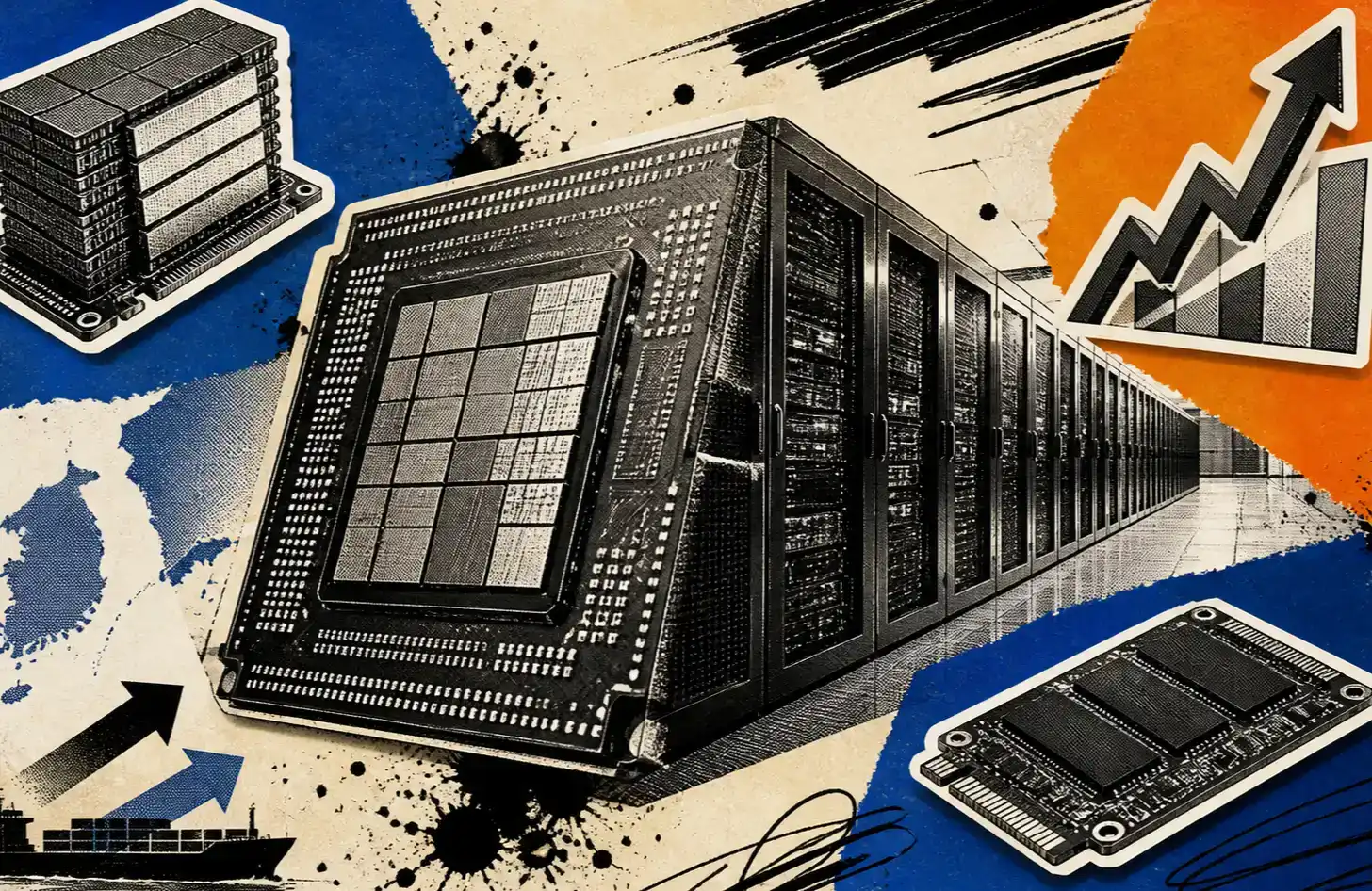
Soaring Export Data for Memory Chips, Market Is Redefining the Valuation Anchor for Memory Stocks

Korean storage export data for the first 20 days of June shows substantial year-on-year increases in both value and price-per-kilogram for categories like DRAM, NAND, and SSDs. This signals a potential shift beyond simple demand recovery, indicating rising prices and a product mix shift towards higher-value items, possibly influenced by AI infrastructure needs. A key point is that the surge in price-per-kilogram is not simply a uniform chip price hike. It reflects a combination of actual price increases and, more importantly, an export structure increasingly dominated by high-value-density products like HBM (High-Bandwidth Memory) and advanced DRAM, which are critical for AI servers. This suggests AI-driven demand may be spilling over from just HBM into broader memory markets. SK Hynix stands to benefit directly due to its leading HBM position. For Samsung and Micron, the implication is potential for greater margin elasticity if the tightness in high-end memory spreads to enterprise SSD and NAND prices. However, the storage sector remains cyclical. Risks include supply expansion, inventory changes, and potential slowdowns in broader AI capital expenditure. Ultimately, while the strong export data supports upward revisions for storage company earnings and fuels discussion of an "AI infrastructure bottleneck premium," a definitive valuation shift from a cyclical to a structural story depends on upcoming quarterly reports. Investors need confirmation from SK Hynix, Samsung, and Micron that improvements in average selling prices, product mix, and, crucially,毛利率 are sustained over multiple quarters.

marsbit1 h fa

Soaring Export Data for Memory Chips, Market Is Redefining the Valuation Anchor for Memory Stocks

marsbit1 h fa

Why Does SpaceX Have Such a High Valuation Ceiling? The Answer Lies in Musk's Business Blueprint

SpaceX achieved a record-breaking IPO on June 12, 2026, with its market cap surging past $2.1 trillion. This valuation reflects its central role within Elon Musk's expansive, interconnected technological ecosystem. The article details how four core components form a synergistic closed-loop system: 1) **The "Brain" (xAI & Orbital Compute):** xAI provides AI models and massive ground/space-based supercomputing for simulation and decision-making across the system. 2) **The "Neural Logistics Core" (Starlink & Starship):** Starlink's low-latency satellite network enables global data transmission, while Starship's low-cost, reusable launch capacity aims to make large-scale space deployment economically viable. 3) **The "Physical Body" (Tesla & Optimus):** Tesla's manufacturing prowess and energy products support hardware production and power, pivoting toward mass-producing the Optimus humanoid robot for terrestrial and potential space-based labor. 4) **The "Human Interface" (Neuralink & X):** Neuralink seeks direct brain-computer communication, and the X platform provides real-time societal data. Together, these elements create three reinforcing "flywheels": manufacturing/logistics, data-driven iteration, and energy/compute/network synergy. This integrated approach promises lower costs, faster innovation cycles, and potential infrastructure-as-a-service offerings. However, it also concentrates technical, regulatory, and corporate governance risks. Ultimately, SpaceX's high valuation stems from its position as the indispensable infrastructural backbone—handling space transport, global communications, and future orbital computing—tying together Musk's entire vision for a self-reinforcing technological empire.

marsbit1 h fa

Why Does SpaceX Have Such a High Valuation Ceiling? The Answer Lies in Musk's Business Blueprint

marsbit1 h fa

Trading

Spot
Futures
活动图片