Author: 1confirmation
Compilation: Chopper, Foresight News
There are many reasons why businesses fail, but bad timing is the most common. Many of today's most successful companies were not the first movers in their industries. They rose when the infrastructure had matured and user behavior had shifted, creating the right timing.
The crypto industry has over a decade of experience in various attempts to target mainstream users, leaving a wealth of failed cases to review and learn from. The following categories of once-struggling directions now have the potential to breed the next phenomenon-level crypto consumer application.
Internet-Native Assets
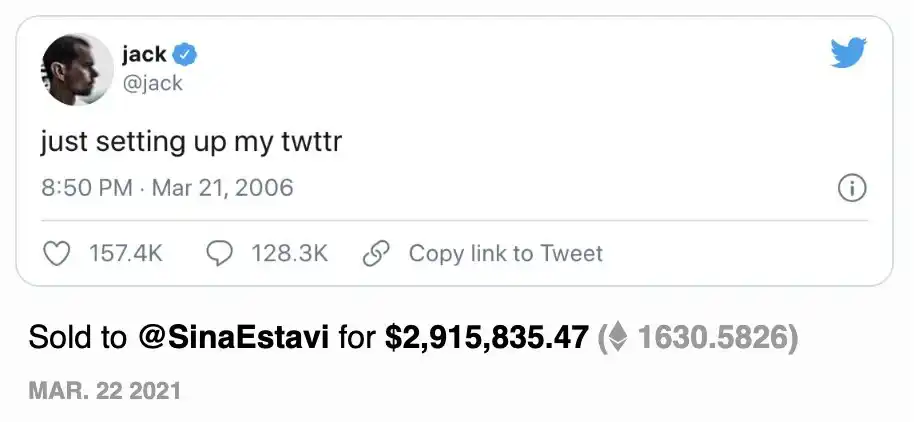
During the 2021 NFT boom, Cent created a marketplace for tokenizing tweets. Jack Dorsey's first tweet sold for 1630 ETH (equivalent to $2,915,835.47) on March 22, 2021. NBA Top Shot also tried to put cultural moments on-chain but ultimately packaged them as digital collectible cards with highly similar forms and mechanics.
To this day, the industry still lacks a mature solution to effectively capture online popularity and cultural moments. Many might point to meme coins, but meme coins are more derivatives of popularity and cannot truly anchor the cultural events themselves.
The whole industry is currently abuzz about RWA, striving to bring real-world assets like stocks, bonds, real estate, and collectible cards on-chain. Perhaps the reverse approach holds greater opportunity: creating a new type of crypto-native asset that doesn't exist in the real world.
X-to-Earn (Play-to-Earn)
Projects like STEPN and Axie Infinity were once hugely popular. They no longer required users to spend money to buy crypto assets but instead provided ways for users to earn tokens.
The lesson we should take from this is not that "the play-to-earn model doesn't work," but that unrestrained issuance of liquidity tokens cannot sustain a viable economic system.
In the future, most people will obtain their first crypto by earning it, not by buying it directly. The core questions are: what are users earning, and why would they want to hold it long-term?
The Metaverse
Mentioning the word "metaverse" today feels out of place to many, given how the last wave of hype ended. Projects like Decentraland and The Sandbox attempted to replicate the real world on the internet, creating digital real estate like land and buildings. When Facebook rebranded to Meta, its market cap had reached $900 billion.
The current mainstream trend in the industry is embracing offline reality. When everyone is rushing to the physical world, exploring new forms of online social interaction might create interesting opportunities.
The past failure of the metaverse might not have been misjudging people's willingness to immerse themselves in digital spaces; the mistake may have been stubbornly believing that virtual worlds must replicate the appearance of the real world.
DAO (Decentralized Autonomous Organization)
DAOs cannot be said to have completely failed; many projects still exist today, but they are far from realizing the potential initially envisioned.
ConstitutionDAO was a highly representative experiment. Its model was very simple: a group of internet strangers raised about $47 million in just a few days to try to bid on an original copy of the U.S. Constitution.
Pooling funds to buy a sports team, invest in a movie, fund an athlete, collect historical artifacts, save a local shop, fund scientific research, purchase land... accomplishing things a single ordinary person could not.
The DAO industry may be overly fixated on governance mechanisms, but the most basic user need is simply for people on the internet to pool funds to do things together.
Personal Value Assetization
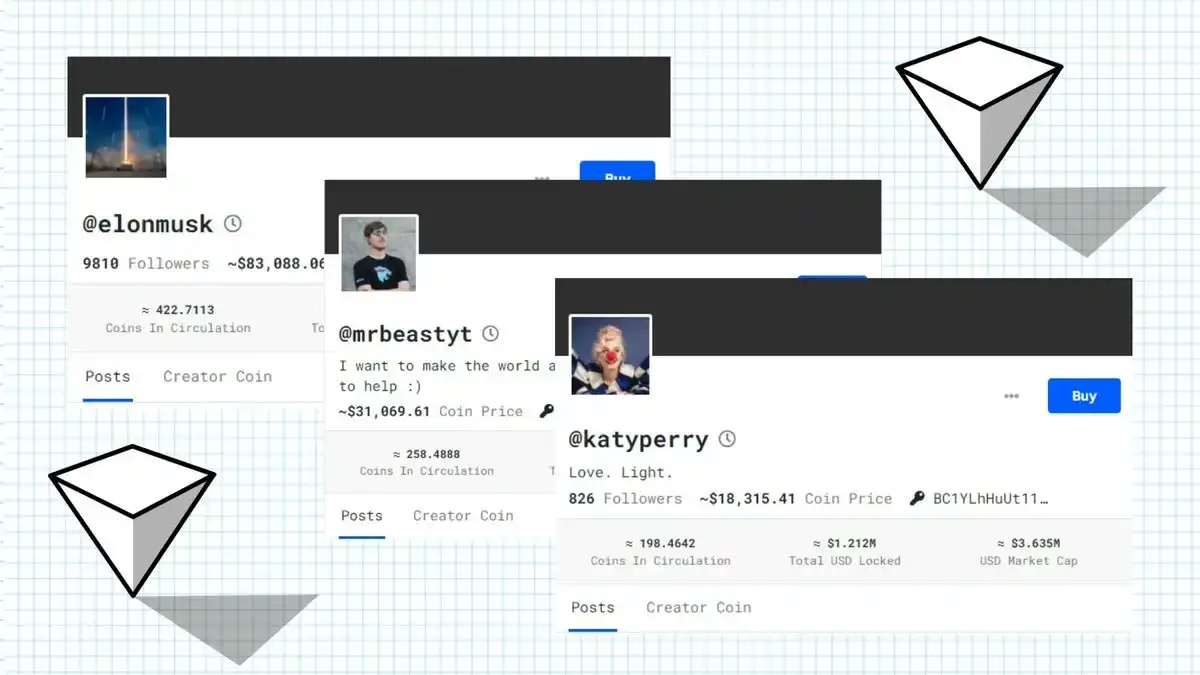
This is the most well-known category on the list. A slew of products like Friend.tech, Rally, Roll, and BitClout constitute the "project graveyard" of the creator economy and SocialFi era.
The underlying idea has always been largely similar: creating a corresponding trading market for each individual. The form is sometimes a creator token, sometimes an access pass, sometimes using a bonding curve for pricing, but no product has been able to sustain itself long-term.
In reality, people trade meme coins tied to personalities, bet on politicians' moves, buy athletes' trading cards, buy or sell stocks because of founders. This shows that the direction of "using people as the underlying asset" may not be inherently wrong; the past implementation methods may have been flawed.
Traders and fans might want to build trading markets around people, but are the creators themselves willing to be treated as trading targets? If creators are reluctant, is it possible to build trading markets around people without turning the people themselves into commodities?
The next phenomenon-level crypto consumer application will not be born in the track where everyone is currently crowding development. It will be an idea that failed five years ago but now finally has the necessary infrastructure and timing for success.