盘点即将IDO的3个项目:Web3War、AOFverse及Meson

Odaily星球日报Pubblicato 2024-01-30Pubblicato ultima volta 2024-01-30

Introduzione

涵盖游戏与DePIN赛道。

原创 | Odaily星球日报

作者 | Asher

编辑 | 秦晓峰

盘点即将IDO的3个项目:Web3War、AOFverse及Meson

Launchpad 打新收益不错,热度居高不下,Odaily星球日报整理了最近热度较高且没有发售的 3 个 IDO 项目。温馨提示,市场波动巨大,投资前务必进行充分的研究。

Web3War:第一人称射击游戏
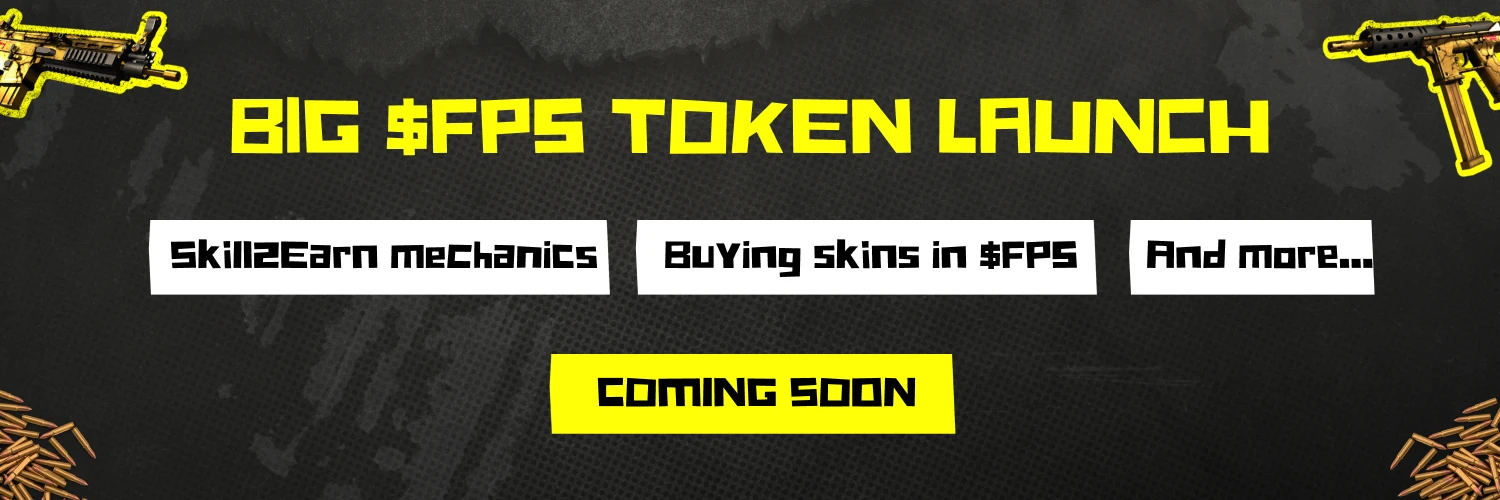
盘点即将IDO的3个项目:Web3War、AOFverse及Meson

Web3 War 是一款免费的第一人称射击游戏,由游戏开发商 Roll1ng Thund3rz 打造,并由 OG Zilliqa 孵化。迄今为止,已注册超过 65, 000 个玩家帐户。游戏内共有 44 种不同的武器以及每种武器的特定附件,玩家只需玩游戏即可解锁和定制他们的武器库。越熟练的玩家自然会以更快的速度前进,获得更广泛的武器和定制,其游戏代币为 FPS。

本次 FPS 进行 IDO 的信息如下:

  • 代币销售价格: 0.0533 美元;

  • 代币初始市值: 900, 000 美元。

关于 FPS 代币的经济模型如下:

  • 公开发售轮:占总供应量的 25% ,开盘解锁 20% ,其余代币每 3 个月释放 20% ;

  • 市场营销:占总供应量的 10% ,开盘不立即解锁,开盘后第一年每 3 个月释放 10% ,之后每 3 个月释放 12.5% ;

  • 团队:占总供应量的 15% ,开盘不立即解锁,开盘 2 年后释放 25% ,之后每 3 个月释放 25% ;

  • 流动性:占总供应量的 15% ,开盘解锁 25% ,其余代币每个月释放 5% ;

  • 游戏内奖励:占总供应量的 30% ,开盘解锁 5% ,其余代币前 9 个月每 3 个月释放 5% ,之后每 3 个月释放 10% ;

  • 团队与顾问:占总供应量的 5% ,开盘解锁 5% ,其余代币锁定 12 个月后每 3 个月释放 12.5% 。

参与 IDO 链接:https://app.daomaker.com/project/Web3 War

官方推特:https://twitter.com/web3 war_game

官网:https://www.w3w.game/

AOFverse:Web3手游

盘点即将IDO的3个项目:Web3War、AOFverse及Meson

AOFverse 是手游工作室制作的一款元宇宙游戏。旨在打造趣味十足、奖励丰富的全新游戏世界,让玩家在欢乐互动中获得真正的资产所有权,其代币为 AFG。

本次 AFG 进行 IDO 的平台为 Bybit,具体信息如下:

  • 代币销售价格: 0.035 美元;

  • 总额度: 30, 000 美元;

  • 代币兑换时间: 1 月 30 日 10: 15 (UTC) —— 1 月 31 日 10: 00 (UTC)。

值得注意的是,AFG 除了在 Bybit 进行 IDO 外,开盘后同时上线 Kucoin。

参与 IDO 网站:https://www.bybit.com/zh-MY/web3/ido/detail/30029 

官方推特:https://twitter.com/AOFverse

官网:https://aofverse.com/

Meson:DePIN领域又一新星

Meson Network 专注于 DePIN+AI,旨在打造一个由人授权的去中心化物理网络,Meson 网络“DePIN”节点采用用户友好技术开发,可容纳各种硬件,如个人笔记本电脑,服务器,物联网设备等等。利用这些网络节点的闲置带宽,Meson 建立了一个经济循环,将闲置资源与业务需求连接起来。其愿景是成为去中心化存储、计算乃至蓬勃发展的 Web3 Dapp 生态系统的基石。

Meson 原生代币名为 MSN,代币销售将于北京时间 2 月 9 日凌晨 02: 00 进行,具体细则如下:

  • 数量: 2, 500, 000 枚 MSN 代币,占总供应量的 2.5% ;

  • 价格: 1.75 美元;

  • 锁定期: 2024 年 3 月 15 日左右解锁 1/6 ,剩余代币在 6 个月内每月解锁;

  • 初始购买限额:最低 50 美元,最高 3, 000 美元,仅限 USDT、USDC;

  • 购买资格: 在注册截止日期(北京时间 2 月 5 日 20: 00)之前,用户的 CoinList 钱包持有最低购买金额(50 USDT 或 USDC)资金。本次销售不对美国、中国、加拿大、韩国和某些其他司法管辖区的居民开放。

参与 IDO 网站:https://coinlist.co/meson?utm_source=meson&utm_medium=web&utm_campaign=Meson+Community+Sale

官方推特:https://twitter.com/NetworkMeson

官网:https://www.meson.network/

Letture associate

Behind the AI Report Card, Lies a Chinese 'Exam Setter'

Beyond the familiar performance charts like MMLU-Pro and MMMU, which major AI models strive to ace, stands a key "examiner": Chinese-Canadian researcher Wenhu Chen. An assistant professor at the University of Waterloo and founder of TIGERLab, Chen addresses the crucial need for more rigorous AI evaluation. As models like GPT-4 began scoring near-perfect results on older benchmarks like MMLU, it became difficult to distinguish their true capabilities. In response, Chen introduced MMLU-Pro in 2024, featuring harder, more reasoning-focused questions with more answer choices, successfully reintroducing meaningful performance gaps. His work extends to multi-modal evaluation with MMMU and its enhanced version, MMMU-Pro. These benchmarks test a model's ability to understand and reason with complex information from images, charts, and text across diverse academic subjects, exposing the significant challenges even top models face in genuine comprehension. Chen's background in complex QA, table reasoning, and his experience at Google DeepMind on projects like Gemini inform his approach. He understands that effective benchmarks must anticipate how models might "cheat" by memorizing data or avoiding visual analysis. His lab also actively researches video understanding and generation models (e.g., UniVideo, Vamba), ensuring his evaluation work is grounded in practical model-building challenges. Now at Meta's Super Intelligence Lab, Chen continues his focus on multi-modal data and evaluation, representing the deep yet often unseen contributions of Chinese talent in shaping the fundamental tools of the AI industry.

marsbit6 min fa

Behind the AI Report Card, Lies a Chinese 'Exam Setter'

marsbit6 min fa

Alliance Co-founder's Letter to Entrepreneurs: Written at the Moment Cursor Sold for $600 Billion

Alliance Co-founder's Letter to Entrepreneurs: On Cursor's $60 Billion Sale Many aspiring founders see massive exits like Cursor's $60B sale and wonder why they can't achieve the same, often concluding opportunities are exhausted. But great companies aren't built in obvious, crowded spaces. Cursor, like Stripe, Figma, and Shopify before it, started with a non-consensus belief about the future. Before ChatGPT, they believed AI would transform knowledge work. They focused on a genuinely exciting domain, became their own customer, and obsessed over power users. Their journey involved years of "glass-chewing" effort before the market was ready. The pattern is consistent: identify a long-term technological shift, find a missed entry point, and execute for years before the trend becomes obvious. First-generation products (PayPal, Adobe, Amazon) prove a market exists. Second-generation winners (Stripe, Figma, Shopify) rebuild that market around new insights, technology, or changing customer behaviors. Founders must identify their phase in the cycle. Early entrants like Coinbase or Cursor focus on making new technology usable for power users. Later entrants find the "yin" to the established "yang"—the blind spots incumbents miss as they grow distant from individual users. The key is deep market immersion. Use every product in your space. Talk to users. Build an audience. Stop looking for ideas and start *seeing* them everywhere. Then, choose one. The idea must offer a 10x improvement or solve a "hair-on-fire" pain point—something severe enough that users are already crafting workarounds. When building, avoid feature bloat. Ask: why would someone switch? Great startups rarely force new behaviors; they improve familiar workflows with drastically lower friction (e.g., Cursor forked VS Code instead of creating a new editor). Distribution is the underestimated moat. Before product-market fit, achieve distribution-market fit. How do customers discover new tools? Founders like those at Airbnb, Stripe, and Cursor did unscalable, manual work to recruit early users. The final, unteachable ingredient is resilience. Cursor built for years pre-market, faced rejection, and persisted. So did Airbnb, Nvidia, and Rain (which launched post-FTX collapse). The lesson isn't that these founders were smarter, but that they stayed in the game long enough for their insights to compound. Framework: Spot technological cycles. Cultivate unique insight. Obsess over your market. Talk to customers. Find a hair-on-fire problem. Build the simplest wedge. Win your distribution channel. Above all, don't quit when it gets hard. Most people won't do these things consistently. The few who do build the next generation of great companies. Go build.

marsbit10 min fa

Alliance Co-founder's Letter to Entrepreneurs: Written at the Moment Cursor Sold for $600 Billion

marsbit10 min fa

Weekly Editor's Picks (0613-0619)

Weekly Editor's Picks (0613-0619): Market Insights & Analysis This weekly digest curates in-depth analysis often lost in the information flow, focusing on key insights across macro trends, investment, and technology. **Macro & Geopolitics:** With the Strait of Hormuz reopening and military conflict shifting to negotiation, markets are pivoting from "war shock" to "supply restoration." Trades include shorting crude risk premiums, longing airlines/tourism, Asian energy importers, and bond duration, while shorting inflation expectations. LNG, fertilizer, and chemical chains are also being repriced. **Investment & VC:** Ray Dalio advises against betting on concentrated AI giants dominating indices, advocating for diversified portfolios of high-quality, low-correlation assets instead. Analysis covers the 4-year crypto cycle, predicting the core surviving product by 2029 will be asset trading markets. Current BTC metrics suggest a potential bottoming zone, presenting a patient accumulation window. SpaceX's high-profile IPO at a $2.1T valuation faces scrutiny over fundamentals, with key watchpoints being its likely inclusion in the Nasdaq index and Q2 earnings. Concerns are raised about potential "gamma squeeze" and systemic risks if its narrative-driven valuation gets amplified by passive index funds. Robinhood (HOOD) is noted for breaking its high correlation with crypto, bolstered by its stock trading and new underwriting business. **Web3 & AI:** A warning highlights ~$1.8T in off-balance-sheet AI infrastructure commitments (purchase commitments, leases) as a potential systemic risk if AI monetization lags. AI models are being used for World Cup predictions, adding a new layer for betting markets. A cost breakdown of a $20 AI subscription reveals the supply chain from model companies to cloud, GPUs, and power. **Prediction Markets:** The emergence of prediction market "concept stocks" is noted, with Robinhood developing its own platform, Rothera, signaling a shift from market competition to a "channel war" for user access. **CeFi & DeFi:** The SpaceX IPO tested perpetual contract mechanisms for pre-IPO assets, highlighting challenges in handling corporate actions like stock splits on-chain. The de-pegging of STRC (Strategy's preferred share) to ~$89 reflects market concerns over MicroStrategy's capital structure and BTC-backed leverage model. BlackRock's covered-call Bitcoin ETF (BITA) offers yield but caps upside, appealing to yield-seeking institutions. **Ethereum:** An opinion piece argues Ethereum's core strength is its vast developer community and composability, solidifying its role as the default operating system for the financial internet. **Weekly Hot Topics:** Include the US-Iran deal reopening the Strait of Hormuz, Fed's hawkish hold, Anthropic restricting model access, SpaceX acquiring Cursor, and a humorous stock surge for "Liuliumei" due to its "LLM" ticker.

marsbit15 min fa

Weekly Editor's Picks (0613-0619)

marsbit15 min fa

Alliance's Co-Founder's Letter to Entrepreneurs: Written on the Occasion of Cursor's $60 Billion Sale

In this letter to entrepreneurs, Alliance reflects on the success of Cursor's $60 billion sale to Elon Musk, using it as a case study to counter the misconception that opportunities in crowded fields like AI or crypto are exhausted. The piece argues that great companies like Cursor, Stripe, Figma, and Shopify are not built by geniuses with perfect ideas, but by founders who start with a non-consensus belief about the future and build for years before that future becomes obvious to everyone. They identify long-term shifts, find overlooked entry points, and execute relentlessly. The framework for success involves: 1. **Identifying your place in the technology cycle**: Early-stage opportunities focus on making new tech usable for power users (e.g., Coinbase, Cursor). Later-stage opportunities involve finding the "yin" to an existing "yang"—the blind spots of first-generation players (e.g., Stripe vs. PayPal, Figma vs. Adobe). 2. **Cultivating unique insights**: Immerse yourself deeply in the market. Use every product, talk to users, and build an audience. Insights will emerge naturally from deep engagement. 3. **Finding a "hair-on-fire" problem**: Look for a 10x improvement or a severe, urgent pain point. The strongest signal is people already building clumsy workarounds. 4. **Building a focused MVP**: Don't just add features because you can. Ask why users would abandon their current tool for yours. The best startups rarely force new behaviors; they improve familiar workflows with drastically lower friction. 5. **Winning a distribution channel**: Distribution is often the moat. Before product-market fit, achieve channel-market fit. Find where your customers are and build an engine to reach them, even through unscalable, manual efforts initially. 6. **Persistence**: The final, unteachable ingredient is resilience. Success stories like Cursor, Airbnb, and Nvidia involved years of grinding, rejection, and perseverance when the path forward seemed unclear. The conclusion is that there is no secret. Most people fail to consistently execute these steps over the long term. The few who do build the companies that define the next era. The world is yours to create.

链捕手20 min fa

Alliance's Co-Founder's Letter to Entrepreneurs: Written on the Occasion of Cursor's $60 Billion Sale

链捕手20 min fa

Crypto Miners' Big AI Gamble: Valuations Enter Differentiation Stage, Comeback Fight Proves Tough

Crypto Mining Firms' AI Bet: Valuation Divergence and a Challenging Transformation Facing declining profitability in crypto mining, mining companies are pivoting to AI infrastructure, capitalizing on their existing power resources, land, and data center expertise to offer GPU compute power. This transition narrative has boosted their stock prices significantly, with firms like Hut 8 and Bitfarms seeing gains over 100% year-to-date, far outpacing Bitcoin. This has led to a market valuation split, with pioneers like CoreWeave reaching a $62.8B market cap, while others remain below $5B. The market currently prioritizes growth potential over short-term profits, which remain under pressure due to heavy capital expenditures for AI build-outs and crypto asset volatility. However, the transformation is a high-stakes gamble. Bitcoin mining profitability is shrinking, with the average production cost around $63,707 and miner margins contracting. While AI offers a more lucrative long-term path, it requires massive investment—estimated at a $500B near-term funding gap. Success now hinges on execution: delivering on contracted power capacity, securing quality tenants like major cloud providers, and managing the immense financial burden. The valuation focus is shifting from mere power capacity to project delivery, future cash flows, and tenant quality, making this a difficult but critical turnaround attempt.

链捕手29 min fa

Crypto Miners' Big AI Gamble: Valuations Enter Differentiation Stage, Comeback Fight Proves Tough

链捕手29 min fa

Trading

Spot
Futures
活动图片