详解Asteroid:Cosmos Hub开源铭文新协议,能否盘活整个生态的流动性?

Odaily星球日报Pubblicato 2024-01-17Pubblicato ultima volta 2024-01-17

Introduzione

该协议旨在让任何人都可以将内容直接永久发布到 Cosmos Hub 区块链上,并永久存在。

原文作者:深潮 TechFlow

详解Asteroid:Cosmos Hub开源铭文新协议,能否盘活整个生态的流动性?

铭文市场的格局仍在持续发生变化。

1 月 17 日,Dephi Digital 旗下的 Dephi Labs 在其推特上宣布了与 Astroport 基金会合作共建的项目:Asteroid Portocol。

该协议旨在让任何人都可以将内容直接永久发布到 Cosmos Hub 区块链上,并永久存在。

目前,该协议已完整包含了 Asteroid 索引器、区块浏览器、API、Cosmos Fungible Token (CFT-20) 代币规范、代币部署器和铸造工具以及前端/后端软件。

用户也可以直接在其官网上进行铭文相关的操作。
详解Asteroid:Cosmos Hub开源铭文新协议,能否盘活整个生态的流动性?

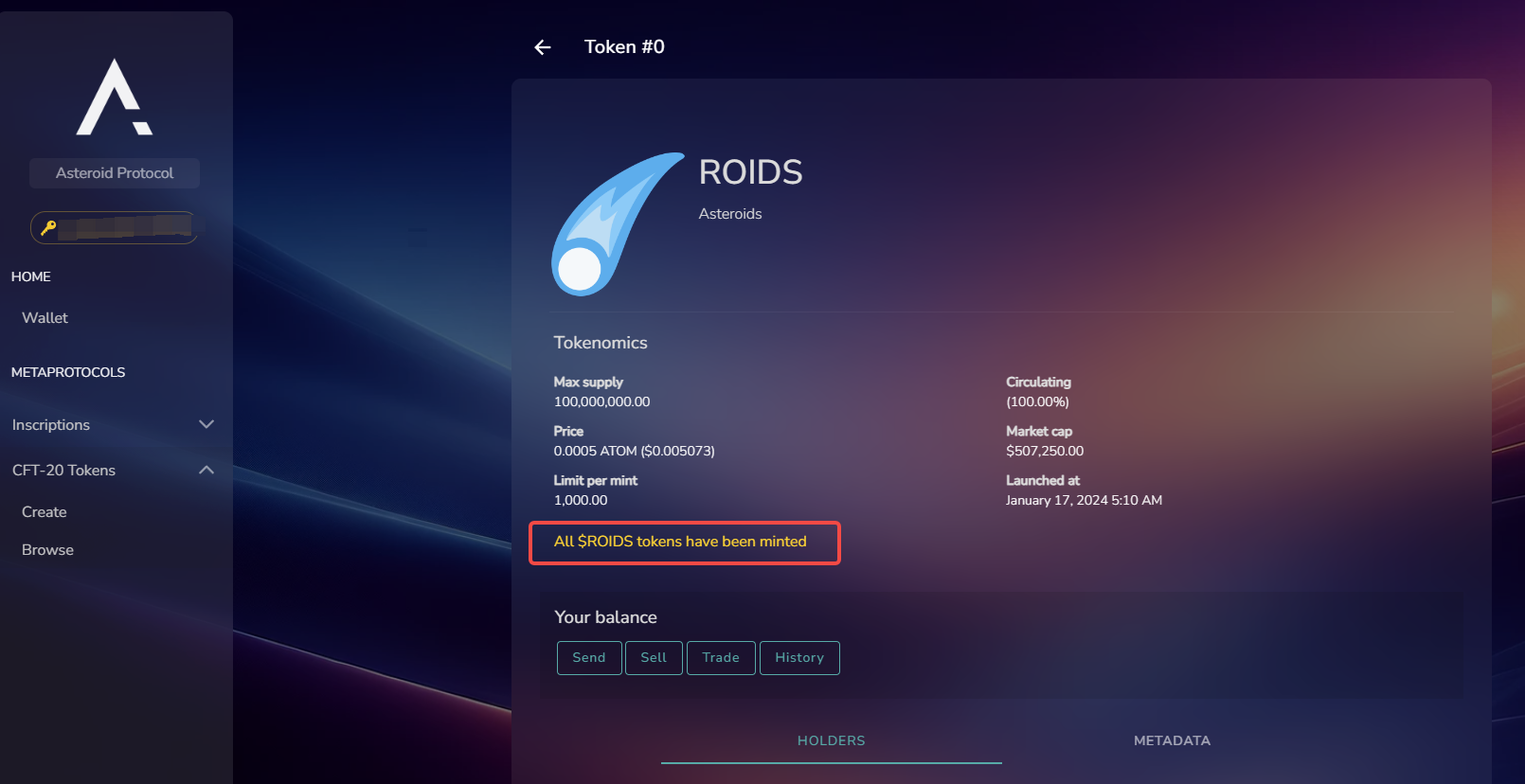
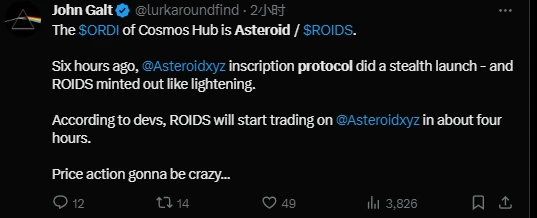
不过值得一提的是,Asteroid 并没有大张旗鼓的进行宣传,而是选择了静默上线。但嗅觉敏锐的市场依然捕捉到了机会,Asteroid 上的第一个官方铭文 RODIS 在平台上线不久后就被光速 Mint 完毕,后知后觉的 degen 们也开始在 Asteriod 上玩起了其他铭文。

同时,根据推友透露,该协议的开发人员表示 RODIS 将会在接下来的 4 小时内于平台内开始交易,届时相想必也会引发一阵有关 Cosmos Hub 的铭文热潮。
详解Asteroid:Cosmos Hub开源铭文新协议,能否盘活整个生态的流动性?

而在 Dephi Labs 的博客中他们写到:

“我们认为 Cosmos Hub 很可能是加密货币中第二好的区块链铭文——仅在比特币后面”。

为什么是 Cosoms Hub?

Dephi Labs 认为,虽然 Cosmos Hub 是市值最大的 Cosmos 区块链,但在设计上并没有对智能合约、NFT 或可替代代币的原生支持。

实际上,它是一台功能强大的全球计算机,每秒能够处理数千笔交易,但基本上处于待机状态。

此外,Dephi Labs 也相信 Cosmos Hub 有潜力成为 Cosmos 及其他地区任何项目的记录数据库。通过在那里永久写入数据,它不仅可以与其他 Cosmos 链竞争,还可以与 Filecoin、IPFS 和 Arweave 竞争——并且应该在此过程中为验证者提供丰厚的回报。

因此,让 Cosmos Hub 动起来的一个好办法,便是引入原生的铭文协议。

Asteroid 的出现,给了 Cosmos Hub 一个更好的赋能,包括但不限于:

  • 在 Cosmos Hub 上引入新功能,而不影响该链的核心价值主张

  • 大幅扩展 Cosmos Hub 的可能性范围,为其带来更多交易、用户和可见性

  • 为 Cosmos Hub 验证者和 ATOM 质押者创造新的收入来源

  • 重振并调整 Cosmos Hub 社区

  • 通过更轻松地将区块链数据集成到 web2 应用程序中来扩大 Cosmos Hub 开发社区

Asteroid 的使用方式

Asteroid Protocol 提供了一个 Cosmos 通用元协议框架,它可以结构化格式记录其内容,以便在链外进行索引和使用。

当前的实现方法是在交易 memo 中填入 URN(Uniform Resource Name),并在 Cosmos SDK 区块链的 non_ritic_extension_options (NCXO) 字段中记载元协议所需的任何其他内容。

详解Asteroid:Cosmos Hub开源铭文新协议,能否盘活整个生态的流动性?

该方法允许在 Cosmos Hub 上记录高达约 550 kb(理论上高达 800 kb)的任意数据,并且对数据的内容没有限制,因此理论上任何人都可以使用它来构建各种各样的数据和链上协议。

一些可能的想法包括社交网络、博客平台、论坛和加密聊天等形式。目前,由项目官方定义的两种关键类型的 Asteroid 协议是:

  • 任意内容铭文规范:通过该类型用户几乎可以直接在 Hub 上发布浏览器可以显示的任何类型的数据,从 JPG 到视频、文本到 JSON、HTML 甚至是游戏……

  • Cosmos 可分割代币(CFT-20)规范: 一种在 Cosmos Hub 上部署、铸造和转移可分割代币的方法。

$ROIDS 便是推出的第一个 CFT-20 代币,总量为 1 亿,每人都可以在单笔交易中铸造最多 1000 个代币,下面是由官方给出的铸造步骤:

但正如前文所说,ROIDS 已经被铸造完毕。玩家们目前还有两个选择,即自己创建新的铭文,以及从目前的市场中浏览其他的铭文进行铸造。
详解Asteroid:Cosmos Hub开源铭文新协议,能否盘活整个生态的流动性?

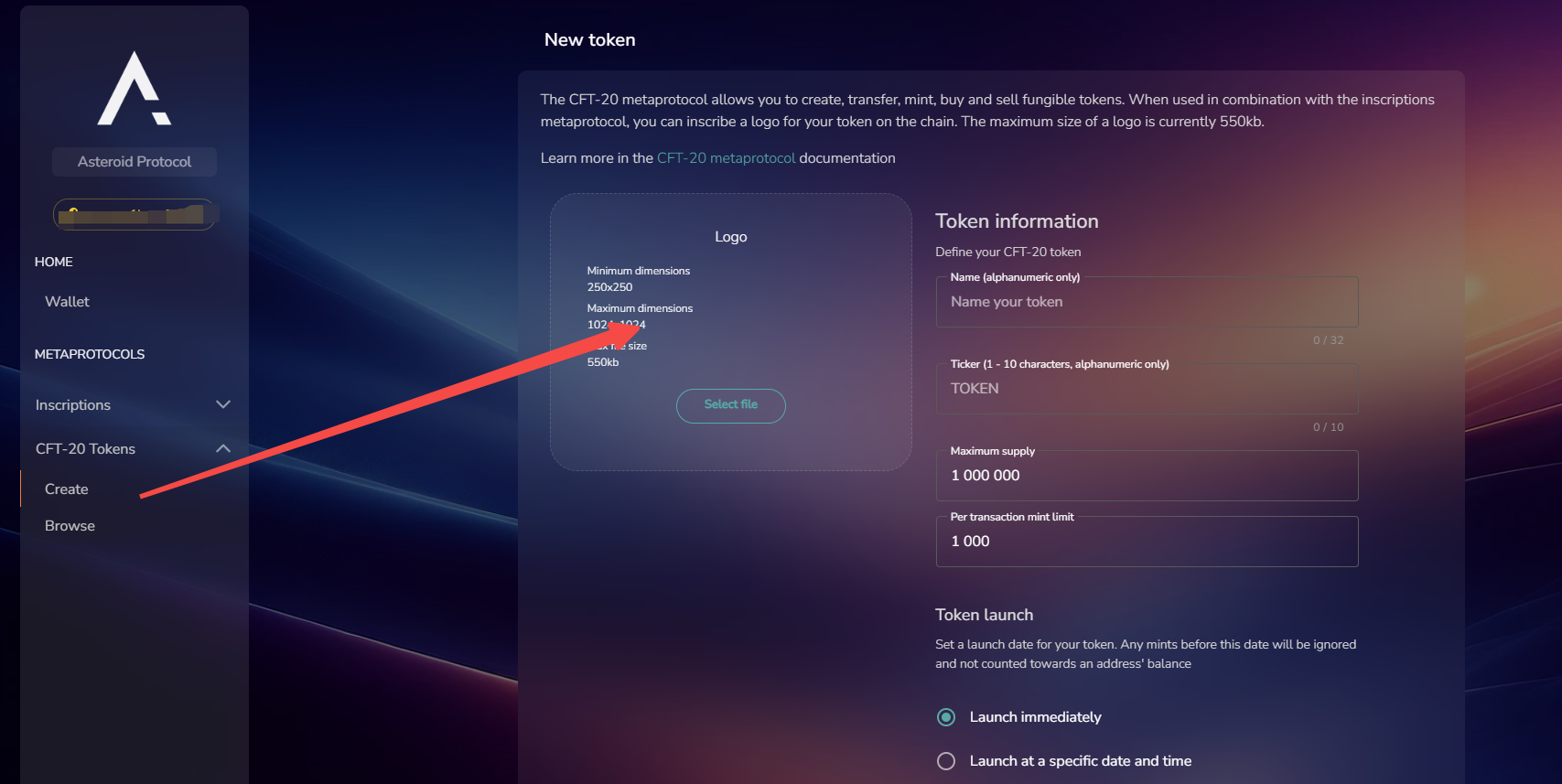
如上图所示,Asteroid 提供了非常简洁的界面供玩家自己铸造,只需上传图片并对铭文进行简单定义即可创建铭文,并不需要太多的技术支持。

但是,当实际面临 Inscribing 或者铸造的时候,往往存在网页打不开的尴尬局面。因此,在了解了 URN 的结构之后,我们还有另一种铸造选择:

  • 给自己地址转 0.000001 atom,因为在 Cosmos Hub 上记录数据需要进行链上交易。为了防止铸造失败,Asteroid 还将最低 Gas 水平上调了 40% ,这些费用将直接奖励给 Hub 的验证者和 ATOM 质押者。

  • 在 memo 中填写:urn:cft 20:cosmoshub-4 @v1;mint$tic=ROIDS, amt= 1000000000. (以$ROIDS 为例)

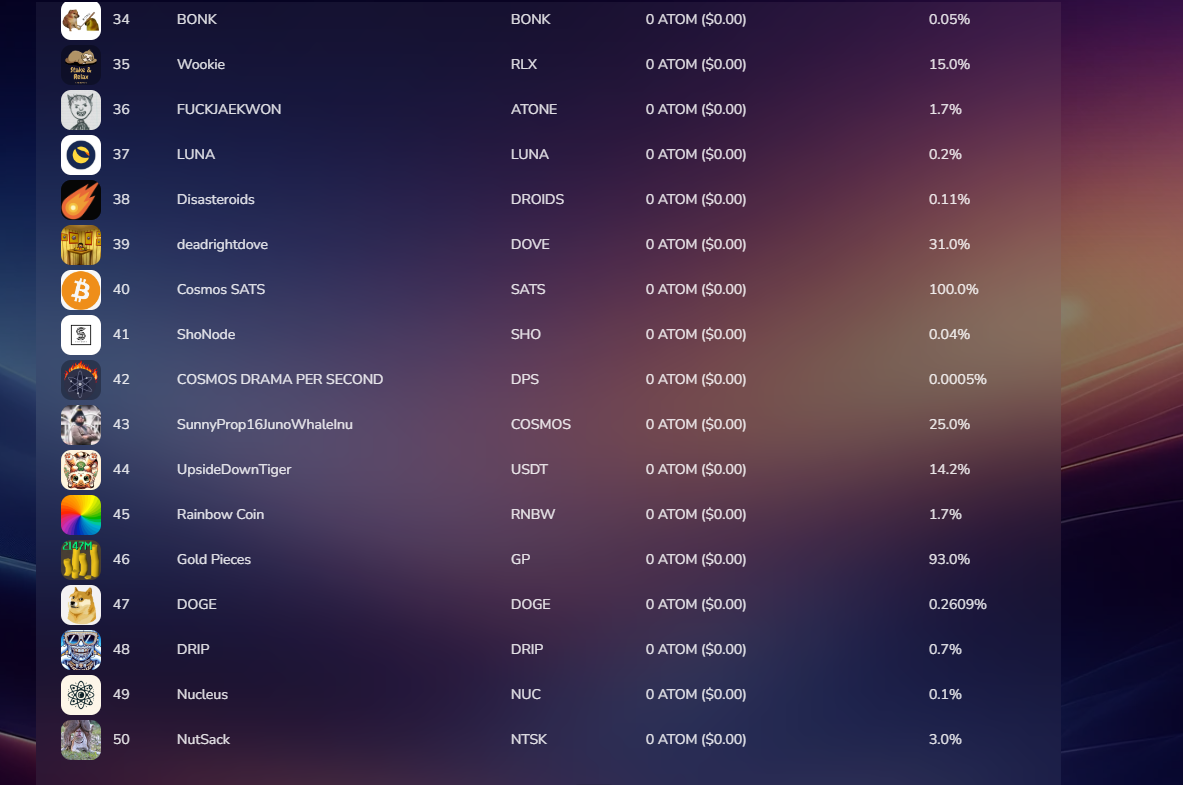
而在浏览功能上可以看到,目前各路山寨铭文也开始了新一轮跑马圈地运动,BONK/DOGE/LUNA 等命名的铭文常客又一次换了生态出现,玩家们也可以随时查看界面右边的百分比数据,观察哪些铭文打的相对火热。
详解Asteroid:Cosmos Hub开源铭文新协议,能否盘活整个生态的流动性?

不过需要注意的是,目前这些所有的铭文都还没有价格。

作为实验的一部分,Asteroid 还草拟了跨链桥计划,该桥允许用户将 CFT-20 代币转移到支持 IBC 的智能合约链,以便人们在 Astroport 上部署 LP,这无疑也为流动性的扩大创造了条件,或许 Cosmos 关联的各条链之后都会收到 Asteroid 铭文市场的影响。

但项目方目前还没有将该计划付诸实践,并不保证它一定会启用。

另外,使用 Asteroid 的费用如何?

目前的设计下,上币和下币费用设定为 0% 。所有市场交易均收取 2% 的 swap 费用,该费用通过 IBC 传输至 Terra 并随每笔交易存入 Astroport 的 $xASTRO 质押池中。

由于 Asteroids 是开源的,因此任何人都可以通过 Asteroids 创建自己的 OTC 市场,设定自己的费用。

最后需要强调的是,基于 Cosmos Hub 部署广泛的基于铭文的元协议框架,可以扩展到几乎任何 Cosmos SDK 区块链。

比特币上的铭文点燃了火种,其他生态的铭文之战仍未结束。

市场究竟会作何反应,不妨静观其变。

Letture associate

Behind the AI Scorecards Lies a Chinese 'Question Setter'

Behind the AI scorecards that dominate industry discussions—benchmarks like MMLU-Pro, MMMU, and MMMU-Pro—stands a Chinese-Canadian researcher: Wenhu Chen. As an assistant professor at the University of Waterloo and founder of the TIGER Lab, Chen has become a key "exam-setter" for evaluating large language and multimodal models. Chen first gained broader recognition with MMLU-Pro, a more challenging and stable update to the popular MMLU benchmark. As top models like OpenAI’s o3 began achieving near-perfect scores on the original MMLU, it became difficult to distinguish their true capabilities. MMLU-Pro introduced more complex reasoning questions, expanded answer choices, and filtered out ambiguous or simple items, effectively reintroducing differentiation among state-of-the-art models. His work on MMMU addressed the evaluation of multimodal models, requiring them to integrate visual information (like charts, diagrams, or tables) with textual knowledge across diverse academic subjects. Even the strongest models initially scored only around 56-59%, highlighting significant room for improvement in genuine multimodal reasoning. MMMU-Pro further refined this by preventing models from bypassing visual cues. Chen’s research focus has long been on complex information understanding and reasoning. His background—including a PhD at UC Santa Barbara, research at Google/DeepMind on Gemini, and now a role in Meta’s superintelligence lab—provides deep insight into model development and their potential weaknesses. His TIGER Lab also builds models (e.g., for video understanding and generation), ensuring his evaluation benchmarks are grounded in practical challenges. While AI headlines often spotlight company leaders and product launches, Chen’s work exemplifies the critical, behind-the-scenes contributions of researchers crafting the rigorous standards that define and drive progress in AI capabilities.

marsbit21 min fa

Behind the AI Scorecards Lies a Chinese 'Question Setter'

marsbit21 min fa

STRC Unpegged by 11%, Can Strategy's Perpetual Motion Machine Keep Turning?

STRC, the perpetual preferred stock of MicroStrategy, is experiencing a persistent de-pegging from its target par value of $100, with the discount recently widening to over 11%. This de-anchoring challenges the core design of STRC, which was intended as a stable, income-oriented security operating near $100. As a crucial funding engine for MicroStrategy's Bitcoin acquisition strategy, STRC's price reflects market confidence in the company's entire capital model. The company's "capital flywheel" relies on issuing STRC at or above $100 via an At-the-Market (ATM) program to raise cash for buying Bitcoin, thereby boosting company equity and theoretically supporting STRC's value. A monthly adjustable dividend mechanism was designed to maintain this peg. Despite raising the dividend to 11.5% and increasing payment frequency, the de-pegging persists. Market concerns extend beyond technical factors like leveraged arbitrage unwinding. Analysts point to MicroStrategy's limited cash reserves relative to its ~$1.7 billion annual dividend obligation for preferred shares. While the company counters that its vast Bitcoin holdings could cover decades of payments, this argument hinges on the potential need to sell Bitcoin—a shift from its longstanding "hodl" narrative. The company's recent sale of a small amount of BTC, framed as a test, amplified these liquidity and strategy concerns. If STRC remains discounted, impairing MicroStrategy's ability to raise cheap capital, fears may grow that the company could sell more Bitcoin to meet obligations. This scenario could transform MicroStrategy from a major market buyer into a potential seller, posing significant downside risk for Bitcoin. The re-pegging of STRC is thus a key indicator for the health of MicroStrategy's capital structure and its market impact.

Odaily星球日报35 min fa

STRC Unpegged by 11%, Can Strategy's Perpetual Motion Machine Keep Turning?

Odaily星球日报35 min fa

Silicon Valley's Most Sought-After New Role Has Emerged

Silicon Valley's New Most Wanted Job: The Rise of the Forward Deployment Engineer The AI industry is witnessing a significant shift. The focus has moved from developing cutting-edge models to deploying them effectively within enterprises. This has made the "Forward Deployment Engineer" (FDE) a critical and highly sought-after role at major firms like OpenAI, Anthropic, and Google. For the past three years, the industry prioritized model scientists. However, companies are now facing a harsh reality: purchasing powerful AI tools does not guarantee productivity gains or organizational change. The biggest hurdle is not the technology itself, but integrating it into complex legacy systems, workflows, and corporate cultures. This includes challenges like data silos, compliance requirements, and internal resistance. The FDE role, pioneered by Palantir Technologies, addresses this "last-mile" problem. FDEs are deployed on-site with clients for extended periods. Their job is to deeply understand the client's specific organizational structure, processes, and pain points, then tailor and implement the AI solution accordingly. They combine skills in technology, project management, and organizational change. A clear signal of this trend emerged in May 2026 when three AI giants made major moves. Anthropic launched a $1.5B joint venture for enterprise deployment. OpenAI formed an independent deployment subsidiary, DeployCo, with over $4B in commitments and acquired a deployment consultancy. Google Cloud's CEO publicly announced a large-scale recruitment drive for FDEs. This shift represents a fundamental change in the software business model: from selling tools to selling guaranteed outcomes. FDEs are the agents of this change, responsible for delivering a working system within the production environment, not just a demo. Real-world cases, such as challenges at Goldman Sachs (compliance barriers) and Target (internal cultural resistance), illustrate that the primary obstacles to AI adoption are organizational, not technical. An FDE's value lies in navigating these human and procedural complexities to facilitate a successful "AI migration." In essence, as core AI technology becomes more accessible and affordable, the true premium is shifting to the human expertise required to understand organizations and drive change—making the FDE role pivotal for the next phase of the AI revolution.

marsbit35 min fa

Silicon Valley's Most Sought-After New Role Has Emerged

marsbit35 min fa

When the World Cup Collides with Agents: From Web2 to Web3, How Are Wallets Evolving into Agentic Wallets?

World Cup as a Catalyst for Agentic Wallets: From Web2 to Web3 This article explores how the World Cup provides a real-world scenario for observing the evolution of digital wallets from simple asset managers towards "Agentic Wallets"—intelligent, AI-powered interfaces. Using the example of prediction markets like Polymarket, it illustrates how AI Agents can lower the barrier to Web3 interaction. Instead of navigating complex DApps, users can express intent in natural language (e.g., "I think Portugal will win") within platforms like Discord or web pages. The Agent then interprets this intent, finds the relevant market, and seamlessly guides the user through the on-chain transaction via their wallet. The core shift is from wallets as mere "function menus" for signing transactions to "intent interpreters" that understand user goals. The article highlights parallel developments in traditional finance, such as Mastercard's "Agent Pay" and WeChat Pay's AI tests, which focus on granting AI controlled, authorized, and auditable payment capabilities. This underscores a broader trend of AI entering the financial layer. However, the article emphasizes that the primary challenge for Agentic Wallets in Web3 is not automation but establishing clear security boundaries. Unlike traditional systems with chargebacks, on-chain transactions are often irreversible. Therefore, future wallets must ensure users retain ultimate control and comprehension. They need to transparently communicate an Agent's permissions, spending limits, authorized durations, and provide easy ways to pause or revoke access. The World Cup experiments represent early steps toward wallets that are not just applications but ubiquitous, intelligent interfaces that simplify Web3 while keeping users securely in control.

marsbit1 h fa

When the World Cup Collides with Agents: From Web2 to Web3, How Are Wallets Evolving into Agentic Wallets?

marsbit1 h fa

Options Don't Work in DeFi? Vitalik Might Not Agree

For years, the prevailing view has been that options struggle to gain traction in DeFi due to complexity, fragmented liquidity, and lack of natural demand compared to products like perpetual futures. However, a recent algorithmic stablecoin design proposed by Vitalik Buterin presents a different perspective, using options not as a standalone trading product, but as foundational infrastructure for other financial instruments. In this design, one unit of ETH is split into two components: a "stable" side (P) that retains value up to a specified strike price, and an "upside" side (N) that captures all appreciation above that strike. Combined, they always equal one ETH, eliminating debt, margin, and liquidation risks inherent in typical collateralized debt position (CDP) stablecoins. The stable component essentially mimics the payoff of a covered call option. To function as a stablecoin, this structure requires continuously rolling deep in-the-money calls, which introduces challenges like rollover slippage, predictable transaction flow vulnerable to front-running, and persistent liquidity needs. A core hurdle is finding consistent buyers for the leveraged ETH upside exposure (N). While it offers leverage without funding rates or liquidation, it must compete with simpler alternatives like direct call options or perpetuals. The system's scalability depends on a sustained demand for this specific form of leverage. The author draws parallels to their experience with Rysk, where earlier versions of DeFi options protocols struggled. The breakthrough came with Rysk V12, which aligns incentives: asset holders generate yield by selling covered calls against their holdings, while market makers efficiently acquire the desired option exposure. This demonstrates that options can find product-market fit when embedded as a risk distribution and pricing engine within structured products, stablecoins, or yield-generating assets, rather than marketed as a complex direct trading instrument. Vitalik's proposal reinforces this architectural approach—using fully collateralized, non-custodial, and physically settled options as a fundamental building block. The real opportunity for options in DeFi may lie not in becoming the next perpetual swap, but in powering the next generation of on-chain financial products.

marsbit2 h fa

Options Don't Work in DeFi? Vitalik Might Not Agree

marsbit2 h fa

Trading

Spot
Futures
活动图片