项目扶持与代币空投,Blast「BIG BANG」大赛规则解析

Odaily星球日报Pubblicato 2024-01-17Pubblicato ultima volta 2024-01-17

Introduzione

建议用户积极参与项目交互与投票。

原创 | Odaily星球日报

作者 | 南枳

项目扶持与代币空投,Blast「BIG BANG」大赛规则解析

根据官方消息,Layer 2 网络 Blast 宣布其测试网已正式上线,并将从 1 月 17 日开启 BIG BANG 大赛,参与的项目方将获得生态扶持和推广、Blast 项目代币空投和 Blast 投资者关系建立,大赛将持续至 2 月 17 日。

项目数据

DefiLlama 显示,Blast 上线第二天 TVL 就突破了 1 亿美元, 34 天后 TVL 突破 10 亿美元,目前的 TVL 已达到 13.6 亿美元。根据 L2BEAT 数据,该 TVL 在 L2 中排名第三,仅次于 Arbitrum 和 OP Mainnet,已超过 zkSync、Starknet 等老牌 L2。

用户方面,上线首日参与地址数就达到了 24587 个,截止发文时已有超 10 万个地址参与了 Blast。

Blast 表示,在 BIG BANG 大赛中获奖的项目将在主网上线时向所有的 Blast 用户推广,无论是一个后期阶段的项目还是刚刚萌生的想法,BIG BANG 大赛都是与 Blast 社区互动的最佳方式。(Odaily星球日报注:根据 Blast 刚上线时的项目计划,将于 24 年 2 月 24 日上线主网。)

Blast 空投

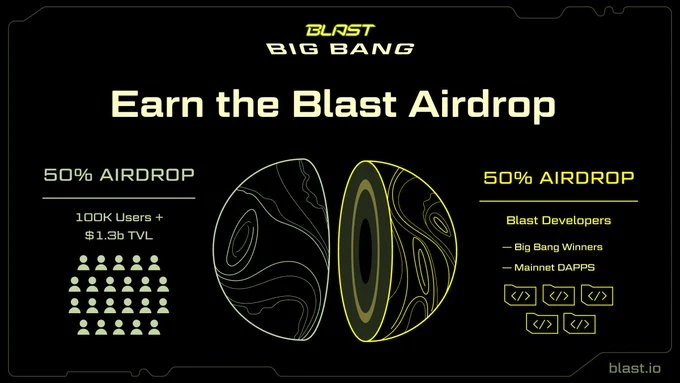
Blast 表示,空投数量的 50% 将面向 BIG BANG 大赛获奖者发放,另 50% 面向交互用户。Blast 进一步表示:“利用 Blast 空投激励你的 DApp 在 Blast 主网上的增长,从而在比赛中取得优势”。(原文:Use the Blast Airdrop to incentivize growth for your dapp on the Blast Mainnet and gain an edge over competitors.)。
项目扶持与代币空投,Blast「BIG BANG」大赛规则解析

这是 Blast 首次提及空投相关的具体数据,从其宣发文案可以得出,评选的部分决定权或将由交互用户进行,而参赛项目可以在参赛中承诺对用户的激励方式,并在主网上线后实施(但是否强制要求按承诺实施未知)。

此前 Arbitrum 进行了大量的项目发展激励代币空投,对协议和生态数据的有着显著的促进作用,用户也从中获得了代币收益。因此用户可在后续活动中持续关注参赛项目并保持交互,因获奖项目预期不会过多,或将有超额收益。

例如杠杆交易协议 Particle 承诺,将向社区用户发放 100% 的开发者空投;交易 Bot Tornado Blast 宣布将选择测试网用户,并向 X 平台互动用户发放主网上线时的奖励。

项目扶持与代币空投,Blast「BIG BANG」大赛规则解析

参赛项目组别

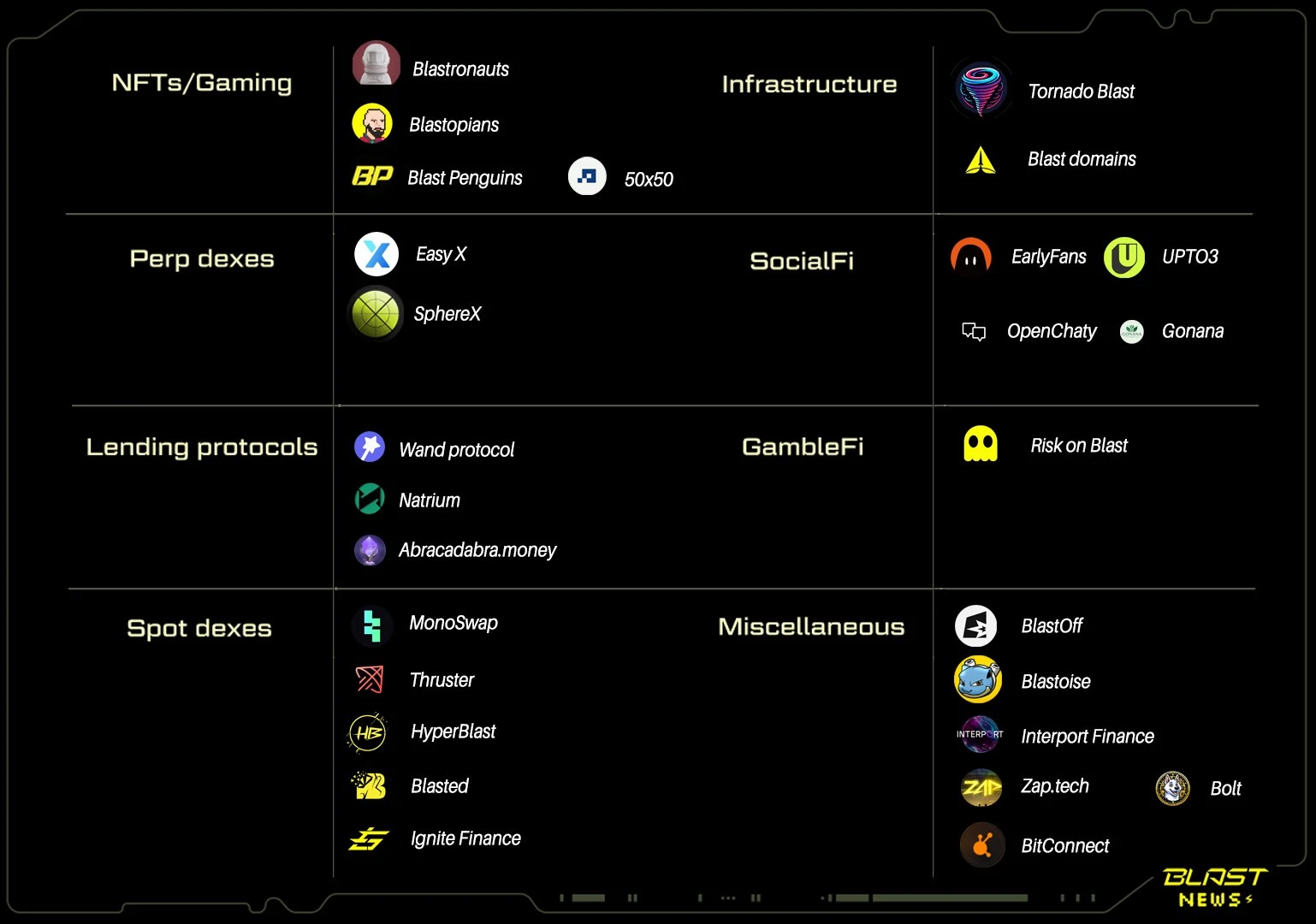
本此 BIG BANG 将设置八个组别,将区分早期或成熟项目,组别分别为:

  • 永续合约 DEX(Perp DEX)

  • 现货交易所:例如 AMM 或订单簿式 DEX

  • 借贷协议

  • NFT 和游戏:NFT 藏品、NFTfi、基础设施和区块链游戏

  • SocialFi:下一代社交产品

  • GambleFi:链上的随机性博彩游戏

  • 基础设施:TG 机器人、预言机、RPC、多签钱包、账户抽象、分析工具

  • 其他:尤其是以独特方式利用 Blast 原生收益,或 Gas Fees 收入分享的项目

评审将通过概念价值、设计和开发情况、Blast 原生性(具备无法在其他链上实现的 Blast 特性),但并未透露每个组别下设置多少获奖项目。

X 平台账户@Blastdapps发布了部分生态早期项目,用户可保持关注并择优挑选交互。
项目扶持与代币空投,Blast「BIG BANG」大赛规则解析

Letture associate

A Guide to Grayscale’s ‘Bottom Fishing’: Using Cash Flow to Assess Cryptocurrency Value

**Title:** Grayscale's Guide to Bottom-Fishing: Valuing Cryptoassets Using Cash Flows **Summary:** This report by Grayscale Research presents a fundamental valuation framework for cryptocurrency assets, moving beyond pure speculation to analyze those with underlying cash flows. It distinguishes between "commodity-like" assets (e.g., Bitcoin) and "cash-flow" assets, primarily within DeFi. Using the leading decentralized lending protocol Aave as a case study, the analysis applies traditional financial methodologies like Discounted Cash Flow (DCF) and Price-to-Earnings (P/E) multiples. Key findings indicate that AAVE tokens are currently undervalued. Despite recent challenges, the protocol's strong revenue growth, ~50% net profit margin, and diversified treasury support a fundamental valuation range of $80-$100 per token (compared to a ~$75 market price at the time of writing). In a base-case scenario driven by stablecoin adoption and regulatory clarity, the fair value could rise to around $175 within a year. The report emphasizes that protocol success does not automatically translate to token value. It critically examines the "value capture" mechanisms—such as buybacks, burns, and staking rewards—that channel protocol profits to token holders. Furthermore, it addresses the legal and governance complexities of Decentralized Autonomous Organizations (DAOs), noting their difference from traditional corporate equity but highlighting how robust, transparent governance can align protocol economics with holder interests. The conclusion is that the crypto market is maturing, with capital increasingly flowing towards projects with demonstrable fundamentals, real adoption, and disciplined capital allocation, creating opportunities for value-based investors.

marsbit28 min fa

A Guide to Grayscale’s ‘Bottom Fishing’: Using Cash Flow to Assess Cryptocurrency Value

marsbit28 min fa

After semiconductors lead the gains, are funds buying into AI orders or a macroeconomic rebound?

After US-Iran talks led to a temporary ceasefire and framework for reopening the strategic Strait of Hormuz, U.S. stocks rose on June 18, with the Nasdaq gaining 1.9%. The semiconductor and AI hardware sectors outperformed. This rally stemmed primarily from reduced geopolitical risk, which lowered oil prices and inflation expectations, easing discount rate pressure on high-valuation growth stocks like tech. The key question is not whether tech rebounded, but the nature of the rebound. The market appears to be selectively repricing AI infrastructure plays rather than broadly chasing AI narratives. Gains were concentrated in chips, optical interconnects, memory, and domestic manufacturing—segments tied to tangible data center build-outs and capital expenditure. Intel's ~10% surge, fueled by a Trump statement about potential Apple collaboration, exemplifies this mixed dynamic. It reflects policy catalysts and domestic manufacturing sentiment more than confirmed fundamentals. Meanwhile, strong earnings from companies like Astera Labs (revenue up 93% YoY) provided concrete evidence of AI-driven demand in hardware. In essence, the rally represents a risk-premium recalibration. Lower Middle East tensions opened a valuation repair window, and capital flowed first into AI infrastructure segments with visible near-term revenue streams. The sustainability of this move hinges on upcoming Q2 earnings, specifically continued strength in cloud provider capex, AI server orders, and hardware company guidance. Policy hopes alone are insufficient; the cycle needs validation from orders and financials.

marsbit33 min fa

After semiconductors lead the gains, are funds buying into AI orders or a macroeconomic rebound?

marsbit33 min fa

The Entire Internet Hails Noam's Joining, But OpenAI's Loss Bill Just Got Thicker

While the AI community celebrates Noam Shazeer, co-author of the "Attention Is All You Need" paper, joining OpenAI as Head of Architectural Research, the company's audited financials reveal a starkly different reality. In 2025, OpenAI reported $13.07 billion in revenue but a massive $20.92 billion operating loss. Even excluding a one-time accounting charge, the cash burn is severe, with $3.7 billion consumed in Q1 2026 alone. This high-profile hiring occurs against a backdrop of significant internal research talent drain, with key founders and researchers departing as the company's focus shifts from exploratory research to product iteration. Meanwhile, OpenAI's fundamental business model faces a deep crisis. It paid Microsoft $10.59 billion for compute in 2025, while its vast user base of 9 billion weekly actives includes only 50 million paying customers, making growth a direct driver of escalating costs. The article argues Shazeer's recruitment is less about technical necessity and more about crafting a compelling narrative for OpenAI's upcoming IPO, aiming to justify a rumored $1 trillion valuation to future public market investors. It contrasts OpenAI's strategy with Anthropic's reported path to profitability, which relies on a strong enterprise customer base and cost control, rather than star-powered narratives. Ultimately, the piece concludes that while Shazeer's architectural work may take 1-2 years to materialize, OpenAI's financial clock is ticking much faster, with its massive losses undercutting the celebratory headlines.

marsbit2 h fa

The Entire Internet Hails Noam's Joining, But OpenAI's Loss Bill Just Got Thicker

marsbit2 h fa

Trading

Spot
Futures
活动图片