Early Mickey Mouse version no longer belongs to Disney, becomes top NFT on OpenSea

CointelegraphPubblicato 2024-01-01Pubblicato ultima volta 2024-01-02

Introduzione

An earlier version of Walt Disney Company’s Mickey Mouse mascot has become the number 1 trending nonfungible token (NFT) at the OpenSea marketplace after it entered the public domain for the first time.

An earlier version of Walt Disney Company’s Mickey Mouse mascot has become the number 1 trending nonfungible token (NFT) at the OpenSea marketplace after it entered the public domain for the first time.
On Jan. 1, a version of Mickey featured in the 1928 short film “Steamboat Willie” became publicly available after its copyright reached its limit. Steamboat Willie was the first publicly distributed appearance of Mickey Mouse. After almost a century, Disney’s claim to this version of the character ended because United States law only allows copyright to be held for 95 years.
Following the copyright expiration, three NFT collections related to the old mascot took the top three spots on OpenSea’s 24-hour trending list. The NFT collection titled “Steamboat Willie Public Domain 2024” has hit the number one spot after getting around $1.2 million in trading volume. Another collection called “Steamboat Willie” took the number two spot on the list, while “Steamboat Willie’s Riverboat” took the third highest ranking.

Steamboat Willie NFTs on OpenSea’s 24-hour trending list. Source: OpenSea Apart from the trending list, the Steamboat Willie Public Domain 2024 collection also took the number six spot on the 24-hour top charts in OpenSea, joining popular collections like the Bored Ape Yacht Club (BAYC) and Pudgy Penguins. The Steamboat Willie collection also came in eighth on the same list.

Steamboat Willie NFTs on OpenSea’s 24-hour top list. Source: OpenSeaWhile the copyright expired for this version of the popular mascot, Disney reminded the public that modern versions of Mickey will remain unaffected by Steamboat Willie’s expiration.
Related: NFT recap 2023: What happened in the NFT space this year?
In a statement to CNN, a Disney spokesperson said that the company will “continue to protect” their rights in the modern versions of Mickey Mouse and other works that remain subject to copyright. “We will work to safeguard against consumer confusion caused by unauthorized uses of Mickey and our other iconic characters.”
Magazine: First digital yuan wallet seizure, China’s $10B Web3 fund, Starbucks NFTs: Asia Express

Letture associate

Transaction Substitution Vulnerability Discovered in Ledger's Ethereum Application

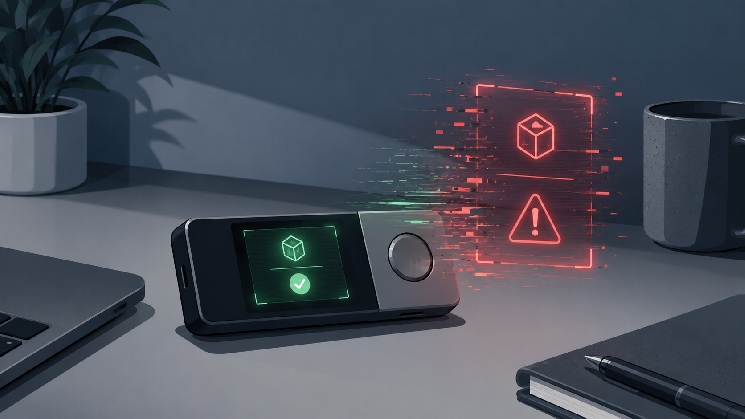
A vulnerability involving transaction substitution has been identified and confirmed in the Ethereum application for Ledger hardware wallets. The issue was a race condition between the transaction data displayed on the device's screen and the buffer holding the actual transaction data. This flaw allowed a malicious actor to overwrite a pending transaction while the user was reviewing a legitimate one on the display, potentially leading to the signing of an unseen transaction. The vulnerability was independently discovered by multiple parties. On August 22, 2026, researcher TestMachine disclosed it after detection by the Azimuth scanning tool. Later, on August 27, OneKey's founder Yishi Wang announced his team had successfully replicated the attack in a lab environment on app version 1.22.1. Ledger's security team, Donjon, responded that no real-world exploits or user losses occurred. They stated the flaw was internally identified and patched in Ethereum app version 1.22.2, released on August 13, 2026—prior to the public disclosures. An update to the underlying Ledger Secure SDK (v26.6.1) followed on August 21. Official security bulletin LSB 023, published August 27, details the vulnerability as residing in the SDK's I/O handling. While there is minor public discrepancy over whether version 1.22.2 or 1.22.3 fully resolved the issue, all parties strongly urge users to update their Ethereum application to the latest version via Ledger Live. The incident highlights a critical security principle: the safety of a hardware wallet depends on the entire chain of components—firmware, SDK, and applications—with a flaw in any link compromising the overall system.

cryptonews.ru7 min fa

Transaction Substitution Vulnerability Discovered in Ledger's Ethereum Application

cryptonews.ru7 min fa

Trading

Spot
活动图片