星球日报 | SEC不太可能在本周初作出ETF相关决定;TRB触及700美元后暴跌(0102)

Odaily星球日报Pubblicato 2024-01-02Pubblicato ultima volta 2024-01-02

Introduzione

Orbit Chain跨链桥疑似遭遇黑客攻击,损失约8150万美元.

星球日报 | SEC不太可能在本周初作出ETF相关决定;TRB触及700美元后暴跌(0102)

头条

消息人士:SEC 仍需时间审查文件,不太可能在本周初作出 ETF 相关决定

Fox Business 记者 Eleanor Terrett 于 X 平台表示,SEC 仍需时间来审查上周四、周五各大 ETF 发行商所提交的 S-1 文件,考虑到自上周五以来 SEC 一直在休假,因此不太可能在本周初关于 ETF 的决定。

Orbit Chain 跨链桥疑似遭遇黑客攻击,损失约 8150 万美元

Orbit Chain 跨链桥疑似被黑客攻击,损失 8150 万美元的加密货币和稳定币。 此次黑客攻击的具体性质尚不清楚。

据悉,在五笔独立的交易中,每笔交易都发送到一个新的钱包,Orbit Bridge 发送了 5000 万美元的稳定币(3000 万 Tether、 1000 万 DAI 和 1000 万 USDC)、 231 枚 wBTC(约 1000 万美元)和 9500 枚 ETH(约 2150 万美元)。

TRB 短线暴跌,且现货与期货合约出现 130 美元价差

欧易 OKX 行情显示,TRB 短线大幅回调,且现货和期货合约价格出现巨大价差,现货现报 387.24 USDT,永续合约现报 252.63 USDT。

行业要闻

加密货币总市值达 1.8 万亿美元,BTC 市占率为 48.3% 

CoinGecko 数据显示,加密货币总市值达 1.8 万亿美元, 24 H 涨幅为 4% 。此外,BTC 市占率上升至 48.3% ,ETH 市占率为 15.8% 。

项目要闻

Synthetix 创始人:因 TRB 异常波动事件,SNX 质押者损失了约 200 万美元

Synthetix 创始人 kain.eth 于 X 平台表示,因今日的 TRB 异常波动事件,SNX 质押者损失了约 200 万美元。

kain.eth 解释称,TRB 在 Synthetix 原本存在上限 25 万美元的未平仓合约限制,但随着其价格在过去几个月的上涨,这一上限已膨胀至 1250 万美元,它本应被下调,但风险控制不严。随着今天 TRB 价格的飙升,几个空头仓位被开设,但由于现货价格和合约价格错位,套利平衡失灵,这对于 Synthetix 而言是一次教训。

Solana Mobile:Saga 手机已交付超 95% 

Solana Mobile 披露最新数据表示,过去几周对于 Solana Mobile 来说非常特别,截至目前 Saga 手机已交付了超过 95% ,剩下需要交付的手机将在本周内发出。

Sushi 回顾 2023 年:总交易额达 510 亿美元

多链 DEX Sushi 发布 2023 年总结报告,总交易额达 510 亿美元。

Sushi 现已部署至 30 多个网络, 2023 年新增支持 Core、LineaAptos、Haqq、BaseFilecoin
2023 年,Sushi 在 3 个网络上使用率最高,交易额排名前三分别是以太坊主网、PolygonArbitrum。在 Sushi V3版本中,Base 网络上的交易额最高。
此外,跨链解决方案 SushiXSwap 已扩展到更多的网络,支持 Ethereum、Arbitrum、Optimism、Polygon、Base、Avalanche、BNB Chain.

Injective:Volan 升级已在测试网上运行,主网升级即将进行

Injective 在 X 平台宣布,Volan 升级现已在 Injective 测试网上成功运行,即将在主网进行升级。据官方介绍,Volan 升级将为 Injective 引入以下功能:
- 亚秒级区块时间:实现快速交易并降低抢先(front-running)交易和 MEV 攻击风险;
- IBC 集成:实现与 Cosmos 生态系统及其他 IBC 支持链的互操作性;
- 支持 CosmWasm 智能合约:允许开发者使用多种编程语言创建多样化应用;
- 与 EVM 兼容:降低开发者迁移应用的门槛;
- 引入治理模块:使 INJ 代币持有者能参与网络决策过程。
据悉,此次升级需要对 Injective 网络进行硬分叉,这意味着所有节点和验证器都必须将其软件更新到最新版本。
Letture associate

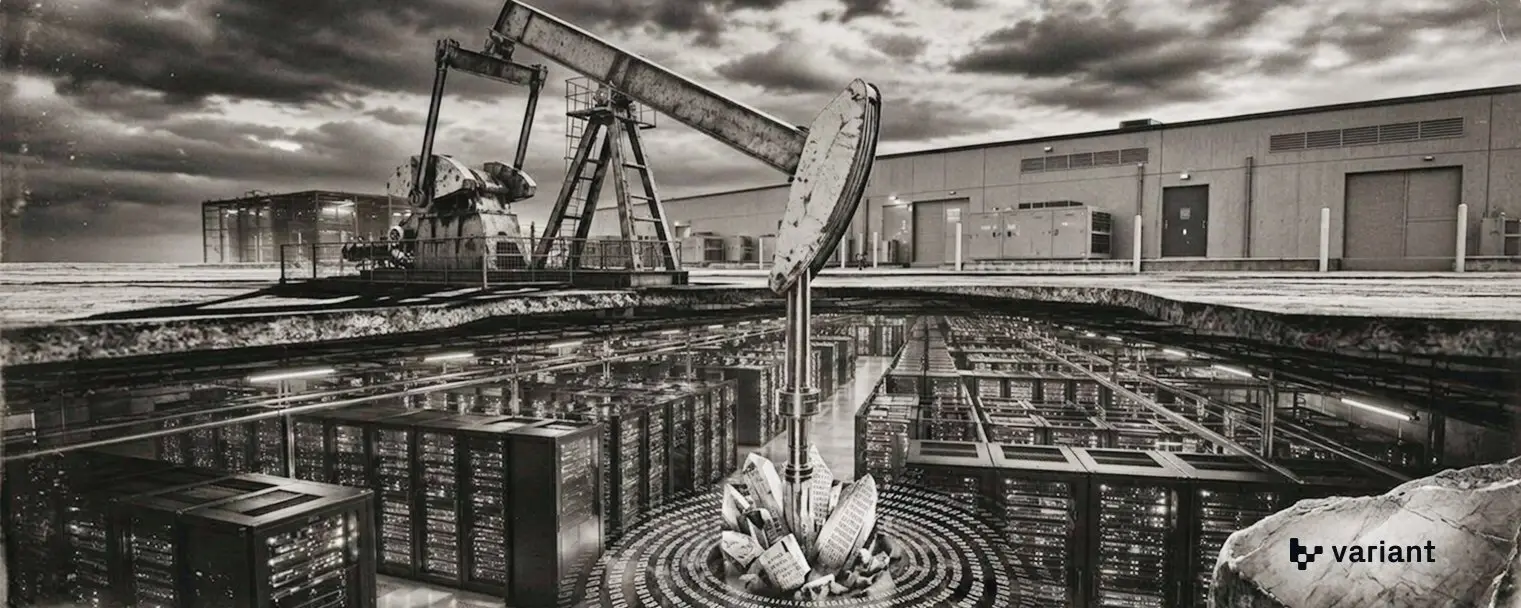
When Computing Power Becomes Commoditized, How Long Until a GPU Futures Market Emerges?

"When Will GPU Futures Arrive? A Framework for Assessing Compute as a Commodity" The article explores the potential for a robust futures market for compute power (GPUs), arguing that such a market is not yet mature but may emerge. It analyzes the landscape using a five-part framework developed for new commodity futures markets. The analysis scores the current state: * **Fragmented Supply (Red)**: Supply is highly concentrated among hyperscale cloud providers (AWS, Azure, GCP, Oracle), limiting the need for price discovery. * **Price Volatility (Green)**: GPU pricing is already highly volatile due to uncertain supply and surging demand. * **Physical Settlement Infrastructure (Green)**: Early infrastructure exists via OTC brokers and price indices (e.g., Ornn, Silicon Data) standardizing contracts. * **Standardized Unit (Red)**: A lack of standardized, tradable units hinders markets; a GPU instance hour varies by region, configuration, and contract terms. * **Lack of Alternatives (Yellow)**: Large players hedge internally via vertical integration, while smaller players bear spot market risk. Overall, the market shows promise (volatility, early infrastructure) but lacks the fragmented supply and standardization needed for large-scale futures trading. Most activity remains OTC. Key open questions and hypotheses: 1. Supply is expected to fragment moderately in 1-2 years, driven by new cloud providers, cheap power locations, and demand from non-frontier labs and AI startups using open-source models. 2. Standardization is most likely to emerge around inference workloads (forecast to be >65% of AI compute demand by 2029), which have simpler, more homogeneous hardware needs than training. Widespread adoption of open-source model weights could accelerate this by democratizing inference and creating demand for optimized, standardized infrastructure. 3. The primary traded unit will likely be the **"chip instance hour"** (akin to electricity, traded regionally), not the physical chip or the downstream AI output (tokens).

marsbit20 min fa

When Computing Power Becomes Commoditized, How Long Until a GPU Futures Market Emerges?

marsbit20 min fa

When Computing Power Becomes Commoditized, How Long Until a GPU Futures Market?

When Compute is Commoditized: How Far Away is a GPU Futures Market? The article explores the potential emergence of a futures market for computing power ("compute"), akin to markets for commodities like oil or electricity. It uses a five-dimension framework to assess the market's maturity for sustaining robust futures trading. **Current Market Assessment (Scorecard):** * **Supply Fragmentation:** 🔴 **Red.** Supply is highly concentrated, dominated by a few hyperscale cloud providers. * **Price Volatility:** 🟢 **Green.** GPU pricing is already highly volatile. * **Physical Settlement Infrastructure:** 🟢 **Green.** Early infrastructure exists at the OTC/broker level. * **Standardization:** 🔴 **Red.** Compute lacks a standardized, tradable unit (e.g., an H100 hour is not uniform). * **Lack of Substitutes:** 🟡 **Yellow.** Vertically integrated players can hedge internally, while others are forced to be long. **Conclusion:** The overall scorecard suggests a robust futures market is premature. The market has volatility and early settlement infrastructure but lacks the necessary supply fragmentation and standardization for large-scale price discovery. Most activity remains OTC. **Key Unanswered Questions & Hypotheses:** The article posits that the market could evolve in the next 1-2 years: 1. **Supply:** May become *moderately more fragmented* due to new cloud providers, cheaper power locations, and demand from long-tail users (e.g., startups running open-source model inference). 2. **Standardization:** Could emerge from the growing **inference** workload (expected to be >65% of AI compute demand by 2029), which has more homogeneous hardware requirements than custom training workloads. Widespread adoption of **open-source model weights** is seen as a key catalyst for democratizing inference and driving infrastructure standardization. 3. **Traded Unit:** The most viable layer for trading is likely the **"chip-instance-hour"** (powered, usable compute time), traded similarly to electricity in regional contracts with spot/futures overlays. Trading at the upstream "chip" layer is unlikely due to supply concentration, while the downstream "token" layer faces challenges due to lack of uniformity across AI models.

链捕手25 min fa

When Computing Power Becomes Commoditized, How Long Until a GPU Futures Market?

链捕手25 min fa

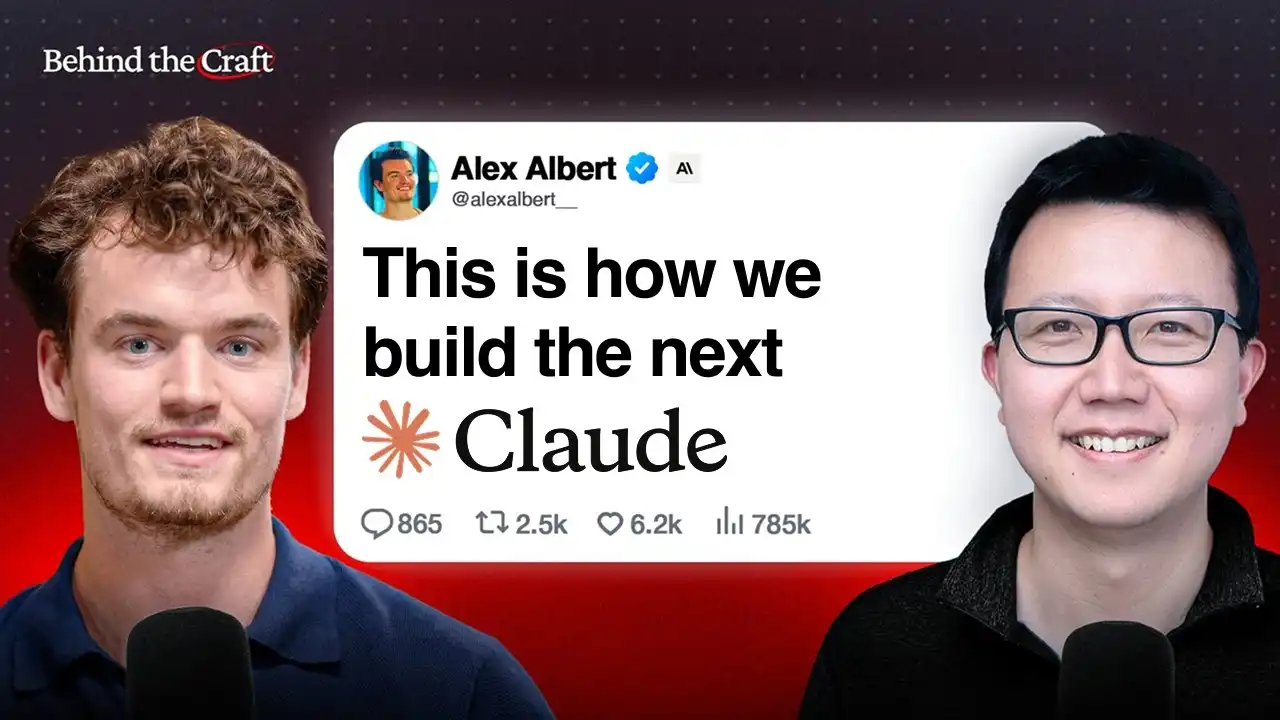
Interview with Anthropic's Product Manager: Claude 'Dreams' in the Background, We Study Its Consciousness Formation Like Raising a Child

**Title**: Anthropic Product Manager Interview: Claude "Dreams" in the Background, We Study Its Consciousness Formation Like Raising a Child **Summary**: In this interview, Anthropic Research Product Manager Alex Albert discusses the development of the next-generation Claude model. He explains that Anthropic treats each new model as a product, defining its intended capabilities and desired "personality" from the start. The development process is likened to "raising" a model, where the final traits emerge during training. Key focus areas include integrating user feedback into training, prioritizing key capabilities like coding and knowledge work, and refining Claude's interactive personality. Albert highlights the importance of Claude's character as models evolve into autonomous agents making unsupervised decisions. He details features like "adaptive thinking," which lets Claude decide when to reason deeply, and a "dreaming" process where the agent reviews and consolidates its memories offline, akin to human memory reconsolidation. The interview also covers how AI accelerates product development, shifting bottlenecks from building to strategic coordination. Albert describes using Claude as a brainstorming partner and research tool internally. While Anthropic has researchers exploring questions of AI consciousness, the company has no official stance on whether Claude is conscious. The focus remains on ensuring Claude is trustworthy and aligned as it takes on more complex, long-term tasks.

marsbit1 h fa

Interview with Anthropic's Product Manager: Claude 'Dreams' in the Background, We Study Its Consciousness Formation Like Raising a Child

marsbit1 h fa

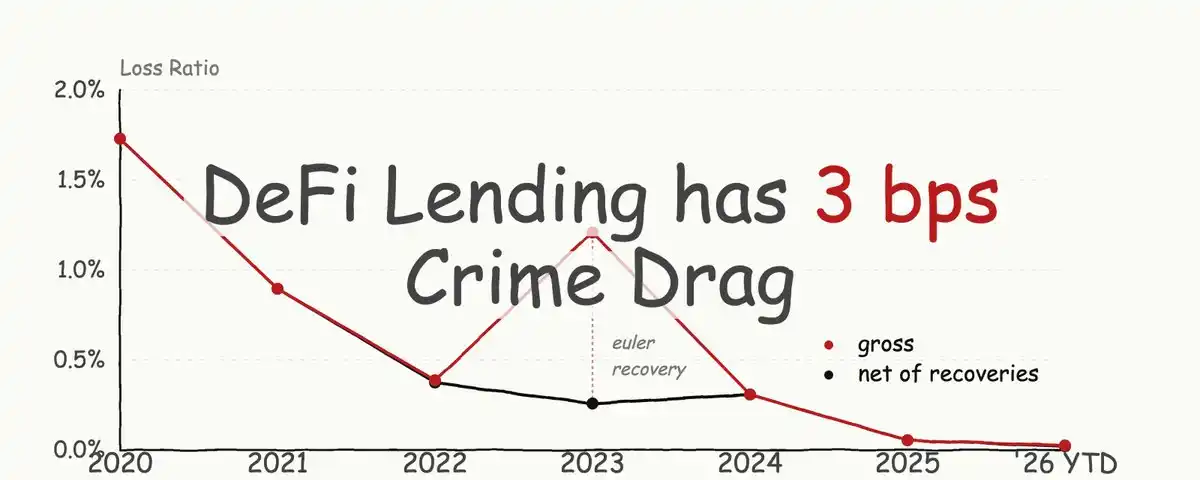
Annual Loss Rate Only 0.03%: Data Disassembles the Real Risk of DeFi Lending

DeFi lending's real-world annual loss rate from hacks and exploits is approximately 0.03% of the Total Value Locked (TVL), excluding cross-chain bridge incidents. This analysis, based on data from DeFi Llama, shows that while lending protocols are frequent targets due to their concentrated assets, the actual financial impact relative to the sector's massive scale is minimal. The overall DeFi hack total of $77.51B is heavily skewed by cross-chain bridge breaches. Removing those, losses drop to $45.18B, with lending and AMM protocols being the most affected non-bridge categories. Risk has significantly improved as the ecosystem has matured. For the year leading to May 2026, net losses in EVM and Solana lending protocols were $30.1 million against an average daily TVL of $99.6 billion, resulting in the 0.03% loss rate. Notably, the industry's asset recovery capability, exemplified by the full recovery and surplus from the Euler Finance hack, mitigates net losses, with a ~20% recovery rate for non-bridge lending incidents. Attack scale follows a log-normal distribution, meaning most incidents are small, and catastrophic losses are rare. This demonstrates that diversification across protocols is an effective risk mitigation strategy. The data indicates that DeFi lending has evolved into a measurable, compartmentalized, and relatively low-risk sector within the broader digital asset landscape.

marsbit1 h fa

Annual Loss Rate Only 0.03%: Data Disassembles the Real Risk of DeFi Lending

marsbit1 h fa

Trading

Spot
Futures
活动图片