BendDAO拥抱BTC生态,能否老树开花?

Odaily星球日报Pubblicato 2023-12-29Pubblicato ultima volta 2023-12-29

Introduzione

与其说是主动求变,不如说是被市场大势裹挟。

原创 | Odaily星球日报

作者 | 0xAyA
BendDAO拥抱BTC生态,能否老树开花?

终于,BendDAO 也开始发铭文了——这个此前专注于 NFTFi 领域,致力于为蓝筹提供更多流动性的协议,最终也还是逃不过 BTC 生态和铭文滚滚而来的浪潮。早在两周前,BendDAO 就表示,团队计划提出解决方案来拥抱比特币 NFT 生态系统,新的解决方案将允许比特币 NFT 和 BendDAO 之间的无缝交互,并支持 WBTC 流动性池作为可借贷资产。

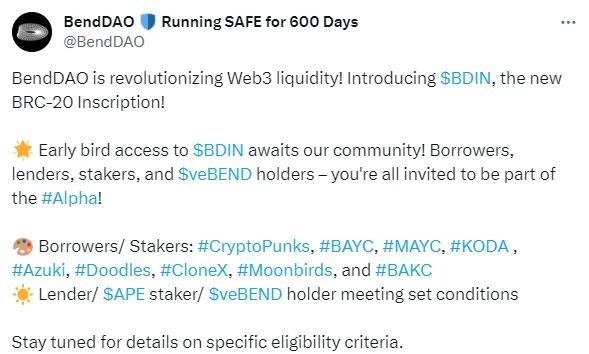
而后 BendDAO 宣布将连接 BRC 20 和 ERC 20 流动性,并即将推出 BendDAO BRC-20 ,为比特币生态提供借贷和跨链桥服务。就在昨天,官方正式宣布将推出 BRC-20 代币 BDIN,将向借款人、贷款人、质押者和 veBEND 持有者提供优先权益。
BendDAO拥抱BTC生态,能否老树开花?

BRC 20 是在比特币网络上发行同质化代币的格式标准,它是通过利用 Ordinal 协议将铭文设置为 JSON 数据格式来配置代币合约、铸造和转移代币,我们可以将其理解为是一种变异的序数 NFT,NFT 上铭文刻录的是图片,BRC 20 上标识的铭文都是统一的 JSON 格式的文本数据(文本)。在 BRC 20 中,铭文亦是 BRC 20 代币的记账账本,可用于追踪每一次代币的变动。ERC 20 则是基于 EVM 依赖智能合约的代币,而由于 BTC 缺乏智能合约支持,所以在 BRC 20 上面发行的代币功能较少。

虽然两者同为代币标准,但 ERC 20 与 BRC 20 本质上来说较少有相通之处。BendDAO 提供跨链桥服务,毫无疑问将大大减少两者之间的隔阂,而这种跨链支持也能够提升两个最重要的生态系统之间的流动性,无论是提高资产的利用率,还是对未来比特币生态的整体发展,都具有潜在的重要意义。

BendDAO 并不是第一次做这种增强流动性的布局——早在以太坊 NFT 叙事方兴未艾之时,BendDAO 就将目光瞄向了整个生态里最重要的一块蛋糕,即蓝筹 NFT 市场。通过“点对池”设计以及双向挖矿激励,BendDAO 很快就吸引了对资金效率极为敏感的蓝筹 NFT Holder 们,至此一个又一个 BAYC 被放入质押池中。

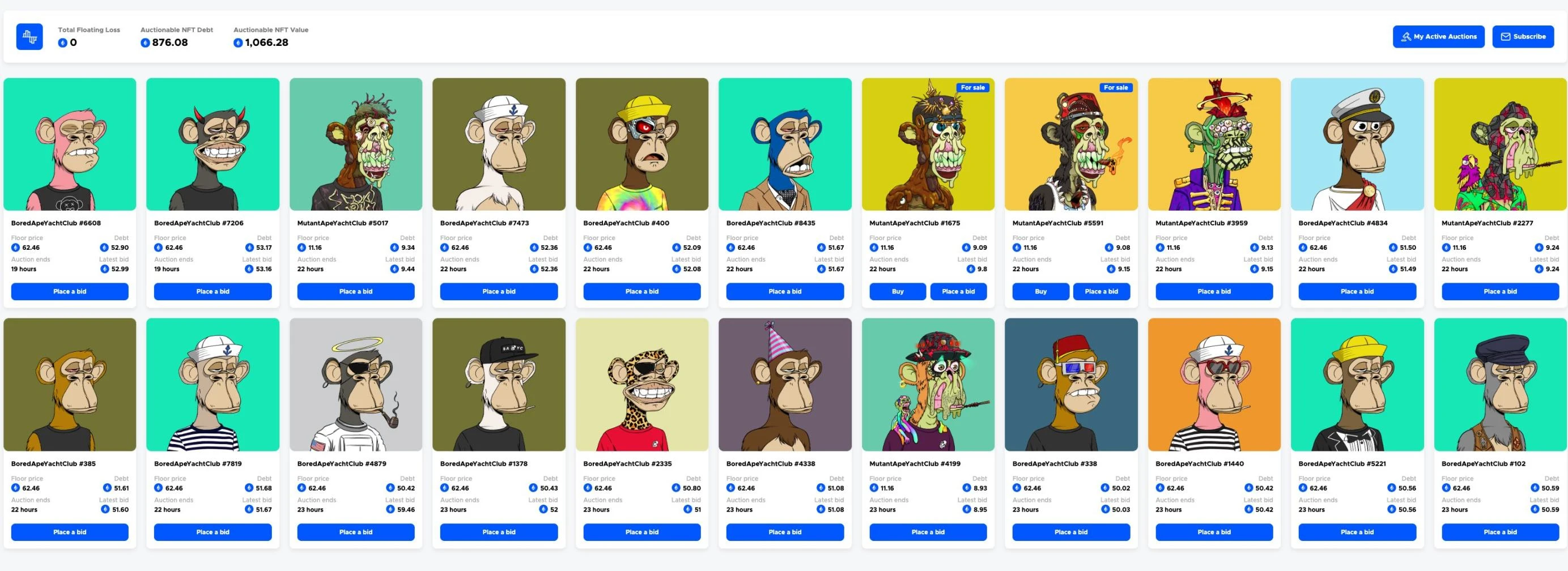
然而 BendDAO 本身的设计以及市场接连不断的暴雷事件,使得清算事件接二连三的发生,尽管项目方在 8 月份的清算事件过后很快调整了清算机制, 将清算阈值由 90% 逐步降低至 70% ,拍卖周期由 48 小时调整为 4 小时,取消“首次投标要高于地板价 95% ”的限制等。但依然还是无法避免流动性危机的产生。
BendDAO拥抱BTC生态,能否老树开花?

随着市场对 NFT 的狂热逐渐消退,蓝筹 NFT 在这一年也陷入了阴跌困局中,头部项目的地板价离最高点纷纷腰斩一半有余,原本人声鼎沸的 NFTFi 叙事也变得鲜少有人问津。

BendDAO 此次的尝试,与其说是主动求变,更不如说是被市场大势所趋带动下的一种无奈之举——铭文和 Launchpad 热潮之下,HOOK,LEVER 等项目纷纷转型,而 BendDAO 也选择了这条路,他们此次的尝试能否成功?时间会给出答案。

Letture associate

Banking Giants Battle in the Tokenization Arena: Who Will Take the Lead?

**Banking Titans Battle in Tokenization: Who Leads the Pack?** Four major banks—JPMorgan Chase, Goldman Sachs, HSBC, and BNY Mellon—are heavily investing in tokenization infrastructure but have adopted distinct strategic paths. This analysis compares them across four key dimensions: verified transaction volume, product breadth, regulatory compliance, and underlying infrastructure model. JPMorgan's Onyx network stands out with over $1 trillion in cumulative cleared transaction volume, focusing deeply on niche areas like tokenized collateral management and intraday repo settlement. However, its closed private network limits market reach. Goldman Sachs Digital Assets Platform (GS DAP) leads in product diversity, having executed tokenized bond issuances for sovereign entities and supranational organizations, and launched tokenized money market funds. It is also a founding member of the Canton Network, a shared ledger for institutions, though its overall cleared volume is less publicly disclosed than JPMorgan's. HSBC's Orion platform carves a niche in cross-border tokenized securities and sustainable finance, exemplified by its tokenized gold product and its role in large-scale digital green bond issuances for the Hong Kong Monetary Authority. Its global network provides a unique advantage in Asia and emerging markets. BNY Mellon, as the world's largest custodian, plays a fundamentally different role by providing essential custody and asset servicing infrastructure for digital assets, notably supporting the Canton Network. It does not actively issue front-end tokenized products. In summary, no single bank dominates all fronts. JPMorgan leads in scale, Goldman in product breadth, HSBC in global cross-border positioning, and BNY Mellon in foundational custody services. The market is likely to see multiple parallel development paths. A key future challenge is avoiding fragmentation; the success of interoperability standards like those within Canton Network will be crucial to realizing blockchain's full efficiency gains across the entire financial ecosystem. The next 5-10 years will reveal which institution builds the most enduring competitive moat.

Foresight News21 min fa

Banking Giants Battle in the Tokenization Arena: Who Will Take the Lead?

Foresight News21 min fa

Focus: Five Leading AI Stocks on Nasdaq

The report analyzes five Nasdaq-listed AI infrastructure stocks—Micron (MU), MaxLinear (MXL), AMD, Lumentum (LITE), and Vicor (VICR)—as distinct plays within the AI capital expenditure chain, rather than a single "AI trade." While all benefit from AI data center spending, they differ in their specific roles (e.g., memory, computing, optics, power, connectivity), financial resilience, and risk profiles. The author argues that the key question is not whether the AI narrative remains intact, but whether capital expenditure translates into real orders, earnings justify valuations, and portfolios can withstand high volatility. Historical data shows these stocks have significantly outperformed benchmarks but also experienced deeper drawdowns (~28% to -32%), highlighting their high-beta, high-volatility nature. An investment framework is proposed: core positions (e.g., MU, AMD) for stocks with stronger fundamental evidence; satellite positions (e.g., LITE, VICR) for high-potential, high-volatility names; and cautious observation (e.g., MXL) for smaller-cap ideas with unproven financials. The emphasis is on disciplined, phased buying during pullbacks—only when price corrections align with intact fundamentals and available risk budget—rather than emotional "buy-the-dip" strategies. Overall, AI infrastructure offers long-term potential, but success requires strict position sizing, role definition for each holding, and preparedness for significant volatility.

marsbit1 h fa

Focus: Five Leading AI Stocks on Nasdaq

marsbit1 h fa

Trading

Spot
Futures
活动图片