SignalPlus宏观研报(20231213):通胀温和下降,加密市场恐将再次探底

Odaily星球日报Pubblicato 2023-12-13Pubblicato ultima volta 2023-12-13

Introduzione

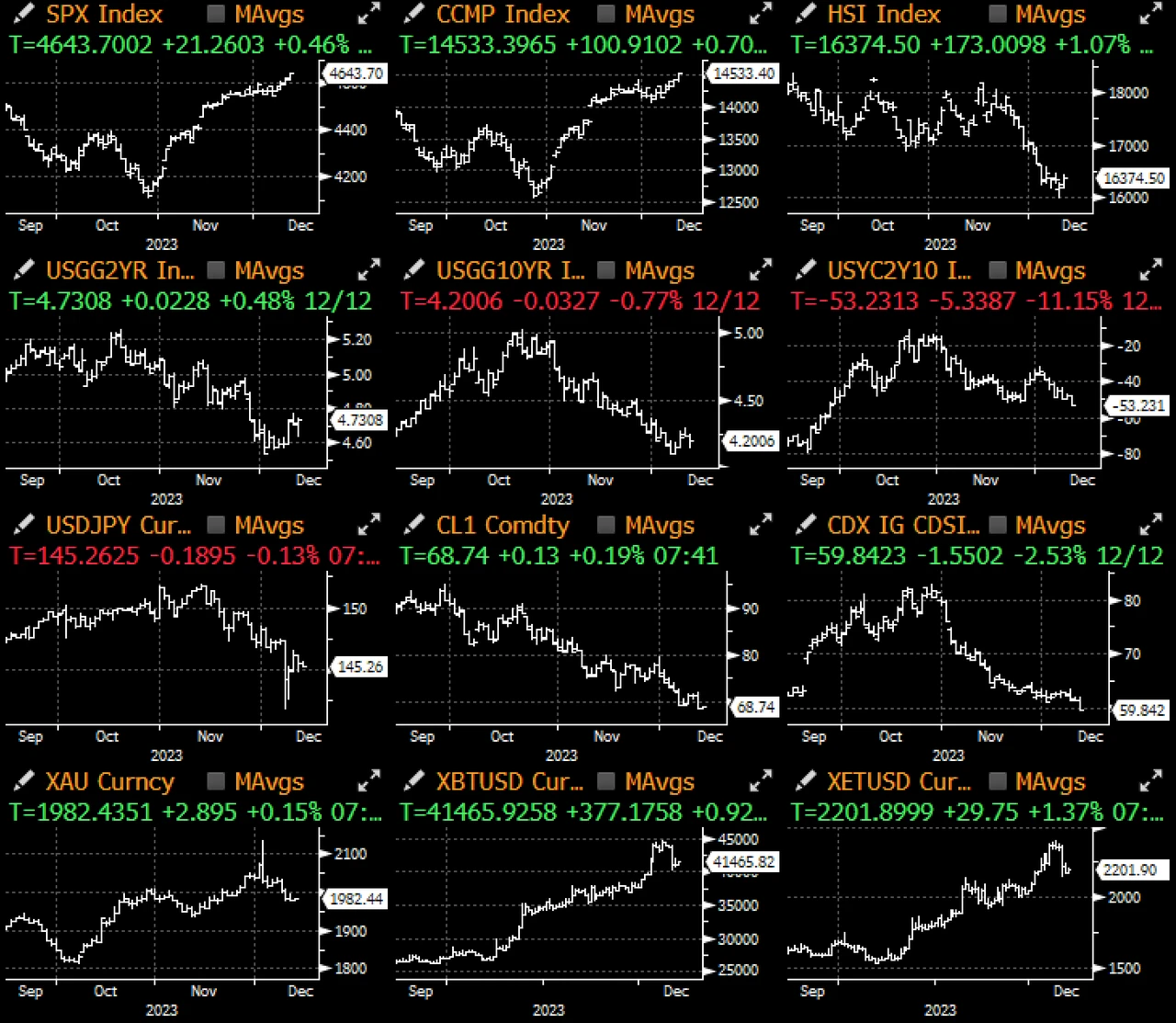
CPI方面,我们仍继续看到相同的趋势:核心商品价格保持疲软,而服务业则维持在3-4%的范围内,为美联储“期待”价格通胀继续降温至2%提供了恰好足够的空间。加密货币方面,在周一 BTC的小规模闪崩后市场没有太多进展,价格处于盘整。

SignalPlus宏观研报(20231213):通胀温和下降,加密市场恐将再次探底

SignalPlus宏观研报(20231213):通胀温和下降,加密市场恐将再次探底

SignalPlus宏观研报(20231213):通胀温和下降,加密市场恐将再次探底

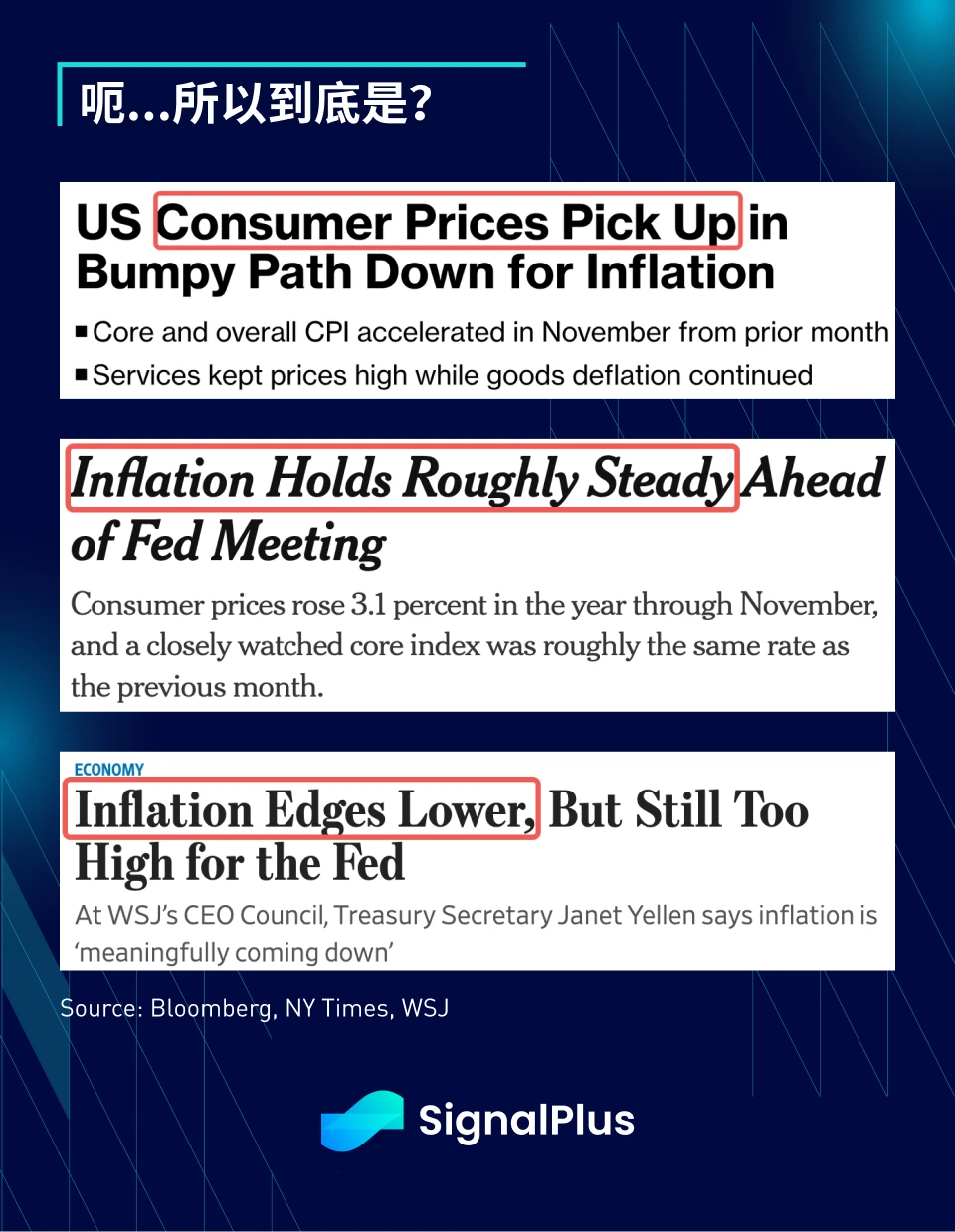
“回升”、“持稳”、“略有下降”,这是三个主流媒体昨天关于 CPI 数据的标题,基本上,CPI 满足了每个人的部分期待,不过深入研究细节的话,本次数据可能更偏向强劲。

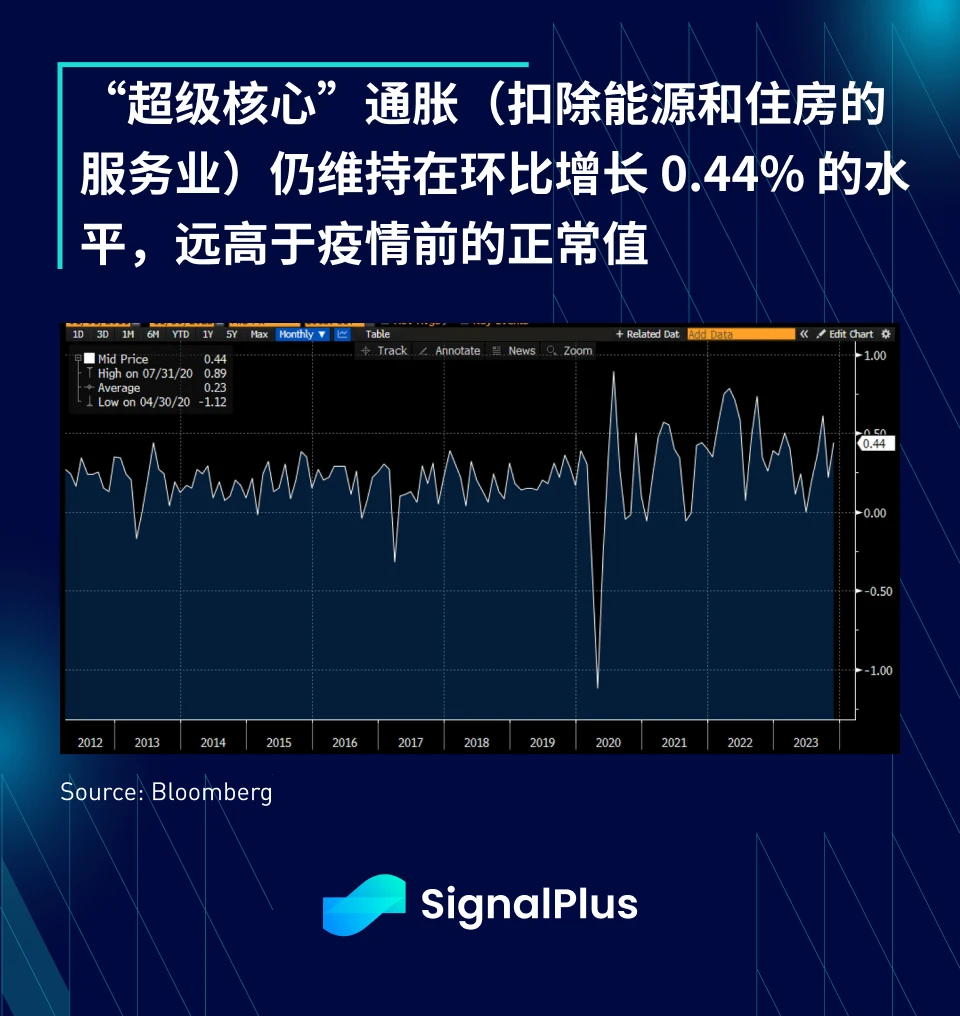
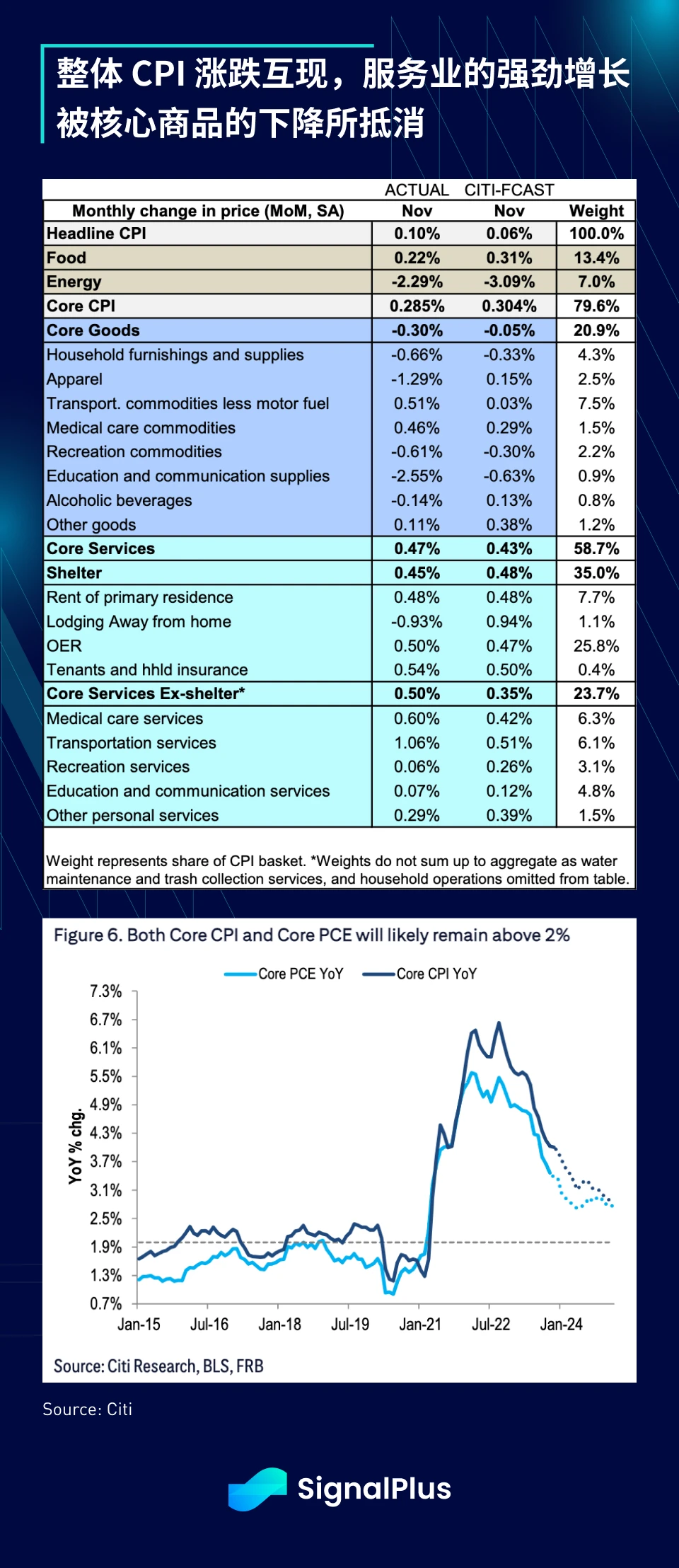
11 月整体 CPI 环比上涨 0.1% ,核心 CPI 上涨 0.3% (均走强),而 CPI 年增速放缓至 3.1% (基数效应),核心 CPI 年增稳定维持在 4.0% ,价格的疲软主要集中在能源(-2.3% )、汽油(-6% ),而服务(+ 0.5% )、房屋(+ 0.4% )和住房成本(+ 0.4% )仍继续推动 CPI 增长,此外,先前美联储偏好的“超级核心” 指数(扣除能源和住房的服务业)仍维持在环比增长 0.44% 的水平,依旧远高于疫情前的标准。

简而言之,我们仍继续看到相同的趋势:核心商品价格保持疲软,而服务业则维持在 3 – 4% 的范围内,为美联储“期待”价格通胀继续降温至 2% 提供了恰好足够的空间,然而,考虑到核心和超级核心通胀压力挥之不去,我们认为美联储有机会传达比市场目前所预期的更加鹰派的声音。
SignalPlus宏观研报(20231213):通胀温和下降,加密市场恐将再次探底

SignalPlus宏观研报(20231213):通胀温和下降,加密市场恐将再次探底

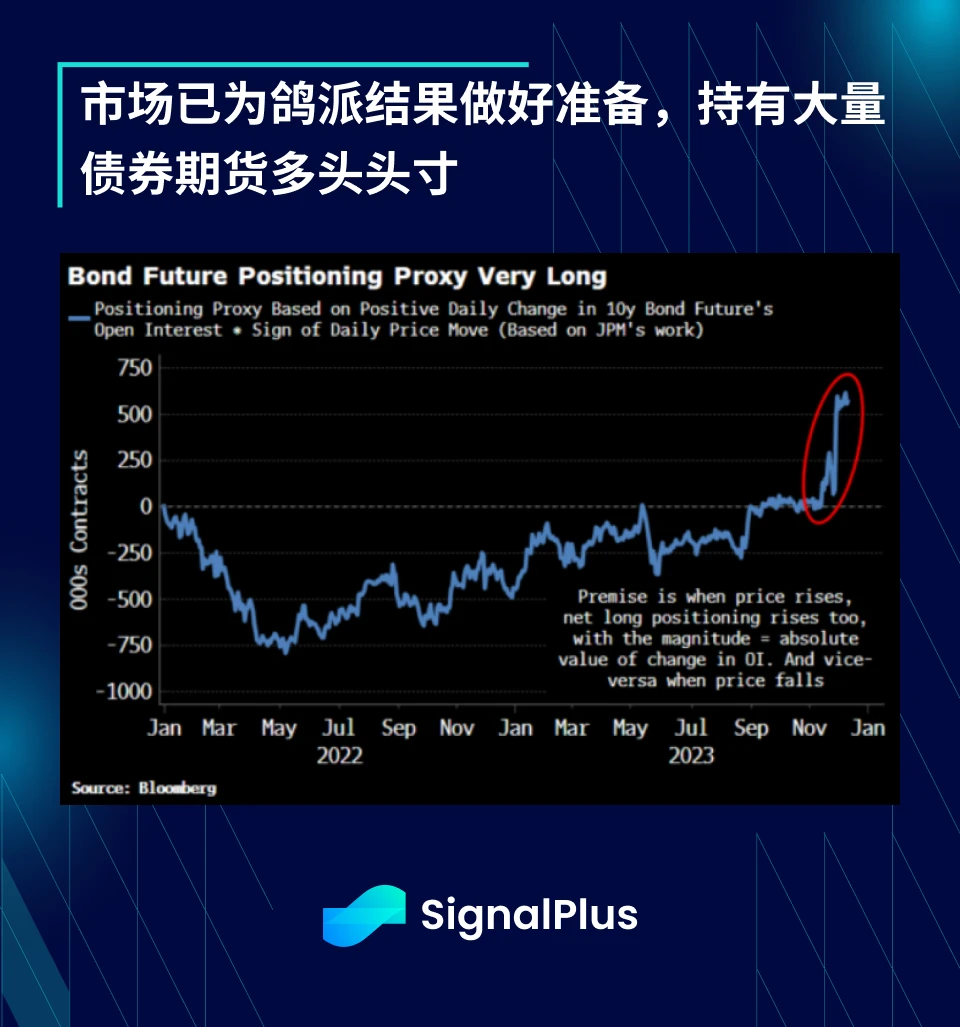
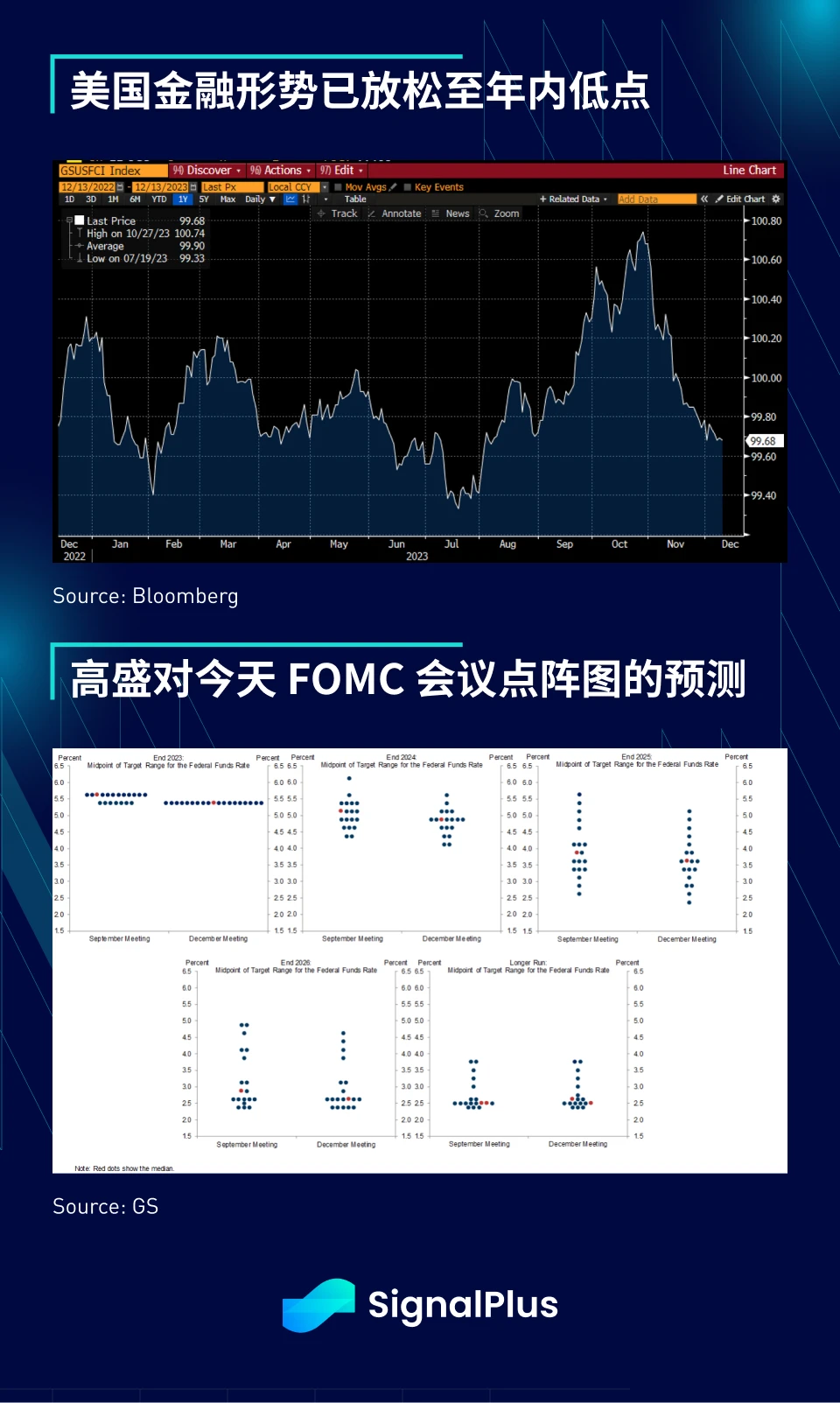
债券和股市都围绕著 CPI 数据经历了来回波动,不过流动性开始出现假期减弱的早期迹象,风险资产最终收高;至于今天的 FOMC 会议,虽然美联储可能对金融形势的快速放松感到不满,但考虑到委员会可能需要下调通胀预测和点阵图中值,Powell 将很难传达鹰派论点,另外,经济放缓的迹象加上令人失望的硬数据也可能会说服美联储考虑提前进行“保险式”降息,甚至在通胀显著降至 2% 目标之前。

简而言之,Powell 将很难在今天的会议上完全达到鹰派的标准,今天的会议应该更有机会偏向鸽派。
SignalPlus宏观研报(20231213):通胀温和下降,加密市场恐将再次探底

SignalPlus宏观研报(20231213):通胀温和下降,加密市场恐将再次探底

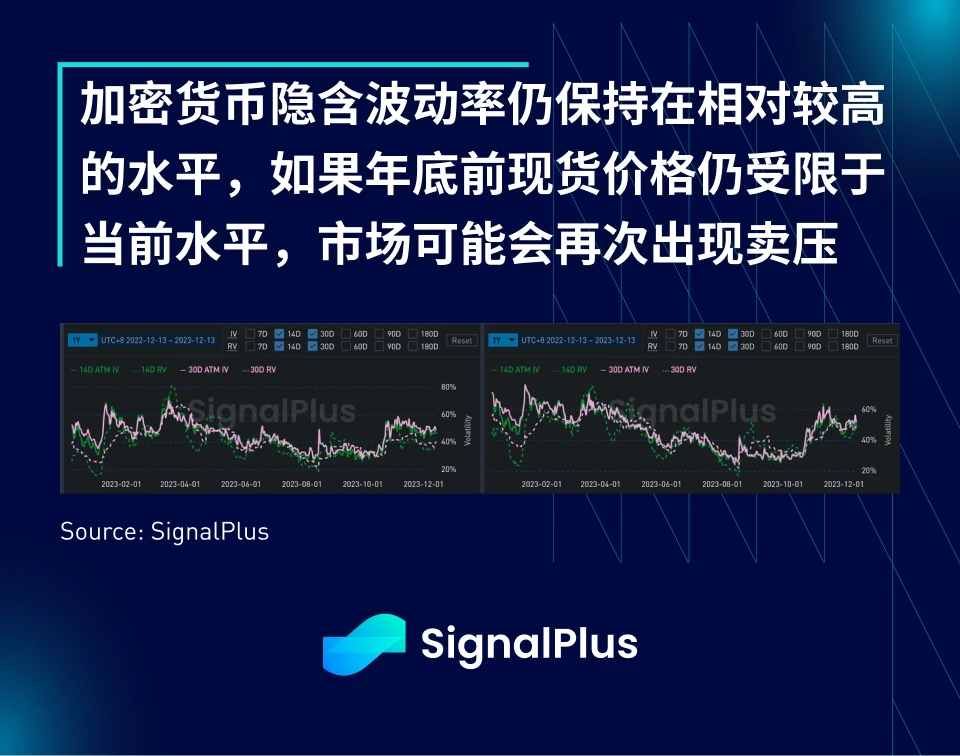
加密货币方面,在周一 BTC 的小规模闪崩后市场没有太多进展,价格处于盘整,然而,参考金价的走势,在突破 2130 美元的历史高点后出现急剧下跌,然后持续往 1980 美元回落,我们预期加密货币价格继续在当前水平盘整,有一些机会走跌,隐含波动率也开始从近期的高点回落,在即将进入年底假期的此时,建议谨慎持有仓位。

SignalPlus宏观研报(20231213):通胀温和下降,加密市场恐将再次探底

SignalPlus宏观研报(20231213):通胀温和下降,加密市场恐将再次探底

您可在 ChatGPT 4.0 的 Plugin Store 搜索 SignalPlus ,获取实时加密资讯。如果想即时收到我们的更新,欢迎关注我们的推特账号@SignalPlus_Web3 ,或者加入我们的微信群(添加小助手微信:xdengalin)、Telegram 群以及 Discord 社群,和更多朋友一起交流互动。

SignalPlus Official Website:https://www.signalplus.com
Letture associate

Vitalik's Latest Long Read: In the AI Era, How Can Code Become More Secure?

Vitalik Buterin explores the role of formal verification as a critical tool for software security, especially in the AI era and for blockchain systems. He defines formal verification as using machine-checkable mathematical proofs to verify that code meets specified properties, moving beyond manual auditing. The article highlights that while AI can generate code and find vulnerabilities rapidly, it also makes formal verification more accessible by assisting in writing proofs. This is crucial for Ethereum's complex components like STARKs, ZK-EVMs, consensus algorithms, and high-performance EVM implementations, where bugs can lead to irreversible losses. Vitalik argues that formal verification enables a powerful "separation of concerns": AI can write highly optimized (e.g., assembly) code for efficiency, while a separate, human-readable specification defines correctness. A machine-checked proof then verifies their equivalence. This paradigm can create a more secure "trusted core" of software. However, he cautions that formal verification is not a panacea. "Proven correctness" depends on the accuracy of the specifications and proofs themselves, which can be wrong or incomplete. Risks include unverified code sections, hardware-level side-channel attacks, and overlooked assumptions. The true goal is not absolute proof but increased confidence through redundant expressions of intent—using code, tests, types, and formal proofs—and automatically checking their consistency. The article concludes that AI and formal verification are complementary: AI enables scale, while verification ensures accuracy. For critical systems, this combination offers a path toward stronger security in a future with powerful AI adversaries, helping to maintain the defensive advantage essential for a decentralized internet.

marsbit26 min fa

Vitalik's Latest Long Read: In the AI Era, How Can Code Become More Secure?

marsbit26 min fa

Trading

Spot
Futures
活动图片