Bitcoin Futures Basis Nears One-Year Lows, How Will This Affect BTC?

newsbtcPubblicato 2022-04-28Pubblicato ultima volta 2022-04-28

Introduzione

In late March/early April, the bitcoin futures basis had mounted an impressive recovery that pushed sentiment back into the positive. This had come after months of a declining futures basis,...

In late March/early April, the bitcoin futures basis had mounted an impressive recovery that pushed sentiment back into the positive. This had come after months of a declining futures basis, so this recovery was a welcome development in the market. This would prove to be short-lived, however, as the futures basis had taken a sharp nosedive in mid-April. Now, it is falling towards one-year lows, leaving in its wake a trail of wary investors.
Nearing One-Year Lows
Bitcoin’s drop back into the $30,000 has had a profound impact on the futures basis. As investor sentiment had turned largely negative, the basis had lost the majority of the gains it had made at the end of March. The decline did not stop there though as the basis has now broken towards one-year lows.
In the past year, there have been a total of two times where the basis had touched this low. The first had been on July 20th, 2021, which had been promptly followed by the famous summer short squeeze. It had come after major liquidations had pushed retail traders to try to recover losses by shorting the market.
The futures basis had fallen this low again on February 18th this year. The last time though, it had recovered before reaching the July 20th low, culminating in its recent peak in April. Unlike the July 20th low, a consolidation in the price of bitcoin had followed the February low. Therefore, not giving a clear, consistent picture of what to expect when the futures basis drops this low. It is however far less volatile now than it was last summer.
BTC futures basis close to one-year lows | Source: Arcane Research
The average futures basis now sits at a low of 2.12%, after touching as low as 2.02% on Sunday, in the offshores futures market. This takes into account all of the crypto futures exchanges except the CME. This time around, the decline in the futures basis is also characterized by liquidations, although nothing as significant as those experienced in July.
How Bitcoin Price Is Reacting
Bitcoin has been on a slow but steady recovery trend since falling to the $37,000 level. It is not unheard of that the digital asset quickly lose footing above $40,000 but a recovery with current market conditions is an impressive feat for bitcoin.
Going by previous occurrences of futures basis declining, a recovery from this point could be very good for bitcoin. The short-squeeze that had followed the July decline had effectively pushed the cryptocurrency towards a massive bull trend, ending in a new all-time high above $64,000 in November.
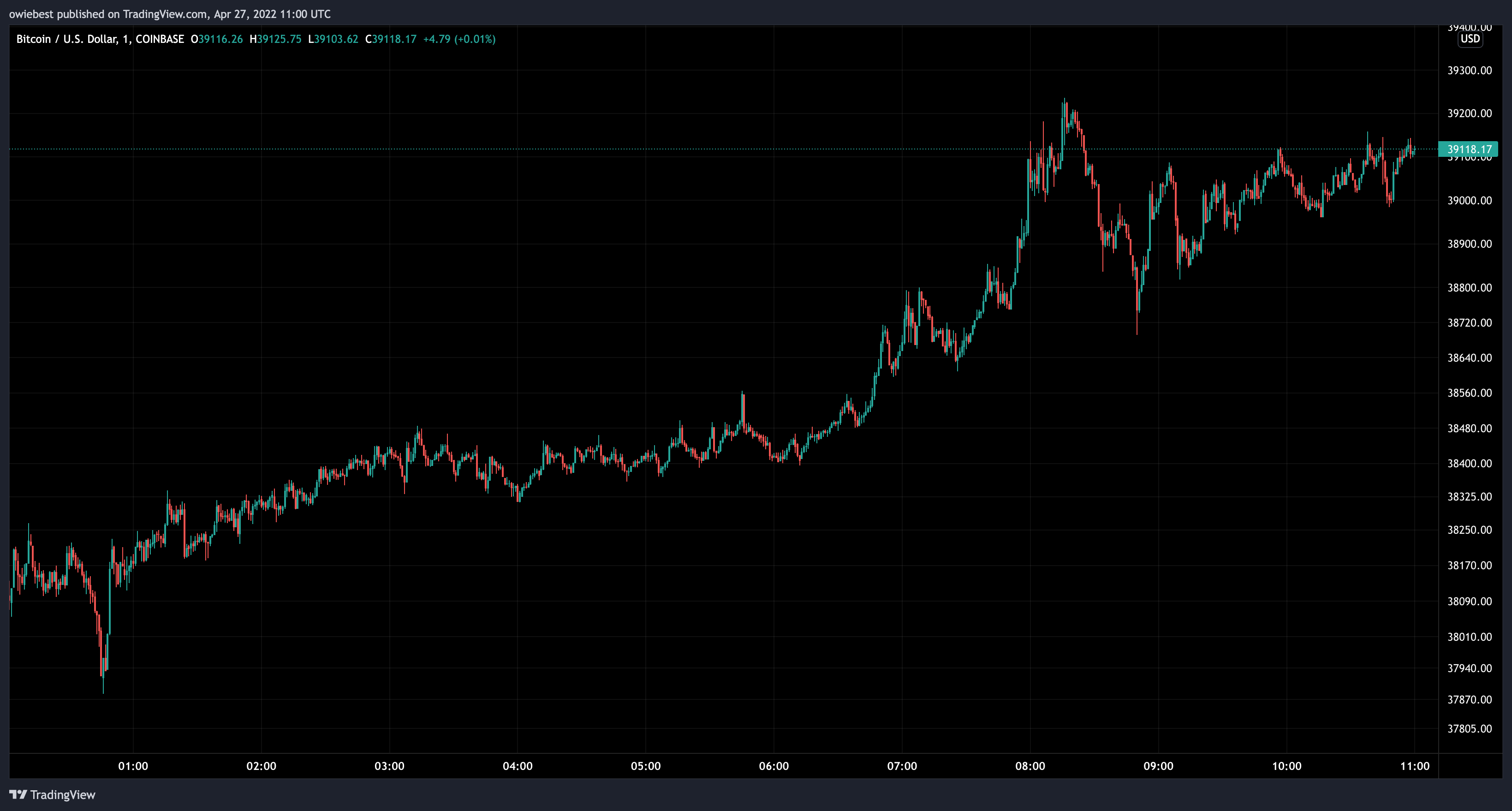
BTC holding against the bears | Source: BTCUSD on TradingView.com
A recovery had also marked the decline in February, albeit to a lesser extent. With the current trend of stagnating momentum, the futures basis may decline further for another week before a recovery towards a bull trend could be in the works.
Bitcoin is trading at $39,002 at the time of this writing. Bulls continue to mount strong opposition causing the $36,000 to $38,000 support level to strengthen.


Letture associate

Anthropic's IPO Launch: Commercial Miracle or Valuation Bubble?

Anthropic has confidentially filed for an IPO, led by Morgan Stanley and Goldman Sachs, potentially going public by October. Following its latest $650 billion funding round, its pre-IPO valuation stands at $965 billion, with projections reaching up to $2 trillion at listing, which would make it the highest-valued private company ever. The article, written by Fu Sheng, addresses skepticism that this represents an AI bubble akin to the 2000 dot-com crash. It argues the current situation differs fundamentally. Unlike the internet bubble era, which relied on speculative narratives with little revenue, Anthropic's valuation is backed by unprecedented, measurable financial performance. Key data points include: * **Revenue Growth:** ARR skyrocketed from $10 billion in early 2025 to $470 billion by May 2026, targeting $100 billion by year-end—a growth curve unmatched in business history. * **Profitability:** It achieved operating profitability in Q2 2026 with an estimated $5.6 billion profit. * **Efficiency:** With ~3,000 employees and ~$470 billion ARR, its revenue per employee exceeds $10 million. Products like Claude Code, launched less than a year ago, already generate $25 billion in annualized revenue. * **Enterprise Adoption:** It boasts a strong enterprise client base, with 8 of the Fortune 10 and over 1,000 large firms spending over $1 million annually on Claude. The valuation is framed using a traditional SaaS model (e.g., a 10x Price-to-Sales multiple on $100 billion revenue). The author contends the core question for analysts has shifted from "How big could this be?" to "How much is it earning and will earn next quarter?" The discussion extends beyond Anthropic to a broader paradigm shift: the transition from a "carbon-based" to a "silicon-based" economy. Companies are increasingly prioritizing investment in compute and AI capabilities over human resources, as these directly scale productivity and competitive advantage. Anthropic's IPO is thus positioned not just as a corporate milestone, but as a price anchor for this new economic era.

链捕手2 h fa

Anthropic's IPO Launch: Commercial Miracle or Valuation Bubble?

链捕手2 h fa

Near Returns to the AI Stage: Transformation into a Public Chain Due to 'Payroll Difficulties,' Agent and Privacy Emerge as New Growth Narratives

NEAR Returns to AI Origins: From Payroll Struggles to Blockchain, Now Focusing on AI Agents and Privacy NEAR Protocol's journey began not with grand blockchain ambitions, but from a practical hurdle: its AI startup founders, including Transformer paper co-author Illia Polosukhin, couldn't efficiently pay international developers in 2017. This led them to pivot and build a high-performance, scalable blockchain. After years navigating various crypto narratives like sharding and cross-chain interoperability, NEAR is now leveraging its AI roots to re-enter the AI arena. A key driver is its "NEAR Intents" layer, which abstracts complex cross-chain transactions. Users simply state their goal (e.g., swap BTC for ETH), and a solver network finds the optimal route. This system has processed over $20B in cross-chain volume, generating significant fee revenue. A major growth area is private transactions via "Confidential Intents/Swaps," which hide trade details until settlement to protect against MEV and front-running. Remarkably, private swaps recently accounted for over 40% of NEAR's transaction volume, highlighting strong demand but also potential regulatory scrutiny. With its AI-founder pedigree, NEAR is positioning itself at the intersection of blockchain, AI agents, and privacy, aiming to become infrastructure for the emerging agent economy while navigating the challenges of its rapid adoption.

marsbit5 h fa

Near Returns to the AI Stage: Transformation into a Public Chain Due to 'Payroll Difficulties,' Agent and Privacy Emerge as New Growth Narratives

marsbit5 h fa

Trading

Spot
Futures
活动图片