FTX 暴雷一年了,加密做市商们还好吗?

长文源:foresightnewsPubblicato 2023-11-01Pubblicato ultima volta 2023-11-02

Introduzione

一些做市商正在减少风险敞口,而另一些正在实现业务多元化。

一些做市商正在减少风险敞口,而另一些正在实现业务多元化。


撰文:Suvashree Ghosh、Olga Kharif

编译:Luffy,Foresight News


Alameda Research 是 Sam Bankman-Fried 失败加密帝国的核心交易公司,在该公司倒闭近一年后,加密资产的做市业务仍在努力复苏中。


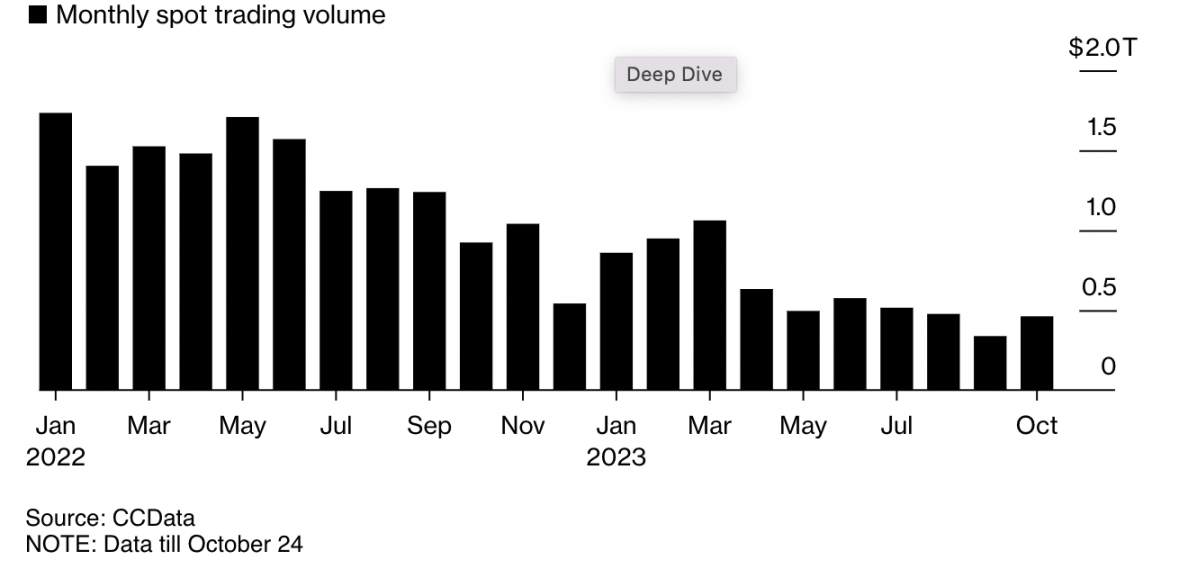
尽管上周比特币上涨近 16%,提振了交易量,但要恢复到加密货币寒冬之前的水平,还有很长的路要走。据 CCData 称,10 月份交易量自 6 月以来首次出现增长,但与 FTX 破产(2022 年 11 月)前相比还是下降了 50%。


这意味着剩下的流动性提供者(他们从代币买卖价格的差价中获利)面临着在缺乏波动性和交易量的市场中创造收入的艰巨任务,而波动性和交易量曾经是加密货币行业的鲜明特征。一些人重新调整了交易活动的重点,而另一些人则在做市之外寻求新的收入来源。


Digital Asset Capital Management 联合创始人 Richard Galvin 表示,「由于交易量下降、多个司法管辖区的监管框架不确定以及对交易所交易对手风险的担忧加剧,今年对做市商来说非常艰难。」 他补充说,如果最近的反弹持续下去,「对于仍然活跃在市场上的做市商和交易者来说将是一个可喜的获利机会」。


自一年前 FTX 崩溃以来,各交易所的交易量减少了一半。


以下是一些仍然活跃在加密货币领域的做市商的最新动态。


Wintermute


Wintermute Trading Ltd.联合创始人 Evgeny Gaevoy 在接受采访时表示,作为最大的加密货币做市商之一,Wintermute 一直保持盈利,并正在实现业务多元化,以应对另一个牛市周期。Wintermute 首席运营官 Marina Gurevich 表示,目前公司每天的交易额在 20 亿至 30 亿美元之间,低于 2021 年市场高峰期间的每天 75 亿美元。


作为在做市以外领域创收的努力的一部分,Wintermute 已成为以太坊网络的主要参与者,帮助打包交易区块。Gaevoy 表示,此举的目的是在向区块添加交易方面获得竞争优势,这有助于其从套利和其他机会中赚更多钱。


Gaevoy 表示,Wintermute 还支持了一个尚未启动的贷款项目,正在考虑启动一个加密货币衍生品交易所,并正在努力推出一个与加密货币相关的指数。Gaevoy 称,其中一些项目的时间表尚未确定,但拒绝提供每个项目更具体的信息。自 2020 年以来,该公司的风险投资部门已支持了 80 多个项目。


Gurevich 在对彭博社询问的书面回复中表示,位于伦敦和新加坡的 Wintermute 计划在未来两到六个月内增加 10% 或 10 名员工。


Cumberland DRW


Cumberland 是总部位于芝加哥的 DRW 的加密货币子公司,成立于 2014 年,专注于场外交易和自有账户交易。该公司表示,其场外衍生品业务持续增长。它通过 ISDA 在 BTC、ETH 和 SOL 上提供双边加密货币期权。


Cumberland 的母公司 DRW 还联合创立了 ErisX(已被 Cboe Global Markets Inc.收购)和 Digital Asset Holdings。Cumberland Labs 是一家区块链项目孵化公司,它支持了 Hashnote 和 Expand.network 等公司。


GSR Markets


总部位于伦敦的 GSR 是加密货币领域最古老的做市商之一,由前高盛交易员于 2013 年创立,现已发展成为加密货币领域领先的做市商之一。它最近获得了新加坡中央银行的批准,可以在新加坡提供数字支付代币服务。


GSR 告诉彭博社,他们历来活跃于各种代币交易,现在更多地关注比特币和以太坊这两种最大的加密货币。


该公司还是一个多产的风险投资者,旗下投资部门是 GSR Investments。根据公司发言人援引 Messari 的数据,GSR Investments 是行业最活跃的投资者之一,持有 EDX Markets、Ethena 和 LayerN 的股份。该发言人表示,在「平静的夏季」之后,该公司的风险投资活动本季度有所回升。


GSR 今年裁员,成为了许多寻求适应更严峻市场环境的加密货币公司之一。该发言人表示,此次裁员是为了「调整和发展我们的业务以适应加密货币行业当前方向」。该发言人补充说,公司正在「积极招聘」交易、工程、法律和金融领域的员工。


Jump Crypto


总部位于芝加哥的 Jump Trading 主要从事传统证券投资业务,于 2015 年底成立了 Jump Crypto,开始投资加密资产。然而,由于美国监管环境的不确定性,该公司一直在着手退出美国的加密货币交易。Jump 是 TerraUSD 项目的主要支持者,也是美国检察官在调查 TerraUSD 过程中接受质询的公司之一。ump Crypto 还面临因 FTX 崩溃而造成的损失,该做市商是 FTX 的客户,并在 Wormhole 遭受 3.2 亿美元的黑客攻击后向该协议用户进行了补偿。根据 Blockworks 的研究,Jump 似乎已经收回了资金。


Jump Crypto 是​​另一家多产的风险投资者,最近的投资包括 Outdid 和 Coinflow Labs。Jump 发言人拒绝就与该公司相关的细节发表评论。


Flow Traders


总部位于阿姆斯特丹的 Flow Traders 是一家横跨各种传统资产类别的老牌做市商,自 2017 年以来一直活跃在加密货币领域。其加密货币业务拥有 60 名员工,主要分布在欧洲,该公司对扩大团队持保守态度。


Flow 在 FTX 上的风险敞口「微不足道」,并且「致力于作为做市商和战略投资者构建数字资产生态系统」。根据该公司半年度收益报告,截至 6 月底,他们持有用于交易的数字资产 8920 万欧元(9410 万美元),高于 12 月底的 5830 万欧元。


Flow Traders 在报告中表示,预计监管不确定性将持续到 2023 年及以后,并补充说,公司正在与监管机构合作,推动「建立一个清晰、公平的监管框架」。


根据 Flow Traders 半年报和网站,他们交易数字资产现货、期货、期权和交易所交易产品,不进行定向押注。该公司于 2022 年 7 月斥资 5000 万欧元(5270 万美元)成立了风险投资部门 Flow Traders Capital,并投资了 Blockdaemon、Elwood、Sei Network 和 Ondo 等公司。


Auros Global


这家在纽约和香港设有办事处的做市商在 FTX 倒闭时被冻结了价值约 2000 万美元的资产,最终导致该公司向英属维尔京群岛法院申请临时清算以重组债务。


Auros 今年 3 月筹集了 1700 万美元,投资方包括 Vivienne Court、Bit Digital、Trovio、Epoch Capital、Primal Capital 以及做市巨头 Optiver 的资深校友财团,这在一定程度上帮助该公司摆脱了危机。


公司发言人表示,自那时起,Auros「优化了对一些加密货币交易所的投资,加强了风险管理」,并要求有业务往来的交易所提高透明度。据公司网站称,该公司与 50 多个交易所合作,目前专注于流动性较高的代币。


Auros 表示,10 月份每天处理的交易额为 130 万美元,低于 2021 年 5 月高峰期间的每天 250 万美元。


Portofino Technologies


总部位于瑞士的 Portofino 由前 Citadel 证券员工于 2021 年 4 月创立,是数字资产市场同行中相对年轻的参与者。Portofino 于 2021 年从 Coatue Management、Valar Ventures 和 Global Founders Capital 等投资者那里筹集了 5000 万美元。


Portofino 发言人在给彭博社的电子邮件回复中表示,该公司通常专注于在最大的加密货币交易所交易的高市值代币。该发言人补充说,公司于 2022 年在 FTX 上交易较为活跃,但在该交易所的资产有限。尽管某些资产类型的做市商利润在全球范围内大幅下降,但 Portofino 预计「未来几个月,加密货币市场交易量将继续增长,因为我们看到一些重要的催化剂将使机构和散户投资者重返加密市场。」

Letture associate

How Risky is the "Death Spiral" of MSTR and STRC?

Summary: This article explores the perceived "death spiral" risk between MicroStrategy (MSTR), its Bitcoin holdings, and its perpetual preferred stock (STRC), drawing comparisons to the LUNA-UST collapse. While both systems feature price anchors, high yields for holders, and potential feedback loops, their core mechanisms differ fundamentally. The MSTR-STRC structure relies on continuous financing to sustain its high dividend payouts, primarily through stock ATM offerings. A negative feedback cycle could occur: falling MSTR stock price makes raising equity capital harder, increasing pressure to sell Bitcoin, which undermines STRC confidence and further depresses MSTR. However, unlike LUNA-UST's automated, direct linkage, the MSTR-STRC loop is weaker and has brakes: STRC dividends can be deferred or rates lowered, and STRC holders have a $100/share liquidation preference in bankruptcy, providing a price floor. The company's sustainability hinges on its ability to continue financing. Its current ~$900 million USD reserves cover only about 6.3 months of its ~$1.71 billion annual interest/dividend burden. The next six months are critical, aligning with both the potential bottom in Bitcoin's four-year cycle and the depletion timeline of its reserves. While a LUNA-style catastrophic collapse is deemed highly unlikely due to structural differences, the key question is whether MicroStrategy can navigate this period through healthy deleveraging to restart its capital engine.

Foresight News16 min fa

How Risky is the "Death Spiral" of MSTR and STRC?

Foresight News16 min fa

How Much Debt Does Strategy Really Have? Is There a Risk of Implosion?

MicroStrategy's Debt Risk: A Turning Point in the "Never Sell" Strategy As of June 3, 2026, MicroStrategy holds 843,706 bitcoins (valued at ~$53.1B) but faces significant financial obligations. Its capital structure includes $6.75B in convertible notes and $15.48B in perpetual preferred stock (led by the $8.5B STRC series), creating an annual payout burden of ~$1.71B. With software revenue at only ~$500M, interest and dividend obligations far exceed operating income. A critical shift occurred in late May 2026 when the company sold 32 bitcoins for ~$2.5M to cover dividends, breaking CEO Michael Saylor's long-standing "never sell" pledge. This symbolic move triggered a sharp decline in both Bitcoin's price and MSTR stock, reflecting market fears about cash flow sustainability. The core of the strain is the STRC perpetual preferred stock, designed as a "permanent loan" with no maturity date but requiring high monthly dividends (currently 11.5%). Its business model relies on a three-part cycle: issuing new STRC shares, using proceeds to buy more Bitcoin and fund a USD reserve, and using that reserve to pay dividends. This cycle depends on continuous investor demand for STRC and Bitcoin's price appreciation. Analysis shows Bitcoin needs to appreciate at least 2.3% annually to cover the $1.71B in yearly obligations at current holdings. With Bitcoin price down ~22% from March 2026 highs, this pressure has intensified. The company's $900M USD reserve can only cover about 7 months of payments if STRC issuance stalls. Key risks are not immediate bankruptcy or forced Bitcoin liquidation (as BTC is not collateral), but rather: 1) The erosion of MSTR's premium to its Bitcoin holdings (mNAV), which would cripple its ability to raise cheap capital; 2) A vicious cycle where stagnant Bitcoin prices reduce STRC demand, draining the USD reserve and forcing BTC sales, further depressing prices. The period from February 2027 to September 2028 is a crucial test, with over $5.9B in convertible notes facing put options or maturity. In essence, MicroStrategy has evolved from a simple Bitcoin holder into a complex financial entity acting like a "private Bitcoin bank," leveraging its BTC holdings to create layered financial products. Its survival depends on maintaining Bitcoin's price trend, its stock premium, and market appetite for its preferred shares. The recent token sale marks not a betrayal of its Bitcoin thesis, but an admission that the leveraged strategy must eventually be paid for.

marsbit27 min fa

How Much Debt Does Strategy Really Have? Is There a Risk of Implosion?

marsbit27 min fa

Anthropic Cries Wolf: Is the AGI Threat Real, or Just an IPO Story?

Anthropic has published an article titled "When AI builds itself," discussing the emerging concept of "recursive self-improvement," where AI begins to actively participate in designing, training, testing, and optimizing its own subsequent versions. The company presents internal data showing that by May 2026, over 80% of code merged into its codebase was written by Claude, its AI model. Claude's capabilities have expanded to handling complex, open-ended engineering tasks, achieving a 76% success rate in such areas, and even contributing to research processes, such as optimizing code performance and conducting AI safety experiments. Anthropic outlines an evolution from human-driven development to AI-assisted workflows, culminating in the current stage where AI agents can autonomously write, run, and delegate code. The company cautions that the path toward a "closed loop," where AI continuously improves itself, is becoming visible. It calls for coordinated global mechanisms to potentially slow or pause frontier AI development to allow safety research and societal structures to catch up. However, the timing of this warning coincides with Anthropic's preparations for an IPO, framing the narrative not just as a safety concern but also as a demonstration of Claude's advanced capabilities and its integral role in accelerating Anthropic's own R&D—creating a potential "flywheel" effect for competitive advantage. This contrasts with OpenAI's recent, more policy-oriented discussion of the same risks, highlighting the competitive dynamics in the AI industry as companies position themselves in both the technological and regulatory landscape.

marsbit1 h fa

Anthropic Cries Wolf: Is the AGI Threat Real, or Just an IPO Story?

marsbit1 h fa

Trading

Spot
Futures
活动图片