【龙虎榜】BTC明显遇阻120日均线,多头大量爆仓增加下跌机会

火必研究院Pubblicato 2022-04-22Pubblicato ultima volta 2022-04-28

Introduzione

BTC短线冲高回落,遇阻重要成本价,提示看跌信号。

1、大盘走势:多头爆仓增加,市场摇摇欲坠

整体市场爆仓规模维持高位运行,特别是2022年3月31日以后,多头被爆仓规模始终明显高于空头,说明整体市场走势较弱。近期整体市场多头被爆仓规模可达4亿美元,4月21日多头被爆仓2.48亿美元,而空头被爆仓仅为6900万美元。可见,多头频繁失利意味着目前行情破位的可能性依然很高。
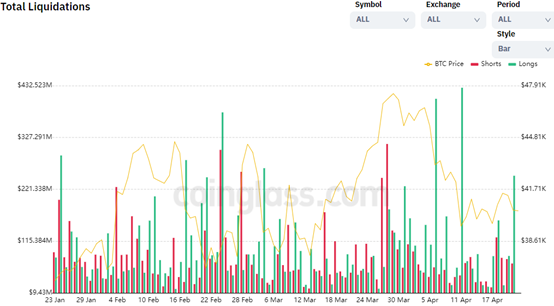
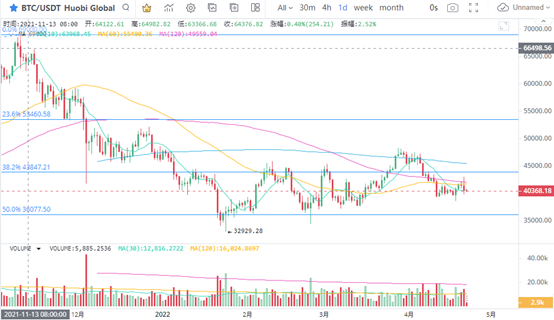
日K线方面,BTC价格表现为震荡下跌,目前均线对BTC的压制非常有效,120日均线就可以阻止BTC反弹向上。区间波动方面,BTC运行在斐波那契50%对应的36077美元上方。考虑到近期交易量表现出零散的特征,多头并未组织起有效攻势,横盘期间价格下跌的高概率事件。
2、恐慌指数解读:

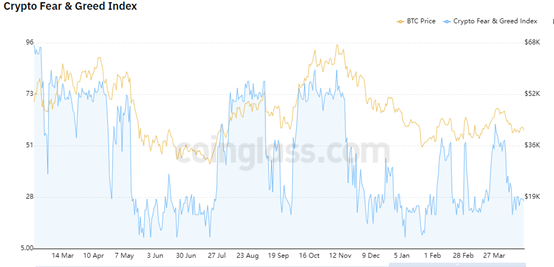
恐慌指数低于30的位置运行,目前波动空间非常小,并且已经持续了多个交易日。因此,恐慌指数也构成了局部三角形的调整形态,脱离该三角形区域以后,BTC等主流币的单边趋势将会持续。恐慌指数在2022年以来持续低于50,表明多头实力不占优势,恐慌情绪随时可能蔓延,今后的价格下跌也在预期中。
3、龙虎榜:

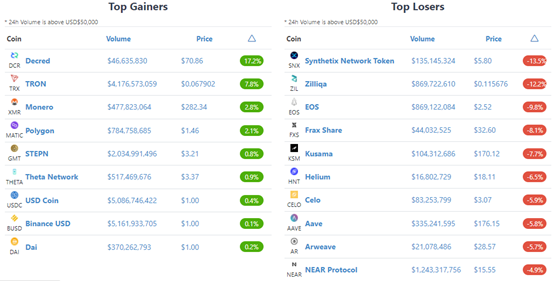
在主流币整体回撤期间,上涨的币种明显减少。市值前100的币种里,涨幅靠前的币种稳定币和平台币较为抗跌,DAI、USDC、BUSD等稳定币小幅反弹。上涨的币种里,DCR涨幅较大,其他币种涨幅有限。
涨幅榜

DCR

作为BTC的山寨版,DCR交易量表现较为低迷,短线放量不足以吸引大资金入市交易。在目前多数主流币表现不佳的背景下,DCR的上涨仅为个案,因此追踪风险较大,不宜投入更多资金买入。

MATIC

MATIC是一种协议和框架,用于构建和连接与以太坊兼容的区块链网络。在以太坊上聚合可扩展的解决方案,支持多链以太坊生态系统。

Matic Network是一个第二层扩展性平台,实现快速、简单和安全的链下交易,不仅可以支付交易,还可以实现广义的脱链智能合约。Matic Network是以太坊生态系统的重要贡献者,致力于实施等离子MVP(最低运行的等离子体),WalletConnect协议和以太坊事件提醒引擎-Dagger做出了突出贡献。Matic代币用于权益押注,参与侧链网络的证明共识机制。

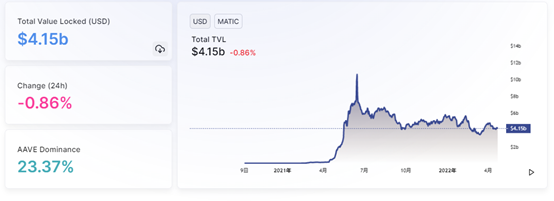
MATIC价格稳定,其锁仓量也是波动较小。从价格走向看,MATIC的区间波动特征明显,因此在行情不佳的情况下,MATIC的短线波动就会出现。区间震荡阶段,MATIC的温和走势或将延续。日线级别的交易量不大,价格还可能维持稳定运行。
跌幅榜

跌幅榜单里,SNX、ZIL和EOS都是短线表现强势的币种,出现了缩量回调的情况。因此,目前行情处在多头观望而空头实力较强的阶段。底部还将进一步确认,BTC以及主流币才看企稳上涨。

Letture associate

Frequent Trading Halts in the Korean Stock Market: Is a Global Financial Crisis Really Coming?

**Title: Frequent Circuit Breakers in South Korean Stock Market: Is a Global Financial Crisis Imminent?** This article examines the recent spate of trading halts in South Korea's stock market as a potential early warning sign for broader global financial instability. The author argues that due to its highly open and liquid capital markets with significant foreign ownership, South Korea often acts as the world's "spare cash pool." International institutions tend to sell their highly liquid Korean holdings first during global liquidity crunches to raise capital for domestic needs, irrespective of Korea's own economic fundamentals. Historically, Korean market stress preceded major crises like the 1997 Asian Financial Crisis, the 2000 Dot-com crash, the 2008 Global Financial Crisis, and the 2020 pandemic crash. The current trigger involves a semiconductor bubble and high domestic leverage, but the core issue is global capital withdrawal signaling tightening liquidity. Whether this evolves into a full-blown crisis hinges on the US Federal Reserve. If the Fed can and will intervene with supportive policies (like rate cuts), a crisis might be averted as in 2020. If not, contagion could spread. For individual investors, the key takeaway is not predicting the crisis but preparing for volatility. Recommendations include: avoiding high leverage, maintaining a significant cash reserve (e.g., 40%) for buying opportunities during market declines, and holding core long-term positions (e.g., 60% in indices like S&P 500 and Nasdaq 100). The author advocates for consistent investment through strategies like dollar-cost averaging, emphasizing that staying invested over decades has historically yielded positive returns despite high valuations or periodic crashes. The conclusion is to stay in the market, manage risk, and have dry powder ready instead of attempting to time the market perfectly.

marsbit4 min fa

Frequent Trading Halts in the Korean Stock Market: Is a Global Financial Crisis Really Coming?

marsbit4 min fa

Ethereum Startup EthSystems Bets on Privacy as Key to Luring Banks to Public Blockchains

EthSystems, a startup spun out of the Ethereum Foundation, posits that privacy, not scalability, is the primary barrier preventing financial institutions from adopting public blockchains. The company builds privacy infrastructure for banks, asset managers, and governments looking to use Ethereum for tokenized assets, stablecoins, and other financial applications. Unlike projects creating new blockchains, EthSystems helps institutions deploy privacy technologies directly on Ethereum, keeping transaction data confidential while settling on the mainnet. Co-founder Mo Jaleel explains that financial institutions require control over who sees transaction data, not necessarily anonymity. While competitors like Canton Network and protocols like Aztec also work on private transactions for enterprises, EthSystems differentiates itself by advising on architecture, building custom infrastructure, and publishing open-source research. It aims to collaborate with existing privacy projects rather than rebuild the entire stack. The decision to become a commercial entity stemmed from institutional demand for production-ready solutions, which the team couldn't fulfill within the non-profit Ethereum Foundation. According to Jaleel, operating as a business facilitates funding and participation in large institutions' procurement processes. He notes a shift in client conversations from experimental innovation teams to core business units now seeking to place real assets and financial flows on-chain. EthSystems argues that the key to bridging public blockchains and institutional needs lies in cryptography and privacy.

cryptonews.ru11 min fa

Ethereum Startup EthSystems Bets on Privacy as Key to Luring Banks to Public Blockchains

cryptonews.ru11 min fa

Russia Establishes New Rules for Digital Depository Ahead of Cryptocurrency System Deployment

Russia is creating new rules for digital depositaries ahead of the launch of its cryptocurrency system. The proposals will extend existing securities market regulations—covering trading, custody, record-keeping, and disclosure—to digital assets. Within this framework, regulated "digital depositaries" will be established to register holdings of cryptocurrency and other digital assets. Their capital requirements will range from 50 million rubles ($570,000) to 250 million rubles ($2.8 million), depending on services provided. Settlement depositaries require the highest capital (250 million rubles), with lower thresholds for firms controlling crypto addresses or using foreign depositaries (100 million rubles) and for other digital depositaries (50 million rubles). Assets counted toward capital must be liquid and meet the central bank's credit quality standards. These rules will also apply to operators of electronic platforms trading digital financial assets. The Bank of Russia will maintain registers for these depositaries, crypto exchange operators, and issuers of digital financial assets. The regulations are based on a digital assets bill passed by parliament in July, with the full crypto system expected by September. The proposals are currently open for public feedback. This announcement follows the European Union's latest sanctions package targeting 14 crypto firms.

cryptonews.ru14 min fa

Russia Establishes New Rules for Digital Depository Ahead of Cryptocurrency System Deployment

cryptonews.ru14 min fa

Trading

Spot
活动图片