一分钟速览加密基金Paradigm成长史,所投项目最爱空投

PanewsPubblicato 2023-09-27Pubblicato ultima volta 2023-09-28

Introduzione

成员仅60余人的加密基金Paradigm从耶鲁大学获得第一笔资金后便在加密行业起飞。虽然经历过“迷途知返”,但过往辉煌业绩不容忽视。

作者:Splin Teron, 加密KOL
编译:Felix, PANews
虽然目前有关Paradigm基金的详细信息很少,但众所周知,该基金投资的项目范围覆盖100万美元到1亿美元以上,且仅在加密领域内。那么仅60多名员工的Paradigm如何赢得投资者的信任并在加密社区中获得关注呢?

一分钟速览加密基金Paradigm成长史,所投项目最爱空投


Paradigm由Coinbase联合创始人Fred Ehrsam和前红杉资本合伙人Matt Huang共同创立。Paradigm的出现恰逢其时,绝非偶然。Paradigm的出现起源于2017年比特币狂热的顶峰时期,当时 Fred Ehrsam决定辞去Coinbase总裁一职。
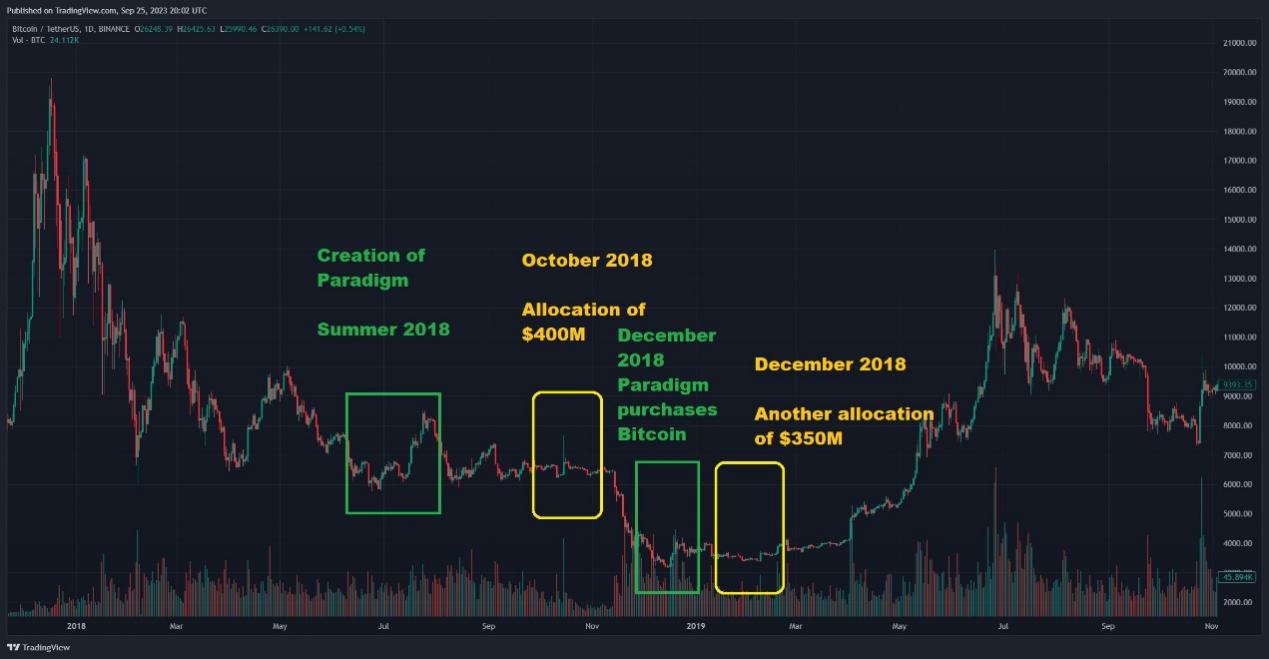
Paradigm基金于2018年夏季在充满挑战的熊市阶段推出。Paradigm的两位创始人决定离开之前的工作,去从事认为更有趣的事情。
一分钟速览加密基金Paradigm成长史,所投项目最爱空投


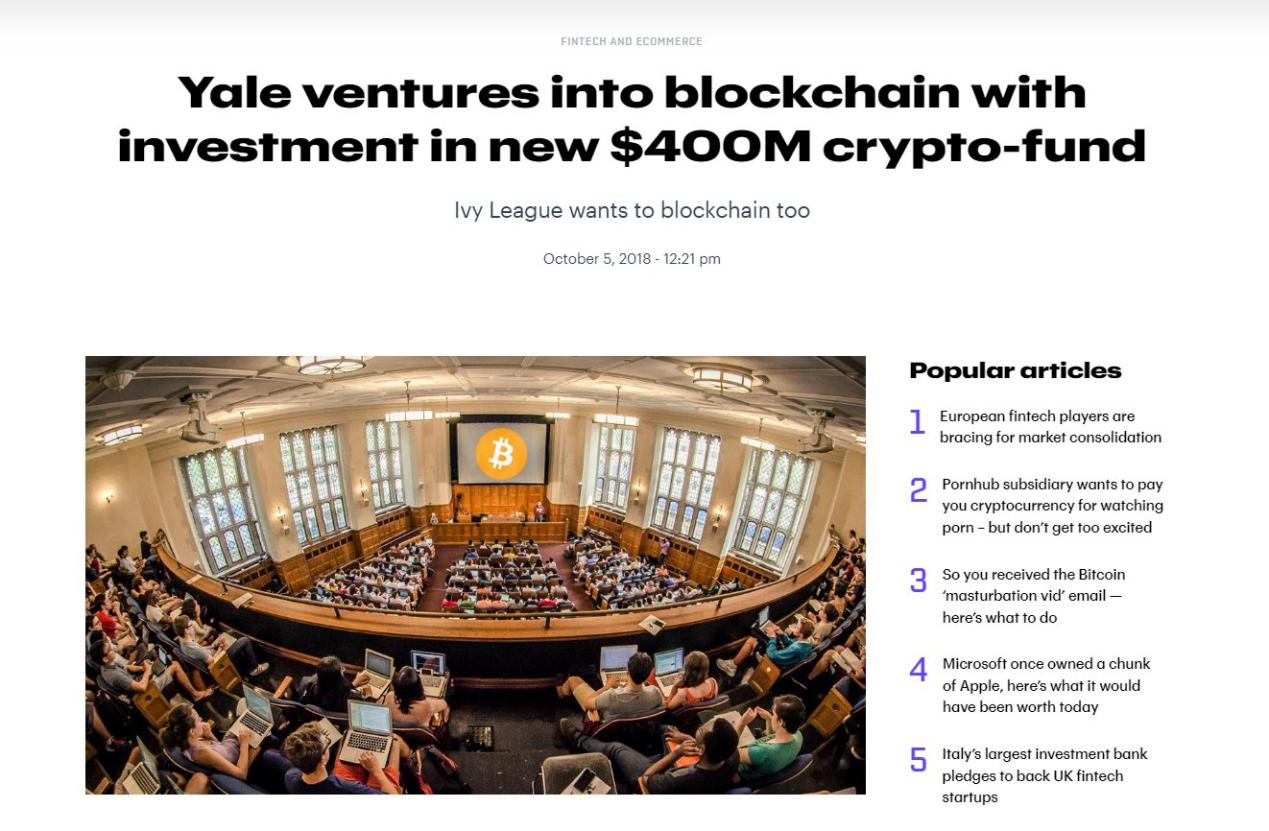
Paradigm的最初资金来自一些最保守的投资者:大学。包括耶鲁大学、哈佛大学以及斯坦福大学的捐赠基金。
2018年10月,Paradigm从投资者那里获得了4亿美元融资(注:资金全部来自耶鲁大学捐赠基金)。到2018年12月,Paradigm主要投资于比特币和以太坊,并在比特币价格低于4000美元的时候完美抄底(注:由上图可知,抄底比特币后,未来基本都是上涨状态)。这一消息传到投资人后,机构投资者(大学)追加认购了3.5亿美元。
一分钟速览加密基金Paradigm成长史,所投项目最爱空投


除获得启动资金外,Paradigm还在大学领域开展工作,并取得了重大进展:

  • 普及加密货币
  • 加强对必要的加密货币监管的讨论
  • 支持Gary Gensler(现任美国SEC主席,曾在麻省理工教书)进行区块链和加密货币技术方面的教育

这是否意味着Paradigm与“市场负责人” 注:Gary Gensler)有联系?无从得知。
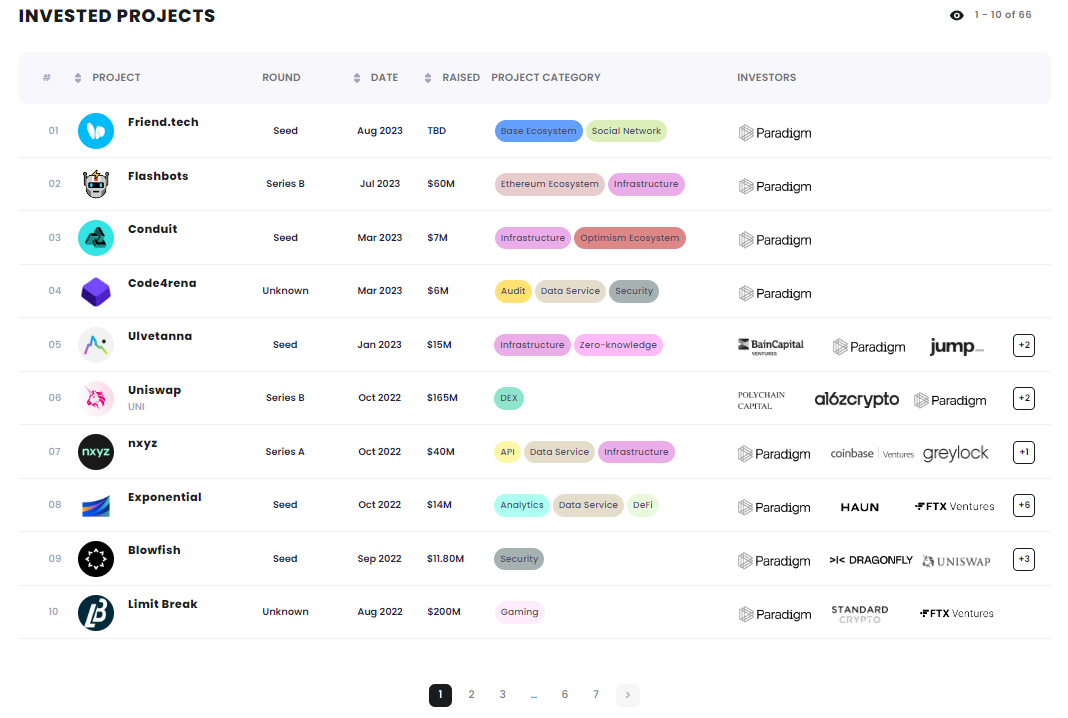
Paradigm最新投资的一个项目是Friend.tech,Friend.tech的出现,标志着SocialFi叙事的又一次启动。有趣的是,Friend.tech是在新Base网络启动。
值得一提的是,在Arbitrum空投之前,Paradigm被列为加密行业最重要的三个空投的投资者:Uniswap、Ribbon Finance和dYdX 。可能这也是Paradigm在空投盛行时代受加密社区追捧的原因。有加密KOL总结了热门基金投资了哪些项目以及其中有多少进行了空投,Paradigm拔得头筹。
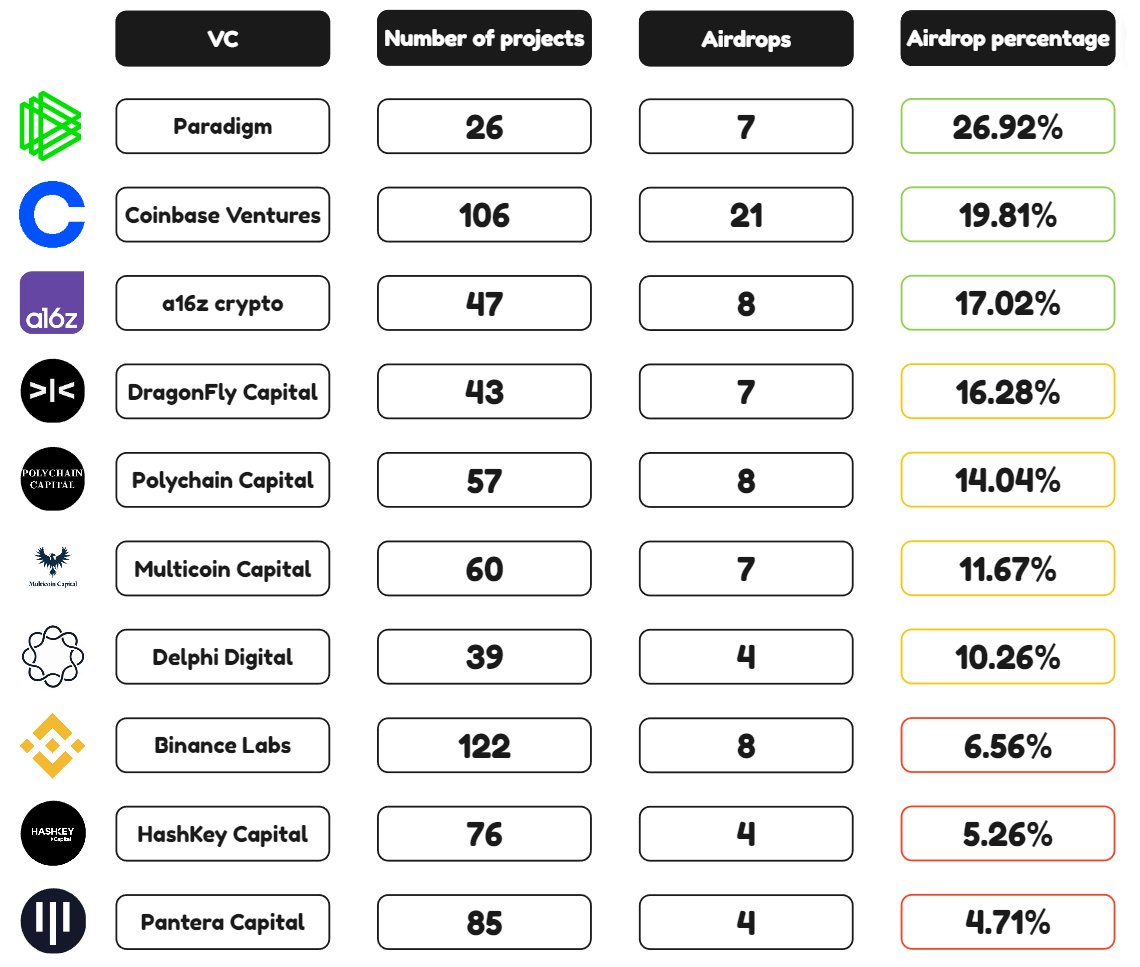
一分钟速览加密基金Paradigm成长史,所投项目最爱空投


以下为Paradigm 投资的完整列表

一分钟速览加密基金Paradigm成长史,所投项目最爱空投


虽然Paradigm曾更改网站表述,将其仅专注于加密货币转向也包括人工智能等“前沿”技术。但Fred和Matt后来表示,他们坚信会长期留在加密领域。“虽然有些人可能会觉得它有争议,但我们坚信加密货币将成为一个重要趋势。事实上,我们认为它是未来20年最重要的技术趋势。”


Letture associate

Is the Sharp Decline Over? Let the Data Speak

**Has the Sharp Decline Ended? Let Data Speak** Bitcoin's recent significant drop has placed short sellers in a precarious position. Three concurrent pressures—sustained outflows from ETFs, miners offloading coins to exchanges, and short-term holders capitulating—pushed the price near $63k. The asset fell 13% this week and 21% this month, roughly halving from its all-time high. A critical data point is the extremely crowded short positioning, with a short-to-long ratio reaching 8:1, representing nearly $100 billion in short interest overhead. This creates conditions for a potential short squeeze if selling pressure merely pauses, similar to the event in November 2022 which triggered a 24% rally. The selling pressures are real: spot Bitcoin ETFs have seen a record $5.4 billion outflow over 20 days. Short-term holders moved 53k loss-held BTC to exchanges in a day, and miners sent 24k BTC to Binance, a six-month high. Capital is also rotating towards AI and tech stocks like SpaceX, with $400 billion invested in AI infrastructure recently. However, on-chain data shows accumulation by long-term holders, who added 200k BTC in a month, and institutions/miners have absorbed 1.24 million BTC since 2023. This indicates strong buying beneath the surface. Key levels to watch are the $67k-$70k zone (2021 high & 2024 breakout point). A swift recovery above it suggests a leverage washout; failure could test $60k-$55k. The direction also hinges on ETF flow reversal. Currently, the S&P 500 hits new highs driven by AI, while Bitcoin and DeFi (TVL down from $173b to $73.9b) lag. The most probable path is a grinding basing process between $60k-$58k with continued ETF outflows. A less likely but explosive scenario involves a sudden flow reversal, a surge above $70k triggering a short squeeze, and a rally back above $76k. The immediate trigger depends on when the relentless selling pauses. A final cautionary note questions Bitcoin's correlation: if the high-flying U.S. stock market corrects, will Bitcoin once again miss the rally but not the decline?

foresightnews_api15 min fa

Is the Sharp Decline Over? Let the Data Speak

foresightnews_api15 min fa

Single-Day Plunge of 30%, Arthur Hayes Suddenly Liquidates: Why Did ZEC Get Exploded by Security Issues?

On June 5th, Zcash founder Zooko Wilcox disclosed a critical soundness vulnerability in the project's latest Orchard privacy pool. This flaw, found in the elliptic curve multiplication constraints, could allow an attacker to create unlimited counterfeit ZEC within the shielded pool, with transactions appearing valid. The vulnerability was discovered in late May by security researcher Taylor Hornby, who utilized Anthropic's new Opus 4.8 AI model for a targeted audit. The Zcash ecosystem had already performed an emergency network upgrade to patch the issue. However, the detailed disclosure triggered severe market panic, causing ZEC's price to plummet over 30% in a single day. Notably, prominent investor Arthur Hayes announced he had sold his entire ZEC position following the news. The incident starkly challenges the "technological trust" narrative central to privacy coins. Despite years of top-tier cryptographic audits, the bug persisted until uncovered with advanced AI-assisted research. This highlights the growing gap between theoretical perfection and practical implementation in privacy technology. The event serves as a industry-wide warning: in an AI-driven security landscape, the assumption that "undiscovered equals safe" is obsolete. It underscores the urgent need for continuous, proactive security practices combining AI audits, formal verification, and rapid response mechanisms.

foresightnews_api1 h fa

Single-Day Plunge of 30%, Arthur Hayes Suddenly Liquidates: Why Did ZEC Get Exploded by Security Issues?

foresightnews_api1 h fa

Breaking the Curse of DeFi Cascading Liquidations, Vitalik Proposes a New Solution

**Vitalik Buterin Proposes New DeFi Design to Eliminate Forced Liquidations** Ethereum co-founder Vitalik Buterin has published a proposal for a new decentralized finance (DeFi) architecture aimed at removing the automatic liquidation mechanisms prevalent in current lending protocols. The core idea involves creating synthetic assets using options as building blocks, fundamentally avoiding the抵押借贷结构 that triggers forced sell-offs. The proposal responds to a recurring flaw in DeFi: during sharp market downturns, mass自动清算 of under-collateralized positions can exacerbate price declines, creating systemic selling pressure and market instability, as evidenced by recent crypto market volatility. Buterin's model would split an asset like 1 ETH into two option-like derivatives, P and N, pegged to a price index with a set strike price and expiration. At expiry, an oracle determines the settlement price to allocate the underlying ETH between P and N holders. This design eliminates the "cliff" of instant liquidation. Instead, a position's value would gradually drift from its target peg if not actively rebalanced by the user, transferring the rebalancing decision from the protocol to the user or automated tools. A key advantage is the reduced reliance on high-frequency, real-time oracle price feeds, which are vulnerable to manipulation and errors in current systems. The delayed settlement in the options model allows for more robust, fault-tolerant oracle designs. However, significant challenges remain for practical adoption. High transaction costs (slippage) from frequent rebalancing on automated market makers (AMMs) could erode user funds. The model may not be suitable for stablecoins requiring a strict 1:1 dollar peg, as it inherently allows for value drift. Success would depend on developing new liquidity provisioning models and deep markets for these synthetic assets. The proposal represents a fundamental rethinking of DeFi risk management, challenging the industry to explore alternatives to被动集中平仓 rather than merely optimizing existing liquidation processes. It remains a theoretical framework awaiting implementation and testing by development teams.

foresightnews_api1 h fa

Breaking the Curse of DeFi Cascading Liquidations, Vitalik Proposes a New Solution

foresightnews_api1 h fa

Bitcoin's Decline Marks the Transformation of Crypto

Title: The Decline of Bitcoin Marks the Transformation of Crypto While Bitcoin's price recently fell below $70,000, down approximately 45% from its peak, the broader crypto industry is not following it into decline. Instead, crypto is maturing and evolving beyond its dependence on Bitcoin's price movements. Two of Bitcoin's core functions are being usurped. First, AI has captured its role as the primary speculative asset. AI, with its tangible revenue, explosive demand, and massive capital inflows ($700-830 billion in 2024), is siphoning off the speculative "hot money" that once drove Bitcoin. It also contributes to a sustained high-interest-rate environment, further tightening liquidity for assets like Bitcoin. Second, dollar-pegged stablecoins like USDC and USDT have replaced Bitcoin as the crypto market's foundational currency and primary on/off-ramp. Most trading pairs and on-chain transactions are now settled in stablecoins, severing the historical link where all capital inflows had to pass through Bitcoin first. This decoupling allows projects to thrive based on their own fundamentals rather than Bitcoin's price. Examples include Hyperliquid, an on-chain derivatives exchange with annual revenues of $8-13 billion, and prediction market platform Polymarket, valued at $200 billion with $3.65 billion in annual fees. These projects are evaluated on traditional metrics like revenue and user growth. New opportunities are emerging, particularly around privacy. Privacy coins like Zcash (ZEC) are seeing surging demand, while infrastructure like NEAR enables private, cross-chain asset transfers without requiring users to hold a specific token—privacy becomes a universal service layer. In this new paradigm, stablecoins are the universal cash, various project tokens represent equity, and privacy-enabled cross-chain coordination layers (like NEAR) act as the critical infrastructure connecting a fragmented, multi-chain ecosystem. Bitcoin is now just one asset among many. The era where the entire crypto market moved in lockstep with Bitcoin is over. The industry's health should now be judged by project fundamentals—real revenue, active users, and tokenomics that capture value—and the development of the underlying infrastructure enabling a mature, dollar-denominated crypto economy.

foresightnews_api1 h fa

Bitcoin's Decline Marks the Transformation of Crypto

foresightnews_api1 h fa

Trading

Spot
Futures

Articoli Popolari

Come comprare UNI

Benvenuto in HTX.com! Abbiamo reso l'acquisto di Uniswap (UNI) semplice e conveniente. Segui la nostra guida passo passo per intraprendere il tuo viaggio nel mondo delle criptovalute.Step 1: Crea il tuo Account HTXUsa la tua email o numero di telefono per registrarti il tuo account gratuito su HTX. Vivi un'esperienza facile e sblocca tutte le funzionalità,Crea il mio accountStep 2: Vai in Acquista crypto e seleziona il tuo metodo di pagamentoCarta di credito/debito: utilizza la tua Visa o Mastercard per acquistare immediatamente UniswapUNI.Bilancio: Usa i fondi dal bilancio del tuo account HTX per fare trading senza problemi.Terze parti: abbiamo aggiunto metodi di pagamento molto utilizzati come Google Pay e Apple Pay per maggiore comodità.P2P: Fai trading direttamente con altri utenti HTX.Over-the-Counter (OTC): Offriamo servizi su misura e tassi di cambio competitivi per i trader.Step 3: Conserva Uniswap (UNI)Dopo aver acquistato Uniswap (UNI), conserva nel tuo account HTX. In alternativa, puoi inviare tramite trasferimento blockchain o scambiare per altre criptovalute.Step 4: Scambia Uniswap (UNI)Scambia facilmente Uniswap (UNI) nel mercato spot di HTX. Accedi al tuo account, seleziona la tua coppia di trading, esegui le tue operazioni e monitora in tempo reale. Offriamo un'esperienza user-friendly sia per chi ha appena iniziato che per i trader più esperti.

467 Totale visualizzazioniPubblicato il 2024.12.12Aggiornato il 2026.06.02

Come comprare UNI

Discussioni

Benvenuto nella Community HTX. Qui puoi rimanere informato sugli ultimi sviluppi della piattaforma e accedere ad approfondimenti esperti sul mercato. Le opinioni degli utenti sul prezzo di UNI UNI sono presentate come di seguito.

活动图片