Ripple CEO Optimistic On SEC Case, Why XRP Saw Weak Response

newsbtcPubblicato 2022-04-16Pubblicato ultima volta 2022-04-16

Introduzione

In an interview with CNBC, Ripple CEO Brad Garlinghouse revealed to feels optimistic about the company’s future and its legal battle. The payment solution company was sued by the U.S....

In an interview with CNBC, Ripple CEO Brad Garlinghouse revealed to feels optimistic about the company’s future and its legal battle. The payment solution company was sued by the U.S. Securities And Exchange Commission (SEC) in 2019 for the alleged illegal sales of a security, XRP.
Initially, the battle was expected to be an easy win for the regulators. This had a negative impact on the price of XRP, the cryptocurrency that powers the XRP Ledger, and some of the products from the payment company.
However, Ripple has been using its resources and appears to be turning the table in its favor. In court, the payment solution company has presented evidence that claims the SEC was made aware of XRP, and Ripple’s business model with the cryptocurrency using a product called Ripple Network.
The evidence goes as back as 2013 and includes documents that suggest the SEC failed to provide clarity over the digital asset’s classification as a security. According to legal experts, the evidence could demonstrate to the court that Ripple was actively seeking to remain compliant with U.S. securities law.
In that sense, Garlinghouse told CNBC the following on his perception of the status of the case:
The lawsuit has gone exceedingly well, and much better than I could have hoped when it began about 15 months ago. But the wheels of justice move slowly.
Other evidence has come to light that could continue to favor Ripple. As highlighted by CNBC, the judge handling the case ruled against the SEC editing emails about how it has treated XRP and other cryptocurrencies, including Ethereum.
The second crypto by market cap, there are currently no standing cases against it as it is not deemed a security. If Ripple can successfully argue that XRP and ETH operate as decentralized cryptocurrencies, could score a win in its legal pursuit.
Ripple Touched Bottom, Only Up From Here?
Despite the legal battle, Ripple has not seen a slowdown in its operations. According to its CEO, the company is “already operating in the worst-case scenario”, but registers “record growth” outside of the United States.
On the other hand, the XRP token records a 7% profit in the last 24-hours potentially as a reaction to Garlinghouse’s statements. The market seems to be positively pricing any development around the legal case with the SEC, but the macro-economic outlook still seems unfavorable for risk-on assets.
On higher timeframes, the token still trends to the downside far from its $2 high in 2021. A positive conclusion of the case could send XRP to those highs.

Ripple XRP XRPUSDT

XRP trends to the downside on the daily chart. Source: XRPUSD Tradingview
Garlinghouse added the following on the importance of Ripple’s case for the crypto industry:
This case is important, not just for Ripple; it’s important for the entire crypto industry in the United States. It would really be negative for crypto in the United States (…). If you determine XRP as a security of Ripple, we have to know every person that owns XRP. That’s an SEC requirement. You have to know all of your shareholders. It’s not possible.

Crypto di tendenza

Letture associate

U.S. Bonds, AI, Inflation: You Can't Have All Three – What's Bitcoin Betting On?

Title: U.S. Treasury Bonds, AI, and Inflation: A Trilemma Facing Washington, and Where BTC Fits In Core Thesis: The U.S. government faces a trilemma: stabilizing the Treasury market, sustaining the AI investment cycle, and controlling inflation. The likely political choice is to prioritize the first two, accepting higher inflation for longer. This creates a sustained tailwind for both gold and Bitcoin by injecting liquidity and shifting duration risk away from the private sector. Key Pressures on Treasuries: * Long-term yields (e.g., 10-year ~4.70%) are near multi-decade highs due to persistent inflation risks, high fiscal supply, weaker demand for long duration, and new competition from AI infrastructure financing. * AI investment, requiring massive capital (estimated ~$300B in investment-grade bond issuance), is now competing directly with the Treasury in long-duration debt markets. * Geopolitical tensions (e.g., Iran conflict) add upward pressure on oil prices and defense spending. Policy Response: The Treasury, under Secretary Besant, is focusing on market stability through measures like supporting the Yen (to prevent forced Japanese Treasury sales), increasing repo operations for long-dated bonds, and potentially shifting issuance toward the short end. This "aggressive Treasury issuance" can function like "stealth QE," easing financial conditions. Impact on Assets: * **Gold** has already benefited (up ~90% from Aug 2024 to Aug 2026), driven by declining trust in the USD, inflation fears, and a "monetary debasement" narrative. * **Bitcoin** is now showing stronger correlation with this theme. Recent outperformance vs. gold (BTC +22.2% vs. Gold +5.9% in late Aug) coincided with Treasury's enhanced repo actions, suggesting the market may be pricing it as a liquidity/ debasement hedge, not just a speculative tech asset. Conclusion: If high inflation, large deficits, and AI capital demands persist, the cost of stabilizing bonds and growth will be shorter debt maturity, constant liquidity support, and tolerance for higher inflation—a favorable environment for gold and BTC. This view would be challenged only by a return to ~2% inflation, credible fiscal consolidation, or AI becoming self-funding.

marsbit16 min fa

U.S. Bonds, AI, Inflation: You Can't Have All Three – What's Bitcoin Betting On?

marsbit16 min fa

HBM is Being Redefined

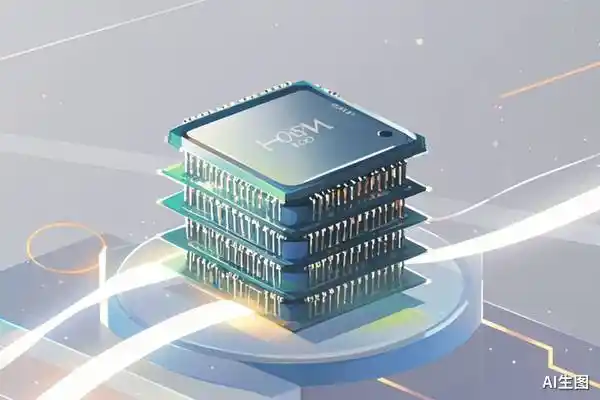
HBM is being redefined as AI-driven demand for computing power shifts the performance bottleneck from processing units to memory bandwidth, making High Bandwidth Memory the critical component for advanced AI hardware. At HotChips 2026, Samsung and SK Hynix unveiled new technical roadmaps for HBM4, moving away from the traditional approach of simply increasing DRAM speed and stacking layers. The focus for HBM4 has shifted from DRAM optimization to a comprehensive system-level redesign of the Base Die. Key innovations include upgrading the Base Die to advanced logic processes (e.g., Samsung's 4nm), adopting hybrid bonding for 3D stacking, and exploring heterogeneous packaging solutions like Intel's EMIB alongside the established CoWoS. This marks HBM's evolution from a simple memory component into an integrated system involving "memory + logic + packaging + IP + EDA." This transition brings benefits like better signal integrity, higher I/O bandwidth (up to 2048-bit), and potential for in-memory computing. However, it also introduces significant complexity. DRAM manufacturers now must deeply collaborate with logic foundries, extending design cycles and increasing supply chain challenges. Furthermore, the industry is moving towards multiple advanced packaging paths, with EMIB emerging as an alternative to CoWoS to alleviate capacity constraints, while hybrid bonding is being developed for future ultra-high (16+ layer) stacks. New core barriers have emerged beyond manufacturing. High-speed PHY/SERDES IP, crucial for HBM4's higher data rates, is concentrated among a few established players, creating an entry barrier for smaller firms. Similarly, the industry lacks mature 3D heterogeneous EDA toolchains capable of co-simulating the coupled electrical, thermal, and mechanical effects across the logic base, memory stacks, and interposer. These "soft" capabilities in IP and EDA are now critical determinants of HBM4's performance and yield. In summary, the HBM industry is entering a new era of systemic competition. The standardized approach is giving way to divergent vendor roadmaps, with multiple technologies coexisting. Success will depend on integrated architecture, packaging, process, and ecosystem capabilities, fundamentally reshaping the competitive landscape for AI memory.

marsbit21 min fa

HBM is Being Redefined

marsbit21 min fa

The Era of Earning 200,000 from a 3,000 Investment Is Over; AI Comic Dramas Are Not a Get-Rich-Quick Trend

The era of turning 3,000 yuan into 200,000 yuan is over. AI-generated comic dramas are no longer a low-barrier gold rush. A wave of sudden account suspensions has hit creators in AI comic dramas, AI art, and AI tutorials, primarily triggered by new content and copyright compliance rules implemented by Tomato Novel on August 17. This "last straw" exposed the underlying issues: tightening platform rules, rising copyright requirements, increasing costs, and severe content homogenization. The business model was fundamentally unsustainable for most creators. One creator detailed the math: producing five minutes of content daily cost around 510 yuan in AI computing and editing, while a video with 60,000 views might only earn 45 yuan. While a few early viral hits like "Huo Qubing" and "Zombie Cleaner" achieved high returns with minimal investment, they were exceptions. The reality for most solo creators was barely covering costs or operating at a loss. The new regulations mandate formal authorization from original authors for adaptations, limit video length and the amount of原著 content used, and ban terms like "Episode 1" in titles. This directly dismantled the previous "produce first, authorize later" model. Faced with the inability to afford版权 costs and the threat of penalty, many creators chose to halt updates. While some fans expressed frustration, the rules protect original authors who often faced侵权 with little recourse. The shutdowns signal not the failure of AI technology, but an inevitable industry shift from wild growth to regulated refinement. The previous model prioritized quick cash over quality content, leading to formulaic, "AI-face" saturated dramas that audiences grew tired of. The future belongs to creators who use AI as a tool to serve solid storytelling, not replace it. Some are now seeking formal licenses, a slower but necessary process. Upcoming national regulations further underscore this move towards standardization, weeding out those seeking only fast money and making space for genuine creators.

marsbit21 min fa

The Era of Earning 200,000 from a 3,000 Investment Is Over; AI Comic Dramas Are Not a Get-Rich-Quick Trend

marsbit21 min fa

Trading

Spot

Articoli Popolari

Cosa è XRP 2.0

XRP 2.0: Una Nuova Frontiera nel Paesaggio delle Criptovalute Introduzione a XRP 2.0 Nel mondo in continua evoluzione delle criptovalute, nuovi progetti emergono continuamente, cercando attenzione e adozione. Una tale iniziativa promettente è XRP 2.0, un nuovo progetto di criptovaluta progettato per sfruttare avanzate tecnologie blockchain e metodologie di crittografia robuste. Anche se il nome richiama alla mente l'XRP di Ripple, è fondamentale notare che XRP 2.0 opera in modo indipendente, concentrandosi sul miglioramento della sicurezza delle transazioni, della privacy e della scalabilità. Mentre il panorama finanziario digitale abbraccia sempre di più soluzioni decentralizzate, XRP 2.0 mira a contribuire in modo significativo al web3 e all'espansione generale dei progetti crypto. Cos'è XRP 2.0? Alla sua base, XRP 2.0 è un progetto di criptovaluta che mira a creare un ecosistema di valuta digitale sicuro e decentralizzato. La sua tecnologia fondamentale integra principi di blockchain sofisticati con tecniche di crittografia all'avanguardia. L'obiettivo principale di XRP 2.0 è quello di affermarsi come una piattaforma affidabile ed efficiente in grado di consentire un'esecuzione rapida delle transazioni, dando priorità a migliori protezioni della privacy per i suoi utenti. Il progetto è promosso come una soluzione a molte limitazioni affrontate dalle criptovalute esistenti, proponendo un sistema in grado di gestire un volume maggiore di transazioni con migliorata velocità e privacy. Questa versatilità pone XRP 2.0 come un significativo competitor in un mercato affollato di varie valute digitali. Chi è il Creatore di XRP 2.0? L'identità del creatore dietro XRP 2.0 è stata segnalata come 'Wilbur'. Tuttavia, i dettagli completi riguardanti Wilbur o l'entità associata rimangono sfuggenti. L'anonimato di molti creatori di criptovalute non è un fenomeno raro nel settore, spesso progettato per mantenere un certo grado di privacy e sicurezza. Chi sono gli Investitori di XRP 2.0? Al momento, informazioni specifiche relative alle fondazioni o organizzazioni di investimento a supporto di XRP 2.0 non sono disponibili pubblicamente. Nel settore delle criptovalute, il supporto di investitori rinomati può influenzare significativamente la credibilità e il successo di un progetto, tuttavia la trasparenza riguardo ai sostenitori finanziari di XRP 2.0 non è stata stabilita. Come Funziona XRP 2.0? XRP 2.0 si distingue per l'impiego di una combinazione di tecnologia blockchain e algoritmi di crittografia avanzati che garantiscono transazioni sicure e decentralizzate. La sua struttura innovativa include caratteristiche uniche progettate per promuovere il coinvolgimento degli utenti e ampliare le funzionalità oltre le transazioni convenzionali delle criptovalute. Tra queste caratteristiche, XRP 2.0 incorpora capacità alimentate da intelligenza artificiale, come funzionalità di testo in immagini e testo in voce. Queste aggiunte sono progettate per migliorare l'esperienza interattiva per gli utenti, promuovendo una maggiore applicabilità in vari settori. Unendo progressi tecnologici con design incentrati sugli utenti, XRP 2.0 mira a catturare l'attenzione di una vasta gamma di individui e aziende che cercano di integrare soluzioni di criptovaluta nei loro framework operativi. Cronologia di XRP 2.0 Comprendere XRP 2.0 richiede di esaminare i traguardi che hanno definito il suo percorso fino ad ora: 23 luglio 2023: XRP 2.0 viene introdotto come un nuovo progetto di criptovaluta, mirante a rivoluzionare le capacità di transazione sicura e decentralizzata nel dominio blockchain. 8 settembre 2023: Si verifica il lancio di un altro progetto, XRP20, marcando l'emergere di un token ERC-20 sulla blockchain di Ethereum che resta non correlato a XRP 2.0. 13 novembre 2023: Il ledger XRP subisce un significativo aggiornamento con il rilascio della versione 2.0.0 del software server rippled. È essenziale notare che questo sviluppo è scollegato dal progetto di criptovaluta XRP 2.0. Punti Chiave su XRP 2.0 Per distillare l'essenza di XRP 2.0, emergono diversi fattori critici: Caratteristiche Uniche: L'inclusione di funzionalità come il testo in immagini e testo in voce alimentato da intelligenza artificiale diversifica ulteriormente le potenziali applicazioni di XRP 2.0. Tecnologia Blockchain: Il framework utilizza meccanismi blockchain avanzati e protocolli di crittografia, garantendo un ambiente sicuro e decentralizzato per le transazioni. Scalabilità e Privacy: XRP 2.0 dà priorità a migliori protezioni della privacy nei processi di transazione e alla scalabilità necessaria per accogliere una base di utenti in crescita. Nessuna Affiliazione con Ripple: È importante notare che, nonostante il suo nome, XRP 2.0 non ha alcuna fedeltà o collaborazione con l'XRP di Ripple, distinguendo il proprio framework operativo e obiettivi all'interno dell'ecosistema delle criptovalute. Conclusione XRP 2.0 rappresenta un'ambiziosa venture nell'ambito delle criptovalute, mirante a offrire una combinazione di sicurezza, privacy ed efficienza nelle transazioni digitali. Integrando tecnologie sofisticate e caratteristiche user-friendly, il progetto si propone di ampliare gli orizzonti di ciò che le criptovalute possono realizzare nell'economia digitale odierna. Sebbene l'anonimato del suo creatore e la mancanza di investitori dichiarati possano sollevare domande per alcuni, il focus di XRP 2.0 su funzionalità avanzate e decentralizzazione ne amplifica l'appeal in un mercato crypto sempre più affollato. Man mano che il panorama delle criptovalute continua a evolversi, XRP 2.0 potrebbe emergere come un attore decisivo nell'espansione di soluzioni blockchain sicure e scalabili.

331 Totale visualizzazioniPubblicato il 2024.04.05Aggiornato il 2024.12.03

Cosa è XRP 2.0

Come comprare XRP

Benvenuto in HTX.com! Abbiamo reso l'acquisto di XRP (XRP) semplice e conveniente. Segui la nostra guida passo passo per intraprendere il tuo viaggio nel mondo delle criptovalute.Step 1: Crea il tuo Account HTXUsa la tua email o numero di telefono per registrarti il tuo account gratuito su HTX. Vivi un'esperienza facile e sblocca tutte le funzionalità,Crea il mio accountStep 2: Vai in Acquista crypto e seleziona il tuo metodo di pagamentoCarta di credito/debito: utilizza la tua Visa o Mastercard per acquistare immediatamente XRPXRP.Bilancio: Usa i fondi dal bilancio del tuo account HTX per fare trading senza problemi.Terze parti: abbiamo aggiunto metodi di pagamento molto utilizzati come Google Pay e Apple Pay per maggiore comodità.P2P: Fai trading direttamente con altri utenti HTX.Over-the-Counter (OTC): Offriamo servizi su misura e tassi di cambio competitivi per i trader.Step 3: Conserva XRP (XRP)Dopo aver acquistato XRP (XRP), conserva nel tuo account HTX. In alternativa, puoi inviare tramite trasferimento blockchain o scambiare per altre criptovalute.Step 4: Scambia XRP (XRP)Scambia facilmente XRP (XRP) nel mercato spot di HTX. Accedi al tuo account, seleziona la tua coppia di trading, esegui le tue operazioni e monitora in tempo reale. Offriamo un'esperienza user-friendly sia per chi ha appena iniziato che per i trader più esperti.

1.9k Totale visualizzazioniPubblicato il 2024.12.10Aggiornato il 2026.06.02

Come comprare XRP

Discussioni

Benvenuto nella Community HTX. Qui puoi rimanere informato sugli ultimi sviluppi della piattaforma e accedere ad approfondimenti esperti sul mercato. Le opinioni degli utenti sul prezzo di XRP XRP sono presentate come di seguito.

活动图片