今天 6 月 20 日的代币价格:比特币收于 27,000 美元,山寨币反弹而美国股市下跌

Tap Chi BitcoinPubblicato 2023-06-20Pubblicato ultima volta 2023-06-20

Introduzione

比特币在鲸鱼积累后反弹至接近 27,000 美元区域,这在短期内改善了网络性能。
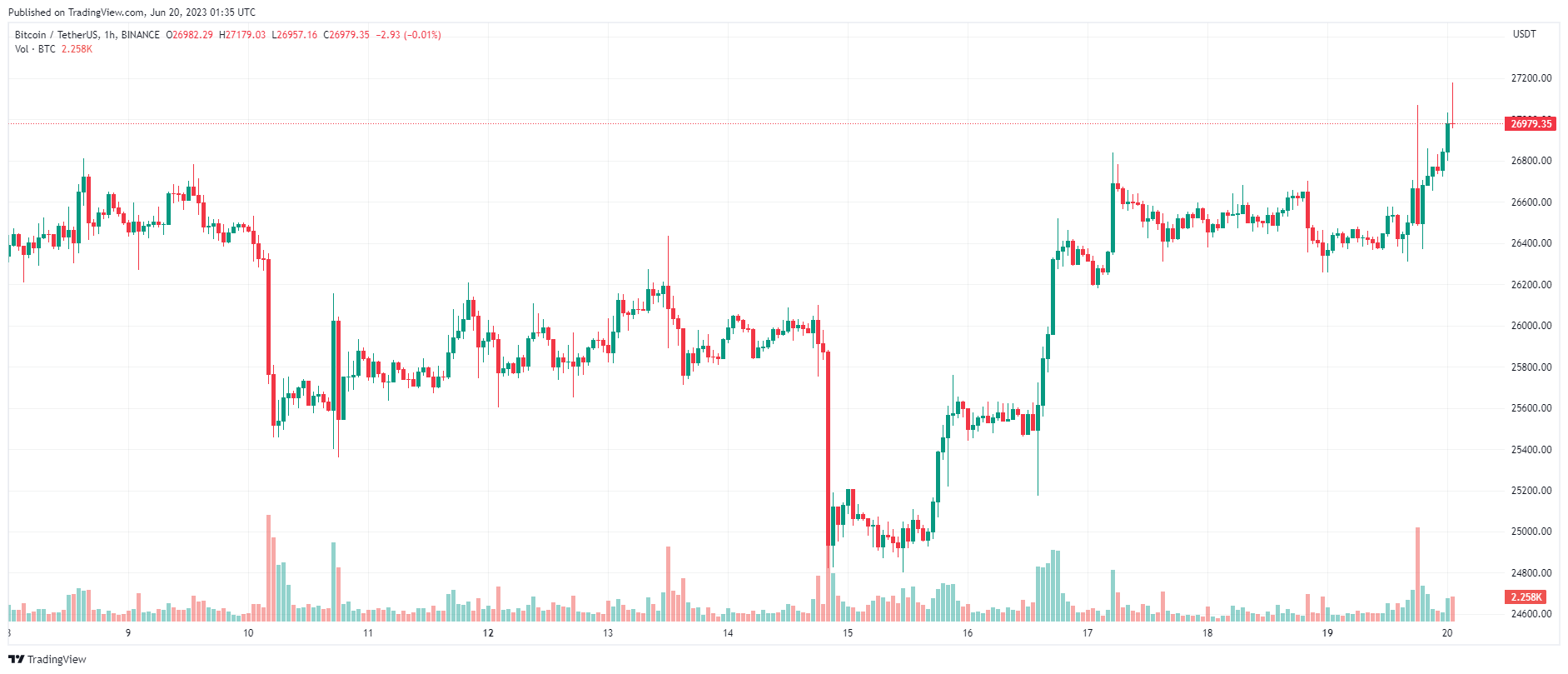
比特币在鲸鱼积累后反弹至接近 27,000 美元区域,这在短期内改善了网络性能。

BTC 价格走势图 – 1 小时 | 资料来源:TradingView

美股

由于投资者期待假期期间交易周缩短,周一晚间股票期货走低。

道琼斯期货下跌 93 点或 0.3%,而标准普尔 500 指数期货下跌 0.2%,纳斯达克 100 指数期货下跌 0.18%。

尽管周五主要股指下跌,但投资者本周表现强劲。标准普尔 500 指数和纳斯达克综合指数创下 3 月以来的最佳单周表现,分别上涨 2.6% 和 3.25%。这也是标准普尔 500 指数自 2021 年 11 月以来连续第五周上涨,也是纳斯达克指数连续第八周上涨,此前它曾在 2019 年实现过这一壮举。

投资者似乎乐于接受央行在 6 月推迟加息的决定。美联储主席杰罗姆鲍威尔周三在新闻发布会上表示,该行表示央行尚未在 7 月会议之前做出决定。不过,政策制定者预计今年晚些时候还会加息两次,每次加息 0.25%。

尽管鲍威尔坚称未来的美联储政策仍将取决于数据,但股市仍在上涨。投资者正试图衡量市场是否会在当前短暂的交易周内保持强劲的情绪。

纽约联储主席约翰威廉姆斯将于周二与美联储负责监督的副总裁迈克尔巴尔一起出席在纽约市举行的公司治理活动。美联储主席鲍威尔将于周三和周四在国会作证。

财报方面,投资者将关注周二航运巨头联邦快递的季度报告。

周一(6 月 19 日)金价小幅下跌,受美元走强打压,因投资者在美联储 (Fed) 主要政策制定者发表“鹰派”言论后评估未来利率路径。

尾盘,现货黄金合约下跌 0.1% 至 1,955.79 美元/盎司。黄金期货下跌 0.2% 至每盎司 1,967.2 美元。

油价周一(6月19日)每桶跌逾1美元,回吐上周涨幅,因对中国经济的疑虑盖过了OPEC+减产和石油钻井平台数量的影响。美国油气业务连续七周下滑.

尾盘,布伦特原油合约下跌 1.15 美元(折合 1.5%)至 75.45 美元/桶。WTI 原油合约下跌 1.09 美元(相当于 1.5%)至 70.69 美元/桶。

比特币和山寨币

据分析师Maartun称,鲸鱼昨天进行了增持。鲸鱼增持的增加可能有助于在短期内提高 BTC 价格,因为它们的购买力将在市场上产生看涨压力。

伴随着这种增持势头,比特币已经反弹至接近 27,000 美元的区域,目前正在创下 27,147 美元的局部顶部,在过去 24 小时内上涨超过 2%。

然而,鲸鱼的累积增长也引发了人们对 BTC 价格对大投资者依赖性的担忧。如果持有 BTC 的鲸鱼比例很高,这可能会使散户投资者容易受到这些有影响力的参与者突然抛售压力的影响。

鲸鱼的行为会影响市场情绪并导致价格大幅波动,从而可能导致市场波动加剧。

另一个可能影响 BTC 价格的因素是稳定币的发行。值得注意的是,CryptoQuant 分析师 Crypto_Lion 表示,稳定币的发布可能会导致 BTC 未来价格上涨。

稳定币的发行与价格走势呈负相关,这表明稳定币对市场的影响很大,尤其是在价格下跌期间。

这种反比关系表明,稳定币可以在市场低迷期间充当稳定力量,吸引寻求避难的投资者。

SEC 诉讼和 FOMC 恐慌等近期事件导致加密货币贬值。不过,根据 CryptoQuant 的数据,稳定币很可能对 BTC 的未来价格产生积极影响。
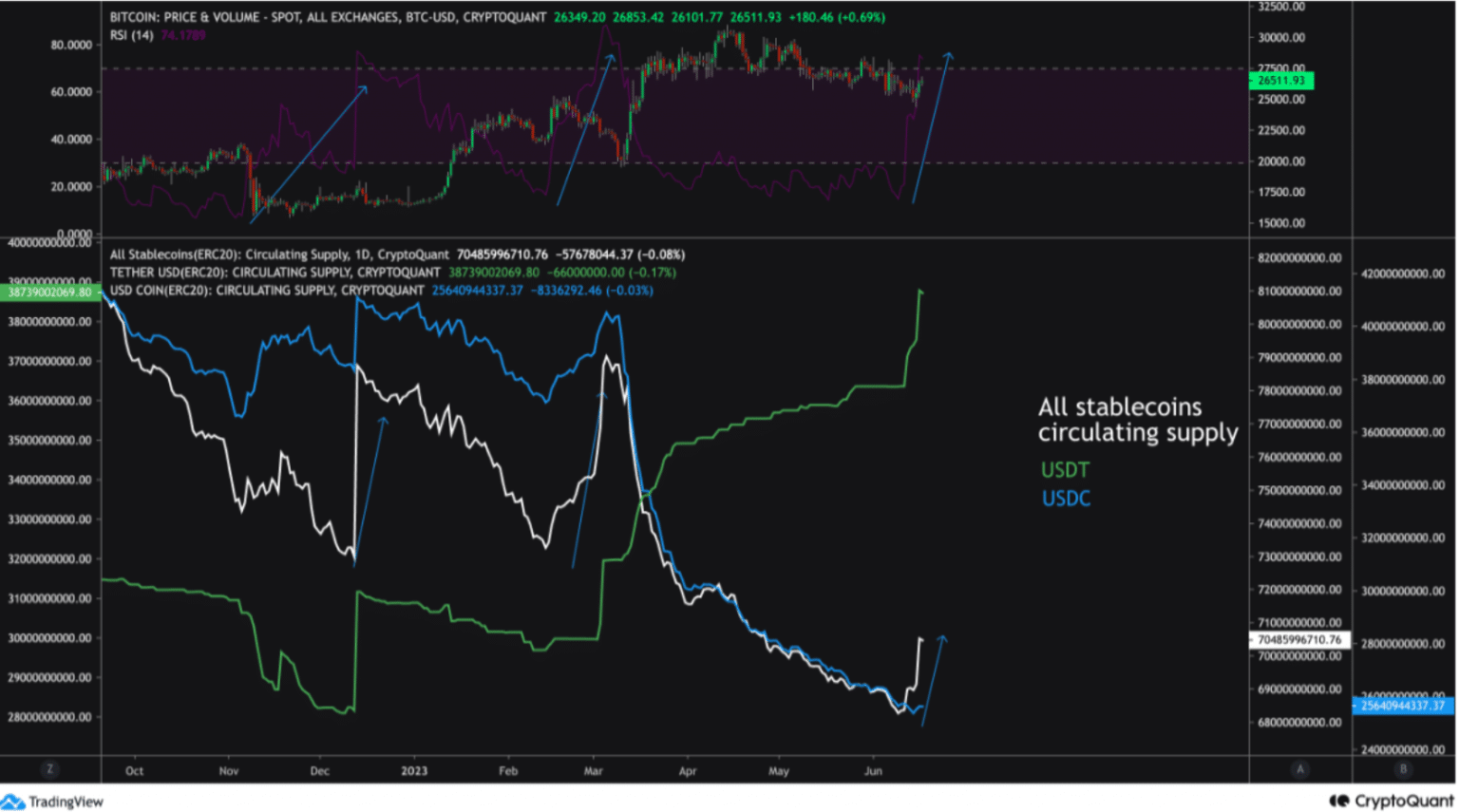
资料来源:CryptoQuant

随着比特币的短期反弹,当大多数项目都以绿色交易时,山寨币市场也会受益。

Sui (SUI) 和 Stacks (STX) 是当天表现最好的两个项目,它们反弹超过 10%,抹去了前一周暴跌后的所有损失。

前 100 名中的其他主要山寨币,如 Maker (MKR)、Render Token (RNDR)、Optimism (OP)、Injective (INJ)、Trust Wallet Token (TWT)、Lido DAO (LDO)、Aptos (APT)、Oasis Network ( ROSE)... 也录得 4-6% 的增长率。
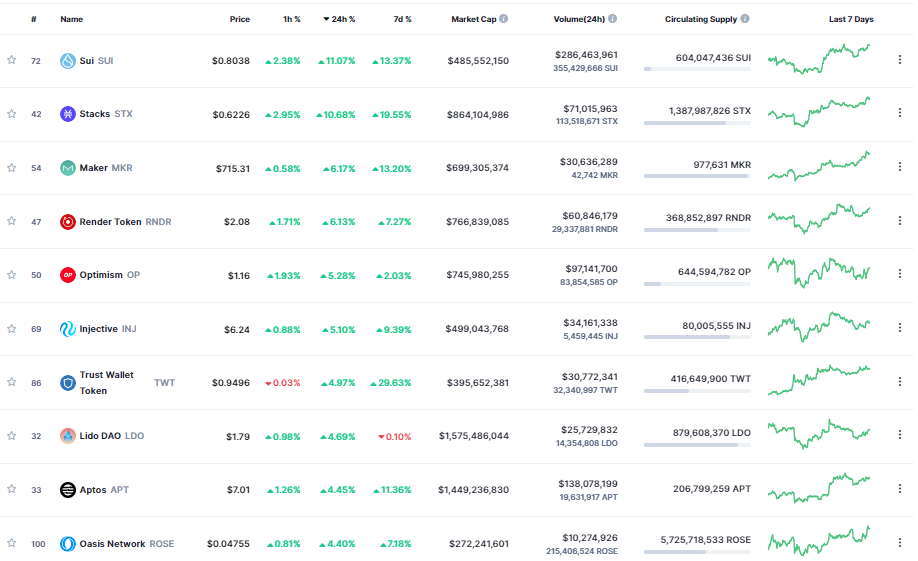
资料来源:Coinmarketcap

与此同时,以太坊(ETH)仍在努力重新获得 1,750 美元的门槛。市值排名第二的资产在当日创下 1,748 美元的局部高点,然后回到 1,735 美元附近交易,当日小幅上涨 0.5%。
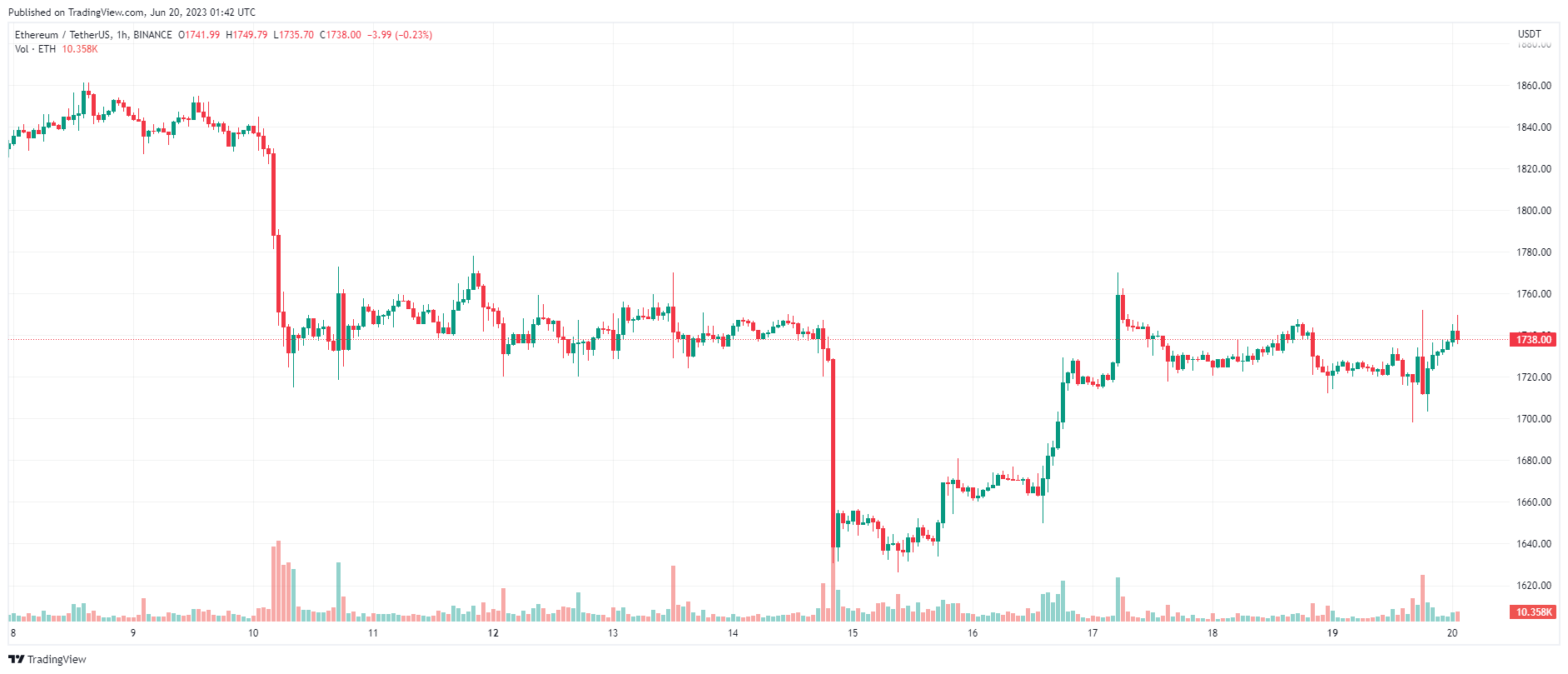
ETH 价格图表 – 1 小时 | 资料来源:TradingView


Letture associate

Why is XRP in the red now after a 50% weekly surge?

XRP fell 2.2% over 24 hours after a 49.4% surge in the previous week, moving back into negative territory. The drop coincides with major banks advancing blockchain-based payment solutions that address the need for prefunding in cross-border transfers, potentially competing with XRP's use case. JPMorgan Chase expanded its blockchain settlement system, Kinexys, to eight currencies, allowing clients to move and exchange funds around the clock without needing a separate crypto asset. Similarly, Citigroup operates a round-the-clock USD clearing network and offers Citi Token Services for tokenized deposits, aiming to speed up payments while reducing the amount of capital required upfront. While its 90-second settlement is slower than XRP Ledger's 3-5 seconds, using cash already held in a regulated bank may be more critical for companies. Furthermore, SWIFT has facilitated interoperability between different bank-issued tokenized deposits without a common cryptocurrency. In a recent pilot, HSBC and Standard Chartered completed a cross-border transaction using SWIFT's ledger to coordinate and settle obligations between their separate token systems. SWIFT reports that 17 banks across six continents are preparing for real transactions using this model. These developments in traditional finance present alternative, bank-integrated pathways for instant, cross-border value transfer, potentially impacting the demand and price trajectory for XRP.

cryptonews.ru6 min fa

Why is XRP in the red now after a 50% weekly surge?

cryptonews.ru6 min fa

The Ambition of the OEM: Dissecting Leju Robot's External Investments to Understand the 'Ecosystem Positioning' Battle in the Humanoid Robot Track

Leju Robotics, a leading humanoid robot manufacturer from China, is aggressively building an industrial ecosystem through strategic investments as it pursues a public listing. Founded in 2016 and known for its "Kuavo" robot, Leju saw its revenue surge to 258 million yuan in 2025, though it remains unprofitable. Its IPO plan, submitted in May 2026, outlines a strategy focused on cost reduction and full-stack capability development. Analysis of Leju's 13 disclosed investments reveals a three-pronged approach to securing its value chain. First, it targets core components like precision actuators (e.g., Lingxinqiaoshou), joint modules, and motors to control costs and supply. Second, it invests in software and AI layers, including companies working on foundational models and embodied intelligence datasets, to develop an independent "brain" while maintaining partnerships with giants like Huawei. Third, it forms alliances with firms in logistics and service robotics to transform from a hardware seller into a solution provider for real-world applications. While this investment network aims to create a competitive moat and support Leju's industrialization story, risks persist. The company faces ongoing losses, declining gross margins, and potential industry price wars. Many investments are early-stage with long payback periods and unproven synergistic benefits. Leju's strategy exemplifies how humanoid robot players are moving beyond pure R&D to ecosystem competition, betting that controlling the "hard work" of the supply chain will be the ultimate barrier to entry.

marsbit18 min fa

The Ambition of the OEM: Dissecting Leju Robot's External Investments to Understand the 'Ecosystem Positioning' Battle in the Humanoid Robot Track

marsbit18 min fa

Trading

Spot
活动图片