Genopets能否会继承stepn的风彩,成为运动gamefi的新宠

老雅痞Pubblicato 2022-04-02Pubblicato ultima volta 2022-04-02

Introduzione

Genopets,世界上第一个基于Solana的Move-to-EarnNFT游戏。

之前给大家介绍了号称是全球首款MoveToEarn(边运动边赚钱)NFT游戏:STEPN,今天我们来聊一聊另一款类似的“边动边赚”NFT游戏——Genopets,世界上第一个基于Solana的Move-to-EarnNFT游戏。

项目简介

Genopets是一款建立在Solona链上的免费NFT游戏,旨在用积极的生活方式变得有趣和有益。Genopets将来自其移动设备的用户步数数据与区块链Play-to-Earn经济学相结合,它有着精灵宝可梦的训练和战斗功能,也具有训练升级、装备制作这些游戏常见功能,玩家可以自由探索Genoverse发展并与在运动中与Genopet战斗时通过在现实生活中采取行动来赚取加密货币。

玩Genopets所需的只是一部智能手机。GenopetNFT可以免费获得,日常行走中就可以积累游戏经验值,玩家随身携带的手机或可穿戴设备记录仪可以随时同步玩家的游戏步数,并将其换成经验值。即使你只是日常上班通勤中拿着手机,也可以在Genopets中获得经验增长。

Genopet是一种生成NFT,随着你在游戏中等级的提高,它可以进化,可以升级和定制。目前GenopetNFT是免费的,并且是个孵化期的项目。随着用户投入时间和精力,Genopet增强它的稀有性,提升战斗性能和外观皮肤,它的价值会增加。Genopet会随着XP(游戏经验值)的增加而进化,它的进化可以通过精炼水晶来引导和加速。、

经济模型

在Genoverse游戏中,实行双token经济模型,分别是:$GENEtoken和$KItoken

$GENE代币

$GENE是治理和质押代币,代表Genoverse的所有权。作为$GENE代币持有者,可以对游戏的未来进行投票,并质押$GENE代币以获得奖励。
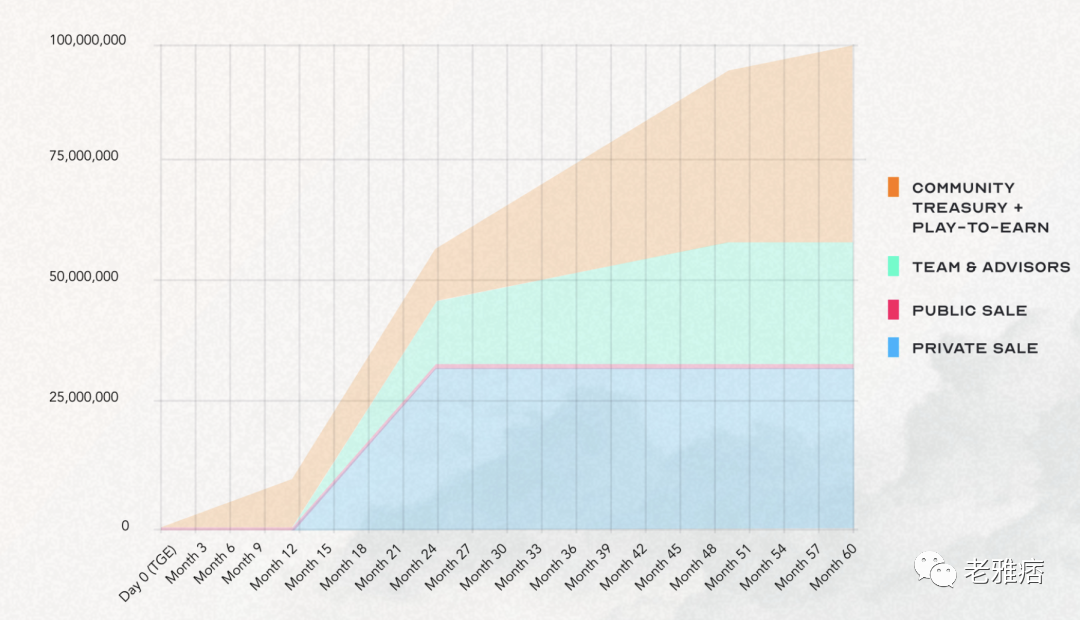
△$Gene在上线后60个月内的流通情况

$KI代币

$KI代币是游戏内的收益代币,购买Habitat时可以获得。使用$KI来进化Genopet,炼化水晶,生成新的栖息地,并与其他玩家战斗。

XP

XP,或称经验值,会随着用户的步数增加以升级Genopet。

RefinedCrystals

RefinedCrystals也是水晶NFT,可以使用$GENE和$KI制作,水晶有多种形式,每一种都在宠物的进化方面发挥着独特的作用。例如,火基因水晶将Genopet元素基因型更改为火,并赋予它炽热的外观和火攻击动作。

Habitat

顾名思义,栖息地是宠物生活和进化的地方。通过GenopetsMarketplace购买或使用$GENE、$KI和GeneCrystals制作的程序生成的NFT。此外,Habitat可提升XP,解锁直接制作精制水晶的能力,并每天赚取$KI。

Genopets首创了一个新的经济驱动模式的,免费和付费玩家都有机会获得收入。我们称之为双赢经济创新。

路线图

第一阶段:可以开始免费铸造您的Genopets、运动赚取XP来进化/升级Genopets。

第二阶段:开放栖息地、水晶、质押$GENE、赚取$KI代币、开放交易市场。

第三阶段:增加更多物品、开发排行榜、社交机制。

第四阶段:新增故事背景模式PvE和团队PvP机制、观众预测优胜者市场。
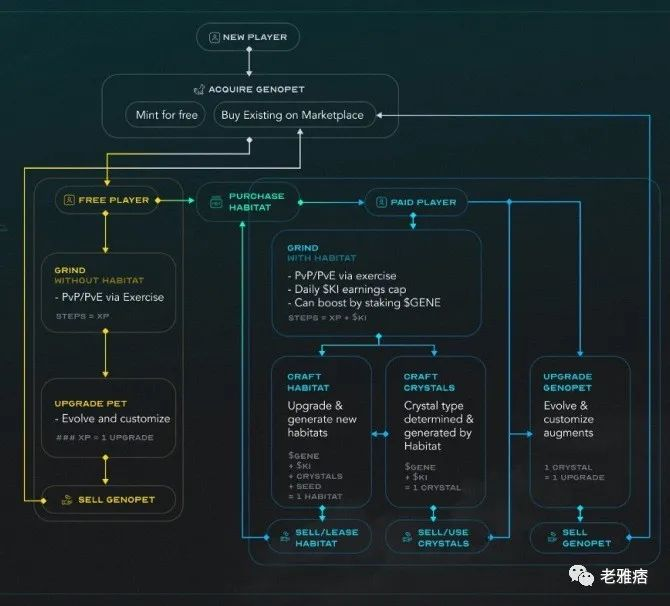
△GenopetsDualEarningEconomy双赢经济

Genopets和STEPN的核心虽然都是在运动健身的赛道上,但Genopets似乎能吸引到更加广泛的群体,因为与STEPN不同的是,它不只是单纯的跑步、升级跑鞋、交易运动鞋这样的运动社交。

它融入了口袋妖怪式的游戏系统,玩家通过运动获得的经验值用于升级和进化GenopetNFT,并且可以与其他玩家的Genopets进行战斗中,栖息地也具有虚拟地产的发展潜力。当然的,随着游戏越来越受欢迎,制作团队可以从中社区的发展中推出更多内容,从而进一步促进经济循环发展。

后疫情时代,让健身运动APP在web3时代下商机一片盎然。Genopets将运动健身,宠物对决和加密的力量完美地结合在了一起,它是否能成为下一个AxieInfinity?

STEPN炒鞋热潮不减,健身应用Strava和Sweatcoin的数据也是逐渐增长,这一类项目掀起了一股新风潮,会启发诸多类似项目不断问世,这类健身GameFi有一定的发展潜力,但是它们都同时面临巨大的竞争压力。每隔一段时间,市场都会推出新一批区块链游戏。每个优质游戏都有自己的特色,互相抢夺客户和市场。你认为健身+GameFi赛道会成为下一个风口吗?

Letture associate

Some Go Bankrupt, Others Go Shopping: The Counter-Cyclical Acquisition Logic of MoonPay, Circle, and Kraken

During a period of market stress where multiple crypto firms filed for bankruptcy or shut down, three major companies—MoonPay, Circle, and Kraken—pursued strategic acquisitions to strengthen their positions. Their divergent strategies reflect differing dependencies on key unresolved industry questions: which trading platforms, public blockchains, and stablecoins will ultimately dominate. MoonPay, operating at the fiat-crypto gateway, acquired Glide to expand its capabilities in token swaps, cross-chain operations, and financial reconciliation. Its business model is not tied to any single blockchain or stablecoin, allowing it to profit from user activity across various platforms. Circle, facing competitive pressure from the new Open Dollar Standard (OUSD) which could erode its core revenue from USDC reserve interest, acquired nearly a thousand patents from IBM. This move aims to build a competitive moat around USDC by enhancing its enterprise infrastructure, banking integrations, and compliance tools, shifting competition beyond mere interest yields. Kraken acquired Magic Labs' wallet-as-a-service business to deepen its integrated trading platform. The goal is to create a seamless "universal account" where users can trade crypto, stocks, and tokenized assets without leaving Kraken's ecosystem, while also bolstering its own layer-2 blockchain, Ink. These acquisitions highlight a trend where leading firms are consolidating core infrastructure not just for immediate profits, but to secure their futures amid ongoing industry consolidation and uncertainty. The competitive battleground is shifting from basic infrastructure access to superior product integration and ecosystem scale.

marsbit6 min fa

Some Go Bankrupt, Others Go Shopping: The Counter-Cyclical Acquisition Logic of MoonPay, Circle, and Kraken

marsbit6 min fa

The Permanent Underclass: No One Can Answer That 17-Year-Old Child

The article "The Permanent Underclass: No One Has an Answer for That 17-Year-Old" explores the concept of a "permanent underclass" emerging in a future where AI can perform most cognitive and physical labor. This theory, gaining traction in tech circles, suggests that as AI reduces the need for human workers, wages lose importance, and wealth increasingly flows to those who own AI models, compute, and data. The core issue is not temporary poverty but the potential breakdown of the traditional ladder of upward mobility—through labor, bargaining, and asset accumulation—making "underclass" a permanent status. The piece highlights a poignant question posed by researcher Jasmine Sun to AI lab personnel: What advice would you give a typical 17-year-old facing this future? Most had no answer, acknowledging the frightening transition ahead. However, while struggling to advise others, many in the AI field are securing their own positions, shifting from research or policy into labs to gain equity and stand on the "capital" side. This creates a vicious cycle: the more people believe labor's bargaining power is vanishing, the fewer work to rebuild it, accelerating its decline. Common personal survival strategies—learning AI skills, acquiring AI company equity, or pivoting to hands-on, in-person work—are analyzed. The author argues these are largely stopgaps, accessible mainly to the privileged, and may collectively undermine labor's overall position. The fundamental question shifts from "how not to fall behind" to "why must one's survival depend on being needed by capital?" The article concludes that the real solution is not individual adaptation but building a new societal "negotiating table"—new laws, forms of collective bargaining, or redistribution mechanisms (like taxes or public funds) to ensure the wealth AI creates is shared, especially with those displaced. It contrasts tentative institutional responses in China with a potential regulatory vacuum in the US, warning that without such frameworks being established before public frustration boils over, social unrest could follow. The 17-year-old’s dilemma underscores a systemic failure: the architects of this future are buying personal insurance but offering no collective answers.

marsbit15 min fa

The Permanent Underclass: No One Can Answer That 17-Year-Old Child

marsbit15 min fa

465% Growth in One Day: How a Memory Shortage Made CXMT China's Most Valuable Company

Chinese memory chip maker CXMT (ChangXin Memory Technologies) saw its shares surge 465.82% on its debut on the Shanghai STAR Market on July 27, 2026, closing at 49 yuan. Its market capitalization reached over 3.2 trillion yuan (~$473-488B), making it mainland China's most valuable listed company. This explosive debut coincided with staggering industry-wide profit growth. China's major integrated circuit manufacturers saw profits soar 2579.5% year-on-year in H1 2026. Specific companies like Shenzhen Longsys Electronics and GigaDevice Semiconductor reported profit growth exceeding 62,000% and 1000%, respectively. The primary driver is the AI boom, which has triggered massive global data center construction. Major memory giants like Samsung, SK Hynix, and Micron shifted capacity to high-margin AI accelerator memory (HBM), creating a severe shortage of standard DRAM used in servers, PCs, and smartphones. Contract DRAM prices spiked 90-95% QoQ in Q1 2026 and another 50-60% in Q2. CXMT, as China's largest domestic DRAM producer, capitalized on this deficit. It ramped up standard DRAM supply, secured long-term contracts with clients like ByteDance and Tencent, and expanded capacity. It forecasts H1 2026 revenue of 110-120B yuan and net profit of 50-57B yuan. A low comparative base from 2025's industry downturn and domestic policy support further fueled growth. However, analysts note a significant constraint: U.S. export controls on advanced lithography and manufacturing equipment limit CXMT's access to tools needed for cutting-edge HBM production. Its future trajectory will depend not just on global DRAM demand but also on China's ability to develop domestic semiconductor manufacturing equipment.

cryptonews.ru16 min fa

465% Growth in One Day: How a Memory Shortage Made CXMT China's Most Valuable Company

cryptonews.ru16 min fa

Trading

Spot
活动图片