Silvergate Bank清算,摩根大通或与Gemini结束银行业务,加密出入金更难了?

比推Pubblicato 2023-03-09Pubblicato ultima volta 2023-03-09

Introduzione

美国银行系统与加密行业之间的未来关系存在不确定性,尽管美国以外的OTC可能会因此受益,但长期来看对整个行业来说影响仍是负面的

纽约时间 3月8日下午,Silvergate Bank 的母公司 Silvergate Capital Corporation宣布将根据适用的监管程序结束运营并“自愿清算 Silvergate Bank”。

“”

自愿清算(voluntarily liquidate),顾名思义,即公司自行对其资产进行清算关闭公司,是指债务人与债权人达成协议,不经过正规破产处理程序,私下对公司进行的清算。自愿清算能够避免许多破产成本,而且债权人也能获得更高比例的偿还。

“”

Silvergate Capital Corporation 在公告中表示:“鉴于最近的行业和监管发展,Silvergate 认为有序结束银行业务和自愿清算银行是最好的前进道路……银行的清盘和清算计划包括全额偿还所有存款。公司还在考虑如何最好地解决索赔并保留其资产的剩余价值,包括其专有技术和税收资产。”

“”

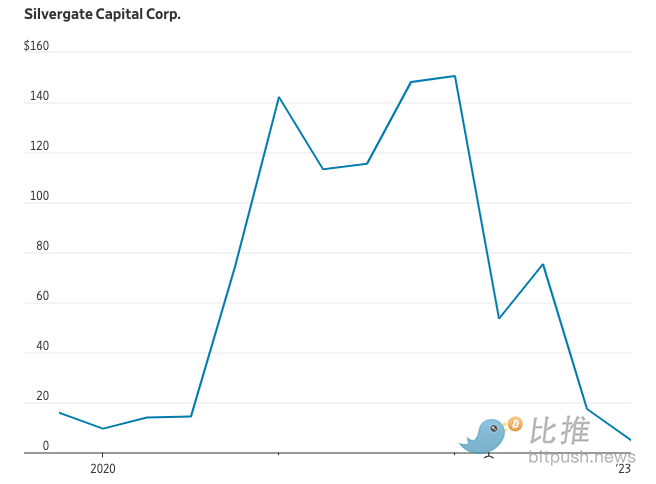
Silvergate 的股价在美股盘后交易中下跌超过 28%。根据道琼斯市场数据,周三收盘价为 4.91 美元,创下 2019 年 11 月以来的历史新低,较 2021 年 11 月创下的历史新高下跌了 98%。
摩根大通或与 Gemini 结束银行业务

“”

当天还有另一个利空消息,Coindesk援引一位知情人士的话报道称,美国银行业巨头摩根大通 (JPMorgan) 将结束与 Gemini 的银行业务关系,Gemini 是 Cameron 和 Tyler Winklevoss 拥有的加密货币交易所。据《华尔街日报》报道,早在 2020 年初,摩根大通就将 Gemini 和美国上市交易所 Coinbase 发展为客户,为他们提供现金管理服务,并为交易所的美国客户处理美元交易,它通过自动清算所网络(ACH,一种电子资金转账系统)处理电汇、存款和取款。

“”

Coinbase 交易所发言人表示,Coinbase 与摩根大通的银行业务关系保持完好。

“”

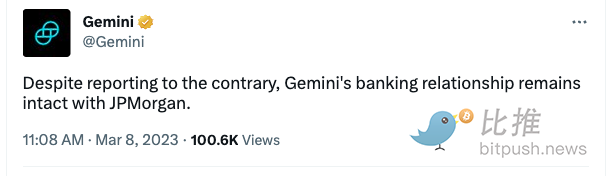
Gemini 在官推中回应了这一报道,称:“尽管有相反的报道,但 Gemini 与摩根大通的银行关系仍然完好无损。”
Gemini 于 2015 年获得纽约州金融服务部(DFS)颁发的信托执照。Coinbase 在金融犯罪执法网络 (FinCEN) 注册为货币服务企业,并且还拥有DFS颁发的加密业务许可证,即 BitLicense,两家公司都在多个州获得了汇款许可。

“”

摩根大通的决定很可能与Silvergate Bank、Gemini Earn 事件有关。

“”

比推此前报道,Gemini 已受到美国证券交易委员会 (SEC) 的审查,被控通过其“Earn计划”提供未注册的证券。Gemini Earn 计划一直存在争议,在该计划的重要合作伙伴和数字货币集团 (DCG) 的子公司 Genesis 停止运营后,用户无法从该平台提取资金。加密收益也是其他拥有相似业务的公司今年以来面临的最新监管挑战。

“”

Gemini 失去一个主要银行合作伙伴可能对其影响不大,根据该交易所的网站,该公司与其他银行有合作关系,例如 State Street,以及即将清算的 Silvergate Bank。

“”

出入金的负面影响

“”

Silvergate Bank 的陨落正在加剧美国监管机构之间关于银行是否能够防范加密风险的争论,并且令加密公司在美国的出入金业务面临阻碍。

“”

Silvergate 总部位于加利福尼亚州La Jolla,自 2013 年以来一直为加密货币公司提供银行服务,并推出了自己的内部支付服务 Silvergate Exchange Network (SEN)。SEN平台是Signature的旗舰产品,为客户提供全天候相互转移现金的能力,被视为加密客户服务的“心脏”,Silvergate 周五晚些时候宣布暂停 SEN。

“”

该公司在 2018 年 11 月申请上市时透露,它拥有近 500 个加密客户。其首次公开募股 (IPO) 于 2019 年完成,在纽约证券交易所交易,当时拥有超过 750 个加密客户。

“”

Silvergate 危机也让那些一直以来反对银行系统与加密公司交互的立法者更拿捏了证据。

“”

另一家远离加密货币的银行是 Signature Bank。2022 年 12 月,它宣布计划减少加密服务、向客户返还资金并关闭与加密相关的账户。由于与熊市和 FTX 破产相关的流动性问题,该银行还在 2022 年最后一个季度从美国联邦住房贷款银行系统 (FHLB)借款近 100 亿美元。

“”

加密银行业务转移至其他国家

“”

银行的举动也在影响加密公司。2 月,币安宣布暂停美元的银行转账。几周前,该交易所表示其 SWIFT 转账合作伙伴 Signature Bank将只处理超过 100,000 元银行账户的用户交易。

“”

Digital Asset Capital Management 联合创始人Richard Galvin 对彭博社表示,公司正在与位于瑞士的银行交谈,他没有透露银行名称。Galvin说:“有些银行处理加密交易,但他们并不专注于加密,这与 Silvergate 不同。我们已经在积极采取措施减少我们在 Silvergate 的存款并寻找新的银行客户,找到银行合作伙伴可能需要一些时间”。

“”

在瑞士,Sygnum Bank AG和SEBA Bank AG是与数字资产部门合作的银行之一,巴哈马的Deltec Bank & Trust Ltd.和Capital Union Bank也以专注于加密货币而闻名。

“”

Signature 的倒闭引起了美国关键立法者的注意,美国参议院银行、住房和城市事务委员会主席、资深参议员 Sherrod Brown在一份声明中表示:“今天,我们看到当一家银行过度依赖加密货币等高风险、不稳定的行业时会发生什么。当银行涉足加密货币时,它会将风险分散到整个金融系统,而付出代价的将是纳税人和消费者。”

“”

总之,美国银行系统与加密行业之间的未来关系存在不确定性,尽管美国以外的OTC可能会因此受益,但长期来看对整个行业来说影响仍是负面的。

Letture associate

This Strategy Earned Hefei One Trillion Yuan

This article analyzes the "Hefei Model" that enabled a municipal state-owned investment to generate paper profits exceeding one trillion yuan through the 2026 IPO of ChangXin Memory Technologies (CXMT). It argues against framing this success as a "lucky gamble," instead presenting it as the result of a deliberate institutional system designed to enable long-term industrial investment. The system comprises three core components. First, a **quantified risk-tolerance mechanism**, including a 40% loss allowance for venture funds and a clear "duty-fulfilled exemption" list, decouples project failure from personal career risk for decision-makers, allowing them to focus on industrial potential rather than personal liability. Second, **strategic investment in critical supply chain gaps**: Hefei doesn't just invest in "good" projects, but targets "missing" links essential for its key industries (appliances, displays, cars). The investment in CXMT aimed to fill the critical DRAM memory chip gap, subsequently attracting over 450 upstream and downstream firms and creating a full semiconductor cluster. Third, **institutional authorization for counter-cyclical investment**: Protected by the risk-tolerance framework, Hefei supported CXMT with increased investment during the 2023 global memory industry downturn, enabling it to scale production and capitalize on the 2025 AI-driven demand surge. The article concludes that the true lesson is not the specific investment but building the institutional infrastructure—quantified risk tolerance, deep industry chain analysis, and counter-cyclical mandates—that makes such long-term, strategic bets possible. It notes the final challenge is perfecting the exit mechanism to complete the investment cycle and transform paper gains into sustainable fiscal returns and reinvestment capacity.

marsbit11 min fa

This Strategy Earned Hefei One Trillion Yuan

marsbit11 min fa

Silicon Valley VC's On-the-Ground Observations of Chinese Entrepreneurship: A Harsher Capital Environment Breeding Fiercer Companies

A Silicon Valley VC's on-the-ground observations of China's startup ecosystem reveal a harsher capital environment forging more aggressive and execution-driven companies. Unlike Silicon Valley's patient capital focused on long-term growth, China's venture landscape is characterized by intense pressure for exits. Startups often face "equity in name, debt in reality" terms with strict timelines and personal founder liability, pushing IPO as the nearly mandatory exit path due to a virtually non-existent M&A market. This high-stakes system, while potentially fostering short-termism, cultivates extreme cost discipline, rapid execution, and formidable commercialization skills—traits evident as these companies expand overseas. The funding ecosystem comprises three main pools: local RMB funds (often government-backed with economic development mandates), domestic USD funds (more founder-friendly, like Sequoia China), and dwindling direct foreign capital. Financial Advisors (FAs) play a crucial intermediary role, packaging deals and navigating China's opaque, relationship-based business networks where platforms like LinkedIn haven't taken root. Underpinning it all is significant state influence through industrial policy, directing capital and incentives toward strategic sectors like semiconductors and AI. The result is a distinct, parallel innovation model—less forgiving than Silicon Valley's, but capable of concentrating resources, accelerating iteration, and producing fiercely competitive companies in targeted industries.

marsbit16 min fa

Silicon Valley VC's On-the-Ground Observations of Chinese Entrepreneurship: A Harsher Capital Environment Breeding Fiercer Companies

marsbit16 min fa

SharpLink's Helm: Buying Only, Never Selling, Making ETH Generate Profits Through the Cold Winter

SharpLink co-CEO Joseph Chalom shares his bullish outlook on Ethereum during the recent "Injective Summit 2026." Despite prevailing negative market sentiment, Chalom argues that fundamentals and data tell a different story: Ethereum dominates with over 50% of stablecoin transaction volume, nearly 60% of tokenized real-world assets (RWA), and remains the uncontested leader in DeFi. He attributes the communication gap and lack of confidence partly to the Ethereum Foundation's restructuring. In response, SharpLink, alongside ConsenSys and Bitmain, is funding three key spin-off teams from the Foundation: ETH Labs (for institutional-scale scalability), Ethereum Institutional (for business development and marketing), and EthSystems (for next-gen privacy and compliance solutions). Chalom emphasizes these are critical for accelerating institutional adoption. Regarding SharpLink's strategy, Chalom details a conservative, yield-focused approach. The firm holds 886,725 ETH, acquired with zero leverage or debt. They generate revenue by staking ETH and strategically deploying capital into DeFi protocols via a dedicated fund, aiming for returns above the native staking yield. This contrasts with some Bitcoin-focused firms that have become net sellers. On the broader institutional adoption of tokenization, Chalom sees current progress as just the beginning. He breaks it down into layers: stablecoins as the currency/value layer, tokenized assets as the exposure layer, and DeFi as the execution layer. He predicts regulatory clarity, like the potential Clarity Act, will be a major catalyst. A key future inflection point will be when fiduciary managers prefer tokenized, 24/7 tradable digital assets over traditional "analog" versions due to their programmability and instant settlement. In conclusion, Chalom positions SharpLink not just as an ETH accumulator and yield generator, but as an active "ecosystem steward," funding essential development and marketing initiatives to support Ethereum's long-term growth, which he believes is directly aligned with shareholder interests.

Odaily星球日报16 min fa

SharpLink's Helm: Buying Only, Never Selling, Making ETH Generate Profits Through the Cold Winter

Odaily星球日报16 min fa

Ten European Banks Launch Blockchain Initiative RL1

On July 28, 2026, ten European financial institutions launched the Regulated Layer One (RL1) initiative. This open, neutral, and compliance-focused blockchain network is specialized for institutional digital asset operations. The founding members include ABN AMRO, Cecabank, Chartered Investment, Crédit Mutuel Alliance Fédérale, DekaBank, DZ BANK, LBBW, Natixis CIB, SC Ventures, and Seturion, formed as a European cooperative society (SCE) and led by Henning Voelkel, former head of SWIAT. The network is open to new participants, with NatWest currently in discussions to join. RL1 is built on the SWIAT blockchain, which will remain its software and services provider. The underlying SWIAT network, operational for three years, has processed 50 transactions totaling €700 million. The initiative is described as a collective European effort to create a foundation for a shared, openly and trustworthily managed distributed ledger. Its primary goal is to overcome fragmentation in the regulated financial sector by establishing a neutral, participant-owned, pan-European DLT infrastructure for tokenized assets, digital money, and next-generation financial services. The move responds to growing EU demand for scalable real-world asset (RWA) infrastructure, evidenced by projects like Pontes and Appia. This launch aligns with broader sector growth expectations, including Standard Chartered's forecast for DeFi and RWA market capitalization to reach $2 trillion.

cryptonews.ru22 min fa

Ten European Banks Launch Blockchain Initiative RL1

cryptonews.ru22 min fa

Trading

Spot
活动图片