除了OpenSea,上榜《时代》百大影响力企业的还有哪些元宇宙公司?

区块律动Pubblicato 2022-03-31Pubblicato ultima volta 2022-03-31

Introduzione

《时代》眼中的元宇宙翘楚是怎么样的?

今年《时代》杂志的 100 大最具影响力企业榜单已经出炉,律动 BlockBeats 整理翻译了其中和加密、元宇宙相关的公司以及《时代》给出的评语:
OpenSea:给 NFT 加把火
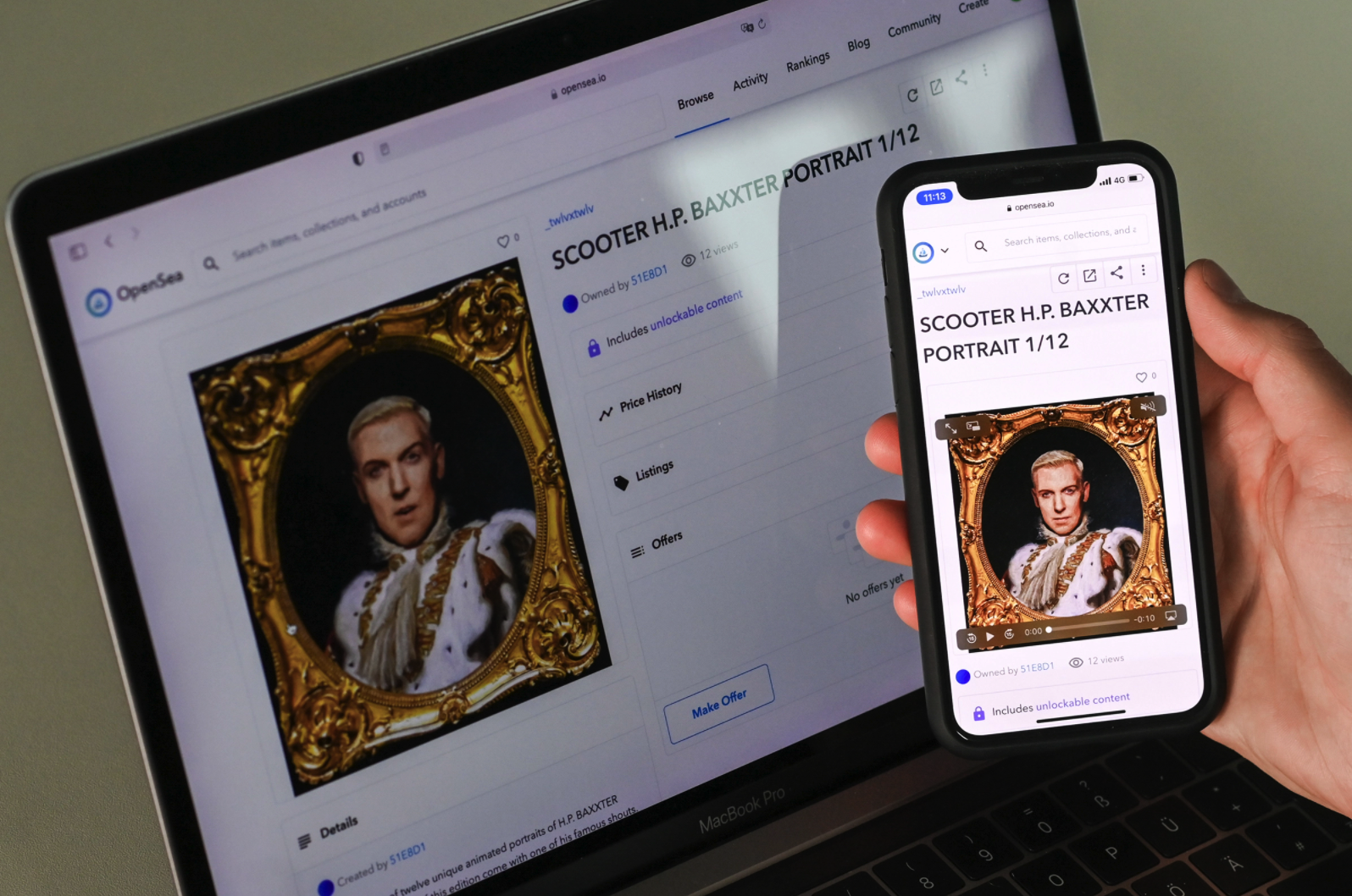
一件以 Scooter 主唱 H.P. Baxxter 为特色的数字艺术品在 OpenSea 上拍卖
OpenSea 2021 年的交易额超过 140 亿美元,是前一年总额的 646 倍。OpenSea 已经巩固了它全球最受欢迎的 NFT 市场地位,NFT 这种基于区块链的技术让对数字艺术、数据等的所有权主张成为可能。
OpenSea 首席执行官兼联合创始人 Devin Finzer 说:「除了艺术和创意工作,NFT 的用例正在扩展到票务、游戏、音乐和时尚。可能有一天,我们拥有的几乎所有东西都会在区块链上得到证明。」
OpenSea 现在有 100 多万用户,但它的迅速崛起并非完全顺利,例如它还在与平台上盗版侵权的行为作斗争。
苏富比:拍卖数字珍宝

Creation of My Metaverse (Between this World and the Next) by Serwah Attafuah,2021 年 6 月 4 日上拍苏富比
这家拥有 278 年历史的拍卖行在 2021 年卖出了价值 73 亿美元的艺术品,这要部分归功于它愿意投身于炙手可热的 NFT 业务。
苏富比的大部分销售仍然涉及更熟知的艺术形式,如波提切利或班克西的作品,但去年苏富比拍卖会上售出了 1 亿美元的 NFT,从「无聊猿」到万维网源代码。
虽然佳士得和其他拍卖行也对这种新技术表现出兴趣,但苏富比是第一家在元宇宙开设虚拟画廊的大拍卖行,这帮助它在一场颠覆几个世纪以来竞标和销售规范的技术革命发生时脱颖而出。
The Sandbox:数字圈地运动
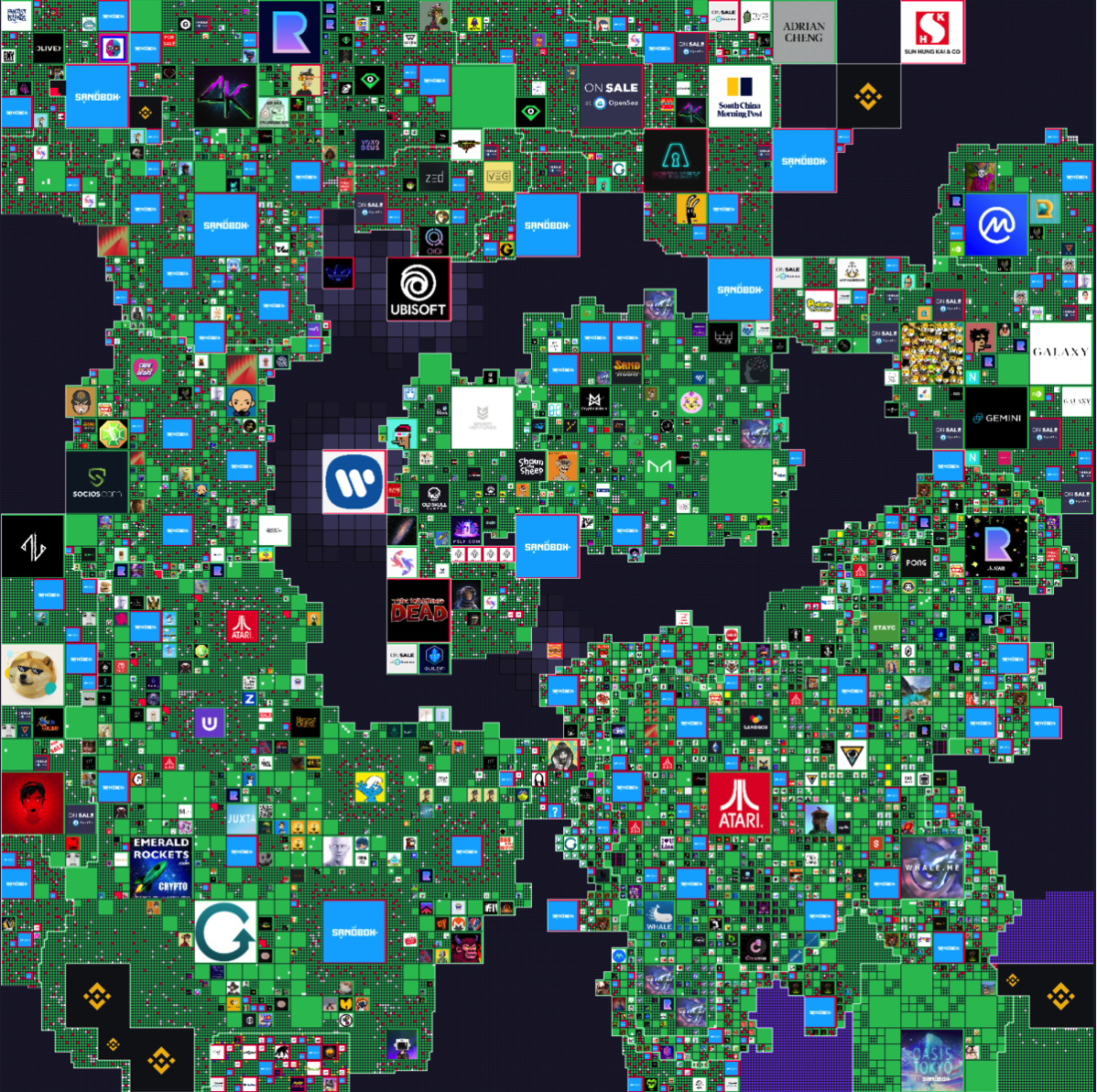
2022 年 2 月的 The Sandbox 地图
房地产几乎总是一种热门投资——在 The Sandbox 这个基于区块链的虚拟世界中似乎依旧如此。
The Sandbox 已经售出了至少 20 亿美元的数字「土地」。在 The Sandbox 的 210 万用户中,有 19,000 名(同比增长 375%)「拥有这个新世界的一部分,并正在为建设它做出贡献,」The Snadbox 联合创始人 Sebastien Borget 表示。
大品牌和名人也在参与其中:2 月,Gucci 以未披露金额购买了 The Sandbox 的土地,以建立互动购物体验,而 Snoop Dogg 则以大约 475 美元一个的价格售出了数千个可玩的 Avatar。
Meta:让元宇宙成为主流
2021 年 10 月 28 日,美国纽约举行的虚拟 Facebook Connect 活动上,Facebook 公司首席执行官马克 · 扎克伯格身着击剑服装
在去年 10 月的一次主题演讲中,当时的 Facebook 首席执行官马克 · 扎克伯格以一个卡通 Avatar 形象现身,并宣布了两项重大消息:Facebook 将更名为 Meta,并将自此专注于构建「元宇宙」。元宇宙是一个虚拟领域,信徒们说它是互联网的未来。
这一举动立即让元宇宙这一概念成为主流,迫使微软和谷歌等竞争对手同样大肆宣传类似的努力,也引发了对形形色色元宇宙相关公司的投资狂潮。但此后投资者对这一想法的降温,加之苹果的 Ad Targeting 禁令,现在 Meta 的市值几乎是去年 6 月万亿美元市值的半数。
除此之外,公众对吹哨人 Frances Haugen 的披露仍然感到担忧——他说该公司对 Facebook 伤害用户心理健康和全球民主的了解远比之前透露的要多。
Rec Room:虚拟游乐场
随着几乎所有技术主管都突然谈论元宇宙,Rec Room 被推到了风口浪尖。
3700 万名玩家用该公司的社交虚拟现实应用,创建和分享大量的游戏和其他数字体验,Rec Room 已成为元宇宙中最大、最多样化和最早的成功案例之一。
首席执行官兼联合创始人尼克-法伊特说:「这个平台已经成为人们可以聚在一起形成有意义的联系、建立社区和分享创造力的地方。」
Together Labs:元宇宙货币
Together Lab 的 VCOIN
社交平台 IMVU 一直是元宇宙游戏中的大玩家,有 700 万月活量。去年,IMVU 母公司 Together Labs 更进一步推出了 VCOIN,这是一种基于区块链的加密货币,用户可以在 IMVU 内消费或兑换成法币。Together Labs 首席执行官 Daren Tsui 表示,VCOIN 是唯一一个美国证券交易委员会发出无异议函(No-action Letter)的活跃使用加密货币,为其他元宇宙建立自己未来的加密货币奠定了「基石」。
Rendever:VR 的新用途
Rendever 的虚拟现实平台通过 VR 和直播节目,让社区老年居民能够再次享受生活
过去的两年里,老年人遭受了两种流行病的折磨:一种是新冠病毒,另一种是由旨在减少病毒传播的社会隔离。
Rendever 为后者提供了一种高科技解决方案:通过虚拟现实,Rendever 为老年人创造了共享体验,以对抗孤独(与痴呆和中风等健康风险息息相关)和改善身体健康。
Rendever 的技术已在美国、加拿大和澳大利亚的 400 多家疗养院中使用,联合创始人兼首席执行官凯尔·兰德 (Kyle Rand) 表示该技术正在「让全球参与者生活得更美好」。

Letture associate

Lei Jun Earns 7 Billion in One Day from CXMT's IPO? Xiaomi Executive Responds

On July 28th, Changxin Technology's stock price on the Sci-Tech Innovation Board experienced minor fluctuations. The company had made a historic market debut the previous day, becoming the first A-share stock to record a single-day trading volume exceeding 1 trillion yuan. This led to significant paper gains for its strategic investors. Among them, Xiaomi's wholly-owned subsidiary was allocated 18.24 million shares with an initial investment of approximately 158 million yuan. Reports estimated a paper profit of 717 million yuan for Xiaomi founder Lei Jun based on his shareholding structure. However, a Xiaomi executive clarified that this was a corporate investment and should not be conflated with personal wealth. Other major beneficiaries included Alibaba and Nio. Alibaba, an early investor, held nearly a 5% stake through two entities, with an estimated paper gain exceeding 160 billion yuan. Nio, participating in the strategic placement, also saw substantial paper returns. Additionally, state-owned banks and insurance institutions that invested in Changxin recorded potential gains in the hundreds of billions. Conversely, companies like Country Garden reportedly missed out on nearly 50 billion yuan in potential gains after divesting their stakes before the IPO due to liquidity pressures. The article notes that these are paper profits based on the listing price, as the allocated shares are subject to lock-up periods, and final realized gains will depend on future stock performance. An employee from Changxin Technology commented that ordinary staff remain focused on their salaries and benefits rather than the market hype.

marsbit2 min fa

Lei Jun Earns 7 Billion in One Day from CXMT's IPO? Xiaomi Executive Responds

marsbit2 min fa

Selling Tokens or Selling Outcomes: Several Paradoxes of the AI Business Model

"The Token vs. Outcome Sale: Key Paradoxes in the AI Business Model By mid-2026, the AI industry shows rapid growth in revenue and token usage, yet the underlying business models differ significantly. This article analyzes four structural paradoxes defining the current landscape, all pointing to the commoditization of intelligence and the concentration of profits in few segments. **The Cost Paradox: Cheaper Tokens, Heavier Bills** Despite a >95% price drop for equivalent AI capability since 2023, total spending has skyrocketed due to the Jevons Paradox: lower prices expand usage into previously uneconomical tasks. Furthermore, the shift to autonomous agents operating 24/7 multiplies consumption. However, efficiency gains often remain unrealized due to unchanged organizational workflows (the Solow Paradox). The focus is shifting from optimizing token price to optimizing the task itself. **The Hierarchy Paradox: The App is King vs. The App is Dead** While conventional wisdom holds that value accrues at the application layer, the AI stack is inverted. Infrastructure (chips) captures ~70% of industry revenue and ~80% of gross profit, while application-layer margins are thin (0-30%). Fast-evolving base models threaten "thin" apps. Sustainable applications are those that embed intelligence into specific contexts, possessing private data, workflows, or delivery capabilities that become more valuable as the base model improves. **The Responsibility Paradox: Profit Follows Accountability** Growth rates alone don't guarantee profit. A key differentiator is a company's willingness and ability to take responsibility for specific outcomes. Selling by the token competes for IT budgets; selling by the outcome (e.g., a resolved support ticket) taps into larger human labor budgets. Low-responsibility, high-volume tasks (e.g., generic客服) face commoditization. High-stakes, regulated domains (e.g., law, healthcare) where vendors assume heavier liability for results command higher margins, as seen with companies like Harvey in legal tech. **The Open-Source Paradox: Open Wins Traffic, Closed Wins Revenue** Open-source models dominate in usage share and developer adoption, often being 5-20x cheaper. However, closed-source models still capture the majority of enterprise spending (~89%). Enterprises pay a premium for closed-source reliability, support, compliance, and accountability. The total cost of ownership (TCO) is converging as closed-source prices fall faster than open-source builds trust, leading to hybrid deployments. Profit is migrating from the model layer itself to upstream (compute) and downstream (orchestration, data, services)."

marsbit3 min fa

Selling Tokens or Selling Outcomes: Several Paradoxes of the AI Business Model

marsbit3 min fa

Ethereum's 2030 Blueprint: 200x Speed Increase, Quantum-Resistance, and Native Privacy

Ethereum's 2030 Roadmap: 200x Speed, Quantum-Resistant, Native Privacy Ethereum, now in its 11th year, is guided by the "Lean Ethereum" vision, a unified development blueprint aiming to streamline the network. This plan, outlined in the evolving "Strawmap" document, targets five core goals for 2030. **1. Fast L1:** Ethereum aims for near-instant finality and faster block times. By using Zero-Knowledge (ZK) proofs to aggregate validator votes, final confirmation could drop from ~15 minutes to seconds. Block times are slated to decrease from 12 seconds to 6 seconds (2027-28) and eventually 4 seconds (2029-30). The minimum staking requirement may also lower to 1 ETH, enhancing decentralization. **2. 1 Billion Gas L1:** To break the scalability-decentralization trade-off, L1 ZK-EVM will replace redundant transaction execution with ZK proofs. This allows nodes (even on phones) to verify blocks without re-running computations, paving the way to increase L1 throughput ~200x to 1 billion gas per second. **3. Trillion-Gas L2:** Ethereum will become a high-capacity settlement layer for Layer 2 networks (L2s). Planned upgrades, like PeerDAS and subsequent optimizations, target 1 GB per second of data bandwidth for L2s (Blobs), enabling a massive ecosystem of high-throughput rollups for specialized use cases. **4. Quantum-Resistant L1:** To counter future quantum computing threats, Ethereum plans to migrate its cryptographic signatures (ECDSA, BLS) to quantum-resistant, hash-based schemes. This multi-upgrade transition is targeted for completion by 2029, securing the network in the post-quantum era. **5. Privacy-Native L1:** For the first time, native transaction privacy is an official goal. Using ZK proofs, transactions could hide sender, receiver, and amount while proving compliance with rules. This infrastructure is tentatively planned, though details remain fluid and subject to regulatory landscapes. Driven by a broader ecosystem beyond the core Foundation, this ambitious roadmap seeks to make Ethereum faster, more scalable, quantum-secure, and private, while preserving its core tenets of neutrality and trustlessness. All plans remain subject to ongoing research, audits, and community consensus.

marsbit16 min fa

Ethereum's 2030 Blueprint: 200x Speed Increase, Quantum-Resistance, and Native Privacy

marsbit16 min fa

Trading

Spot
活动图片