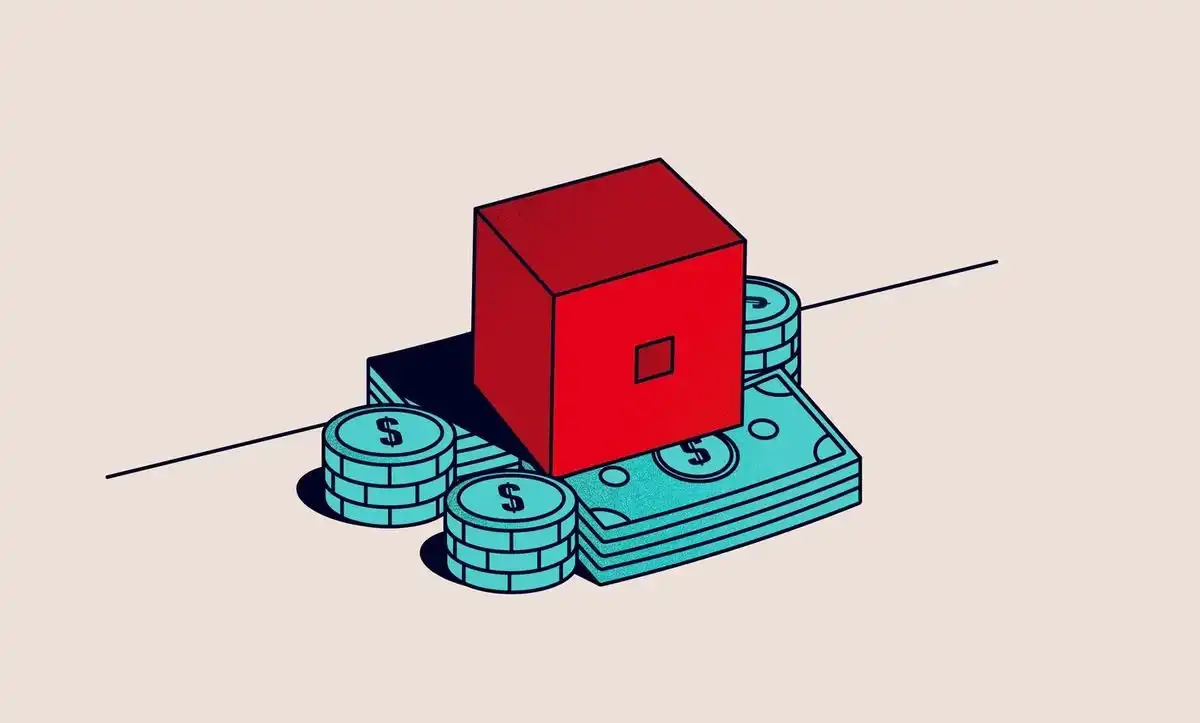
Locked And Loaded: MicroStrategy Takes $200M Loan To Buy Bitcoin

BitcoinistPubblicato 2022-03-30Pubblicato ultima volta 2022-03-30

Introduzione

Software company MicroStrategy is read to buy the Bitcoin dip. According to a press release, the company took a $205...

Software company MicroStrategy is read to buy the Bitcoin dip. According to a press release, the company took a $205 million loan from Silvergate Bank, a financial solution provider for the crypto industry.
The company took the loan via MacroStrategy, a subsidiary created with the purpose of holding its parent company’s Bitcoin funds. As per the release, the $205 million loans were issued under the Silvergate Exchange Network (SEN) and its Leverage program and will mature on March 23, 2025.
The SEN was launched in 2020, the release clarified, to address the demand for BTC collateralized loans. The financial institution claims the program has seen great interest which suggests a growing demand for BTC-backed loans.
Michael Saylor, Chairman, and CEO at MicroStrategy said:
The SEN Leverage loan gives us an opportunity to further our position as the leading public company investor in bitcoin. Using the capital from the loan, we’ve effectively turned our bitcoin into productive collateral, which allows us to further execute against our business strategy.
As collateral, MacroStrategy used “certain Bitcoin” held by the subsidiary and secured with a custodian entity approved by both parties. In addition to buying BTC and increasing one of the largest private holdings by a company, MicroStrategy will use the loan to pay fees, interest, and related expenses.
Alan Lane, Chief Executive Officer at Silvergate said the following:
We’re thrilled to add MicroStrategy to our growing list of SEN Leverage borrowers. Their innovative approach to treasury management is an exceptional example of how institutions can utilize their bitcoin to support and grow their business.
MicroStrategy Rushes To Buy Bitcoin?
The price of BTC continues its upward trajectory as the news about MicroStrategy broke. The first crypto by market cap trades at $47,800 with a 16% profit in the past 7-days.

Bitcoin BTC BTCUSD

BTC with bullish momentum on the 4-hour chart. Source: BTCUSD Tradingview On social media, users discuss MicroStrategy’s potential impact on BTC’s price as some entities could attempt to front-run the software company. This could lead to extended bullish price action.
As mentioned, MicroStrategy is one of the largest BTC holders. Data from BitcoinTreasuries indicates the company holds over 125,000 BTC after investing around $2 billion.
The company has seen an increase in its competitors. Terra’s Luna Foundation Guard is set on becoming the biggest BTC holder and dethroning MicroStrategy.
The entity perceives BTC as pristine collateral and has already begun accumulating it. The objective is to protect the 19% APY offer by the Anchor Protocol, and hedge Terra’s native stablecoin against potential downside periods.
Do Kwon, co-founder at Terraform Labs, the company behind Terra’s development, has publicly challenged Saylor.
The Terra Protocol will be one of the largest holders of $BTC@saylor beware
— Do Kwon 🌕 (@stablekwon) March 2, 2022
Letture associate

Countdown to the CLARITY Act: 25 Days Left—What Will Happen to the Crypto Market if It Fails to Pass Before the August Recess?

"The CLARITY Act, a key US crypto market structure bill, faces a tight deadline with only 25 working days left before the Senate's August 10 recess. The bill aims to clarify SEC/CFTC jurisdiction and establish a non-security path for decentralized tokens. Despite passing the House in 2025 and a Senate committee in May 2026, final negotiations have stalled over ethics and law enforcement provisions, jeopardizing the 60 Senate votes needed. If the bill fails to pass before the recess, its chances in 2026 drop significantly, with prediction markets giving only a 40% probability. Analyst Galaxy Digital has lowered its 2026 passage odds to 50%. Failure would likely lead to continued 'slow bleeding' in crypto markets, as seen in June's record $4.5 billion net outflow from US Bitcoin ETFs. XRP, which stands to gain permanent commodity status from the bill, could lose its 'regulatory premium.' Bitcoin and Ethereum, already classified as commodities via a joint agency interpretation, would face less direct impact but broader regulatory uncertainty would persist, delaying institutional capital and DeFi innovation. The path forward includes: 1) Passage before August (a major catalyst), 2) Delay to 2027 (extending market uncertainty), or 3) Failure, requiring the bill to be reintroduced in the next Congress. While delay is a setback, the bill's progress indicates the US is closer than ever to resolving crypto regulatory ambiguity."

marsbit16 min fa

Countdown to the CLARITY Act: 25 Days Left—What Will Happen to the Crypto Market if It Fails to Pass Before the August Recess?

marsbit16 min fa

In the First Half of the Year, Half of VC Money Flowed to AI, with These 30 Companies Alone Raising Over 170 Billion Yuan

First Half of 2026: VC Investment in AI Explodes, with 30 Top Companies Raising Over 170 Billion RMB In the first half of 2026, China's AI sector saw a massive surge in venture capital, with total equity financing exceeding 300 billion RMB—already surpassing the entire 2025 total. Key trends include: * **Massive Funding Scale:** The AI track recorded 1,203 financing events totaling over 300 billion RMB. Investment peaked in June, partly driven by DeepSeek's landmark 51-billion-RMB Series A round. * **Geographic Concentration:** Beijing, Hangzhou, Shanghai, and Shenzhen dominated, accounting for 74% of deals and 86% of total funding. Beijing led with 95.5 billion RMB, while Hangzhou surged to second place due to DeepSeek's round. * **Sector Focus:** * **Large Models** were the top draw, securing over half of all funds (nearly 1.6 trillion RMB). * **AI Infrastructure** (compute, chips) and **Embodied AI** (e.g., robotics) were other major investment areas, with the latter being the most active in number of deals. * **AIGC Applications** attracted significant capital (59.6 billion RMB), indicating strong belief in near-term commercialization. * **Investment Stage Logic:** Capital followed a clear strategy: heavy bets on growth-stage companies (A/B rounds), major funding for mature leaders, and widespread, smaller-scale seeding of early-stage innovators. * **Notable Early-Stage Trends:** World models (seen as the "OS" for embodied AI) attracted the most early capital. Angel/seed rounds reached unprecedented sizes ("inflation"), and investment shifted from foundational large models to downstream applications like robotics and physical AGI. * **Top Companies:** The 20 largest mid/late-stage deals raised 1.565 trillion RMB. Leaders include the "Big Three" large model firms (DeepSeek, StepFun, Kimi), seven leading humanoid robot companies ("Seven Samurai"), and top AIGC application players. * **Outlook:** Full-year 2026 funding is projected to exceed 6 trillion RMB. However, consolidation is expected in the large model sector, with the window for pure-play general AI startups closing. Survival will depend on finding niche verticals or securing strategic backing.

marsbit21 min fa

In the First Half of the Year, Half of VC Money Flowed to AI, with These 30 Companies Alone Raising Over 170 Billion Yuan

marsbit21 min fa

Trading

Spot
活动图片