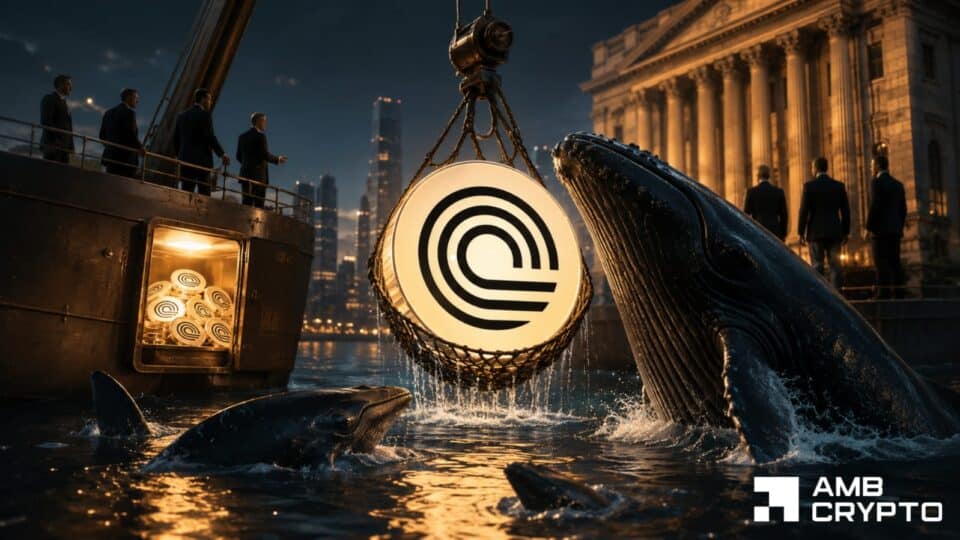
The bullish case for TAO requires you to believe that a game theory miracle can happen. But such miracles have occurred before in the cryptocurrency industry.
Bittensor has one of the most elegant narratives in the cryptocurrency space: a decentralized marketplace for AI intelligence, where market mechanisms allocate capital to the most impactful research. TAO is the coordination layer, subnets are the labs, and the market is the funding committee.
Strip away the narrative, and you'll find something more unsettling.
Bittensor is a funding program where cryptocurrency speculators provide capital for AI R&D—and the funded parties have no obligation to return any value to TAO.
Think of TAO as Elon Musk—he was the first investor in OpenAI, a "non-profit" enterprise. Subnets are like Sam Altman—they are the builders who receive the funding, deliver the product, but have no contractual obligation to share the proceeds. They may ultimately choose to privatize the gains without returning any value to the original funding source.
Bittensor distributes TAO tokens to subnet operators and miners based on the price of the subnet's token. Once a subnet receives a TAO allocation, there is no enforcement mechanism requiring that the AI models, datasets, or services it generates must remain within the Bittensor ecosystem. Subnet operators can farm the TAO incentives from Bittensor and then take the real product elsewhere—deploy it on centralized cloud servers, package it as an independent API, or simply put a SaaS wrapper on it and sell it.
TAO holds no equity and has no licensing contracts. The only binding element is the subnet token—its price must be maintained to sustain access to resources. But this only works *before* the subnet "flies the coop": once the product is robust enough to stand on its own outside the Bittensor system, that tether is cut. The relationship between Bittensor and its subnets is less like venture capital and more like research grant funding—you get seed money, but they don't get your equity.
To put it bluntly, Bittensor is essentially a wealth transfer: from the pockets of token speculators to the accounts of AI researchers—or more plainly, from the retail investors to the technically savvy "miners".
The mechanism is simple: TAO investors are underwriting the entire ecosystem. They buy and hold TAO, propping up the price, and that price itself is the pipeline for capital flowing into the subnet incentive system. Subnet operators earn TAO inflation rewards by "demonstrating performance"—but in reality, "demonstrating performance" largely means keeping the price of their own subnet token looking good. The AI products built with this funding can walk away at any time—the only constraint is their continued need to access network resources.
This is a VC's worst nightmare: you provide the capital, they build the product, but they owe you nothing. What remains is a token emission schedule and a prayer.
The Optimist's Interpretation
Now, look at it from another angle. The optimistic view rests on two pillars:
Persistent resource needs mean AI companies are perpetually capital-constrained. Compute, data, and talent are expensive. If Bittensor can reliably provide these resources at scale, subnets have a rational incentive to stay—not because they are locked in, but because leaving means losing the supply channel.
There is a soft, logical underpinning: AI's hunger for resources is insatiable, and the scale TAO can provide is unattainable through independent financing. Following this logic, subnet teams will actively maintain their token's valuation; no enforcement mechanism is needed, and the TAO economy spontaneously forms a positive flywheel. Cryptocurrency excels at resource aggregation. Bitcoin aggregated a massive amount of computing power solely through token incentives. Ethereum's proof-of-work was also a tremendous success, a powerful magnet for computational resources.
Bittensor is applying the same playbook to AI. The "enforcement mechanism" is the token game itself—as long as TAO has value, the incentive to participate keeps growing.
If you ran 1000 simulations of Bittensor's future, the distribution of outcomes would be extremely skewed.
In most simulated scenarios, Bittensor remains a niche funding program. The AI outputs generated by subnets are insignificant. The best-performing subnets gain significant attention, capture the rewards, and then pivot to closed-source models, leaving no value for TAO. As token emissions outpace value creation, the TAO token depreciates.
In a minority of simulation paths, something actually takes off. A subnet creates a truly competitive AI service, and network effects begin to snowball. TAO becomes the de facto coordination layer for decentralized AI infrastructure—not by enforcing value capture, but through the gravitational pull of being the reserve asset of a functioning AI economy.
In a very few cases, TAO becomes the defining asset of a new category.
What Could Go Wrong
The bear case is simple: no stickiness. Once a subnet no longer needs the TAO token incentives, it leaves. Bittensor is a transitional phase, not a final destination. Centralized AI holds overwhelming advantage. Companies like OpenAI, Google, and Anthropic have orders of magnitude more compute and talent. TAO cannot compete with the firepower of venture capital and private equity markets. Therefore, the best talent will choose the traditional path. Emissions are a tax.
TAO's emission schedule subsidizes subnets by diluting holders. If the value created by subnets doesn't justify this dilution, it's a slow bleed disguised as a "growth mechanism".
The optimistic scenario, frankly, feels more like wishful thinking than a viable path to success.
Conclusion
The majority of capital deployed into TAO will ultimately subsidize development activities that return no value to token holders. But Crypto has repeatedly proven that coordination games driven by token incentives can produce results that all rational models fail to forecast.
Bitcoin shouldn't have worked, but it did—though this argument alone is not sufficient, and the industry has used it to back numerous projects that couldn't withstand first-principles scrutiny.
The core question for TAO isn't whether an enforcement mechanism exists—it doesn't, and efforts like dTAO haven't changed that. The core question is: are the game-theoretic incentives strong enough to keep the highest-quality subnets on the rails? Buying TAO is a bet that a "soft lock-in" will hold in the harsh face of reality.
This is either naivety or foresight.