From Lloyd's Coffeehouse to Polymarket: Prediction Markets Are Reshaping the Insurance Industry

marsbitDipublikasikan tanggal 2026-02-21Terakhir diperbarui pada 2026-02-21

Abstrak

From the coffeehouses of 17th-century London to the blockchain-based prediction markets of today, the fundamental nature of risk management is being reimagined. The article begins with a contemporary crisis: major insurers like Farmers Insurance and State Farm are canceling hundreds of thousands of policies in states like Florida and California, a "great insurance withdrawal" driven by catastrophic losses from hurricanes and wildfires that have shattered traditional actuarial models. The narrative then returns to the origin of modern insurance at Lloyd's Coffee House, where merchants and shipowners gathered to collectively underwrite voyages, dispersing individual risk among a group. For centuries, this model of risk transfer, priced by expert actuaries, has dominated. However, climate change and unprecedented disasters are now exposing its limits. The article proposes looking beyond insurance to the financial concept of *hedging*—offsetting risk rather than transferring it. Examples include Ray Dalio's innovative solution for McDonald's to lock in corn and soybean meal prices to launch the McChicken, and Southwest Airlines' legendary fuel hedging strategy that saved it billions. This "elegant" mechanism turns future uncertainty into present-day certainty through open markets. The pivotal shift is embodied by Polymarket, a prediction market platform. Here, users can trade contracts on the outcome of real-world events, from elections to weather patterns. This creates a dece...

In 2023, a letter arrived in the mailboxes of one hundred thousand households in Florida, USA.

The letter, from the century-old insurance giant Farmers Insurance, was brief and brutal: one hundred thousand policies, from homes to cars, were voided effective immediately.

Promises in black and white turned into worthless paper overnight. Furious policyholders flooded social media, demanding answers from the company they had trusted for decades. But all they got was a cold announcement: "We must more effectively manage our risk exposure."

In California, the situation was worse. Insurance behemoths like State Farm and Allstate had already stopped accepting any new applications for home insurance, and over 2.8 million existing policies were denied renewal.

An unprecedented "Great Insurance Retreat" is underway in the United States. The very industry that once served as a social stabilizer, promising to be a safety net for all, is itself now in turmoil.

Why? Let's look at the following data.

Hurricane Helene may have caused over $53 billion in damages in North Carolina; Hurricane Milton, according to Goldman Sachs estimates, could result in insured losses exceeding $25 billion; and for a major fire in Los Angeles, AccuWeather estimated total economic losses between $250 and $275 billion, while CoreLogic estimated insurance payouts between $35 and $45 billion.

Insurance companies are finding themselves at the limits of their ability to pay. So, who can replace the traditional insurance industry?

A Wager in a Coffeehouse

The story begins over three hundred years ago in London.

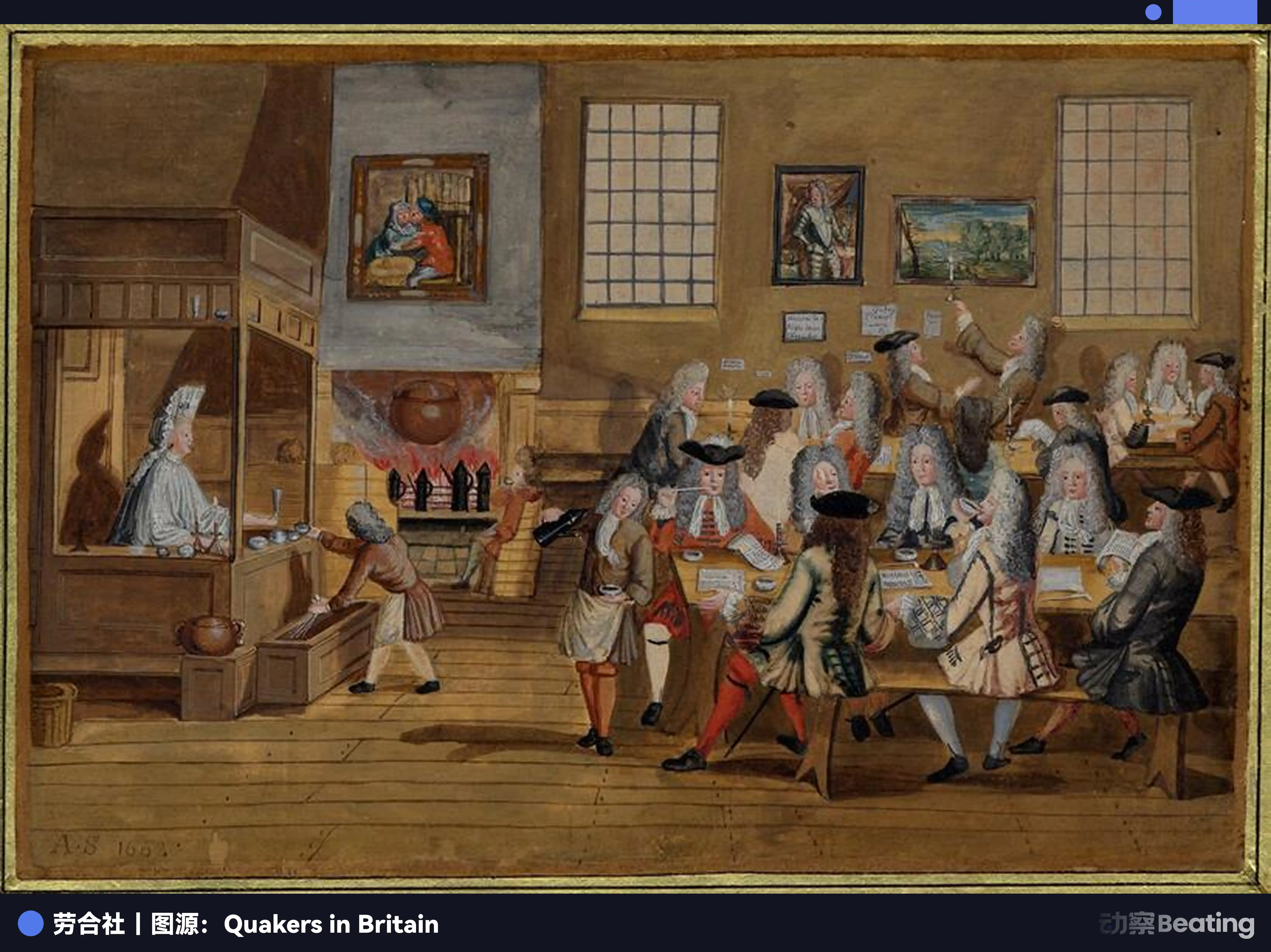
In 1688, on the banks of the Thames, a coffeehouse named Lloyd's was shrouded in the same shadow for sailors, merchants, and shipowners. Merchant ships laden with goods sailed from London to distant Americas or Asia. A safe return meant immense wealth; but encountering a storm, pirates, or running aground meant total loss.

Risk, like an inescapable dark cloud, loomed over every seafarer.

The coffeehouse owner, Edward Lloyd, was a shrewd businessman. He realized these captains and cargo owners needed more than just coffee; they needed a place to share risk. So, he began encouraging a kind of "betting game."

A captain would write the ship and cargo details on a piece of paper and post it on the coffeehouse wall. Anyone willing to assume a portion of the risk could sign their name on this paper and write the amount they were willing to underwrite. If the ship returned safely, they would share a fee (the premium) paid by the captain proportionally; if the ship was lost, they had to compensate the captain for the losses proportionally.

If the ship returns, everyone celebrates; if it sinks, losses are shared.

This was the prototype of modern insurance. It had no complex actuarial models, only simple business wisdom—distributing one person's enormous risk for a group to share.

In 1774, 79 underwriters joined forces to form the Lloyd's Association, moving from the coffeehouse into the Royal Exchange. A modern financial industry worth trillions was born.
For over three hundred years, the essence of the insurance industry has never changed: it is a business of managing risk. Through actuarial science, it calculates the probability of various risks, prices that risk, and sells it to those seeking protection.

But today, this ancient business model faces unprecedented challenges.

When the frequency and intensity of hurricanes, floods, and wildfires far exceed the predictions of historical data and actuarial models, insurance companies find their measuring stick can no longer gauge the world's growing uncertainty.

They have only two choices: either drastically raise premiums, or retreat—as we saw in Florida and California.

A More Elegant Solution: Hedging Risk

While the insurance industry is stuck in the dilemma of "can't calculate accurately, can't afford to pay, dare not insure," we might step outside the insurance framework and look for answers in another ancient industry: finance.

In 1983, McDonald's planned to launch a revolutionary product: Chicken McNuggets. But a major problem faced management: chicken prices were too volatile. If they locked in menu prices and chicken prices soared, the company would face huge losses.

The tricky part was, there was no chicken futures market available to hedge this risk.

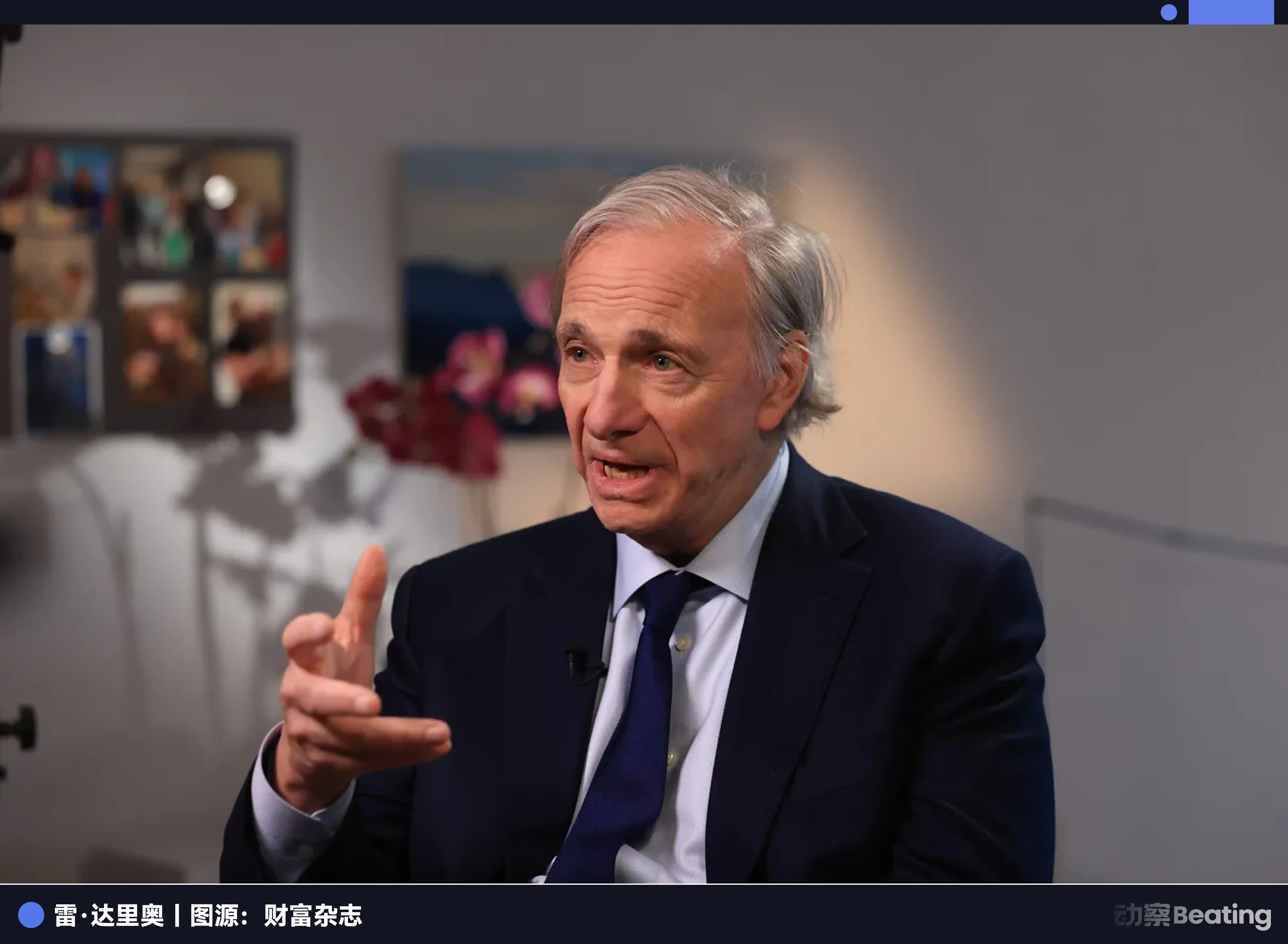
Ray Dalio, then a commodity trader, proposed a genius solution.

He said to McDonald's chicken suppliers: "Isn't the cost of a chicken just the chick, corn, and soybean meal? Chick prices are relatively stable; what really fluctuates are the prices of corn and soybean meal. You can go to the futures market and buy corn and soybean meal futures contracts, locking in your production costs. Then you can supply McDonald's with fixed-price chicken, right?"

This idea of a "synthetic future," commonplace today, was revolutionary at the time. It not only helped McDonald's successfully introduce Chicken McNuggets but also planted the seed for Ray Dalio to later found the world's largest hedge fund, Bridgewater Associates.
Another classic case comes from Southwest Airlines.

In 1993, then-CFO Gary Kelly began establishing a fuel hedging strategy for the company. From 1998 to 2008, this strategy saved Southwest approximately $3.5 billion in fuel costs, equivalent to 83% of the company's profits during the same period.

During the 2008 financial crisis, when oil prices soared to $130 per barrel, Southwest, through futures contracts, purchased 70% of its fuel at a locked-in price of $51 per barrel. This made it the only major U.S. airline that could maintain its "bags fly free" policy at the time.

Whether it was McDonald's chicken or Southwest's fuel, both reveal the same simple business wisdom: use financial markets to transform future uncertainty into present certainty.

This is hedging. Its goal is the same as insurance, but the underlying logic is completely different.

Insurance is the transfer of risk. You transfer a risk (e.g., a car accident, illness) to an insurance company and pay a premium for it. Hedging is the offsetting of risk.

You have a position in the spot market (e.g., need to buy fuel), so you establish an opposite position in the futures market (e.g., buy fuel futures). When the spot price rises, the profit from the futures offsets the loss on the spot.

Insurance is a relatively closed system, dominated by insurance companies and actuaries. Hedging is an open system, priced collectively by market participants.

So, if hedging is so elegant and efficient, why can't we use it to solve today's insurance dilemma? Why can't a Florida resident hedge the risk of a hurricane making landfall, just like Southwest Airlines hedged fuel risk?

The answer is simple: because such a market didn't exist.

Until a young entrepreneur, who started his business in a bathroom, brought it to us.

From "Risk Transfer" to "Risk Trading"

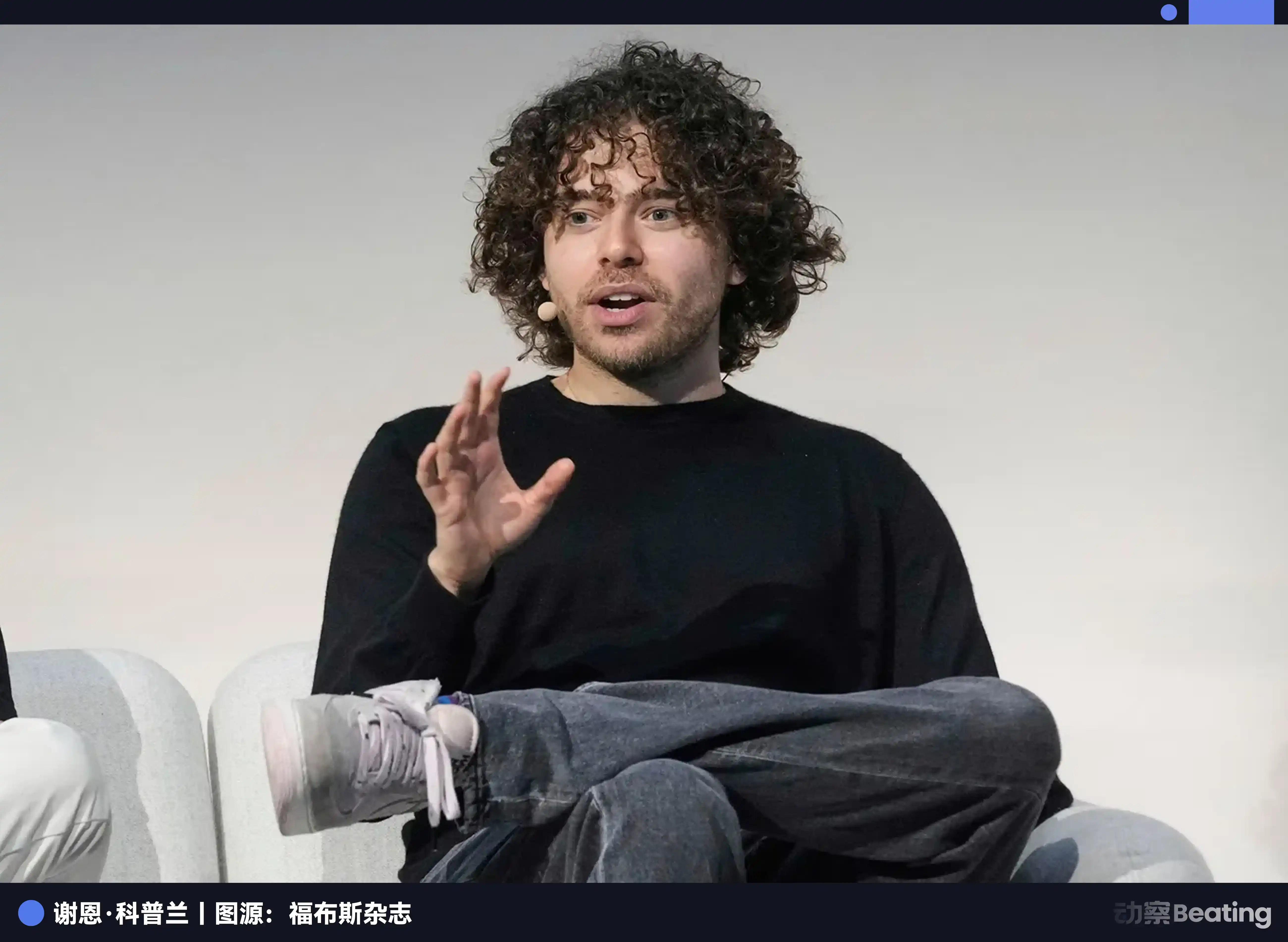
22-year-old Shayne Coplan founded Polymarket in a bathroom. This blockchain-based prediction market gained fame in 2024 during the U.S. presidential election, with annual trading volume exceeding $9 billion.
Beyond the political betting, Polymarket also hosts some intriguing markets. For example, will Houston's maximum temperature exceed 105 degrees Fahrenheit in August? Will California's nitrogen dioxide concentration be above average this week?

An anonymous trader named Neobrother accumulated profits of over $20,000 trading these weather contracts on Polymarket. He and his followers are known as "Weather Hunters."

While insurance companies are fleeing Florida because they can't predict the weather, a group of mysterious players are enthusiastically trading differences of 0.1 degrees Celsius.

Prediction markets are essentially a platform for "futurizing everything." They extend the function of traditional futures markets from standardized commodities (oil, corn, foreign exchange) to any event that can be publicly and objectively verified.

This provides a completely new way of thinking to solve the insurance industry's dilemma.

First, it replaces expert arrogance with the wisdom of the crowd.

Traditional insurance pricing relies on the actuarial models of insurance companies. But when the world becomes increasingly unpredictable, models based on historical data fail.

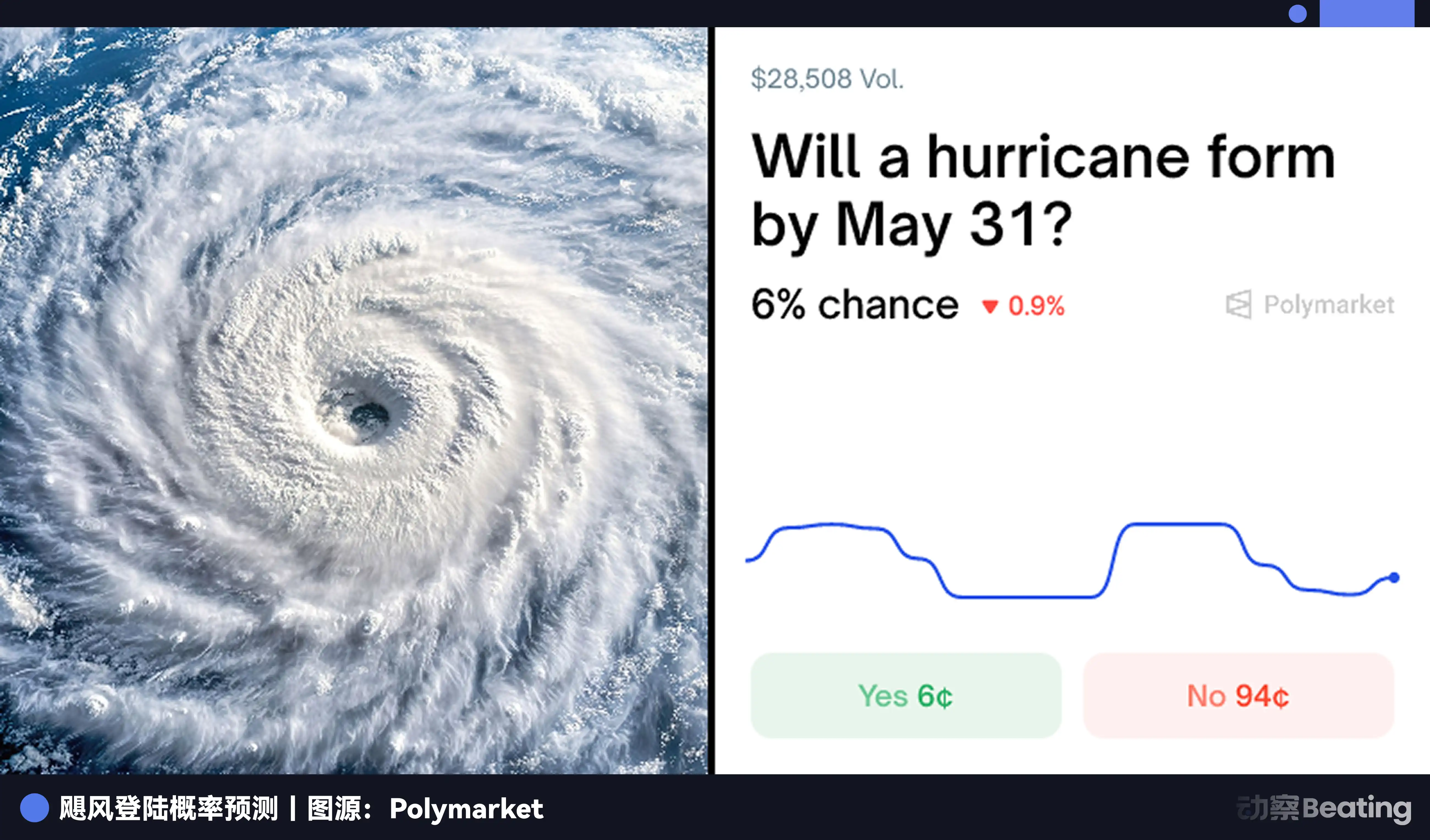
The price on a prediction market, however, is "voted" on by thousands of participants with real money. It reflects the aggregate information the market has on the probability of an event occurring. The price fluctuation of a contract on "whether a hurricane will make landfall in Florida in May" is itself the most sensitive, real-time measure of that risk.
Second, it replaces the helplessness of bearing losses with the freedom to trade.

A Florida resident worried about their house being destroyed by a hurricane no longer has only the "buy insurance" option. They can go to the prediction market and buy a "hurricane will make landfall" contract. If the hurricane does hit, their profit on the contract can be used to cover the cost of damage to their home.

This is, in essence, a personalized risk hedge.

More importantly, they can also sell this contract at any time, locking in profits or cutting losses. Risk is no longer a heavy burden that needs to be packaged and transferred wholesale; it becomes an asset that can be sliced, traded, bought, and sold at will. They transform from risk bearers into risk traders.

This is not just a technical improvement; it's a paradigm shift in thinking. It liberates the pricing power of risk from the hands of a few elite institutions and returns it to everyone.

The End of Insurance, or a New Beginning?

Will this "universal risk trading platform" of prediction markets replace insurance?

On one hand, prediction markets are eroding the foundation of the traditional insurance industry in a fundamental way.

The core of traditional insurance is information asymmetry. Insurance companies have actuaries and massive data models; they need to understand risk better than you to price it. But when the pricing power of risk is replaced by a public, transparent market driven by collective wisdom—or even insider information—the information advantage of insurance companies vanishes.

A Florida resident no longer needs to blindly trust an insurance company's quote; they just need to look at the price of a hurricane contract on Polymarket to know the market's true assessment of the risk.

More crucially, the traditional insurance industry is a "heavy model"—sales, underwriting, claims assessment, payouts... every环节 is full of labor costs and friction. Prediction markets, in contrast, are an ultimate "light model," with only trading and settlement, and almost zero intermediate links.

On the other hand, we see that prediction markets are not a panacea; they cannot completely replace insurance.

They can only hedge risks that are clearly defined and objectively verifiable (e.g., weather, election outcomes). For more complex and subjective risks (e.g., accidents caused by driving behavior, personal health conditions), they are inadequate.

You can't open a contract on Polymarket for the world to predict "whether you will have a car accident next year."

Personalized risk assessment and management remain the core strength of the traditional insurance industry.

The future landscape might not be a war of "one replacing the other," but rather a new and sophisticated relationship of co-opetition.

Prediction markets will become the infrastructure for risk pricing. Like Bloomberg Terminals and Reuters today, they provide the fundamental data anchors for the financial world. Insurance companies might also become deep participants in prediction markets, using market prices to calibrate their models or hedge catastrophic risks they cannot absorb.

And insurance companies will return to the essence of service.

When the pricing advantage is gone, insurance companies must rethink their value. Their core competence will no longer be information asymmetry, but rather a deeper focus on areas requiring deep involvement, personalized management, and long-term service, such as health management, retirement planning, and wealth inheritance.

The giants of the old world are learning the dance of the new world. And the explorers of the new world need to find the route to the continents of the old.

Epilogue

Over three hundred years ago, in a London coffeehouse, a group of merchants used primitive wisdom to invent a mechanism for sharing risk.

Over three hundred years later, in the digital world, players are reshaping how we interact with risk.

History often completes its cycles in the most unexpected ways.

From forced trust to free trading. This might be another exciting moment in financial history. Each of us will evolve from passive risk acceptors to active risk managers.

And this is not just about insurance; it's about how each of us can better survive in this world full of uncertainty.


Pertanyaan Terkait

QWhat is the core challenge facing the traditional insurance industry today, as described in the article?

AThe core challenge is that the frequency and intensity of catastrophic events like hurricanes, floods, and wildfires have far exceeded the predictions of historical data and actuarial models. This makes it impossible for insurers to accurately price risk, leading them to either drastically increase premiums or withdraw from markets entirely, as seen in Florida and California.

QHow did the coffeehouse owner Edward Lloyd contribute to the birth of the modern insurance industry?

AEdward Lloyd encouraged a 'betting game' in his 17th-century London coffeehouse. A ship's captain would post details of a voyage, and anyone willing to assume a portion of the risk would sign the paper and state the amount they would underwrite. If the ship returned safely, they shared the premium; if it was lost, they shared the loss. This was the雏形 of modern insurance, dispersing one person's large risk among a group.

QWhat is the fundamental difference between insurance and hedging, according to the article?

AInsurance is the transfer of risk, where an individual pays a premium to an insurance company to assume a specific risk (e.g., a car accident). Hedging is the offsetting of risk, where an entity with an exposure in the spot market (e.g., needing to buy fuel) establishes an opposite position in the futures market. If the spot price rises, the gain on the futures position offsets the loss on the physical purchase.

QWhat role does the prediction market Polymarket play in redefining risk management?

APolymarket, a blockchain-based prediction market, creates a platform for 'everything can be futures.' It allows anyone to trade contracts on the outcome of objectively verifiable events (e.g., weather, elections). This shifts risk pricing from closed, expert-led actuarial systems to an open system priced by the collective wisdom of market participants, enabling individuals to hedge personal risks directly.

QWill prediction markets completely replace the traditional insurance industry? What is the likely future relationship?

ANo, prediction markets will not completely replace traditional insurance. They are effective for hedging objective, verifiable risks (e.g., weather) but cannot handle complex, subjective risks (e.g., individual driving behavior). The future likely involves a symbiotic relationship: prediction markets will act as foundational infrastructure for real-time risk pricing, while insurers will focus on personalized risk management services like health and wealth planning, using market data to calibrate their models.

Bacaan Terkait

Menurunkan Ekspektasi untuk Bull Market Bitcoin Berikutnya

Artikel ini membahas penurunan ekspektasi penulis terhadap potensi kenaikan harga Bitcoin (BTC) pada siklus bull market berikutnya. Penulis, Alex Xu, yang sebelumnya memegang BTC sebagai aset terbesarnya, telah mengurangi porsi BTC dari full menjadi sekitar 30% pada kisaran harga $100.000-$120.000, dan kembali mengurangi di level $78.000-$79.000. Alasan utama penurunan ekspektasi ini adalah: 1. **Energi Penggerak yang Melemah:** Narasi adopsi BTC yang mendorong kenaikan signifikan di siklus sebelumnya (dari aset niche hingga institusi besar via ETF) sulit terulang. Langkah berikutnya, seperti masuknya BTC ke dalam cadangan bank sentral negara maju, dianggap sangat sulit tercapai dalam 2-3 tahun ke depan. 2. **Biaya Peluang Pribadi:** Penulis menemukan peluang investasi yang lebih menarik di perusahaan-perusahaan lain. 3. **Dampak Resesi Industri Kripto:** Menyusutnya industri kripto secara keseluruhan (banyak model bisnis seperti SocialFi dan GameFi terbukti gagal) dapat memperlambat pertumbuhan basis pemegang BTC. 4. **Biaya Pendanaan Pembeli Utama:** Perusahaan pembeli BTC terbesar, Stratis, menghadapi kenaikan biaya pendanaan yang memberatkan, yang dapat mengurangi kecepatan pembeliannya dan memberi tekanan jual. 5. **Pesaing Baru untuk "Emas Digital":** Hadirnya "tokenized gold" (emas yang ditokenisasi) menawarkan keunggulan yang mirip dengan BTC (seperti dapat dibagi dan dipindahkan) sehingga menjadi pesaing serius. 6. **Masalah Anggaran Keamanan:** Imbalan miner yang terus berkurang pasca halving menimbulkan kekhawatiran tentang keamanan jaringan, sementara upaya mencari sumber fee baru seperti ordinals dan L2 dinilai gagal. Penulis menyatakan tetap memegang BTC sebagai aset besar dan terbuka untuk membeli kembali jika alasannya tidak lagi relevan atau muncul faktor positif baru, meski siap menerima jika harganya sudah terlalu tinggi untuk dibeli kembali.

marsbit04/27 02:47

Menurunkan Ekspektasi untuk Bull Market Bitcoin Berikutnya

marsbit04/27 02:47

Trading

Spot
Futures

Artikel Populer

Apa Itu $S$

Memahami SPERO: Tinjauan Komprehensif Pengenalan SPERO Seiring dengan perkembangan lanskap inovasi, munculnya teknologi web3 dan proyek cryptocurrency memainkan peran penting dalam membentuk masa depan digital. Salah satu proyek yang telah menarik perhatian di bidang dinamis ini adalah SPERO, yang dilambangkan sebagai SPERO,$$s$. Artikel ini bertujuan untuk mengumpulkan dan menyajikan informasi terperinci tentang SPERO, untuk membantu para penggemar dan investor memahami dasar-dasar, tujuan, dan inovasi dalam domain web3 dan crypto. Apa itu SPERO,$$s$? SPERO,$$s$ adalah proyek unik dalam ruang crypto yang berusaha memanfaatkan prinsip desentralisasi dan teknologi blockchain untuk menciptakan ekosistem yang mendorong keterlibatan, utilitas, dan inklusi finansial. Proyek ini dirancang untuk memfasilitasi interaksi peer-to-peer dengan cara baru, memberikan pengguna solusi dan layanan keuangan yang inovatif. Pada intinya, SPERO,$$s$ bertujuan untuk memberdayakan individu dengan menyediakan alat dan platform yang meningkatkan pengalaman pengguna dalam ruang cryptocurrency. Ini termasuk memungkinkan metode transaksi yang lebih fleksibel, mendorong inisiatif yang dipimpin komunitas, dan menciptakan jalur untuk peluang finansial melalui aplikasi terdesentralisasi (dApps). Visi mendasar dari SPERO,$$s$ berputar di sekitar inklusivitas, bertujuan untuk menjembatani kesenjangan dalam keuangan tradisional sambil memanfaatkan manfaat teknologi blockchain. Siapa Pencipta SPERO,$$s$? Identitas pencipta SPERO,$$s$ tetap agak samar, karena ada sumber daya publik yang terbatas yang memberikan informasi latar belakang terperinci tentang pendiriannya. Kurangnya transparansi ini dapat berasal dari komitmen proyek terhadap desentralisasi—sebuah etos yang banyak proyek web3 bagi, memprioritaskan kontribusi kolektif di atas pengakuan individu. Dengan memusatkan diskusi di sekitar komunitas dan tujuan kolektifnya, SPERO,$$s$ mewujudkan esensi pemberdayaan tanpa menonjolkan individu tertentu. Dengan demikian, memahami etos dan misi SPERO tetap lebih penting daripada mengidentifikasi pencipta tunggal. Siapa Investor SPERO,$$s$? SPERO,$$s$ didukung oleh beragam investor mulai dari modal ventura hingga investor malaikat yang berdedikasi untuk mendorong inovasi di sektor crypto. Fokus investor ini umumnya sejalan dengan misi SPERO—memprioritaskan proyek yang menjanjikan kemajuan teknologi sosial, inklusivitas finansial, dan tata kelola terdesentralisasi. Fondasi investor ini biasanya tertarik pada proyek yang tidak hanya menawarkan produk inovatif tetapi juga memberikan kontribusi positif kepada komunitas blockchain dan ekosistemnya. Dukungan dari investor ini memperkuat SPERO,$$s$ sebagai pesaing yang patut diperhitungkan di domain proyek crypto yang berkembang pesat. Bagaimana SPERO,$$s$ Bekerja? SPERO,$$s$ menerapkan kerangka kerja multi-faceted yang membedakannya dari proyek cryptocurrency konvensional. Berikut adalah beberapa fitur kunci yang menekankan keunikan dan inovasinya: Tata Kelola Terdesentralisasi: SPERO,$$s$ mengintegrasikan model tata kelola terdesentralisasi, memberdayakan pengguna untuk berpartisipasi aktif dalam proses pengambilan keputusan mengenai masa depan proyek. Pendekatan ini mendorong rasa kepemilikan dan akuntabilitas di antara anggota komunitas. Utilitas Token: SPERO,$$s$ memanfaatkan token cryptocurrency-nya sendiri, yang dirancang untuk melayani berbagai fungsi dalam ekosistem. Token ini memungkinkan transaksi, hadiah, dan fasilitasi layanan yang ditawarkan di platform, meningkatkan keterlibatan dan utilitas secara keseluruhan. Arsitektur Berlapis: Arsitektur teknis SPERO,$$s$ mendukung modularitas dan skalabilitas, memungkinkan integrasi fitur dan aplikasi tambahan secara mulus seiring dengan perkembangan proyek. Kemampuan beradaptasi ini sangat penting untuk mempertahankan relevansi di lanskap crypto yang selalu berubah. Keterlibatan Komunitas: Proyek ini menekankan inisiatif yang dipimpin komunitas, menggunakan mekanisme yang memberikan insentif untuk kolaborasi dan umpan balik. Dengan memelihara komunitas yang kuat, SPERO,$$s$ dapat lebih baik memenuhi kebutuhan pengguna dan beradaptasi dengan tren pasar. Fokus pada Inklusi: Dengan menawarkan biaya transaksi yang rendah dan antarmuka yang ramah pengguna, SPERO,$$s$ bertujuan untuk menarik basis pengguna yang beragam, termasuk individu yang mungkin sebelumnya tidak terlibat dalam ruang crypto. Komitmen ini terhadap inklusi sejalan dengan misi utamanya untuk memberdayakan melalui aksesibilitas. Garis Waktu SPERO,$$s$ Memahami sejarah proyek memberikan wawasan penting tentang trajektori dan tonggak perkembangannya. Berikut adalah garis waktu yang disarankan yang memetakan peristiwa signifikan dalam evolusi SPERO,$$s$: Fase Konseptualisasi dan Ideasi: Ide awal yang membentuk dasar SPERO,$$s$ dikembangkan, sangat selaras dengan prinsip desentralisasi dan fokus komunitas dalam industri blockchain. Peluncuran Whitepaper Proyek: Setelah fase konseptual, whitepaper komprehensif yang merinci visi, tujuan, dan infrastruktur teknologi SPERO,$$s$ dirilis untuk menarik minat dan umpan balik komunitas. Pembangunan Komunitas dan Keterlibatan Awal: Upaya jangkauan aktif dilakukan untuk membangun komunitas pengguna awal dan investor potensial, memfasilitasi diskusi seputar tujuan proyek dan mendapatkan dukungan. Acara Generasi Token: SPERO,$$s$ melakukan acara generasi token (TGE) untuk mendistribusikan token asli kepada pendukung awal dan membangun likuiditas awal dalam ekosistem. Peluncuran dApp Awal: Aplikasi terdesentralisasi (dApp) pertama yang terkait dengan SPERO,$$s$ diluncurkan, memungkinkan pengguna untuk terlibat dengan fungsionalitas inti platform. Pengembangan Berkelanjutan dan Kemitraan: Pembaruan dan peningkatan berkelanjutan terhadap penawaran proyek, termasuk kemitraan strategis dengan pemain lain di ruang blockchain, telah membentuk SPERO,$$s$ menjadi pemain yang kompetitif dan berkembang di pasar crypto. Kesimpulan SPERO,$$s$ berdiri sebagai bukti potensi web3 dan cryptocurrency untuk merevolusi sistem keuangan dan memberdayakan individu. Dengan komitmen terhadap tata kelola terdesentralisasi, keterlibatan komunitas, dan fungsionalitas yang dirancang secara inovatif, ia membuka jalan menuju lanskap keuangan yang lebih inklusif. Seperti halnya investasi di ruang crypto yang berkembang pesat, calon investor dan pengguna dianjurkan untuk melakukan riset secara menyeluruh dan terlibat dengan perkembangan yang sedang berlangsung dalam SPERO,$$s$. Proyek ini menunjukkan semangat inovatif industri crypto, mengundang eksplorasi lebih lanjut ke dalam berbagai kemungkinan yang ada. Meskipun perjalanan SPERO,$$s$ masih berlangsung, prinsip-prinsip dasarnya mungkin benar-benar mempengaruhi masa depan cara kita berinteraksi dengan teknologi, keuangan, dan satu sama lain dalam ekosistem digital yang saling terhubung.

75 Total TayanganDipublikasikan pada 2024.12.17Diperbarui pada 2024.12.17

Apa Itu $S$

Apa Itu AGENT S

Agent S: Masa Depan Interaksi Otonom di Web3 Pendahuluan Dalam lanskap Web3 dan cryptocurrency yang terus berkembang, inovasi secara konstan mendefinisikan ulang cara individu berinteraksi dengan platform digital. Salah satu proyek perintis, Agent S, menjanjikan untuk merevolusi interaksi manusia-komputer melalui kerangka agen terbuka. Dengan membuka jalan untuk interaksi otonom, Agent S bertujuan untuk menyederhanakan tugas-tugas kompleks, menawarkan aplikasi transformasional dalam kecerdasan buatan (AI). Eksplorasi mendetail ini akan menyelami seluk-beluk proyek, fitur uniknya, dan implikasinya untuk domain cryptocurrency. Apa itu Agent S? Agent S berdiri sebagai kerangka agen terbuka yang inovatif, dirancang khusus untuk mengatasi tiga tantangan mendasar dalam otomatisasi tugas komputer: Memperoleh Pengetahuan Spesifik Domain: Kerangka ini secara cerdas belajar dari berbagai sumber pengetahuan eksternal dan pengalaman internal. Pendekatan ganda ini memberdayakannya untuk membangun repositori pengetahuan spesifik domain yang kaya, meningkatkan kinerjanya dalam pelaksanaan tugas. Perencanaan Selama Rentang Tugas yang Panjang: Agent S menggunakan perencanaan hierarkis yang ditingkatkan pengalaman, pendekatan strategis yang memfasilitasi pemecahan dan pelaksanaan tugas-tugas rumit dengan efisien. Fitur ini secara signifikan meningkatkan kemampuannya untuk mengelola beberapa subtugas dengan efisien dan efektif. Menangani Antarmuka Dinamis dan Tidak Seragam: Proyek ini memperkenalkan Antarmuka Agen-Komputer (ACI), solusi inovatif yang meningkatkan interaksi antara agen dan pengguna. Dengan memanfaatkan Model Bahasa Besar Multimodal (MLLM), Agent S dapat menavigasi dan memanipulasi berbagai antarmuka pengguna grafis dengan mulus. Melalui fitur-fitur perintis ini, Agent S menyediakan kerangka kerja yang kuat yang mengatasi kompleksitas yang terlibat dalam mengotomatisasi interaksi manusia dengan mesin, membuka jalan untuk berbagai aplikasi dalam AI dan seterusnya. Siapa Pencipta Agent S? Meskipun konsep Agent S secara fundamental inovatif, informasi spesifik tentang penciptanya tetap samar. Pencipta saat ini tidak diketahui, yang menyoroti baik tahap awal proyek atau pilihan strategis untuk menjaga anggota pendiri tetap tersembunyi. Terlepas dari anonimitas, fokus tetap pada kemampuan dan potensi kerangka kerja. Siapa Investor Agent S? Karena Agent S relatif baru dalam ekosistem kriptografi, informasi terperinci mengenai investor dan pendukung keuangannya tidak secara eksplisit didokumentasikan. Kurangnya wawasan yang tersedia untuk umum mengenai fondasi investasi atau organisasi yang mendukung proyek ini menimbulkan pertanyaan tentang struktur pendanaannya dan peta jalan pengembangannya. Memahami dukungan sangat penting untuk mengukur keberlanjutan proyek dan potensi dampak pasar. Bagaimana Cara Kerja Agent S? Di inti Agent S terletak teknologi mutakhir yang memungkinkannya berfungsi secara efektif dalam berbagai pengaturan. Model operasionalnya dibangun di sekitar beberapa fitur kunci: Interaksi Komputer yang Mirip Manusia: Kerangka ini menawarkan perencanaan AI yang canggih, berusaha untuk membuat interaksi dengan komputer lebih intuitif. Dengan meniru perilaku manusia dalam pelaksanaan tugas, ia menjanjikan untuk meningkatkan pengalaman pengguna. Memori Naratif: Digunakan untuk memanfaatkan pengalaman tingkat tinggi, Agent S memanfaatkan memori naratif untuk melacak sejarah tugas, sehingga meningkatkan proses pengambilan keputusannya. Memori Episodik: Fitur ini memberikan panduan langkah demi langkah kepada pengguna, memungkinkan kerangka untuk menawarkan dukungan kontekstual saat tugas berlangsung. Dukungan untuk OpenACI: Dengan kemampuan untuk berjalan secara lokal, Agent S memungkinkan pengguna untuk mempertahankan kontrol atas interaksi dan alur kerja mereka, sejalan dengan etos terdesentralisasi Web3. Integrasi Mudah dengan API Eksternal: Versatilitas dan kompatibilitasnya dengan berbagai platform AI memastikan bahwa Agent S dapat dengan mulus masuk ke dalam ekosistem teknologi yang ada, menjadikannya pilihan menarik bagi pengembang dan organisasi. Fungsionalitas ini secara kolektif berkontribusi pada posisi unik Agent S dalam ruang kripto, saat ia mengotomatisasi tugas-tugas kompleks yang melibatkan banyak langkah dengan intervensi manusia yang minimal. Seiring proyek ini berkembang, aplikasi potensialnya di Web3 dapat mendefinisikan ulang bagaimana interaksi digital berlangsung. Garis Waktu Agent S Pengembangan dan tonggak Agent S dapat dirangkum dalam garis waktu yang menyoroti peristiwa pentingnya: 27 September 2024: Konsep Agent S diluncurkan dalam sebuah makalah penelitian komprehensif berjudul “Sebuah Kerangka Agen Terbuka yang Menggunakan Komputer Seperti Manusia,” yang menunjukkan dasar untuk proyek ini. 10 Oktober 2024: Makalah penelitian tersebut dipublikasikan secara terbuka di arXiv, menawarkan eksplorasi mendalam tentang kerangka kerja dan evaluasi kinerjanya berdasarkan tolok ukur OSWorld. 12 Oktober 2024: Sebuah presentasi video dirilis, memberikan wawasan visual tentang kemampuan dan fitur Agent S, lebih lanjut melibatkan pengguna dan investor potensial. Tanda-tanda dalam garis waktu ini tidak hanya menggambarkan kemajuan Agent S tetapi juga menunjukkan komitmennya terhadap transparansi dan keterlibatan komunitas. Poin Kunci Tentang Agent S Seiring kerangka Agent S terus berkembang, beberapa atribut kunci menonjol, menekankan sifat inovatif dan potensinya: Kerangka Inovatif: Dirancang untuk memberikan penggunaan komputer yang intuitif seperti interaksi manusia, Agent S membawa pendekatan baru untuk otomatisasi tugas. Interaksi Otonom: Kemampuan untuk berinteraksi secara otonom dengan komputer melalui GUI menandakan lompatan menuju solusi komputasi yang lebih cerdas dan efisien. Otomatisasi Tugas Kompleks: Dengan metodologinya yang kuat, ia dapat mengotomatisasi tugas-tugas kompleks yang melibatkan banyak langkah, membuat proses lebih cepat dan kurang rentan terhadap kesalahan. Perbaikan Berkelanjutan: Mekanisme pembelajaran memungkinkan Agent S untuk belajar dari pengalaman masa lalu, terus meningkatkan kinerja dan efektivitasnya. Versatilitas: Adaptabilitasnya di berbagai lingkungan operasi seperti OSWorld dan WindowsAgentArena memastikan bahwa ia dapat melayani berbagai aplikasi. Saat Agent S memposisikan dirinya di lanskap Web3 dan kripto, potensinya untuk meningkatkan kemampuan interaksi dan mengotomatisasi proses menandakan kemajuan signifikan dalam teknologi AI. Melalui kerangka inovatifnya, Agent S mencerminkan masa depan interaksi digital, menjanjikan pengalaman yang lebih mulus dan efisien bagi pengguna di berbagai industri. Kesimpulan Agent S mewakili lompatan berani ke depan dalam pernikahan AI dan Web3, dengan kapasitas untuk mendefinisikan ulang cara kita berinteraksi dengan teknologi. Meskipun masih dalam tahap awal, kemungkinan aplikasinya sangat luas dan menarik. Melalui kerangka komprehensifnya yang mengatasi tantangan kritis, Agent S bertujuan untuk membawa interaksi otonom ke garis depan pengalaman digital. Saat kita melangkah lebih dalam ke dalam ranah cryptocurrency dan desentralisasi, proyek-proyek seperti Agent S pasti akan memainkan peran penting dalam membentuk masa depan teknologi dan kolaborasi manusia-komputer.

776 Total TayanganDipublikasikan pada 2025.01.14Diperbarui pada 2025.01.14

Apa Itu AGENT S

Cara Membeli S

Selamat datang di HTX.com! Kami telah membuat pembelian Sonic (S) menjadi mudah dan nyaman. Ikuti panduan langkah demi langkah kami untuk memulai perjalanan kripto Anda.Langkah 1: Buat Akun HTX AndaGunakan alamat email atau nomor ponsel Anda untuk mendaftar akun gratis di HTX. Rasakan perjalanan pendaftaran yang mudah dan buka semua fitur.Dapatkan Akun SayaLangkah 2: Buka Beli Kripto, lalu Pilih Metode Pembayaran AndaKartu Kredit/Debit: Gunakan Visa atau Mastercard Anda untuk membeli Sonic (S) secara instan.Saldo: Gunakan dana dari saldo akun HTX Anda untuk melakukan trading dengan lancar.Pihak Ketiga: Kami telah menambahkan metode pembayaran populer seperti Google Pay dan Apple Pay untuk meningkatkan kenyamanan.P2P: Lakukan trading langsung dengan pengguna lain di HTX.Over-the-Counter (OTC): Kami menawarkan layanan yang dibuat khusus dan kurs yang kompetitif bagi para trader.Langkah 3: Simpan Sonic (S) AndaSetelah melakukan pembelian, simpan Sonic (S) di akun HTX Anda. Selain itu, Anda dapat mengirimkannya ke tempat lain melalui transfer blockchain atau menggunakannya untuk memperdagangkan mata uang kripto lainnya.Langkah 4: Lakukan trading Sonic (S)Lakukan trading Sonic (S) dengan mudah di pasar spot HTX. Cukup akses akun Anda, pilih pasangan perdagangan, jalankan trading, lalu pantau secara real-time. Kami menawarkan pengalaman yang ramah pengguna baik untuk pemula maupun trader berpengalaman.

1.1k Total TayanganDipublikasikan pada 2025.01.15Diperbarui pada 2025.03.21

Cara Membeli S

Diskusi

Selamat datang di Komunitas HTX. Di sini, Anda bisa terus mendapatkan informasi terbaru tentang perkembangan platform terkini dan mendapatkan akses ke wawasan pasar profesional. Pendapat pengguna mengenai harga S (S) disajikan di bawah ini.

活动图片