SpaceX IPO Unlock Timeline

marsbitDipublikasikan tanggal 2026-06-17Terakhir diperbarui pada 2026-06-17

Abstrak

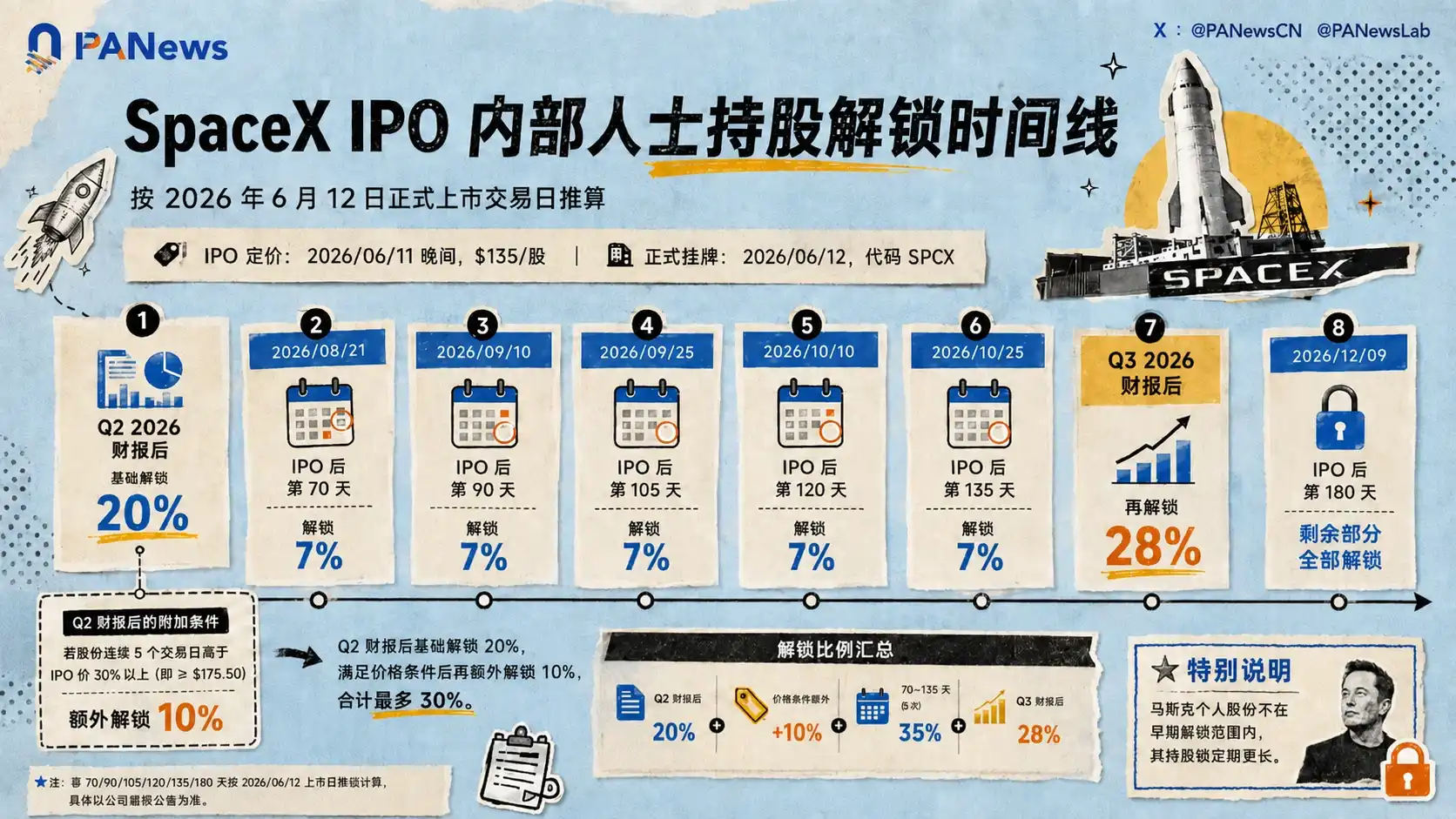
SpaceX (stock symbol: SPCX) shares have been rising strongly since its IPO, largely due to extremely low immediate float. Currently, only about 4.2% of total shares are freely tradable, locking approximately 96% of the equity. However, a series of share unlock events are scheduled, which could increase selling pressure. After the Q2 earnings report, up to 30% of locked shares may be released. Following that, an additional 7% is set to unlock approximately every 15 days. After the Q3 earnings report, another 28% will be released. The final remaining locked shares are scheduled for full release on December 9th, which is 180 days after the IPO. It is noted that Elon Musk's personal holdings are subject to a longer lock-up period and are not included in these early unlock phases.

SpaceX (SPCX) has been continuously rallying since its listing. The reason might be simple: currently, only about 4.2% of the total outstanding shares are floating, with 96% of the shares still unable to be sold.

But the pressure of unlocking is already counting down: Up to 30% will be released after the Q2 earnings report, followed by an additional 7% unlocked approximately every 15 days. Another 28% will be released after the Q3 earnings report. The remaining portion will be fully unlocked on December 9th (the 180th day after the IPO).

Elon Musk's personal holdings are not included in the early unlock scope and have a longer lock-up period.

Pertanyaan Terkait

QWhat is the approximate percentage of SpaceX's total shares currently available for trading after its IPO?

AApproximately 4.2% of SpaceX's total shares are currently in the float and available for trading.

QAccording to the article, what is the main reason suggested for SpaceX's post-IPO stock price rally?

AThe main reason suggested is the extremely low float, with only about 4.2% of total shares initially available for trading, creating limited supply.

QWhat is the maximum percentage of locked shares that could be released after the Q2 earnings report?

AUp to 30% of the locked shares could be released after the Q2 earnings report.

QHow often will additional share unlocks occur after the initial post-Q2 release, and what is the size of each subsequent unlock?

AAfter the initial release, an additional 7% of shares will unlock approximately every 15 days.

QAre Elon Musk's personal shares subject to the same early unlock schedule as described in the article?

ANo, Elon Musk's personal shares have a longer lock-up period and are not included in the early unlock schedule.

Bacaan Terkait

Mengapa Asuransi DeFi Tidak Laku?

**Mengapa Asuransi DeFi Tidak Laku?** Artikel ini mengeksplorasi alasan rendahnya adopsi asuransi di sektor DeFi (Keuangan Terdesentralisasi), meskipun berpotensi menghilangkan penolakan klaim sepihak seperti pada asuransi tradisional. **Masalah Inti:** 1. **Premi Tinggi vs. Hasil Rendah:** Premi asuransi untuk banyak protokol DeFi (1.5%–6%) sering kali memakan sebagian besar atau bahkan seluruh hasil investasi tahunan pengguna (biasanya 3%–5%). Setelah dikurangi premi, hasil bersih menjadi sangat rendah, bahkan negatif untuk beberapa platform seperti Maple Finance dan Ethena, sehingga tidak sepadan dengan risikonya. 2. **Risiko Terkait dan Kapasitas Terbatas:** Berbeda dengan asuransi tradisional (misal: kebakaran rumah), risiko di DeFi (seperti bug oracle atau jembatan silang) sangat terkait dan dapat memengaruhi banyak protokol sekaligus. Kapasitas total asuransi DeFi (misal: Nexus Mutual ~$81 juta) sangat kecil dibandingkan total aset terkunci (ratusan miliar), membuatnya tidak mampu menanggung kejadian besar seperti peretasan Kelp DAO senilai $292 juta. 3. **Konflik dalam Model "Mutual":** Pada platform seperti Nexus Mutual, pemegang token yang juga menyediakan modal memutuskan klaim. Jika klaim dibayar dan dana habis, nilai token mereka turun. Ini menciptakan insentif untuk menolak klaim, mirip dengan masalah asuransi tradisional. 4. **Tidak Ada Pihak yang Memaksa:** Tidak seperti perbankan tradisional yang diwajibkan memiliki asuransi deposit (FDIC), tidak ada yang dapat memaksa protokol DeFi untuk membeli asuransi, karena sifatnya yang tanpa izin (permissionless). **Kondisi Pasar:** Nexus Mutual mendominasi 85% pasar, sementara penyedia lain menyusut atau tutup. Klaim kumulatifnya sejak 2019 hanya sekitar $18 juta, menunjukkan pasar belum diuji oleh bencana besar sekaligus mengungkap kerapuhannya. **Jalan ke Depan:** Beberapa upaya sedang dilakukan, seperti beralih ke model pencegahan risiko (program bounty bug) dan mencoba menghubungkan risiko kripto dengan pasar reasuransi tradisional yang lebih besar. Ini mengakui kenyataan bahwa modal internal DeFi saja tidak cukup. **Dilema Mendasar:** Asuransi DeFi adalah "barang publik" – menguntungkan semua orang dengan menstabilkan sistem, tetapi karena biayanya ditanggung individu sementara manfaatnya dinikmati bersama, tidak ada yang mau membayarnya secara sukarela. Jika semua mengandalkan orang lain untuk membeli asuransi, pada akhirnya tidak akan ada yang terlindungi.

Foresight News5m yang lalu

Mengapa Asuransi DeFi Tidak Laku?

Foresight News5m yang lalu

Trading

Spot
Futures
活动图片