Trump's First Year in Office: Memorable Moments and Controversies

marsbitPublié le 2026-01-20Dernière mise à jour le 2026-01-20

Résumé

Donald Trump's first year in office (2026) was marked by a controversial foray into cryptocurrency. Shortly before his inauguration, a mysterious wallet purchased a newly created token, $TRUMP, just hours before he publicly announced it. The token's price skyrocketed, allowing early insiders to profit over $100 million, while 810,000 wallets, many belonging to new investors, lost a total of $2 billion. His family then launched "World Liberty Financial," a DeFi platform where they held a 60% stake, generating hundreds of millions from token sales and stablecoin interest. This created a system of "access capitalism," where investments bought proximity to power. Concurrently, Trump's administration dismantled regulatory oversight. The SEC chairman was replaced, numerous crypto lawsuits were dropped, and a key Justice Department crypto enforcement team was dissolved, clearing the path for his ventures. He also issued controversial pardons to convicted crypto figures like Ross Ulbricht (Silk Road) and Changpeng Zhao (Binance), while denying clemency to those who donated to Democrats, creating a clear "price list" for pardons. The article argues this constitutes a legalized, industrialized form of corruption, where rules are designed by the same people who profit from them. The system is not hidden but operates transparently on the blockchain, turning what Trump once called "air" into a multi-billion dollar enterprise, with ordinary investors acting as the fuel.

By Lin Wanwan @linwanwan823, Dongcha Beating

January 20, 2026 marks the first anniversary of Trump's official inauguration.

Rewind to 72 hours before the inauguration ceremony, an encrypted wallet with the code 6QSc2Cx began purchasing large amounts of a new token at 18 cents per coin. This token had been created just hours earlier with no public promotion.

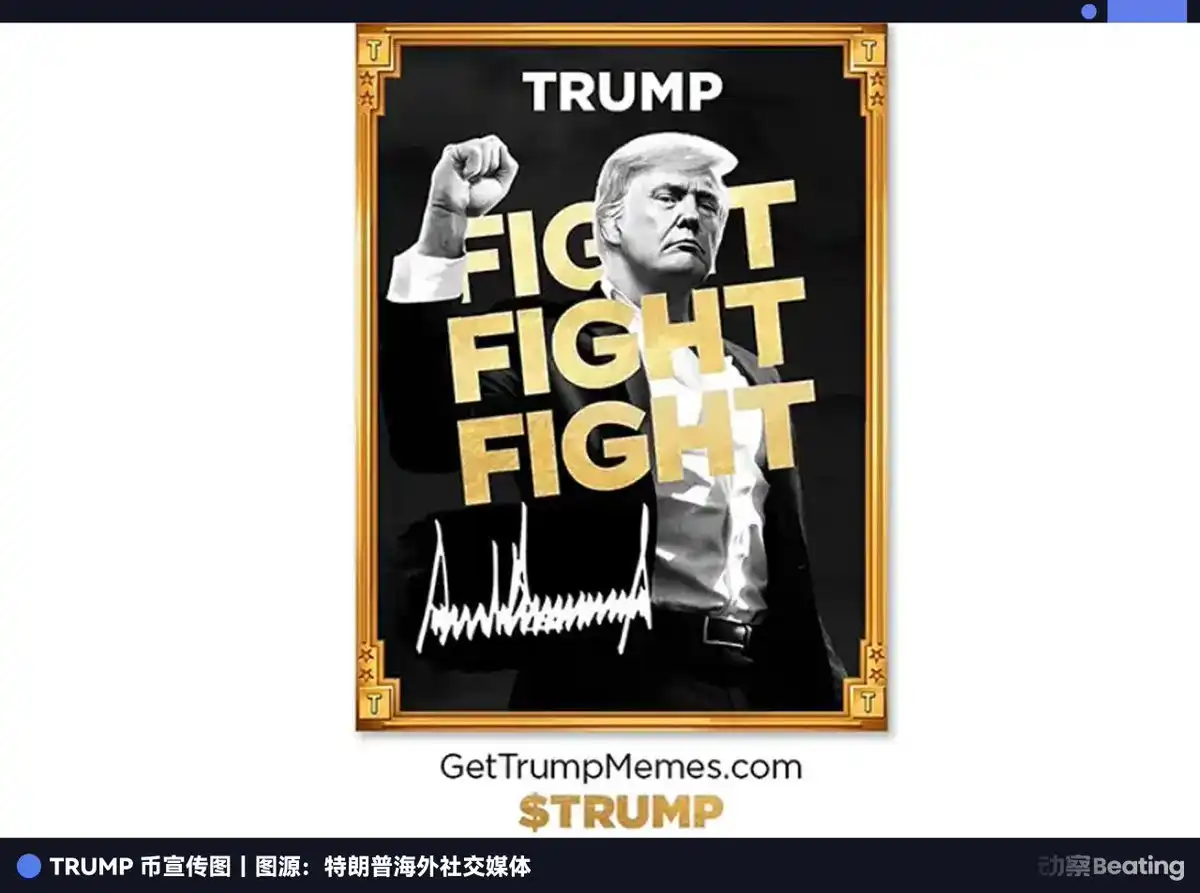
A few hours later, Trump announced on social media: he had issued a cryptocurrency named after himself, $TRUMP.

After the announcement, the token's price surged from under $1 to $75 within 48 hours. The wallet that entered early sold at the peak, making a profit of $109 million.

The New York Times commissioned an on-chain analysis company to track this and found that there was more than one such "mystery insider."

On the same day, an American truck driver using the online name Mike invested his daughter's entire college fund into TRUMP tokens. He posted on an overseas media platform: "The President won't let us lose money."

Three weeks later, he lost $47,000.

Six months later, the team that issued this token had cashed out over $1 billion.

Six years ago, Trump said: "Cryptocurrency is based on thin air." He was right. He just didn't complete the thought: how much that air is worth depends on who's selling it.

Appetizer

No one knows who they are on the other end of the wallet. No one knows how they knew in advance. But one thing is certain: when these people exited, another group was entering.

Chainalysis data shows that 810,000 wallets lost money on the TRUMP token, totaling over $2 billion. An average loss of $2,500 per person.

Nearly half of them were newcomers who had created their crypto wallets for the first time on the day the token was issued. They saw the news about the "President issuing a coin," downloaded the app, and transferred their savings.

Further analysis by Chainalysis showed that the average holding time for these new wallets was 47 hours. They bought near the peak and sold after the price had halved. On-chain data还原(reconstructed) a typical path: download App → deposit funds → buy → watch it rise → buy more → crash → sell at a loss → uninstall App. The entire process took less than a week.

Someone posted on Reddit: "I used my daughter's college fund." The top-voted reply under the post was: "Bro, the President won't let you lose money."

The President indeed didn't let everyone lose money; after all, many people made life-changing money that day. It's just that the majority weren't the ones making it.
Someone posted a rocket emoji on Twitter with the caption "TRUMP to the moon". Eleven days later, he posted again: "Had enough of this TRUMP garbage, sold it all."

When he sold, the token price was between $24 and $27. If he had held on for a few more months, he would have seen the price drop below $5, a decline of over 90% from its peak.

Meanwhile, the issuers of the $TRUMP token, two companies linked to the Trump family, earned over $320 million in transaction fees in the first year alone. This doesn't include the 800 million tokens they held, worth tens of billions of dollars at the issuance price.

The interesting part is the token's purchase terms. There was a line of fine print: purchasers agree to waive the right to participate in any class action lawsuits.

And another line: this token is "not an investment opportunity" and "is not related to any political activity or government position."

Translation: If you buy it and lose, you can't sue me. The money I make has nothing to do with me being President.

Main Course

$TRUMP was just the appetizer.

The real main course is called World Liberty Financial. This is a "decentralized financial platform" founded in September 2024 by the Trump family and several partners. The platform issued a governance token called WLFI and a stablecoin called USD1.

The equity structure is as follows: the Trump family holds 60%. 75% of the net income from token sales goes to the family. The reserve assets for the stablecoin USD1 are invested in U.S. Treasury bonds, generating about $80 million in annual interest, 75% of which also goes to the family.

In other words, this is not a project Trump "supports," nor is it a project Trump "endorses." This is a project directly owned by the Trump family from which they receive dividends.
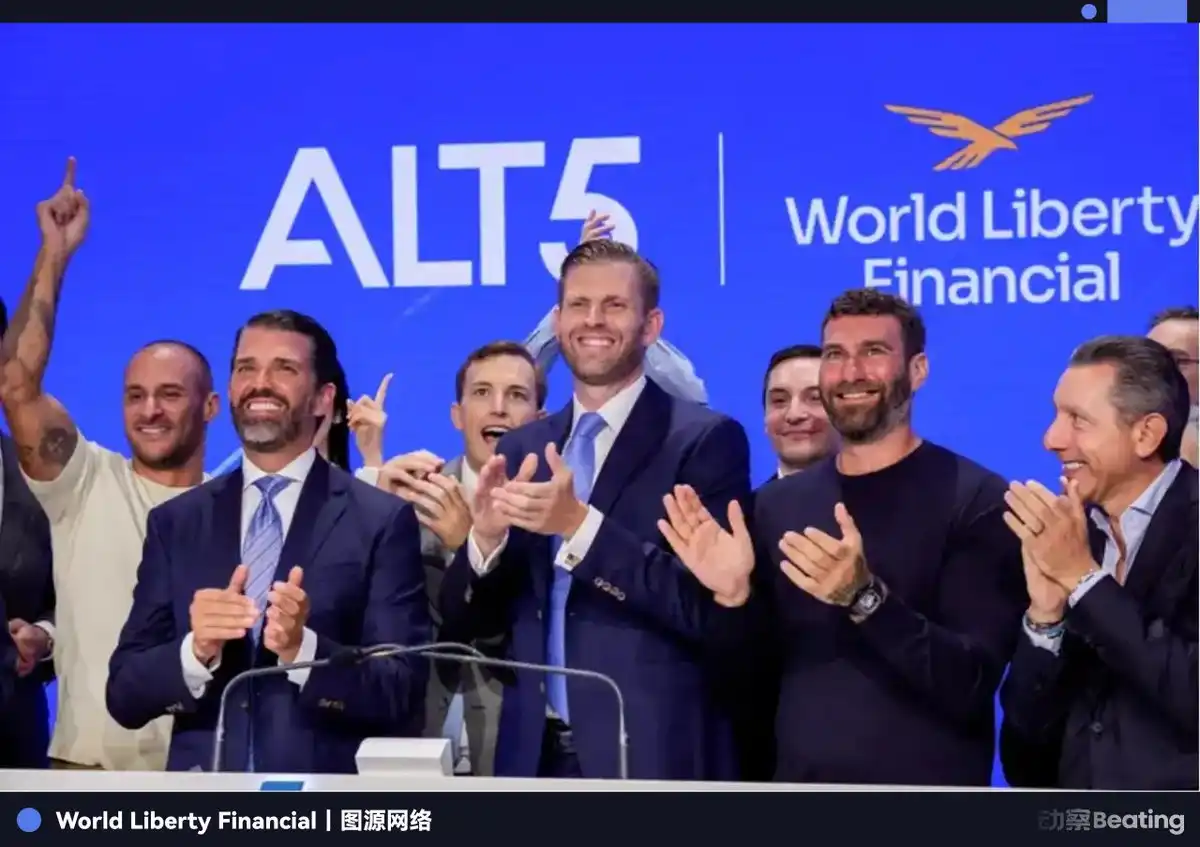
As of the end of 2025, World Liberty had raised over $550 million. The list of investors reads like an Interpol watch list:

MGX, the Abu Dhabi sovereign wealth fund, led by a member of the UAE royal family. In May 2025, it invested $2 billion worth of USD1 stablecoins in Binance. This means UAE government funds, through the stablecoin issued by the Trump family, flowed into the world's largest crypto exchange.

Why would these people put money into a crypto project owned by the family of a sitting U.S. President?

Reuters interviewed several investors and received strikingly consistent answers: "Proximity to the President."

There's an old Wall Street joke: How much is a round of golf with the President worth?

The answer: It depends on whether you're playing golf or paying legal fees.

World Liberty rewrote the answer to this joke. Now there's a clear price: WLFI tokens start at $250,000. "Platinum Seats" cost $1 million. "Founding Partners" cost $20 million.

You're not buying a token. You're buying a photo op, a dinner, a name to be remembered.

In political science, this is called "access capitalism." Previously, it was hidden in Super PACs, charity dinners, and lobbying firm invoices. Now it's written into smart contracts, traded 24/7, globally accessible.

The democratization of corruption.

A financial commentator put it more bluntly: "Eric Trump is in Dubai selling $20 million token packages while his father is simultaneously shaping U.S. crypto policy. You call this a business model? I call it a paid access lane."

Clearing the Field

But this paid access lane has one prerequisite: no one can be allowed to investigate.

So the first thing Trump did after taking office was to clear out everyone who might investigate him. The speed and efficiency were nothing short of artistic.

First: personnel purge.

On inauguration day, SEC Chairman Gary Gensler resigned. This "Crypto Hunter" had sued almost every major exchange during his tenure. His replacement, Paul Atkins, had previously served as an advisor to a crypto industry association.

The newly formed SEC "Crypto Task Force" was led by Hester Peirce, whose nickname in the industry is "Crypto Mom," known for years of opposing regulation.

Next followed: case clearance.

Cases from the Gensler era were dropped one after another. Coinbase case, dropped. Ripple case, dropped. Kraken case, dropped. OpenSea investigation, terminated. Uniswap investigation, terminated. Robinhood investigation, terminated.

The New York Times统计(statistics): The dismissal rate for SEC crypto cases was 33%, compared to 4% for other cases. This disparity is unprecedented in SEC history.

Finally: agency dissolution.

On April 7, 2025, Deputy Attorney General Todd Blanche signed a memorandum announcing the immediate dissolution of the "National Cryptocurrency Enforcement Team." This team, established in 2021, specialized in investigating crypto money laundering, hacking, and fraud.

Blanche wrote in the memo: "The Department of Justice is not a digital asset regulator."

What he didn't write: When he signed this memo, he personally held over $150,000 in crypto assets. Blanche was later questioned about this during congressional testimony. He said: "My crypto holdings were 'compliantly disclosed.'"

He was right. Disclosed, therefore compliant. Compliant, therefore not a conflict of interest.

This is the brilliance of this play: it doesn't need to hide conflicts of interest, it just needs to turn conflicts of interest into a form.

Within three months, the personnel were changed, the cases were dropped, and the investigating agencies were disbanded.

The referee didn't just join the game; the referee dismantled the playing field.

The Price List for Pardons

This business scheme was missing one last component: credibility.

For Trump's crypto empire to attract global funds, it needed to make those "with records" respectable again. They had money, resources, and connections, but their status was "convicted felons" or "indicted defendants."

What to do?

Pardons.

On January 21, 2025, Trump's second day in office, he signed the first crypto-related pardon. The pardoned individual was Ross Ulbricht, founder of the "Silk Road" dark web market, originally sentenced to two life sentences plus 40 years for operating a platform that facilitated $1 billion in drug transactions. Court records show at least 6 people died from drugs purchased on the platform.

Trump wrote on Truth Social: "The people who prosecuted him are scum."

After his release, Ulbricht appeared on stage at the 2025 Bitcoin Conference, telling the cheering crowd: "A few months ago I was in prison, now I'm free, thanks to you, thanks to Trump."

In March, the four founders of BitMEX were pardoned; they had pleaded guilty to violating anti-money laundering laws and were called operators of a "money laundering platform" by prosecutors. In October, Binance founder Changpeng Zhao (CZ) was pardoned; he had pleaded guilty in 2023 and served time for allowing the platform to be used for money laundering.

Three pardons, six people in total, spanning dark web drugs, money laundering, and illegal operations. All cleared within ten months.

But more telling are those who were *not* pardoned.

Sam Bankman-Fried (SBF), founder of FTX, sentenced to 25 years in 2024 for fraud causing $8 billion in customer losses. He donated $5.2 million to the Biden campaign in 2020.

Not pardoned.

Do Kwon, founder of Terra/Luna, sentenced to 15 years in December 2025; his algorithmic stablecoin collapse caused investors $40 billion in losses.

Not pardoned.

In terms of severity of crimes, the losses caused by SBF and Do Kwon far exceeded those of the pardoned individuals. In terms of legal definition, the FTX case was outright customer fund fraud.

What's the difference?

The pardoned: Either invested in Trump's projects, or their companies had business dealings with Trump, or had massive influence in the crypto community to help endorse.

The not pardoned: Donated to Democrats, or had no business relationship with Trump whatsoever.

This is a price list for pardons.

It's not written on paper; it's written in court verdicts, on pardon documents, on the prison walls of those still serving time.

The true function of the pardon is not to免除(waive) punishment. The punishment was already served. Ross Ulbricht served 11 years, Changpeng Zhao served 4 months, the BitMEX founders paid $100 million fines.

The function of the pardon is to send signals.

Signal one: Those who cooperate with me, I will protect. Signal two: Those who don't cooperate with me, look at Sam Bankman-Fried. Signal three: I make the rules, and I can change them.

You follow the organization, the organization has your back.

Trump wrote this into the Federal Register.

The Assembly Line of Corruption

Is this corruption?

Of course not. Corruption is sneaky, needs to be hidden, risks investigation.

This is a meticulously designed system. Every component is legal, every transaction is recorded on the blockchain, every disclosure is written in government documents. It doesn't need to hide. It was designed not to need hiding.

Traditional corruption is a handicraft workshop. You need middlemen, need to launder money, worry about being recorded, worry about witnesses turning. Every transaction is a risk.

This play is an assembly line. Token contracts automatically distribute profits, the blockchain automatically records, disclosure forms are automatically compliant. No middlemen, no cash, no witnesses. Just code.

Code doesn't turn state's evidence. Code doesn't lie. Code just runs as designed.

And the people who designed it happen to be the ones who design the rules.

Genius

Trump's genius isn't in corruption. Anyone can be corrupt.

His genius lies in: designing corruption as a product.

Bribery becomes "investment." Graft becomes "dividends." Pardons become "judicial reform." Regulatory retreat becomes "supporting innovation."

It's all written in the terms, recorded on the blockchain, legal, compliant, open, and transparent.

In 2019, Trump said cryptocurrency is "based on thin air."

He was right.

He just omitted the second half: Air can also be sold for money, as long as the seller gets to decide what is legal.

This system is still running. Tokens are still trading, stablecoins are still generating interest, money from all over the world is still pouring into those wallet addresses stamped with Trump's name.

And those 810,000 retail investors who lost money, those newcomers who rushed in when they saw "President issues coin," those who thought buying TRUMP tokens was patriotic.

They are not investors. They are fuel.

The casino doesn't thank the gamblers. The casino just榨干(squeezes them dry).

Some might ask: Is this legal? That question itself is already outdated.

In this game, "legal" is not a description, but a product feature. Just like the iPhone has a waterproof feature, this system has a "legal" feature.

It is designed to be legal, just as it is designed to be profitable.

The real question is not "Is this legal?"

The real question is: When the person who defines what is legal is the same person who profits from it, what does the word "legal" even mean anymore?

In 2019, Trump said crypto was based on air. In 2025, he proved himself right: air can be priced, can be traded, can make a President a billionaire.

The only prerequisite is, you have to be the one who gets to decide what "air" is.

Questions liées

QWhat was the primary mechanism through which the Trump family allegedly profited from the cryptocurrency ventures described in the article?

AThe Trump family directly owned and profited from projects like the $TRUMP token and the World Liberty Financial platform. They held 60% ownership, received 75% of token sale net income, and earned 75% of the interest from the USD1 stablecoin's reserve assets.

QHow did the regulatory environment change under the new administration to facilitate these cryptocurrency operations?

AThe administration replaced key regulators like the SEC chairman with industry-friendly figures, systematically dropped ongoing crypto-related cases with an unusually high dismissal rate, and dissolved the Justice Department's National Cryptocurrency Enforcement Team, effectively removing regulatory oversight.

QWhat pattern did the article identify regarding presidential pardons for figures in the cryptocurrency industry?

AThe pardons followed a clear pattern: individuals who had invested in Trump-related projects, had business ties to Trump, or had significant influence in the crypto community were pardoned (e.g., Ross Ulbricht, BitMEX founders, Changpeng Zhao). Those who donated to Democrats or had no business relationship with Trump (e.g., Sam Bankman-Fried, Do Kwon) were not pardoned, creating a de facto price list for clemency.

QAccording to the article, what was the fate of the average retail investor who bought the $TRUMP token?

AChainalysis data showed that 810,000 wallets lost money on the $TRUMP token, totaling over $2 billion, with an average loss of $2,500 per person. Nearly half were first-time crypto users who bought near the peak and sold after the price crashed, often within a week.

QHow does the article characterize the difference between traditional corruption and the system described as being built by the Trump administration?

AThe article characterizes traditional corruption as a 'cottage industry' requiring intermediaries, money laundering, and carrying risk of exposure. In contrast, it describes the new system as an 'assembly line' where corruption is automated through smart contracts and blockchain, with profits automatically distributed and all actions designed to be 'legally compliant' by the very people who write the rules and profit from them.

Lectures associées

Trading

Spot
Futures

Articles tendance

Qu'est ce que $S$

Comprendre SPERO : Un aperçu complet Introduction à SPERO Alors que le paysage de l'innovation continue d'évoluer, l'émergence des technologies web3 et des projets de cryptomonnaie joue un rôle central dans la façon dont se dessine l'avenir numérique. Un projet qui a attiré l'attention dans ce domaine dynamique est SPERO, désigné comme SPERO,$$s$. Cet article vise à rassembler et à présenter des informations détaillées sur SPERO, afin d'aider les passionnés et les investisseurs à comprendre ses fondations, ses objectifs et ses innovations dans les domaines du web3 et de la crypto. Qu'est-ce que SPERO,$$s$ ? SPERO,$$s$ est un projet unique dans l'espace crypto qui cherche à tirer parti des principes de décentralisation et de la technologie blockchain pour créer un écosystème qui favorise l'engagement, l'utilité et l'inclusion financière. Le projet est conçu pour faciliter les interactions entre pairs de nouvelles manières, offrant aux utilisateurs des solutions et des services financiers innovants. Au cœur de SPERO,$$s$, l'objectif est d'autonomiser les individus en fournissant des outils et des plateformes qui améliorent l'expérience utilisateur dans l'espace des cryptomonnaies. Cela inclut la possibilité de méthodes de transaction plus flexibles, la promotion d'initiatives dirigées par la communauté et la création de voies pour des opportunités financières via des applications décentralisées (dApps). La vision sous-jacente de SPERO,$$s$ tourne autour de l'inclusivité, visant à combler les lacunes au sein de la finance traditionnelle tout en exploitant les avantages de la technologie blockchain. Qui est le créateur de SPERO,$$s$ ? L'identité du créateur de SPERO,$$s$ reste quelque peu obscure, car il existe peu de ressources publiques fournissant des informations détaillées sur son ou ses fondateurs. Ce manque de transparence peut découler de l'engagement du projet envers la décentralisation—une éthique que de nombreux projets web3 partagent, privilégiant les contributions collectives plutôt que la reconnaissance individuelle. En centrant les discussions autour de la communauté et de ses objectifs collectifs, SPERO,$$s$ incarne l'essence de l'autonomisation sans désigner des individus spécifiques. Ainsi, comprendre l'éthique et la mission de SPERO reste plus important que d'identifier un créateur unique. Qui sont les investisseurs de SPERO,$$s$ ? SPERO,$$s$ est soutenu par une diversité d'investisseurs allant des capital-risqueurs aux investisseurs providentiels dédiés à favoriser l'innovation dans le secteur crypto. L'objectif de ces investisseurs s'aligne généralement avec la mission de SPERO—priorisant les projets qui promettent des avancées technologiques sociétales, l'inclusivité financière et la gouvernance décentralisée. Ces fondations d'investisseurs s'intéressent généralement à des projets qui non seulement offrent des produits innovants, mais qui contribuent également positivement à la communauté blockchain et à ses écosystèmes. Le soutien de ces investisseurs renforce SPERO,$$s$ en tant que concurrent notable dans le domaine en rapide évolution des projets crypto. Comment fonctionne SPERO,$$s$ ? SPERO,$$s$ utilise un cadre multifacette qui le distingue des projets de cryptomonnaie conventionnels. Voici quelques-unes des caractéristiques clés qui soulignent son unicité et son innovation : Gouvernance décentralisée : SPERO,$$s$ intègre des modèles de gouvernance décentralisée, permettant aux utilisateurs de participer activement aux processus de décision concernant l'avenir du projet. Cette approche favorise un sentiment de propriété et de responsabilité parmi les membres de la communauté. Utilité du token : SPERO,$$s$ utilise son propre token de cryptomonnaie, conçu pour servir diverses fonctions au sein de l'écosystème. Ces tokens permettent des transactions, des récompenses et la facilitation des services offerts sur la plateforme, améliorant ainsi l'engagement et l'utilité globaux. Architecture en couches : L'architecture technique de SPERO,$$s$ supporte la modularité et l'évolutivité, permettant une intégration fluide de fonctionnalités et d'applications supplémentaires à mesure que le projet évolue. Cette adaptabilité est primordiale pour maintenir la pertinence dans le paysage crypto en constante évolution. Engagement communautaire : Le projet met l'accent sur des initiatives dirigées par la communauté, utilisant des mécanismes qui incitent à la collaboration et aux retours d'expérience. En cultivant une communauté forte, SPERO,$$s$ peut mieux répondre aux besoins des utilisateurs et s'adapter aux tendances du marché. Accent sur l'inclusion : En proposant des frais de transaction bas et des interfaces conviviales, SPERO,$$s$ vise à attirer une base d'utilisateurs diversifiée, y compris des individus qui n'ont peut-être pas engagé auparavant dans l'espace crypto. Cet engagement envers l'inclusion s'aligne avec sa mission globale d'autonomisation par l'accessibilité. Chronologie de SPERO,$$s$ Comprendre l'histoire d'un projet fournit des aperçus cruciaux sur sa trajectoire de développement et ses jalons. Voici une chronologie suggérée cartographiant les événements significatifs dans l'évolution de SPERO,$$s$ : Phase de conceptualisation et d'idéation : Les idées initiales formant la base de SPERO,$$s$ ont été conçues, s'alignant étroitement avec les principes de décentralisation et de concentration sur la communauté au sein de l'industrie blockchain. Lancement du livre blanc du projet : Suite à la phase conceptuelle, un livre blanc complet détaillant la vision, les objectifs et l'infrastructure technologique de SPERO,$$s$ a été publié pour susciter l'intérêt et les retours de la communauté. Construction de la communauté et engagements précoces : Des efforts de sensibilisation actifs ont été entrepris pour construire une communauté d'adopteurs précoces et d'investisseurs potentiels, facilitant les discussions autour des objectifs du projet et recueillant du soutien. Événement de génération de tokens : SPERO,$$s$ a organisé un événement de génération de tokens (TGE) pour distribuer ses tokens natifs aux premiers soutiens et établir une liquidité initiale au sein de l'écosystème. Lancement de la première dApp : La première application décentralisée (dApp) associée à SPERO,$$s$ a été mise en ligne, permettant aux utilisateurs d'interagir avec les fonctionnalités principales de la plateforme. Développement continu et partenariats : Des mises à jour et des améliorations continues des offres du projet, y compris des partenariats stratégiques avec d'autres acteurs de l'espace blockchain, ont façonné SPERO,$$s$ en un acteur compétitif et évolutif sur le marché crypto. Conclusion SPERO,$$s$ se dresse comme un témoignage du potentiel du web3 et de la cryptomonnaie pour révolutionner les systèmes financiers et autonomiser les individus. Avec un engagement envers la gouvernance décentralisée, l'engagement communautaire et des fonctionnalités conçues de manière innovante, il ouvre la voie vers un paysage financier plus inclusif. Comme pour tout investissement dans l'espace crypto en rapide évolution, les investisseurs et utilisateurs potentiels sont encouragés à mener des recherches approfondies et à s'engager de manière réfléchie avec les développements en cours au sein de SPERO,$$s$. Le projet illustre l'esprit d'innovation de l'industrie crypto, invitant à une exploration plus approfondie de ses nombreuses possibilités. Bien que le parcours de SPERO,$$s$ soit encore en cours, ses principes fondamentaux pourraient en effet influencer l'avenir de nos interactions avec la technologie, la finance et entre nous dans des écosystèmes numériques interconnectés.

101 vues totalesPublié le 2024.12.17Mis à jour le 2024.12.17

Qu'est ce que $S$

Qu'est ce que AGENT S

Agent S : L'avenir de l'interaction autonome dans Web3 Introduction Dans le paysage en constante évolution de Web3 et des cryptomonnaies, les innovations redéfinissent constamment la manière dont les individus interagissent avec les plateformes numériques. Un projet pionnier, Agent S, promet de révolutionner l'interaction homme-machine grâce à son cadre agentique ouvert. En ouvrant la voie à des interactions autonomes, Agent S vise à simplifier des tâches complexes, offrant des applications transformantes dans l'intelligence artificielle (IA). Cette exploration détaillée plongera dans les subtilités du projet, ses caractéristiques uniques et les implications pour le domaine des cryptomonnaies. Qu'est-ce qu'Agent S ? Agent S se présente comme un cadre agentique ouvert révolutionnaire, spécifiquement conçu pour relever trois défis fondamentaux dans l'automatisation des tâches informatiques : Acquisition de connaissances spécifiques au domaine : Le cadre apprend intelligemment à partir de diverses sources de connaissances externes et d'expériences internes. Cette approche double lui permet de construire un riche répertoire de connaissances spécifiques au domaine, améliorant ainsi sa performance dans l'exécution des tâches. Planification sur de longs horizons de tâches : Agent S utilise une planification hiérarchique augmentée par l'expérience, une approche stratégique qui facilite la décomposition et l'exécution efficaces de tâches complexes. Cette fonctionnalité améliore considérablement sa capacité à gérer plusieurs sous-tâches de manière efficace et efficiente. Gestion d'interfaces dynamiques et non uniformes : Le projet introduit l'Interface Agent-Ordinateur (ACI), une solution innovante qui améliore l'interaction entre les agents et les utilisateurs. En utilisant des Modèles de Langage Multimodaux de Grande Taille (MLLMs), Agent S peut naviguer et manipuler sans effort diverses interfaces graphiques. Grâce à ces fonctionnalités pionnières, Agent S fournit un cadre robuste qui aborde les complexités impliquées dans l'automatisation de l'interaction humaine avec les machines, préparant le terrain pour d'innombrables applications en IA et au-delà. Qui est le créateur d'Agent S ? Bien que le concept d'Agent S soit fondamentalement innovant, des informations spécifiques sur son créateur restent insaisissables. Le créateur est actuellement inconnu, ce qui souligne soit le stade naissant du projet, soit le choix stratégique de garder les membres fondateurs sous le radar. Quoi qu'il en soit, l'accent reste mis sur les capacités et le potentiel du cadre. Qui sont les investisseurs d'Agent S ? Étant donné qu'Agent S est relativement nouveau dans l'écosystème cryptographique, des informations détaillées concernant ses investisseurs et soutiens financiers ne sont pas explicitement documentées. Le manque d'aperçus publiquement disponibles sur les fondations d'investissement ou les organisations soutenant le projet soulève des questions sur sa structure de financement et sa feuille de route de développement. Comprendre le soutien est crucial pour évaluer la durabilité du projet et son impact potentiel sur le marché. Comment fonctionne Agent S ? Au cœur d'Agent S se trouve une technologie de pointe qui lui permet de fonctionner efficacement dans divers environnements. Son modèle opérationnel est construit autour de plusieurs caractéristiques clés : Interaction homme-ordinateur semblable à l'humain : Le cadre offre une planification IA avancée, s'efforçant de rendre les interactions avec les ordinateurs plus intuitives. En imitant le comportement humain dans l'exécution des tâches, il promet d'élever l'expérience utilisateur. Mémoire narrative : Utilisée pour tirer parti des expériences de haut niveau, Agent S utilise la mémoire narrative pour suivre les historiques de tâches, améliorant ainsi ses processus de prise de décision. Mémoire épisodique : Cette fonctionnalité fournit aux utilisateurs un accompagnement étape par étape, permettant au cadre d'offrir un soutien contextuel au fur et à mesure que les tâches se déroulent. Support pour OpenACI : Avec la capacité de fonctionner localement, Agent S permet aux utilisateurs de garder le contrôle sur leurs interactions et flux de travail, s'alignant avec l'éthique décentralisée de Web3. Intégration facile avec des API externes : Sa polyvalence et sa compatibilité avec diverses plateformes IA garantissent qu'Agent S peut s'intégrer sans effort dans des écosystèmes technologiques existants, en faisant un choix attrayant pour les développeurs et les organisations. Ces fonctionnalités contribuent collectivement à la position unique d'Agent S dans l'espace crypto, alors qu'il automatise des tâches complexes en plusieurs étapes avec un minimum d'intervention humaine. À mesure que le projet évolue, ses applications potentielles dans Web3 pourraient redéfinir la manière dont les interactions numériques se déroulent. Chronologie d'Agent S Le développement et les jalons d'Agent S peuvent être encapsulés dans une chronologie qui met en évidence ses événements significatifs : 27 septembre 2024 : Le concept d'Agent S a été lancé dans un document de recherche complet intitulé “Un cadre agentique ouvert qui utilise les ordinateurs comme un humain”, présentant les bases du projet. 10 octobre 2024 : Le document de recherche a été rendu publiquement disponible sur arXiv, offrant une exploration approfondie du cadre et de son évaluation de performance basée sur le benchmark OSWorld. 12 octobre 2024 : Une présentation vidéo a été publiée, fournissant un aperçu visuel des capacités et des caractéristiques d'Agent S, engageant davantage les utilisateurs et investisseurs potentiels. Ces jalons dans la chronologie illustrent non seulement les progrès d'Agent S, mais indiquent également son engagement envers la transparence et l'engagement communautaire. Points clés sur Agent S Alors que le cadre Agent S continue d'évoluer, plusieurs attributs clés se distinguent, soulignant sa nature innovante et son potentiel : Cadre innovant : Conçu pour offrir une utilisation intuitive des ordinateurs semblable à l'interaction humaine, Agent S propose une approche nouvelle de l'automatisation des tâches. Interaction autonome : La capacité d'interagir de manière autonome avec les ordinateurs via une interface graphique signifie un bond vers des solutions informatiques plus intelligentes et efficaces. Automatisation des tâches complexes : Avec sa méthodologie robuste, il peut automatiser des tâches complexes en plusieurs étapes, rendant les processus plus rapides et moins sujets aux erreurs. Amélioration continue : Les mécanismes d'apprentissage permettent à Agent S de s'améliorer grâce à ses expériences passées, améliorant continuellement sa performance et son efficacité. Polyvalence : Son adaptabilité à travers différents environnements d'exploitation comme OSWorld et WindowsAgentArena garantit qu'il peut servir un large éventail d'applications. Alors qu'Agent S se positionne dans le paysage Web3 et crypto, son potentiel à améliorer les capacités d'interaction et à automatiser les processus représente une avancée significative dans les technologies IA. Grâce à son cadre innovant, Agent S incarne l'avenir des interactions numériques, promettant une expérience plus fluide et efficace pour les utilisateurs à travers divers secteurs. Conclusion Agent S représente un saut audacieux en avant dans le mariage de l'IA et de Web3, avec la capacité de redéfinir notre interaction avec la technologie. Bien qu'il soit encore à ses débuts, les possibilités de son application sont vastes et convaincantes. Grâce à son cadre complet abordant des défis critiques, Agent S vise à mettre les interactions autonomes au premier plan de l'expérience numérique. À mesure que nous plongeons plus profondément dans les domaines des cryptomonnaies et de la décentralisation, des projets comme Agent S joueront sans aucun doute un rôle crucial dans la façon dont la technologie et la collaboration homme-machine évolueront à l'avenir.

753 vues totalesPublié le 2025.01.14Mis à jour le 2025.01.14

Qu'est ce que AGENT S

Comment acheter S

Bienvenue sur HTX.com ! Nous vous permettons d'acheter Sonic (S) de manière simple et pratique. Suivez notre guide étape par étape pour commencer votre parcours crypto.Étape 1 : Création de votre compte HTXUtilisez votre adresse e-mail ou votre numéro de téléphone pour ouvrir un compte sur HTX gratuitement. L'inscription se fait en toute simplicité et débloque toutes les fonctionnalités.Créer mon compteÉtape 2 : Choix du mode de paiement (rubrique Acheter des cryptosCarte de crédit/débit : utilisez votre carte Visa ou Mastercard pour acheter instantanément Sonic (S).Solde :utilisez les fonds du solde de votre compte HTX pour trader en toute simplicité.Prestataire tiers :pour accroître la commodité d'utilisation, nous avons ajouté des modes de paiement populaires tels que Google Pay et Apple Pay.P2P :tradez directement avec d'autres utilisateurs sur HTX.OTC (de gré à gré) : nous offrons des services personnalisés et des taux de change compétitifs aux traders.Étape 3 : stockage de vos Sonic (S)Après avoir acheté vos Sonic (S), stockez-les sur votre compte HTX. Vous pouvez également les envoyer ailleurs via un transfert sur la blockchain ou les utiliser pour trader d'autres cryptos.Étape 4 : tradez des Sonic (S)Tradez facilement Sonic (S) sur le marché Spot de HTX. Il vous suffit d'accéder à votre compte, de sélectionner la paire de trading, d'exécuter vos trades et de les suivre en temps réel. Nous offrons une expérience conviviale aux débutants comme aux traders chevronnés.

1.4k vues totalesPublié le 2025.01.15Mis à jour le 2025.03.21

Comment acheter S

Discussions

Bienvenue dans la Communauté HTX. Ici, vous pouvez vous tenir informé(e) des derniers développements de la plateforme et accéder à des analyses de marché professionnelles. Les opinions des utilisateurs sur le prix de S (S) sont présentées ci-dessous.

活动图片