Trump to ‘look into’ recently convicted Samurai Wallet co-founder

cointelegraphPublié le 2025-12-16Dernière mise à jour le 2025-12-16

Résumé

US President Donald Trump has stated he will review the case of Keonne Rodriguez, the convicted co-founder of Samourai Wallet, suggesting a potential pardon. Rodriguez and co-founder William Lonergan Hill were sentenced to five and four years in prison, respectively, on charges related to operating an unlicensed money-transmitting business. Privacy advocates argue the case criminalizes open-source privacy tools. Rodriguez, set to begin his prison term, expressed hope for a pardon, citing Trump's own experiences with the DOJ. He believes a conventional appeal is unlikely after pleading guilty. Trump has previously pardoned high-profile crypto figures, including Binance's Changpeng Zhao and Silk Road's Ross Ulbricht.

US President Donald Trump says he will review the case of convicted Samourai Wallet developer Keonne Rodriguez, hinting he will explore the possibility of a pardon.

Samourai Wallet co-founders Rodriguez and William Lonergan Hill were sentenced on Nov. 19 to five and four years in prison on charges stemming from their involvement in the crypto mixing protocol.

“I’ve heard about it, I’ll look at it,” Trump said when asked about the case at a press conference about the Mexican border at the White House on Monday.

“Okay, let’s take a look at it. You know, you’ll have to tell me. I don’t know anything about it, but we’ll take a look,” he added.
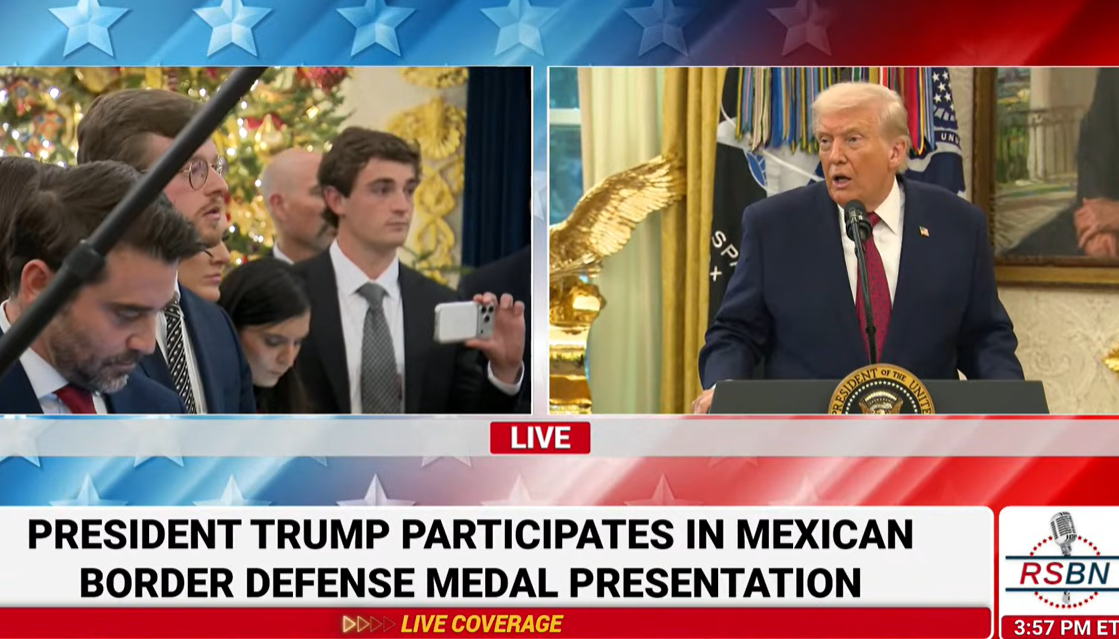
US President Donald Trump has promised to review the case of Samurai Wallet developer Keonne Rodriguez. Source: YouTube

Privacy advocates and crypto users have long been advocating for Rodriguez and Hill, along with Tornado Cash co-founder Roman Storm, arguing they shouldn’t be held responsible for the actions of third parties using their software, because their convictions risk criminalizing open-source privacy tools and restricting privacy rights.

Samourai co-founder says “noise is working”

Rodriguez, who is due to start his time behind bars this week, said in an X post on Monday that the “continued noise” from supporters is working. “Thank you to everyone pushing Donald Trump to pardon Bill and me. Let’s get this over the line.”

In an interview with Bitcoin educator Natalie Brunell on Friday, Rodriguez said he thought there was a chance of receiving a pardon if the case were presented to Trump and the top officials in the administration.

“Because President Trump has been touched by a DOJ that was weaponized against him, I think when he sees the facts laid out on the table, he will know exactly what’s going on,” Rodriguez said.

Conventional appeal is unlikely

Rodriguez also said it’s his understanding he waived his right to appeal the sentence when he took the plea deal, adding that he’s not “100% on that, but my understanding is appeal is pretty unlikely.”

Rodriguez and Hill initially pleaded not guilty but then agreed to plead guilty to one charge of operating an illegal money transmitter in July.

They faced at least 25 years in prison on charges of conspiracy to commit money laundering, which carries a maximum prison sentence of 20 years, and operating an unlicensed money-transmitting business, which carries a sentence of up to five years.

Up until the sentencing hearing, Rodriguez said he regretted pleading guilty but feared the judge wouldn’t allow key evidence to be used in his defense, such as receiving legal advice before launching Samourai Wallet.

Related: After Samourai, DOJ’s money-transmitter theory now looms over crypto mixers

After crunching the numbers, he also found a “conviction means 25 years, even if you appeal, that you’re sitting in prison for five years waiting for your appeal, your appeal is going to cost you another $7 million on top of the four and a half million you’ve already spent to get to this point. So the numbers just didn’t make any sense.”

Trump pardoned Changpeng Zhao, Ross Ulbricht

Since taking office, Trump pardoned Binance founder Changpeng “CZ” Zhao in October, after he pleaded guilty in November 2023 to failing to maintain an effective Anti–Money Laundering program at Binance, in violation of the Bank Secrecy Act.

Ross Ulbricht, the founder of the defunct darknet marketplace the Silk Road, was also granted a presidential pardon on his life sentence in January.

Magazine: Do Kwon sentenced to 15 years, Bitcoin’s ‘choppy dance’: Hodler’s Digest, Dec. 7 – 13

Lectures associées

Les retraits de Bitcoin se poursuivent : 8 ans de stockage en portefeuille froid Coldcard se sont terminés par un solde nul

Le portefeuille matériel Coldcard a été compromis, entraînant une nouvelle vague de retraits depuis les appareils vulnérables. Selon Galaxy Research, environ 1 367,05 BTC (88,6 millions de dollars) ont été dérobés à partir de 4 585 adresses. Le problème ne réside pas dans le firmware, qui a été corrigé, mais dans les phrases seed générées entre mars 2021 et les mises à jour correctives. Ces phrases, créées en raison d'une erreur de programmation ayant conduit à l'utilisation d'un générateur de nombres aléatoires logiciel (Yasmarang) au lieu du générateur matériel STM32, sont prévisibles et vulnérables à une attaque par force brute hors ligne. Les propriétaires concernés doivent impérativement générer une nouvelle phrase seed sur un firmware corrigé et transférer leurs actifs, sous peine de rester exposés. L'histoire d'un investisseur de 39 ans illustre l'impact dévastateur : après avoir accumulé 2 BTC (130 000 dollars) sur huit ans via un travail physique, en les conservant comme protection contre l'hyperinflation dans son pays, il a tout perdu en quelques minutes. Son cas montre que même les stratégies de conservation à long terme les plus prudentes ("cold storage") ne sont pas infaillibles. D'un point de vue historique, cet incident rappelle les faiblesses passées des générateurs de nombres aléatoires dans la cryptographie. Il remet en question l'idée reçue selon laquelle le stockage hors ligne garantit automatiquement une sécurité absolue. La communauté espère que le fabricant pourra aider à récupérer les fonds volés.

cryptonews.ruIl y a 1 h

Les retraits de Bitcoin se poursuivent : 8 ans de stockage en portefeuille froid Coldcard se sont terminés par un solde nul

cryptonews.ruIl y a 1 h

Pourquoi le Bitcoin maintient 64 000 $ après la pause restrictive de la Fed

Le Bitcoin se stabilise autour de 64 000 $ après la décision de la Fed de maintenir ses taux d'intérêt dans la fourchette 3,50-3,75 %. Bien que perçu comme une pause, le vote a révélé des divisions internes, trois membres plaidant pour une hausse, signalant une attitude globalement restrictive. Cette position limite l'appétit pour les actifs risqués comme les cryptomonnaies. Le marché a réagi avec une volatilité modérée. Les FNB spot sur Bitcoin ont enregistré un afflux net de 32,1 millions de dollars, mettant fin à une série de sorties, tandis que les FNB Ethereum ont subi des sorties. Cela indique une rotation des capitaux vers l'actif principal. Les niveaux clés à surveiller pour le Bitcoin sont le support à 63 000-63 500 $ et la résistance autour de 66 000 $. Malgré la pression macroéconomique, le marché ne montre pas de signes de capitulation. Les fondamentaux du réseau Ethereum restent solides avec une file d'attente importante pour le staking. Le report du vote sur le CLARITY Act au Sénat américain a tempéré les attentes réglementaires immédiates. Pour la fin du mois, les données macro américaines (inflation, dépenses) guideront les senteurs. Le scénario de base prévoit une consolidation du Bitcoin entre 63 000 et 66 000 $. La résilience au-dessus de 63 000 $, le maintien de l'Ethereum au-dessus de 1 860 $ et la poursuite des entrées institutionnelles seront des facteurs déterminants pour une éventuelle reprise au second semestre.

cryptonews.ruIl y a 5 h

Pourquoi le Bitcoin maintient 64 000 $ après la pause restrictive de la Fed

cryptonews.ruIl y a 5 h

Trading

Spot
活动图片




