The 'VVV' Concept Soars 9x in Half a Year, The New AI Narrative on Base Chain

marsbitPublié le 2026-05-12Dernière mise à jour le 2026-05-12

Résumé

"The article explores the 'VVV' concept as the new AI-focused narrative within the Base ecosystem, centered around the token $VVV of the privacy-focused, uncensored generative AI platform Venice, led by crypto veteran Erik Voorhees. Venice has seen significant growth in 2026, with its API users surging, partly attributed to exposure from OpenClaw. The platform now boasts over 2 million total users and 55,000 paid subscribers. Correspondingly, the $VVV token price has risen over 9x this year. Key to its performance are tokenomics designed for value accrual: reduced annual emissions, subscription revenue used for buyback-and-burn, and a unique staking mechanism. Staking $VVV yields $sVVV, which can be used to mint $DIEM tokens. Each staked $DIEM provides a daily $1 credit for using Venice's API services, creating tangible utility. The article also highlights other tokens associated with the 'VVV' narrative. $POD, the token of distributed AI network Dolphin (which co-developed Venice's default AI model), saw a massive price surge. $cyb3rwr3n, a project for a Venice credit auction market, gained attention due to perceived connections to Venice's team despite official denials. Finally, $SR of robotics platform STRIKEROBOT.AI rose after announcing a partnership with Venice for robot vision-language model development. Overall, the 'VVV' ecosystem combines AI platform growth, deflationary tokenomics, and innovative utility mechanisms, driving significant investor interest and pric...

Author: BlockBeats

Undoubtedly, the current main narrative within the Base ecosystem remains AI. To be more precise, it's "VVV."

Before introducing the tokens related to the "VVV" concept, let's first understand what "VVV" actually is.

What is the "VVV" Concept?

$VVV is the token of Venice, which is a privacy-first and censorship-resistant generative AI platform on the Base ecosystem, led by Erik Voorhees.

Erik is a seasoned OG in the crypto space since 2011, having played a pivotal role in early Bitcoin adoption. After the Mt.Gox collapse, he founded ShapeShift, one of the first platforms to emphasize non-custodial and privacy-first trading. His expertise in decentralized finance and user sovereignty makes him a strong advocate for permissionless AI.

According to the Venice API user statistics chart disclosed by Erik Voorhees in March, Venice's API user count grew from near zero to 15,000 throughout 2025.
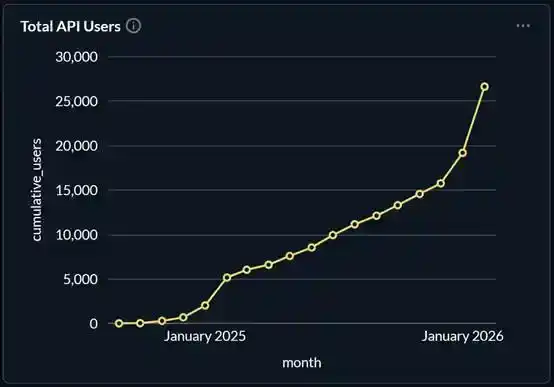
However, the corresponding price performance of $VVV has been lukewarm, with occasional rebounds reaching only about a $200 million market cap at most. It once fell below a $45 million market cap, far from its all-time high of nearly $1 billion when it first launched.

It's also noticeable that entering 2026, Venice's API user count experienced rapid growth. This has to be credited to the explosion of OpenClaw. Due to its privacy-focused positioning, Venice was prominently recommended in the model provider section of OpenClaw's official documentation.
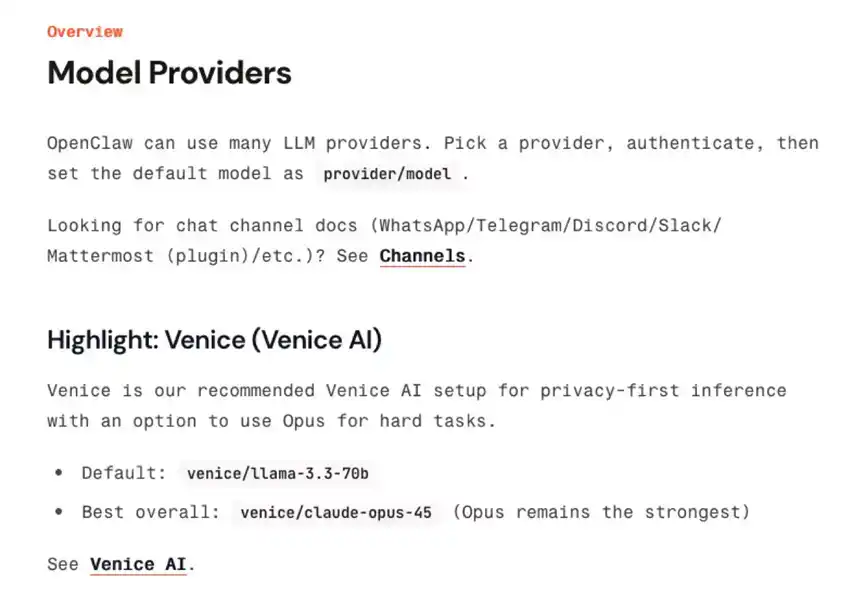
Although this prominent recommendation was later removed, 2026 has been a year of rapid growth for Venice. According to data disclosed by Erik Voorhees, by March this year, Venice's total user count exceeded 2 million, paid subscription users reached 55,000, monthly revenue hit $835,000, with a monthly growth rate of 15%.

Corresponding to this is the continuous rise of $VVV. Since entering 2026, $VVV has increased by over 9 times.

$VVV/$DIEM

Earlier, we covered Venice's growth in exposure and user numbers this year, which are the macro-narrative reasons for its rise. But as a crypto AI project with a token, its price increase is also closely tied to the token's mechanisms.

This year, the annual emission of $VVV has undergone multiple reductions and adjustments, dropping from 8 million tokens per year to 5 million. By July 1st, the annual emission will be further reduced to 3 million tokens. The official stated goal is to achieve net deflation for $VVV, ensuring the burn rate exceeds the emission rate to guarantee $VVV's native yield.
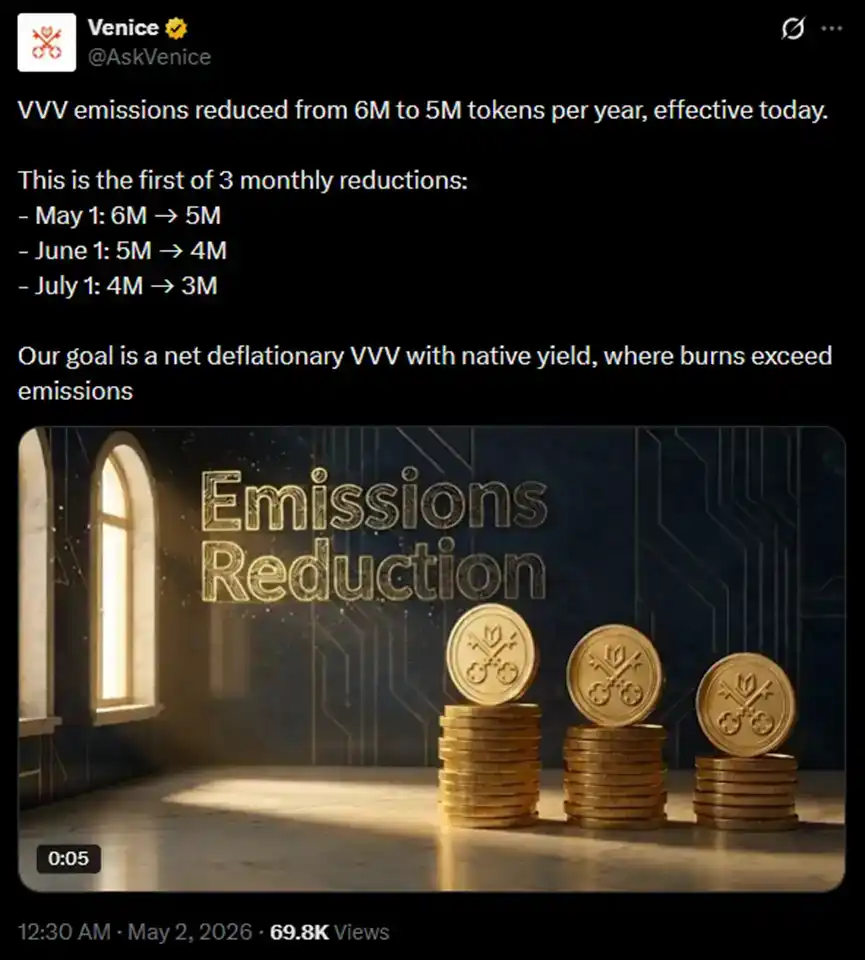
$VVV's initial total supply was 100 million tokens. The current total token supply is approximately 79.9 million, with 42.22% (about 33.73 million) of the current supply already burned.

The burn of $VVV is linked to Venice's subscription revenue. At the end of April, Venice allocated more subscription revenue towards token buybacks. For each new Pro plan subscription ($18), $2 will be allocated to buy back and burn $VVV. The Pro+ plan ($68) and Max plan ($200) correspond to $5 and $10 for buyback and burn, respectively.

The current circulating token count is approximately 46 million tokens. Additionally, about 8.85 million tokens remain locked, and around 32.47 million tokens are staked.

The token utility of $VVV is quite interesting. Compared to the awkward situation faced by past crypto projects where "token rights are useless compared to equity," $VVV offers a very compelling solution.

On the foundation of continuously controlling token supply, staking $VVV not only earns more $VVV (receiving more rewards from emission cuts) but also grants the right to mint $DIEM using the staked token $sVVV.
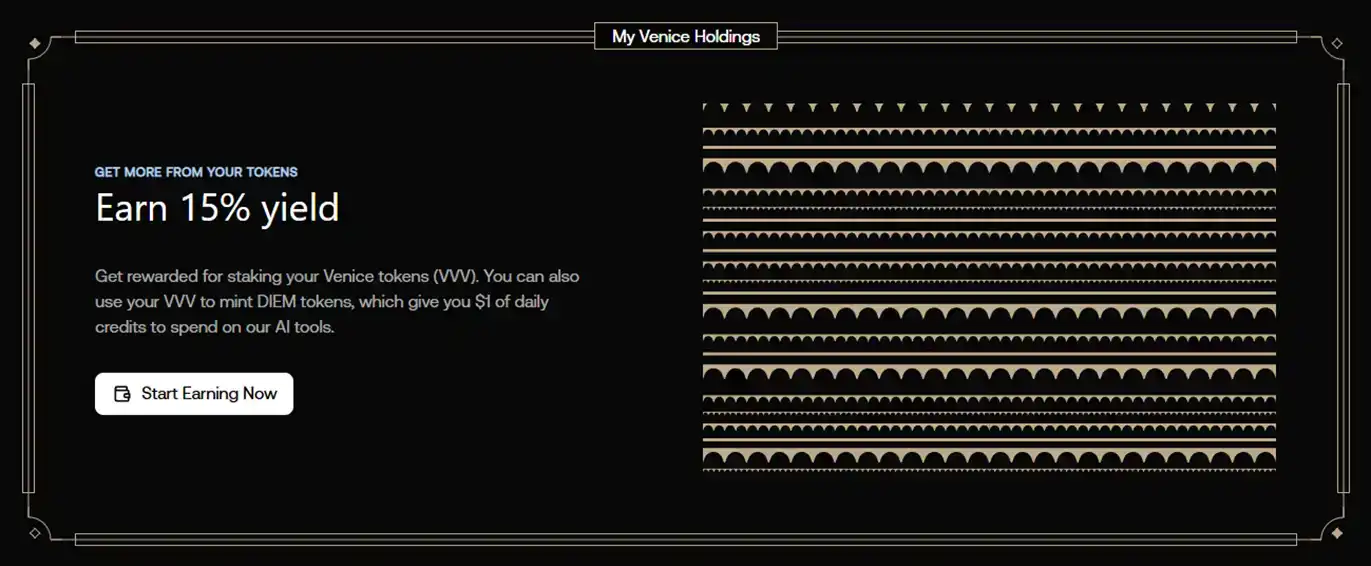
$DIEM can either be traded or staked. Staking 1 $DIEM corresponds to $1 worth of Venice API credit per day.

This credit refreshes daily; what's used today is replenished tomorrow, and it's permanent. What can you do with $1 of Venice API credit? Quite a lot, according to Venice itself:
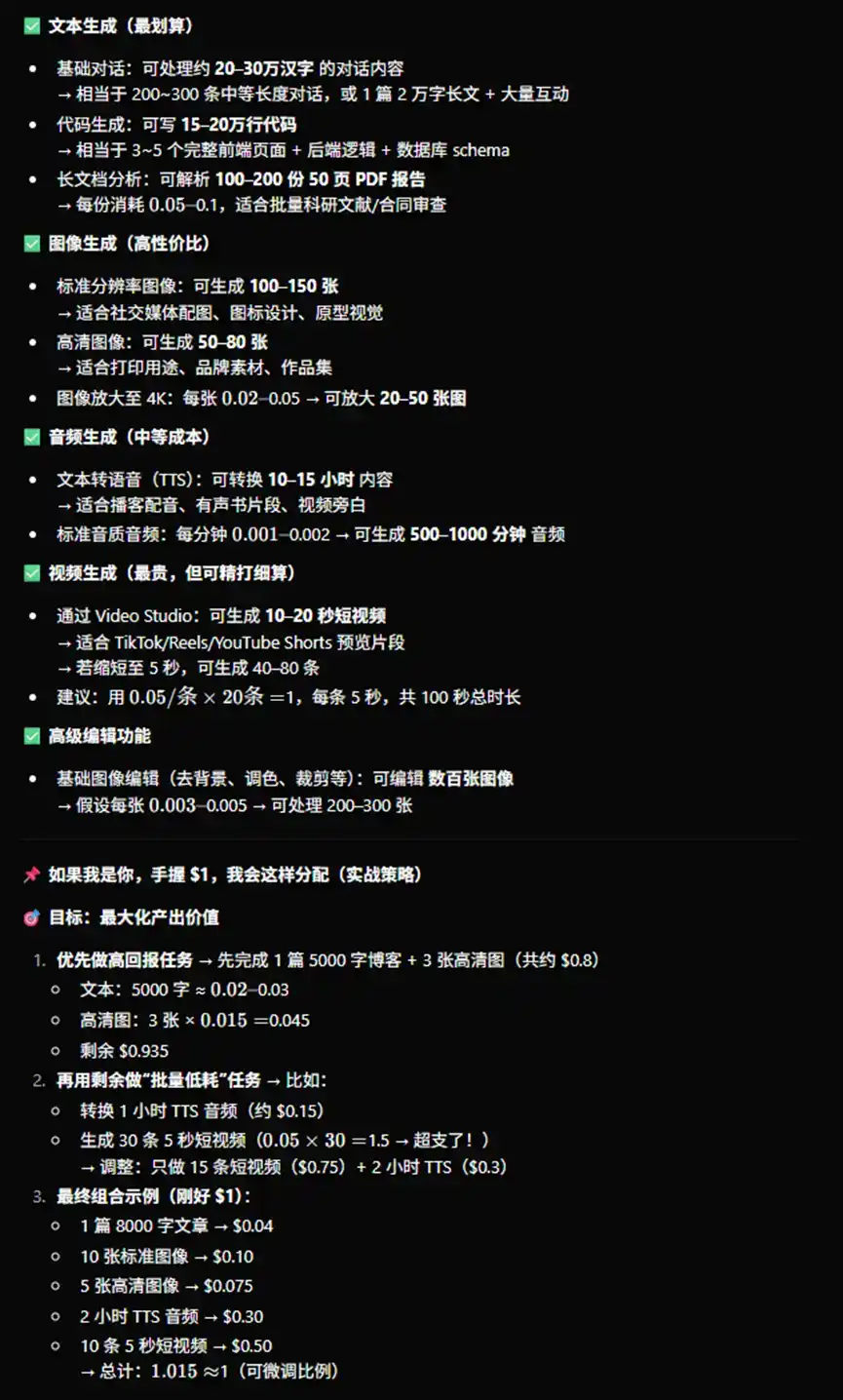
Stake 1 $DIEM, and get free daily processing of the above with Venice.

However, one must consider that the current price of one $DIEM has skyrocketed to around $1,500. To mint one $DIEM requires approximately 756 $sVVV, costing about $12,800. Is it worth it? Venice's own calculation looks like this:
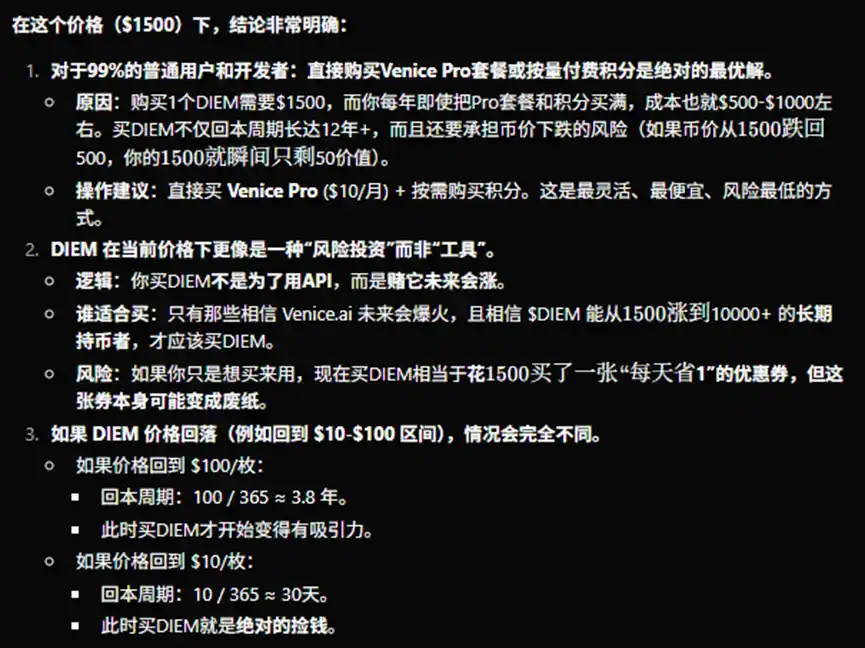
Overall, the $VVV/$DIEM economic structure, combined with Venice's regulatory mechanisms, gives $VVV a genuine "tech stock" flavor while retaining unique crypto characteristics:

- Supply-side emission reduction prevents excessive dilution of token value (and also protects the $VVV dividends for stakers from dilution).

- Subscription revenue is used for token buybacks.

- Staked $VVV can be used to mint $DIEM, allowing the token to serve a practical function within the product through $DIEM.

- However, this practical utility comes at a cost; $VVV used to mint $DIEM only receives 80% of the dividends ($VVV staking rewards).

- Enables on-chain DeFi operations, such as staking $VVV to obtain $DIEM, then selling $DIEM to buy more $VVV. There are even community projects like @cheaptokensAI that allow users to profit without selling $DIEM, by reselling the daily credit granted by $DIEM.

$POD

Since entering May, $POD has surged over 12 times at its peak, with its market cap rising from about $7.8 million to briefly surpass $100 million.

$POD is the token for Dolphin's distributed AI inference and training network. In simple terms, it involves "mining" with idle GPUs, providing computing power to those needing AI computation services, and earning $POD rewards.

However, the reason for $POD's speculative frenzy isn't the network itself, but another aspect of Dolphin's business—AI models. Venice's current default model, Venice Uncensored 1.2, is jointly developed by Dolphin and Venice and evolved from Dolphin Mistral 24B Venice Edition.

Therefore, although $POD is solely the token for Dolphin's distributed AI network, at this stage, it is being treated as the only investment vehicle for Dolphin and is being heavily speculated upon.

$cyb3rwr3n

This project claims to be building a USDC-based auction market for Venice usage credits. However, it is seen as part of the "VVV" related concepts largely because some players, after analyzing correlations between on-chain behavior and tweets, believe this project is highly associated with Venice founder Erik Voorhees.

The Venice official Twitter account has clarified these speculations, stating that cyb3rwr3n is not an official Venice project.

When this news broke last month, it caused about a 50% price drop, but a few days ago, the token hit a new all-time high. The official clarification hasn't completely erased market associations. According to some community discussions, Erik Voorhees was the first follower of the cyb3rwr3n official Twitter account, and Venice team members like co-founder @TeanaTaylor, CTO @jesseproudman, and product lead @willyogo also follow the account. They argue that even if Venice has no formal link, the supportive sentiment conveyed by such interactions is still a significant bullish signal.

This is also currently one of the cheaper tokens among "VVV" related concepts, with only a $4 million market cap. But being cheap comes with reasons—its product hasn't launched yet, and it currently functions more like a meme coin.

$SR

STRIKEROBOT.AI is a full-stack embodied intelligence platform building a humanoid robot framework for physical AI Business Process Outsourcing (BPO), focusing on safety in hazardous environments (nuclear plants, high-voltage facilities, radiation zones, etc.).

They have a robot training and simulation platform called SR Platform, and $SR is the token for this platform. The project's connection to Venice is the announcement on May 7th about jointly developing a VLM inference layer for robots with Venice and receiving funding sponsorship from Venice.
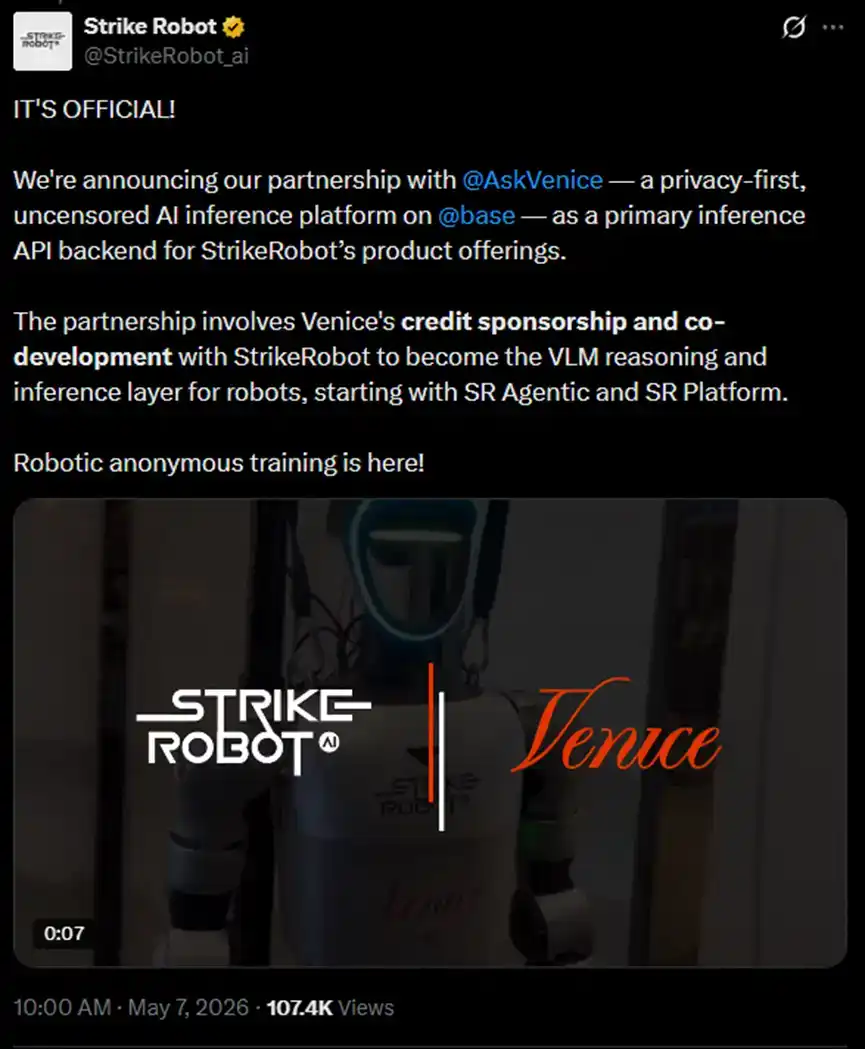
Since entering May, $SR has risen approximately 4 times, with a current market cap of around $9 million.

Questions liées

QWhat is the 'VVV' concept referred to in the article, and what is its primary platform?

AThe 'VVV' concept refers to the $VVV token associated with Venice, which is a privacy-focused, uncensored generative AI platform on the Base blockchain ecosystem, led by Erik Voorhees.

QAccording to the article, what was a significant driver for Venice's rapid growth in user numbers in 2026?

AThe significant driver for Venice's rapid growth in user numbers in 2026 was its high-profile recommendation in the official documentation of the popular project OpenClaw, thanks to its privacy-focused positioning.

QHow does the Venice platform's subscription model contribute to the $VVV token's economics?

AVenice uses a portion of its subscription revenue from Pro, Pro+, and Max packages to buy back and burn $VVV tokens. For example, each new $18 Pro subscription allocates $2 for this buyback and burn, creating deflationary pressure on the token's supply.

QWhat is the relationship between the $VVV token and the $DIEM token within the Venice ecosystem?

AStaking $VVV tokens yields staked $sVVV, which can be used to mint $DIEM tokens. Each staked $DIEM token provides a daily $1 credit for using the Venice API. While $DIEM can be traded, it also has this core utility within the Venice product.

QBesides $VVV itself, name two other tokens mentioned in the article that are considered part of the 'VVV' concept and briefly state their connection to Venice.

ATwo other tokens are $POD and $SR. $POD is the token for Dolphin, a distributed AI network, which co-developed the Venice Uncensored 1.2 model with Venice. $SR is the token for STRIKEROBOT.AI, which received funding from Venice and is collaborating with them to develop a VLM inference layer for robots.

Lectures associées

9,42 millions de particuliers se ruent sur Changxin Technology, qui a été attribué ?

Les résultats de l'offre publique initiale (IPO) de Changxin Technology sont publiés. L'émission a attiré 942 880 investisseurs particuliers et 285 institutions, avec un nombre record d'actions allouées en ligne. Le taux de succès pour les particuliers s'élève à environ 0,4714%, le plus élevé jamais enregistré pour une nouvelle action sur le marché STAR. Après un mécanisme de rapatriement des actions, le nombre d'actions offertes en ligne a été porté à 3,851 milliards, représentant 50,07% du total. Environ 7,7 millions de numéros gagnants ont été attribués. Les estimations suggèrent qu'un gain potentiel pour un lot gagnant (500 actions) pourrait se situer entre 10 600 et 25 600 yuans selon la valorisation boursière post-introduction. Côté institutions, 285 investisseurs ont reçu 2,173 milliards d'actions, avec un taux d'allocation de 0,1756%. Taikang Asset Management a été la plus grande bénéficiaire. Parmi les fonds communs de placement, E Fund, Southern Fund et ICBC Credit Suisse Trust sont en tête. Dans la catégorie des fonds privés, Liang Wenfeng, fondateur de la société d'IA DeepSeek, via ses entités Ningbo Fantasia Quant et Zhejiang Jiuzhang Asset, a obtenu la plus grande part, avec une allocation d'environ 202,5 millions d'actions d'une valeur de 1,75 milliard de yuans. Des gains potentiels pour ses fonds sont estimés à 7,3 milliards de yuans si la capitalisation atteint 3 000 milliards de yuans. Le Fonds de sécurité sociale national figurait parmi les 30 investisseurs stratégiques, ayant reçu pour 144,37 milliards de yuans d'actions avec une période de blocage. La société devrait être cotée vers le 27 juillet. Les valorisations anticipées par les analystes vont de 1 000 à 4 250 milliards de yuans, malgré des récentes corrections sur les marchés technologiques mondiaux qui pourraient influencer ses débuts en bourse.

marsbitIl y a 24 mins

9,42 millions de particuliers se ruent sur Changxin Technology, qui a été attribué ?

marsbitIl y a 24 mins

Une "déesse de la charité" de 3 millions d'abonnés entièrement créée par IA, un orphelinat factice, un "faux philanthrope" transnational s'effondre du jour au lendemain

**[Guide] Scandale : Une influenceuse australienne prétendant aider des orphelins avec 3 millions d'abonnés a été démasquée pour avoir utilisé l'IA afin de créer de fausses images et vidéos de son oeuvre caritative.** L'ABC révèle que Lily Jay, une influenceuse australienne convertie à l'islam avec près de 3 millions d'abonnés, a orchestré une vaste escroquerie caritative en utilisant l'intelligence artificielle. Sa fondation, le "Lily Jay Foundation", prétendait construire des mosquées, distribuer de la nourriture à Gaza et gérer un orphelinat en Ouganda. Cependant, l'enquête montre que des vidéos clés, notamment celle de l'inauguration de l'orphelinat où des enfants tiennent des sucettes, étaient intégralement générées par IA, avec des incohérences typiques comme des erreurs de texte sur les vêtements. Aucune trace de l'orphelinat "Ada Nur" ou de la boulangerie à Gaza n'a pu être vérifiée sur place. Un trophée "humanitaire" présenté en mai 2026 portait le filigrane invisible d'un générateur d'images AI. Le site web de la fondation admettait discrètement ne pas être un organisme de bienfaisance enregistré, échappant ainsi aux obligations de transparence financière. Opérant depuis Chypre et le Kosovo, Lily Jay (de son vrai nom Lily Jay Hinson) mène une vie luxueuse sur ses réseaux personnels. Après les questions de l'ABC, le site a modifié son contenu pour les visiteurs australiens, supprimant les options de don et les pages compromettantes, tout en les conservant pour le public international. Les experts alertent sur la dangerosité de ces escroqueries qui exploitent la générosité et la volonté de croire en de belles histoires. À l'ère du deepfake, la défense reste un questionnement critique : est-ce vrai ?

marsbitIl y a 1 h

Une "déesse de la charité" de 3 millions d'abonnés entièrement créée par IA, un orphelinat factice, un "faux philanthrope" transnational s'effondre du jour au lendemain

marsbitIl y a 1 h

L2 « recalibrage » : quand L1 devient son propre Rollup, quel est le destin final d’Ethereum ?

"L2 Recalibration": When L1 Becomes Its Own Rollup, What Is Ethereum's Endgame? In recent years, the proliferation of L2s (Rollups) has solved Ethereum's scalability issues but at the cost of fragmenting liquidity, user states, and the unified chain experience. This has prompted a fundamental reevaluation of the relationship between L1 and L2 within the Ethereum community. Ethereum's roadmap is evolving. The core challenge is no longer just creating more block space, but redefining the roles of L1, L2, execution, and settlement layers in a fragmented ecosystem. L1 is actively enhancing its own scalability (increasing Gas Limit, statelessness, zkEVM). Consequently, L2s can no longer rely solely on "cheaper, faster transactions" for long-term value. Their future role shifts towards providing differentiated features (privacy, custom governance, application-specific optimizations) that L1 cannot easily offer uniformly, while still contributing extra capacity. Interoperability is key to restoring a seamless user experience. The goal is not just cross-chain bridges but enabling different execution environments to trust each other's states faster and at lower cost. Initiatives like Open Intents Frameworks and the Ethereum Interoperability Layer (EIL) aim to make cross-L2 interactions feel like single-chain transactions. Crucially, shortening Ethereum's finality time (from minutes to seconds) is a major focus, as it directly benefits cross-chain applications by reducing the trust latency for state changes. A provocative idea from researcher Barnabé Monnot suggests that as proof systems (like zkEVM) mature on mainnet, L1 itself could become a form of "its own Rollup." Here, specialized nodes would execute transactions and generate validity proofs, while validators would verify these proofs instead of re-executing everything. This blurs the traditional L1/L2 hierarchy, making "Rollup" more of a general execution-verification architecture than a strict layer. The vision is a future where multiple L2s act as specialized execution domains (for DeFi, gaming, privacy, etc.) under a shared Ethereum security, settlement, and state framework—a system that is fragmented in execution but unified in trust and liquidity. In conclusion, Ethereum's endgame is not L2s replacing L1 or being made obsolete by a scaled L1. It is an ecosystem where L2s become a spectrum of execution environments with varying features, all capable of securely interoperating and sharing Ethereum's foundational security and liquidity. The next phase is about re-integrating what was fragmented back into a coherent, user-friendly "one chain" experience.

marsbitIl y a 1 h

L2 « recalibrage » : quand L1 devient son propre Rollup, quel est le destin final d’Ethereum ?

marsbitIl y a 1 h

Grayscale Dépose le Premier ETF sur Worldcoin auprès de la SEC sous le Symbole GWLD

La société Grayscale Investments a déposé une demande d'enregistrement Form S-1 auprès de la SEC américaine pour créer un nouveau fonds négocié en bourse (ETF) lié à la cryptomonnaie Worldcoin, sous le ticker GWLD sur Nasdaq. Ce fonds, établi le 10 juillet, offrirait aux investisseurs américains un accès régulé à Worldcoin (WLD), alors que les citoyens américains ne sont pas éligibles aux subventions utilisateurs du projet. Le dépôt intervient alors que le WLD a atteint son plus bas historique en mai 2026, avant de connaître une hausse de plus de 8% à l'annonce de l'ETF. Le dossier de Grayscale soulève également des questions importantes sur la tokenomique de Worldcoin, notamment la concentration des tokens (les 100 plus grands portefeuilles détiennent environ 90% de l'offre en circulation) et le déblocage continu de tokens par les initiés jusqu'en 2028, ce qui exercera une pression vendeuse. De plus, l'écosystème de Worldcoin, qui utilise des dispositifs biométriques de scan oculaire (Orbs), est confronté à des défis réglementaires spécifiques dans plusieurs juridictions. Malgré un calendrier incertain (l'introduction en bourse n'est pas attendue avant fin 2026) et l'approbation de la SEC encore en suspens, cette démarche illustre la volonté de Grayscale d'étendre son offre d'investissements cryptographiques régulés et de se positionner sur le marché émergent des ETF.

TheNewsCryptoIl y a 1 h

Grayscale Dépose le Premier ETF sur Worldcoin auprès de la SEC sous le Symbole GWLD

TheNewsCryptoIl y a 1 h

Trading

Spot
活动图片