The Founder of Coinbase Is Going to Research Immortality

marsbitPublié le 2026-06-03Dernière mise à jour le 2026-06-03

Résumé

Coinbase founder Brian Armstrong has co-founded NewLimit, a longevity biotech startup, which just raised $435 million in a Series C funding round led by Peter Thiel’s Founders Fund. The round values the company at $3.1 billion, more than triple its valuation from a year ago. NewLimit is developing drugs aimed at reversing cellular aging to extend human healthspan. Its approach builds on Nobel Prize-winning research on cellular reprogramming (Yamanaka factors), with a focus on identifying specific gene combinations that can restore younger cell function. The company plans to begin human clinical trials next year, initially targeting alcohol-related liver disease as a form of accelerated aging. Founded in 2021 by Armstrong alongside biotech investor Blake Byers and scientist Jacob Kimmel, NewLimit has now raised over $700 million across multiple rounds. It joins a growing field of well-funded longevity ventures backed by tech billionaires, including Sam Altman’s Retro Biosciences and Jeff Bezos-backed Altos Labs, reflecting a surge of interest in using science to combat aging and extend healthy lifespan.

Author | Azuma(@azuma_eth)
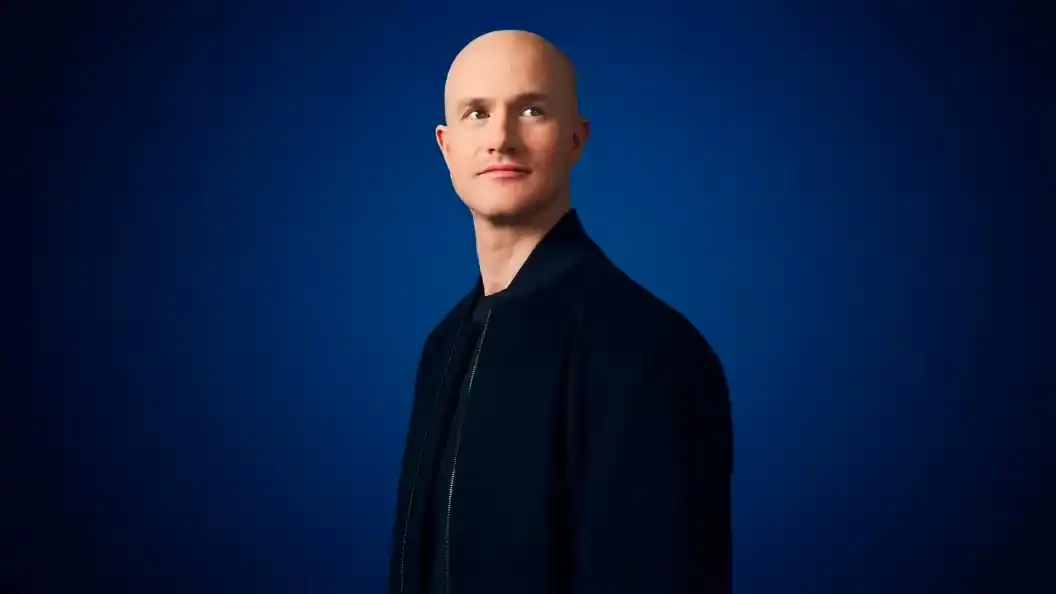
At 3:00 AM Beijing time on June 3, longevity technology startup NewLimit announced the completion of a $435 million Series C funding round. This round was led by Peter Thiel's fund Founders Fund, with continued participation from Abstract Ventures, Kleiner Perkins, NFDG, Eli Lilly Ventures, Valor Equity Partners, among others, while also introducing new investors such as Thrive Capital, Greenoaks, and Quiet Capital.

A WSJ report indicated that NewLimit's valuation in this round reached $3.1 billion, more than triple its valuation from a year ago.
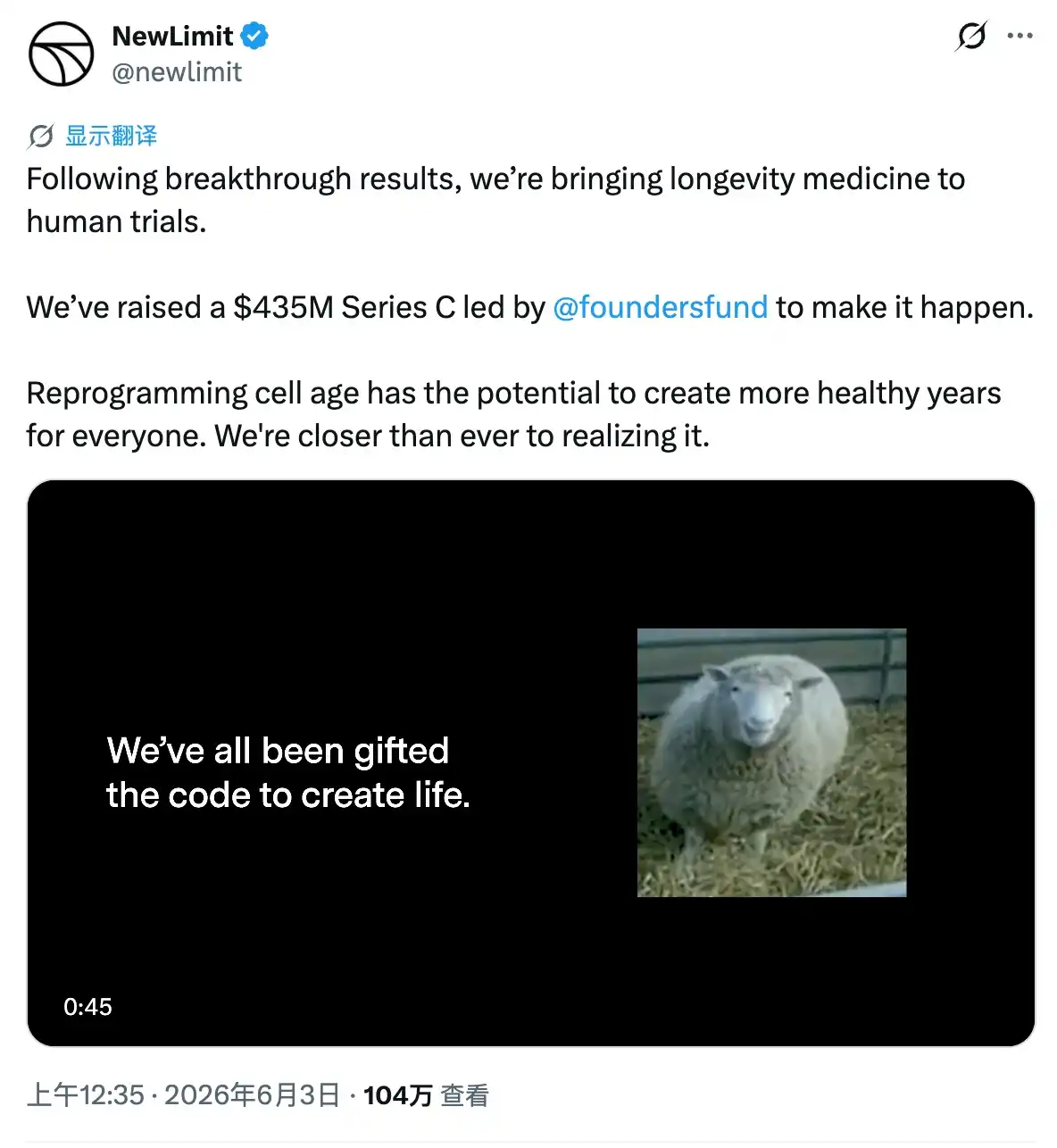
In its funding announcement, NewLimit revealed that following breakthrough research achievements, the company is advancing longevity medicine into the human clinical trial stage. Its first drug targeting alcohol-related liver disease is expected to commence clinical trials next year.

NewLimit also emphasized: "By reprogramming cell age, humans may achieve longer health spans, and now, we are closer than ever to the goal of delaying or even reversing aging."

The Founder Turns Out to Be an Old Acquaintance

It is worth mentioning that one of NewLimit's co-founders is none other than our old acquaintance — Coinbase founder and CEO Brian Armstrong.

In 2021, Brian Armstrong, together with former GV partner and bioengineer Blake Byers and stem cell biologist Jacob Kimmel, invested $110 million to establish NewLimit in South San Francisco.
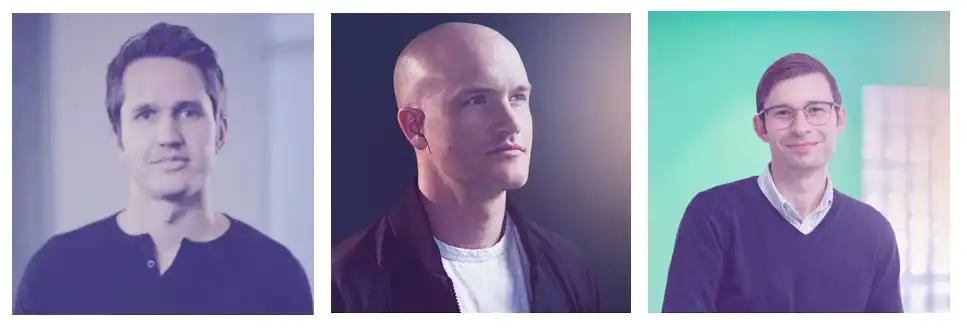
Picture: The NewLimit founding team

Prior to this funding round, NewLimit had already completed three rounds of financing, as detailed below.

  • May 2023: Completed a $40 million Series A round, with investors including Dimension, Founders Fund, and Kleiner Perkins;
  • May 2025: Completed a $130 million Series B round, reaching a valuation of $810 million, led by Kleiner Perkins, with participation from Founders Fund, Khosla Ventures, and Human Capital, among others;
  • October 2025: Received an additional $45 million investment, bringing the post-money valuation to $1.62 billion, with investors including Lilly Ventures, Duke University, Section 32, etc.;

According to NewLimit's official introduction, the company is dedicated to developing drugs that can extend human health span — "As humans age, cellular function gradually declines, making people more susceptible to diseases. It was once believed that aging was inevitable, but emerging science shows that the aging process can be reversed at the cellular level. We are developing the first drugs based on these discoveries to restore the youthful function of aging cells."

In simpler terms, NewLimit is using scientific methods to research immortality!

Reversing Aging is Not a Fantasy

Over the past few decades, while the scientific community has long recognized the link between aging and cellular functional decline, it could not precisely find a way to make cells "rejuvenate." The turning point came in 2006 when Japanese scientist Shinya Yamanaka discovered that activating just a few specific transcription factors could reprogram adult cells into a youthful state resembling embryonic stem cells. This discovery was later named "Yamanaka Factors" and helped him win the 2012 Nobel Prize in Physiology or Medicine.
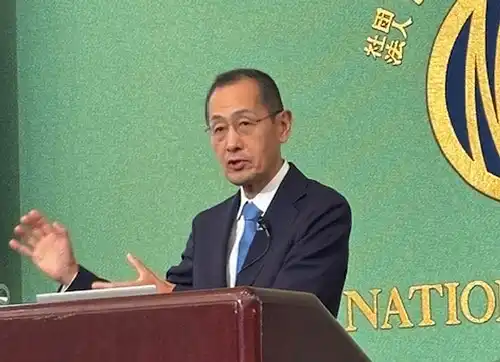
Odaily Note: Picture shows Shinya Yamanaka speaking in Tokyo

Yamanaka's research first proved something previously considered impossible — that cellular age is not irreversible. And the story told by NewLimit is built precisely upon this discovery.

NewLimit writes on its website: "Our drugs can reprogram a cell's epigenome to a younger state by activating specific transcription factor genes. We already know this reversal is possible. However, for different cell types, exactly which combinations of transcription factors are needed to restore their youthful function remains unknown. Finding and discovering these effective payloads is the core challenge of our work."

NewLimit's strategy is to first target a specific disease to obtain drug approval, and then explore broader applications. As mentioned earlier, NewLimit is advancing a drug for alcohol-related liver disease into clinical trials.

NewLimit Co-founder and CEO Jacob Kimmel further explained, "Liver disease can actually be viewed as an 'accelerated version of aging,' it just presents the aging process that everyone experiences in a faster and more intense manner."

The Biggest Investors in This Sector Are All Billionaires

NewLimit is not the only tech company currently targeting "immortality."

In 2022, Sam Altman invested $180 million in Retro Biosciences, which is developing drugs to rejuvenate aging cells. Last month, Retro Biosciences disclosed its valuation had reached $1.8 billion.

Furthermore, Altos Labs, reportedly backed by Jeff Bezos's funding, also launched in 2022 with $3 billion and has since raised nearly twice that amount in total funding.

It's easy to see that from Peter Thiel to Sam Altman to Jeff Bezos, the biggest investors in this sector are without exception super-rich individuals at the pinnacle of technology and wealth. Peter Thiel has publicly expressed extreme aversion to death, advocating similar views on multiple occasions: "Death is humanity's greatest enemy, yet we treat it as a natural law..."

The logic behind these tech titans' willingness to invest hundreds of millions is not hard to understand — when wealth and power reach their peak, time becomes the only enemy, the only luxury that cannot be bought directly with money.

Having earned enough money, "how to live longer" becomes the greatest challenge.

Questions liées

QWhat is NewLimit, and what is its primary goal?

ANewLimit is a longevity biotechnology startup. Its primary goal is to develop drugs to extend human healthspan by reversing the aging process at the cellular level.

QWho is the notable co-founder of NewLimit mentioned in the article?

AThe notable co-founder is Brian Armstrong, who is also the founder and CEO of the cryptocurrency exchange Coinbase.

QWhat scientific breakthrough is NewLimit's research based on?

ANewLimit's research is based on the discovery of the 'Yamanaka Factors' by Japanese scientist Shinya Yamanaka in 2006, which showed that adult cells can be reprogrammed into a younger, pluripotent state.

QHow much funding did NewLimit recently raise and at what valuation?

ANewLimit recently raised $435 million in a Series C funding round, which valued the company at $3.1 billion.

QWhy are super-wealthy tech figures like Peter Thiel and Sam Altman investing in longevity companies?

AFor super-wealthy individuals, time is seen as the ultimate luxury that money cannot directly buy. After achieving immense wealth and power, extending their healthspan and potentially reversing aging becomes a primary focus.

Lectures associées

Liste des altcoins les plus populaires selon les recherches des dernières heures publiée !

La plateforme CoinGecko a publié une liste des cryptomonnaies les plus recherchées par les utilisateurs au cours des dernières heures. Le jeton Pudgy Penguins ($PENGU) est en tête, suivi de Catecoin (CATE) et de Bless ($BLESS). Sur les 24 dernières heures, CATE a enregistré une hausse de prix impressionnante de 126,2%, tandis que $BLESS a augmenté de 86,1% et $PENGU de 3,9%. What IF (IF) a également progressé de 41,9%. Le classement complet des actifs les plus consultés sur CoinGecko, avec leur capitalisation boursière, est le suivant : 1. Pudgy Penguins ($PENGU) – 389,13 millions de dollars 2. Catecoin (CATE) – 19,62 millions de dollars 3. Bless ($BLESS) – 32,72 millions de dollars 4. Aerodrome Finance (AERO) – 385,03 millions de dollars 5. Hyperliquid (HYPE) – 11,43 milliards de dollars 6. Ethereum (ETH) – 224,17 milliards de dollars 7. Chainlink (LINK) – 6,17 milliards de dollars 8. Aave (AAVE) – 1,42 milliard de dollars 9. What IF (IF) – 31,24 millions de dollars 10. Polkadot (DOT) – 1,34 milliard de dollars 11. Bitcoin (BTC) – 1,27 trillion de dollars 12. Virtual Protocol (VIRTUAL) – 366,19 millions de dollars 13. Algorand (ALGO) – 758,15 millions de dollars 14. Cash Cat (CASHCAT) – 41,81 millions de dollars 15. Solana (SOL) – 42,38 milliards de dollars. *Ceci ne constitue pas un conseil en investissement.

cryptonews.ruIl y a 2 h

Liste des altcoins les plus populaires selon les recherches des dernières heures publiée !

cryptonews.ruIl y a 2 h

Les retraits de Bitcoin se poursuivent : 8 ans de stockage en portefeuille froid Coldcard se sont terminés par un solde nul

Le portefeuille matériel Coldcard a été compromis, entraînant une nouvelle vague de retraits depuis les appareils vulnérables. Selon Galaxy Research, environ 1 367,05 BTC (88,6 millions de dollars) ont été dérobés à partir de 4 585 adresses. Le problème ne réside pas dans le firmware, qui a été corrigé, mais dans les phrases seed générées entre mars 2021 et les mises à jour correctives. Ces phrases, créées en raison d'une erreur de programmation ayant conduit à l'utilisation d'un générateur de nombres aléatoires logiciel (Yasmarang) au lieu du générateur matériel STM32, sont prévisibles et vulnérables à une attaque par force brute hors ligne. Les propriétaires concernés doivent impérativement générer une nouvelle phrase seed sur un firmware corrigé et transférer leurs actifs, sous peine de rester exposés. L'histoire d'un investisseur de 39 ans illustre l'impact dévastateur : après avoir accumulé 2 BTC (130 000 dollars) sur huit ans via un travail physique, en les conservant comme protection contre l'hyperinflation dans son pays, il a tout perdu en quelques minutes. Son cas montre que même les stratégies de conservation à long terme les plus prudentes ("cold storage") ne sont pas infaillibles. D'un point de vue historique, cet incident rappelle les faiblesses passées des générateurs de nombres aléatoires dans la cryptographie. Il remet en question l'idée reçue selon laquelle le stockage hors ligne garantit automatiquement une sécurité absolue. La communauté espère que le fabricant pourra aider à récupérer les fonds volés.

cryptonews.ruIl y a 4 h

Les retraits de Bitcoin se poursuivent : 8 ans de stockage en portefeuille froid Coldcard se sont terminés par un solde nul

cryptonews.ruIl y a 4 h

Trading

Spot
活动图片





