The Founder of Coinbase Is Going to Research Immortality

marsbitPublié le 2026-06-03Dernière mise à jour le 2026-06-03

Résumé

Coinbase founder Brian Armstrong has co-founded NewLimit, a longevity biotech startup, which just raised $435 million in a Series C funding round led by Peter Thiel’s Founders Fund. The round values the company at $3.1 billion, more than triple its valuation from a year ago. NewLimit is developing drugs aimed at reversing cellular aging to extend human healthspan. Its approach builds on Nobel Prize-winning research on cellular reprogramming (Yamanaka factors), with a focus on identifying specific gene combinations that can restore younger cell function. The company plans to begin human clinical trials next year, initially targeting alcohol-related liver disease as a form of accelerated aging. Founded in 2021 by Armstrong alongside biotech investor Blake Byers and scientist Jacob Kimmel, NewLimit has now raised over $700 million across multiple rounds. It joins a growing field of well-funded longevity ventures backed by tech billionaires, including Sam Altman’s Retro Biosciences and Jeff Bezos-backed Altos Labs, reflecting a surge of interest in using science to combat aging and extend healthy lifespan.

Author | Azuma(@azuma_eth)
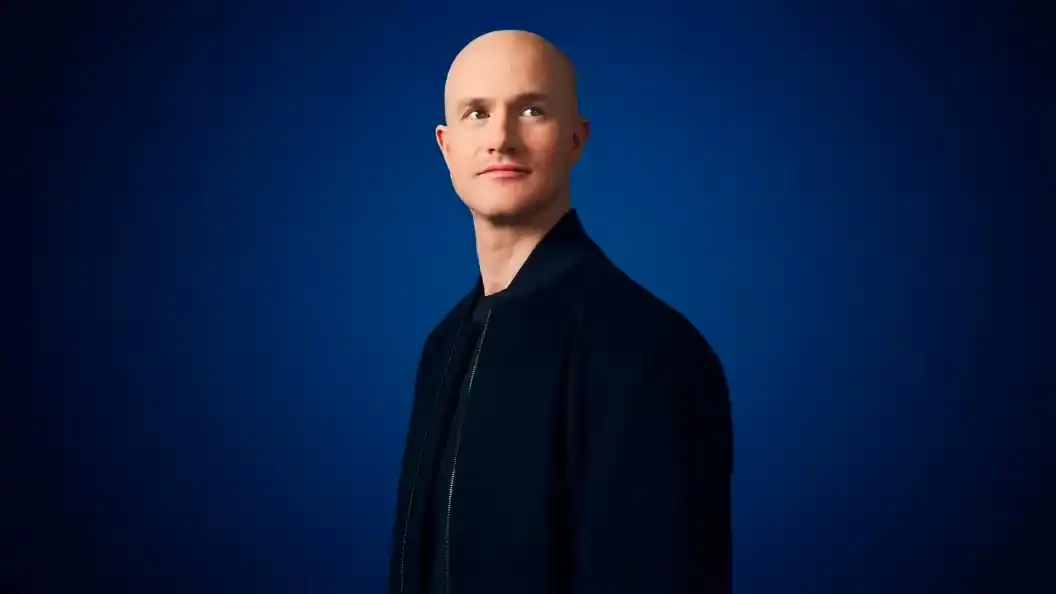
At 3:00 AM Beijing time on June 3, longevity technology startup NewLimit announced the completion of a $435 million Series C funding round. This round was led by Peter Thiel's fund Founders Fund, with continued participation from Abstract Ventures, Kleiner Perkins, NFDG, Eli Lilly Ventures, Valor Equity Partners, among others, while also introducing new investors such as Thrive Capital, Greenoaks, and Quiet Capital.

A WSJ report indicated that NewLimit's valuation in this round reached $3.1 billion, more than triple its valuation from a year ago.
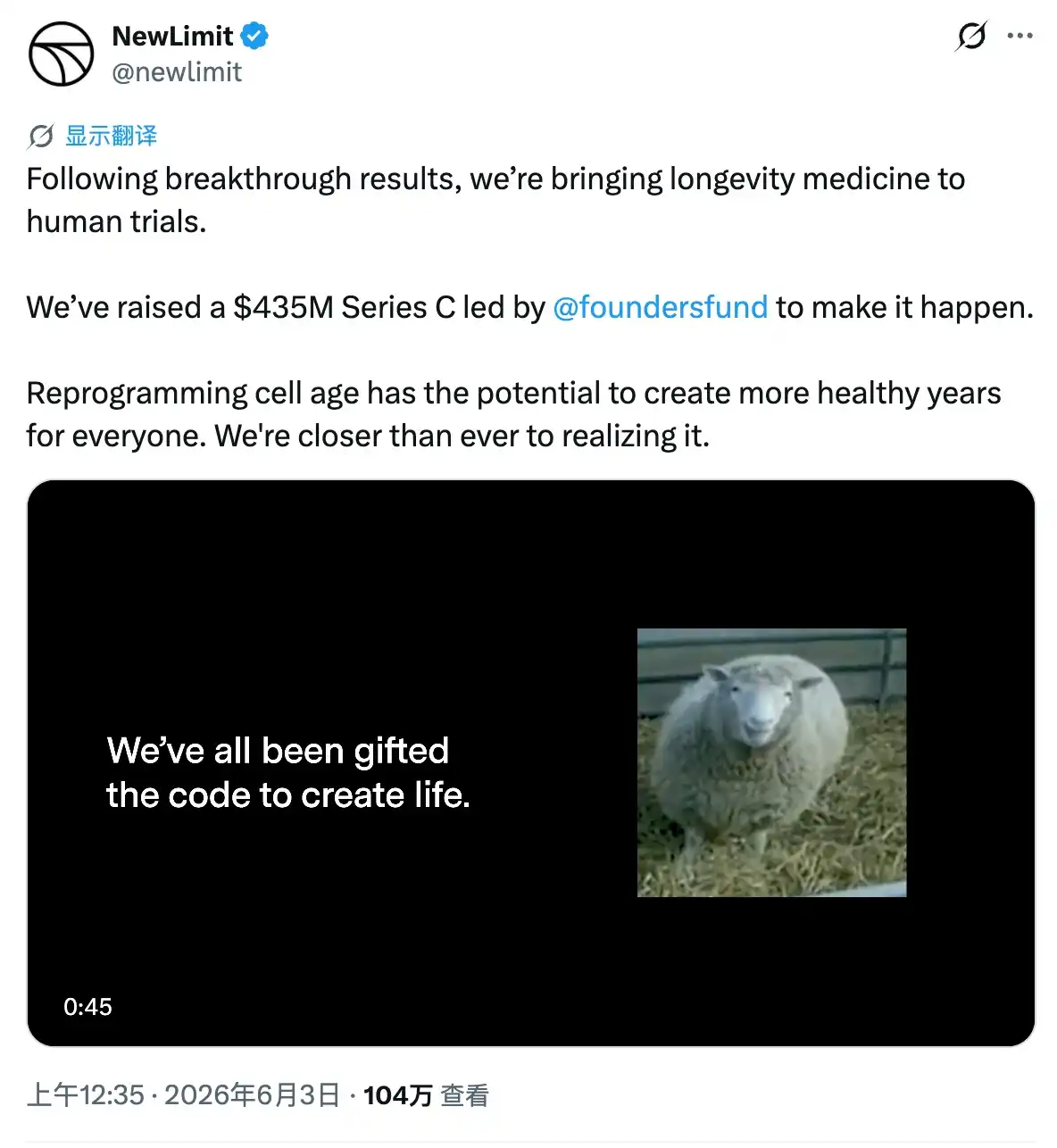
In its funding announcement, NewLimit revealed that following breakthrough research achievements, the company is advancing longevity medicine into the human clinical trial stage. Its first drug targeting alcohol-related liver disease is expected to commence clinical trials next year.

NewLimit also emphasized: "By reprogramming cell age, humans may achieve longer health spans, and now, we are closer than ever to the goal of delaying or even reversing aging."

The Founder Turns Out to Be an Old Acquaintance

It is worth mentioning that one of NewLimit's co-founders is none other than our old acquaintance — Coinbase founder and CEO Brian Armstrong.

In 2021, Brian Armstrong, together with former GV partner and bioengineer Blake Byers and stem cell biologist Jacob Kimmel, invested $110 million to establish NewLimit in South San Francisco.
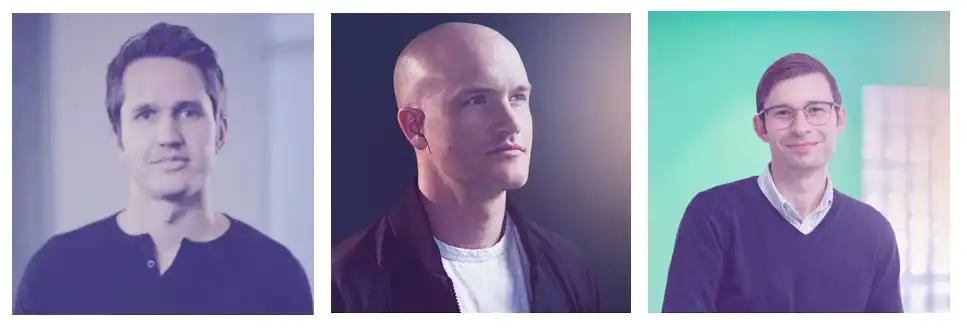
Picture: The NewLimit founding team

Prior to this funding round, NewLimit had already completed three rounds of financing, as detailed below.

  • May 2023: Completed a $40 million Series A round, with investors including Dimension, Founders Fund, and Kleiner Perkins;
  • May 2025: Completed a $130 million Series B round, reaching a valuation of $810 million, led by Kleiner Perkins, with participation from Founders Fund, Khosla Ventures, and Human Capital, among others;
  • October 2025: Received an additional $45 million investment, bringing the post-money valuation to $1.62 billion, with investors including Lilly Ventures, Duke University, Section 32, etc.;

According to NewLimit's official introduction, the company is dedicated to developing drugs that can extend human health span — "As humans age, cellular function gradually declines, making people more susceptible to diseases. It was once believed that aging was inevitable, but emerging science shows that the aging process can be reversed at the cellular level. We are developing the first drugs based on these discoveries to restore the youthful function of aging cells."

In simpler terms, NewLimit is using scientific methods to research immortality!

Reversing Aging is Not a Fantasy

Over the past few decades, while the scientific community has long recognized the link between aging and cellular functional decline, it could not precisely find a way to make cells "rejuvenate." The turning point came in 2006 when Japanese scientist Shinya Yamanaka discovered that activating just a few specific transcription factors could reprogram adult cells into a youthful state resembling embryonic stem cells. This discovery was later named "Yamanaka Factors" and helped him win the 2012 Nobel Prize in Physiology or Medicine.

Odaily Note: Picture shows Shinya Yamanaka speaking in Tokyo

Yamanaka's research first proved something previously considered impossible — that cellular age is not irreversible. And the story told by NewLimit is built precisely upon this discovery.

NewLimit writes on its website: "Our drugs can reprogram a cell's epigenome to a younger state by activating specific transcription factor genes. We already know this reversal is possible. However, for different cell types, exactly which combinations of transcription factors are needed to restore their youthful function remains unknown. Finding and discovering these effective payloads is the core challenge of our work."

NewLimit's strategy is to first target a specific disease to obtain drug approval, and then explore broader applications. As mentioned earlier, NewLimit is advancing a drug for alcohol-related liver disease into clinical trials.

NewLimit Co-founder and CEO Jacob Kimmel further explained, "Liver disease can actually be viewed as an 'accelerated version of aging,' it just presents the aging process that everyone experiences in a faster and more intense manner."

The Biggest Investors in This Sector Are All Billionaires

NewLimit is not the only tech company currently targeting "immortality."

In 2022, Sam Altman invested $180 million in Retro Biosciences, which is developing drugs to rejuvenate aging cells. Last month, Retro Biosciences disclosed its valuation had reached $1.8 billion.

Furthermore, Altos Labs, reportedly backed by Jeff Bezos's funding, also launched in 2022 with $3 billion and has since raised nearly twice that amount in total funding.

It's easy to see that from Peter Thiel to Sam Altman to Jeff Bezos, the biggest investors in this sector are without exception super-rich individuals at the pinnacle of technology and wealth. Peter Thiel has publicly expressed extreme aversion to death, advocating similar views on multiple occasions: "Death is humanity's greatest enemy, yet we treat it as a natural law..."

The logic behind these tech titans' willingness to invest hundreds of millions is not hard to understand — when wealth and power reach their peak, time becomes the only enemy, the only luxury that cannot be bought directly with money.

Having earned enough money, "how to live longer" becomes the greatest challenge.

Questions liées

QWhat is NewLimit, and what is its primary goal?

ANewLimit is a longevity biotechnology startup. Its primary goal is to develop drugs to extend human healthspan by reversing the aging process at the cellular level.

QWho is the notable co-founder of NewLimit mentioned in the article?

AThe notable co-founder is Brian Armstrong, who is also the founder and CEO of the cryptocurrency exchange Coinbase.

QWhat scientific breakthrough is NewLimit's research based on?

ANewLimit's research is based on the discovery of the 'Yamanaka Factors' by Japanese scientist Shinya Yamanaka in 2006, which showed that adult cells can be reprogrammed into a younger, pluripotent state.

QHow much funding did NewLimit recently raise and at what valuation?

ANewLimit recently raised $435 million in a Series C funding round, which valued the company at $3.1 billion.

QWhy are super-wealthy tech figures like Peter Thiel and Sam Altman investing in longevity companies?

AFor super-wealthy individuals, time is seen as the ultimate luxury that money cannot directly buy. After achieving immense wealth and power, extending their healthspan and potentially reversing aging becomes a primary focus.

Lectures associées

De Web3 à l'Agent IA, le vieux VC crypto Variant mise 2 milliards sur une transformation

Variant, un vétéran du capital-risque crypto, annonce un nouveau fonds de 222 millions de dollars, le "Variant 4". Ce fonds marque une évolution de sa thèse d'investissement centrale : du concept de "propriété numérique" vers celui plus large de "souveraineté individuelle" (autonomie). Cette autonomie concerne le contrôle accru que les utilisateurs ont sur leur vie numérique, leurs actifs, leur identité et leur capacité d'action, au-delà de la simple automatisation. La distinction clé est que l'automatisation intelligente doit servir l'utilisateur final, et non la plateforme, pour véritablement accroître l'autonomie. Variant investira donc dans les technologies qui étendent cette souveraineté, en augmentant l'accès, les connaissances et la propriété des utilisateurs. Ce cadre englobe ses investissements passés dans les blockchains (Ethereum, Solana), l'infrastructure pour développeurs, les marchés financiers décentralisés et les produits grand public. Le fonds voit dans la convergence des agents d'IA intelligents et des rails financiers globaux ouverts un potentiel de transformation structurelle d'Internet, passant d'un modèle où "l'utilisateur est le produit" à un modèle où l'utilisateur dispose d'une autonomie inédite. Variant mettra son expertise, acquise dans l'écosystème crypto, au service des fondateurs qui construisent aux frontières de ces systèmes autonomes.

marsbitIl y a 6 mins

De Web3 à l'Agent IA, le vieux VC crypto Variant mise 2 milliards sur une transformation

marsbitIl y a 6 mins

Bloomberg révèle : Comment les riches Chinois contournent la limite annuelle de 50 000 dollars pour transférer leurs actifs ?

Bloomberg révèle que malgré le plafond annuel de 50 000 dollars par personne fixé par l'administration chinoise des changes, environ 150 milliards de dollars s'échappent chaque année via des canaux informels ou souterrains. L'article retrace l'évolution du contrôle des capitaux depuis 1994, avec un durcissement notable après la dévaluation de 2015 et une sophistication numérique accrue entre 2024 et 2026, incluant le CRS et un suivi renforcé des transactions. Cinq principales méthodes de transfert sont identifiées : le système de compensation "Duiqiao" (aucune sortie effective de RMB), le "déménagement de fourmis" utilisant les quotas légaux de multiples personnes, la falsification des factures commerciales, la migration vers des canaux de gestion de fortune des grandes banques (ex: QDII), et les arrangements structurels comme les fiducies ou l'immigration. La réponse réglementaire se concentre désormais sur les individus plutôt que sur les seules entreprises, avec le CRS comme outil de rétrospection clé pour identifier les actifs offshore. Même les cryptomonnaies, parfois perçues comme une échappatoire, font l'objet de poursuites pour infraction. La pression pour diversifier les actifs à l'étranger reste forte parmi les millions de ménages aisés chinois, malgré un "mur" réglementaire de plus en plus haut et intelligent.

marsbitIl y a 18 mins

Bloomberg révèle : Comment les riches Chinois contournent la limite annuelle de 50 000 dollars pour transférer leurs actifs ?

marsbitIl y a 18 mins

Claude Code lance des workflows dynamiques : faire en sorte que l'IA apprenne à travailler en équipe

Claude Code introduit des flux de travail dynamiques, permettant à l'IA de créer des cadres d'exécution sur mesure pour des tâches complexes. Ces workflows coordonnent plusieurs agents Claude indépendants, chacun avec son propre contexte, pour décomposer les missions, traiter en parallèle, valider de manière antagoniste et synthétiser les résultats. Cette approche vise à résoudre des problèmes courants des modèles linguistiques sur de longues tâches : la paresse agentique (arrêt prématuré), le biais d'auto-préférence (favoriser ses propres conclusions) et la dérive d'objectifs. Les flux de travail dynamiques s'appliquent au-delà du code, pour la recherche approfondie, la vérification des faits, le tri de CV, l'enquête sur les causes profondes, le brainstorming de noms ou l'examen de plans d'affaires. L'article présente des modèles pratiques comme la classification et l'exécution, l'éventail et la synthèse, la validation antagoniste, les tournois et les boucles jusqu'à l'achèvement. Il souligne que les workflows, bien que consommant généralement plus de jetons, ne sont pas une solution universelle mais représentent une direction importante : la future concurrence des outils d'IA pourrait reposer sur leur capacité à orchestrer des processus d'exécution fiables et réutilisables pour des objectifs complexes.

marsbitIl y a 59 mins

Claude Code lance des workflows dynamiques : faire en sorte que l'IA apprenne à travailler en équipe

marsbitIl y a 59 mins

Hyperliquid, le dépanneur de Wall Street ouvert 24h/24

Le samedi de février où son téléphone a annoncé les frappes aériennes de Trump contre l'Iran, Vala Zeinali, trader dans un fonds spéculatif, s'est immédiatement rendu sur Hyperliquid. Cette plateforme de trading décentralisée, ouverte 24h/24 et 7j/7, est devenue un repaire pour les traders de Wall Street cherchant à anticiper les marchés hors des heures d'ouverture. Zeinali y a clôturé des positions sur le pétrole pour un gain de 243%. Fondée il y a trois ans par Jeff Yan, ancien trader quantitatif, Hyperliquid répond au besoin de garder le contrôle de ses actifs, renforcé après la chute de FTX. Avec seulement 11 employés, la plateforme et sa blockchain ont généré environ 8 milliards de dollars de revenus l'an dernier. Son jeton natif, HYPE, a vu sa valeur exploser. Hyperliquid symbolise la fusion entre la finance traditionnelle et les cryptos, proposant des contrats perpétuels sur des actifs variés : Bitcoin, S&P 500, pétrole, ou même des entreprises non cotées comme SpaceX. Bien que les utilisateurs américains soient officiellement interdits, beaucoup contournent la restriction via des VPN, attirés par l'interface simple, la diversité des produits et l'absence de vérification d'identité rigoureuse. La plateforme cultive une forte communauté. Les utilisateurs interagissent directement avec l'équipe sur Discord et animent l'espace en ligne avec le mème "Hypurr". Cependant, les contrats perpétuels, avec leur effet de levier, sont très risqués. Lors d'un krach en octobre dernier, les liquidations sur Hyperliquid ont atteint 10 milliards de dollars, révélant à la fois les risques et la robustesse technique de la plateforme qui est restée opérationnelle. L'objectif ultime d'Hyperliquid est d'héberger toute activité financière. La plateforme prévoit maintenant de s'étendre aux marchés de prédiction et aux options.

marsbitIl y a 1 h

Hyperliquid, le dépanneur de Wall Street ouvert 24h/24

marsbitIl y a 1 h

Trading

Spot
Futures
活动图片





