Even the most oblivious can sense it—the crypto industry is at a turning point.
Over the past decade, the core competency in the crypto space has been asset issuance. Launch a chain, launch a coin, launch a governance token, create an economic model, push it to the market with narratives, airdrops, liquidity incentives, and community consensus—a classic game of hot potato.
We once boldly hypothesized that blockchain would create an entirely new asset system: new currencies, new financial protocols, new gaming assets, new social networks, even new forms of organization.
Yet now, these native assets are heading towards a slow death, turning every attempt to buy the dip into an exercise in futility.
What's sucking away liquidity and attention are yesterday's assets: US stocks, US bonds, gold, crude oil, indices......

Bidding Farewell to All Native Assets, Saying Hello to Traditional Ones
The protagonists on-chain have changed. Native assets are ignored, while tokenized traditional assets thrive.
Every bear market brings claims that "ETH is done for," "no one's buying altcoins anymore," or "DeFi is dead." But why does $2000 ETH feel more hopeless than $200 ETH from the past?
Because the criticism no longer stems from mere price cycles or narrative shifts between sectors, but from a migration of the industry's very function. The crypto industry is transitioning from a "new asset factory" to a "global asset conduit."
Stablecoins are the earliest and most successful example. The mass adoption of USDT and USDC is hardly crypto defeating the dollar; it's the crypto space finding a more efficient way for dollars to circulate on-chain.
Over the past decade, countless projects have claimed they'd "create a new monetary system." In the end, only stablecoins achieved widespread global use. Because apart from us degenerates, ordinary users aren't fixated on discovering a new world currency. They just want the dollar to move faster, cheaper, and with fewer time and geographical restrictions.
Looking back, this quietly predetermined the fate of crypto-native assets.
The blockchain capability that was ultimately validated at scale wasn't value storage, governance, or some fancy complex financial innovation. It was the initial peer-to-peer transfer and global settlement. Long live Satoshi Nakamoto.
Except for Bitcoin, the value storage function of other cryptocurrencies has been disproven. These assets are wildly volatile, have thin cash flows, ambiguous governance rights, and demand stems purely from speculation.
Going full circle, the market returns to the blockchain's foundational, humble functions: transfer, settlement, cross-border movement, collateral, and trading.
Altcoins? Not Even Worth a Dog's Time
The awkwardness of crypto-native assets—altcoins—also becomes clear in this logic.
When hot money flows in, we compare assets within the crypto bubble, pick one that looks promising, and go all in. We compare public chains by TPS, DeFi by TVL, memes by community hype. Everyone is swimming in the same narrative pool, none with much real-world anchoring. Every story has room for imagination. As long as it's packaged ambitiously enough, a new token can front-load a decade's worth of valuation.
But now, internal narratives are exhausted, and external wealth effects are everywhere. The charade can't continue.
On one side, real-world assets like US stocks, gold, and crude oil are placed on the same on-chain trading interface; on the other, AI is breaking into everyone's lives in a way that feels like science fiction becoming reality.
Crypto used to be the best at storytelling about the future, gaining valuation premiums through a sense of "futurism"—talking about new networks, new finance, new organizations, new production relations. But years later, the narratives remain in whitepapers, roadmaps, funding news, and token prices. Meanwhile, AI, beyond its powerful narrative, has already become a tool readily available on everyone's computers and phones.
An altcoin used to only need a better story than another altcoin. Now it must face two types of external competitors simultaneously: one is traditional assets with actual cash flows, underlying asset backing, and a global pricing system; the other is the new tech cycle of AI, which boasts both future narratives and tangible products.
On one side are shitcoins with no revenue, no demand, and no value capture; standing next to Nvidia, Micron, crude oil, and AI apps, they look downright pathetic.
Ethereum? Not What It Used to Be
The frequently discussed "Ethereum problem" should also be viewed within this framework.
The pressure Ethereum faces isn't just short-term issues of roadmap and liquidity; it's that the "native asset worldview" it once represented has been squeezed out.
On one flank, tokenized traditional assets are moving on-chain; on the other, AI monopolizes the global tech narrative.
Ethereum remains a crucial infrastructure for on-chain finance and asset issuance. But stripped of the innovative universe and worldview faith of the "native crypto scene," ETH's own ability to capture ecosystem value appears rather meager. Users can pay on Base, trade on Arbitrum, move assets between rollups, and trade US stocks on-chain, but they certainly don't need to hold ETH to do so.
DeFi is the same. Its original grand narrative was to rebuild the financial system, but few truly essential needs have solidified.
Users don't need an entire on-chain banking system; they need cheaper dollar transfers, faster settlement, deeper liquidity, and tradable price volatility. Lending, DEXs, yield aggregators still exist, of course, but they increasingly feel like part of the infrastructure, struggling to single-handedly fuel the industry's imagination. The narrative of "financial LEGOs" has become a relic of the last cycle.
The Protagonist Has Become the Asset Itself
The crypto space must finally admit that on-chain finance doesn't need to reinvent Nvidia, much less the dollar. We don't have the capability for that anyway.
We just need to ensure these assets can be transferred, traded, used as collateral, shorted, leveraged, and combined into new financial structures with greater freedom.
Hence, when we say "the crypto scene is dead," we refer to the era that relied on the endless inflation of native assets. That era has left the stage.
No one dares speak anymore of the crypto industry overturning old finance. Practitioners are now busy equipping traditional finance with a new transport layer. US stocks are still US stocks, but through new infrastructure, they can have 24/7 trading, global liquidity, on-chain settlement, permissionless access, and composability. The industry is fully engaged in building a new API for the old world.
Honestly, tokenized US stocks, RWA, on-chain perpetual swaps—none of these are new.
The industry didn't just think of bringing traditional assets on-chain today, nor just think of trading everything via perpetual contracts today.
Years ago, there were waves of Perp DEXs, synthetic assets, on-chain stocks, and projects attempting to move traditional assets on-chain. Looking back at the designs of some early protocols, you'd find their underlying mechanisms aren't fundamentally different from many hot projects today.
This is also why some old-timers dismissed Hyperliquid and missed the boat. Kyle Samani's persistent bearishness on Hyperliquid is a classic example.
It's not that he hadn't seen this before—he saw it too early, too often, and got bored. Five, eight years ago, or even earlier, many in the industry tried to build on-chain futures exchanges, decentralized derivatives, or universal asset trading platforms. They all failed.
I recently found an article about PerpDEX projects we published in 2020 on Odaily. Honestly, the mechanisms are essentially the same as now.
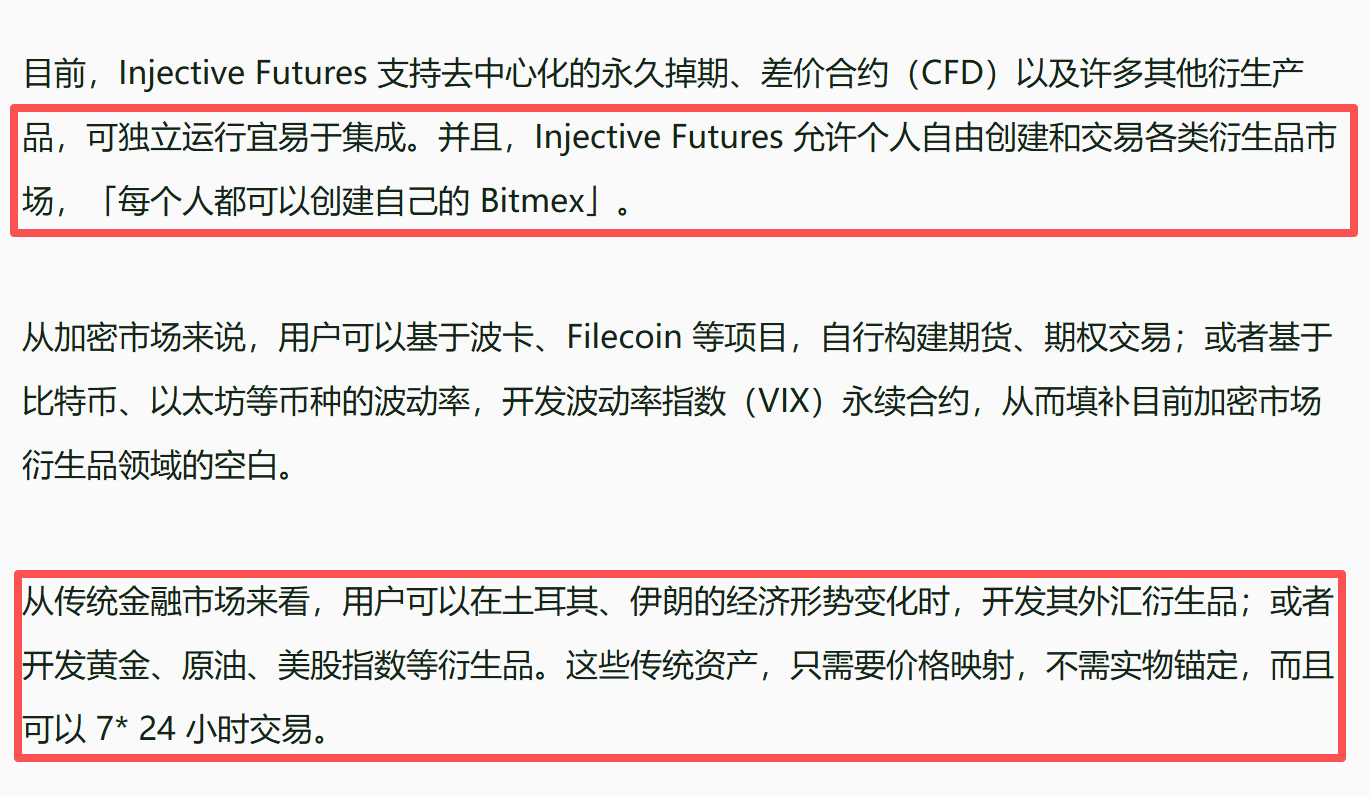
The issue was never the direction, always the Timing.
The Industry's Shining Star: Hyperliquid
In its early days, Hyperliquid also had a rough UX, mediocre liquidity, and was heavily criticized for regulatory risks. But it caught successive waves of change head-on, becoming the biggest beneficiary, leaving followers in the dust.
The first wave was the CEX-ification of On-chain Perps. Hyperliquid's initial standout feature wasn't being yet another Perp DEX, but making on-chain futures trading feel less like DeFi and more like a centralized exchange. Order books, low latency, APIs, rebates, ecosystem frontends, HYPE airdrop, no VC, community wealth effect—these elements combined propelled it from an on-chain protocol to a trading hub. This phase wasn't sexy, but crucial. The hardest part for any trading platform is that first bit of liquidity. People need to trade for market makers to come, and only then can it handle larger asset volumes.
The second wave was the trust shift after the 10.11 incident. The black-box risks of centralized exchanges were exposed again. Since then, many whales preferred to battle openly on-chain with everyone, rather than get silently liquidated in a dark forest system where they couldn't see their true opponents. "Decentralization" wasn't just a slogan; it became traders' practical need for "dying with clarity" during extreme volatility.
The third wave was volatility in macro assets like gold and crude oil. War and geopolitical conflicts pulled global markets back into macro narratives. Users started needing a venue for 24/7 trading of global assets. Traditional markets have opening and closing times, regional restrictions, account limitations. On-chain perpetual markets have none of that baggage.
The fourth wave, which needs little elaboration, was the explosion of US stock trading. When popular assets are placed in a 24/7, global, low-barrier perpetual market, the assets themselves bring traffic. The traffic attracts B-side market makers and ecosystem frontends, which in turn enhance liquidity, starting a snowball effect.
So understanding early doesn't guarantee big results. We all know: back then, there weren't enough on-chain users, wallet UX was immature, market-making infrastructure was lacking, and asset volatility lacked sufficient external catalysts. Building a big ship when there's no wind gets you nowhere—it just runs aground.
The Sinister Yet Captivating Perpetual Swap!
Finally, let's talk about crypto's greatest invention—the perpetual swap.
To trade spot US stocks on-chain, you'd face a whole complex set of issues: compliance, custody, underlying asset tokenization, trading hours, clearing, equity rights, dividends, corporate actions. Every step involves interacting with the old financial system; every step can become a bottleneck.
But with a US stock Perp, the platform only needs to build a contract pool around the price. Liquidity can be provided by ecosystem partners. Users trade price exposure, not direct ownership of the underlying equity.
It bypasses the heaviest parts and captures the part with the most trading demand.
This is, of course, also its sinister side. The Perp reduces an asset to a price symbol to bet on, compressing complex ownership relationships into long/short directions and leverage multiples. It doesn't care if you own the stock, or if you understand the company's value. It only cares if the price is volatile, if someone wants to go long, if someone wants to go short.
This is also its most vital, captivating aspect.
People don't necessarily want to own Nvidia, but they want to trade its volatility; they don't necessarily want to hold gold, but they want to bet on its direction; they don't necessarily need crude oil, but they might need the risk exposure from its price.
The Perp distills this need to its essence. It doesn't create new assets; it creates new casinos. It doesn't provide ownership; it provides risk exposure. Its goal isn't to reconstruct the financial world; it's to turn every asset into a "price" that can be traded 24/7.
So if we look back on crypto history in the future, the product that will likely remain is the Perp.
From a finance perspective, it's almost absurd. Futures have expiration dates because, historically, assets needed to return to the real world. Perpetual swaps remove expiration, turning a product with a finite lifespan into something eternally present. This is perhaps the ultimate revelation after the crypto space created worthless assets.
Traditional exchanges have opening and closing bells because markets need rest; perpetual swaps eliminate downtime, keeping the market always on. Traditional finance relies on brokers, clearinghouses, and regional regulatory systems; perpetual markets are inherently borderless.
The perpetual swap might be the most successful, and also the most dangerous, financial innovation in crypto history. It truly feels like a financial monster released by a demon. (Arthur Hayes: My bad?)
Countless people have been liquidated by it, countless fortunes evaporated. It amplifies humanity's greediest instincts. But simultaneously, it has also created unprecedented liquidity and price discovery efficiency.
Conclusion
Looking back, years have flown by. The most successful currency in crypto is the US Dollar; the most successful asset is Bitcoin; the most successful application is trading; and now, the most "promising new growth" comes from US stocks.
This is a failure for idealists, but more likely, it's the market finally completing its selection.
The story of how things change is cliché. Humanity's pursuit of wealth, appetite for risk, and fascination with leverage never change. Thus, today's crypto industry no longer obsesses over inventing new assets, but tries to turn existing assets into trading pairs that are always online, globally accessible, and permissionless.
The crypto scene is dead. Perpetual swaps are eternal.






