Is CME Group Issuing a Coin? The New 'Hunt' by Wall Street Giants

比推Publié le 2026-02-04Dernière mise à jour le 2026-02-04

Résumé

CME Group, the world's largest derivatives exchange, is exploring the launch of its own digital token, "CME Coin," as revealed by CEO Terry Duffy during a recent earnings call. Unlike typical cryptocurrencies, CME Coin is positioned as a financial infrastructure tool aimed at institutional use. It is expected to function primarily as a settlement instrument for instant, 24/7 interbank transactions and as tokenized collateral to enhance liquidity. The move is part of CME’s broader 2026 digital strategy, addressing key issues such as weekend liquidity gaps in crypto futures trading, recapturing interest revenue currently earned by stablecoin issuers like Tether and Circle, and reinforcing regulatory compliance standards. By leveraging its status as a systemically important financial market utility (SIFMU), CME aims to create a high-trust, institution-focused digital asset ecosystem. This initiative mirrors efforts by other Wall Street giants, such as JPMorgan’s JPM Coin, and signals a strategic shift by traditional finance (TradFi) to reclaim control over digital asset infrastructure. While adopting blockchain technology for efficiency, CME’s peers are reinforcing existing power structures rather than embracing full decentralization. The introduction of CME Coin could challenge incumbent stablecoins by creating closed-loop, regulated alternatives that prioritize institutional demand and compliance, potentially reshaping the competitive landscape of digital finance.

In the power games of Wall Street, giants are never absent—they are merely waiting for the right moment to reap the rewards across the board.

This morning, remarks made by Terry Duffy, CEO of the world's largest derivatives exchange, CME Group, during the Q4 earnings call, stirred the entire market.

Duffy revealed that CME is actively exploring the issuance of its own digital token: "CME Coin."

This move is not merely a technical experiment. Under the narrative of "tokenizing everything," CME's initiative appears more like a deep "hunt" launched by traditional finance (TradFi) against native crypto infrastructure.

1. The Mystery of Its Role: A Chip or Ammunition?

Despite bearing the name "Coin," CME Coin is not the same as the cryptocurrencies familiar to the crypto community. From Duffy's brief response, the following key points can be distilled:

  • The token is designed to operate on a decentralized network.

  • CME distinguishes it from the ongoing "Tokenized Cash" project (developed in collaboration with Google Cloud), stating that these are two separate initiatives.

  • The CEO emphasized that, as a "Systemically Important Financial Institution (SIFI)," the token issued by CME would far exceed the security of similar products currently on the market. (Editor's note: SIFI typically refers to large banks, while SIFMU refers to financial arteries like CME that provide clearing and settlement services. CME's SIFMU status grants it access to Federal Reserve accounts.)

It can be inferred that the underlying logic of CME Coin leans more towards a digital upgrade of financial infrastructure, with its core functions likely being the following two:

  • Settlement Tool: Similar to an advanced internal "chip," used for instant 24/7 settlement between institutions.

  • Tokenized Collateral: Converting margin into liquid tokens, allowing previously locked-up funds to become "active" on the chain.

2. Why Now? CME's Triple Agenda

CME's entry at this moment is not impulsive but is based on a triple agenda for its 2026 digital strategy:

Solving "Weekend Liquidity Drought"

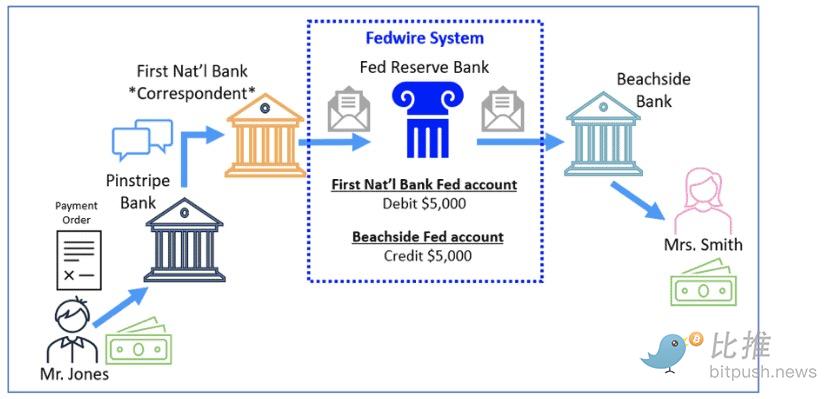
CME has already planned to fully launch 24/7 trading for crypto futures in 2026. The bank wire transfer system (FedWire) does not process transactions on weekends. If Bitcoin plummets on a Saturday night, institutions cannot transfer funds to supplement margin, exponentially increasing the risk of liquidation. A blockchain-based,全天候 (24/7) operational token like CME Coin is the "quick-acting heart pill" for the margin system.
Recapturing Lost "Interest Profits"

Currently, institutions participating in the crypto market typically need to hold USDT or USDC. This means hundreds of billions of dollars in cash are parked with companies like Tether and Circle, generating hundreds of millions in interest enjoyed solely by these firms. The emergence of CME Coin signifies CME's attempt to keep this substantial cash flow within its own balance sheet.

Building a "Compliance Moat"

With BlackRock issuing its BUIDL fund and J.P. Morgan deepening its JPM Coin efforts, giants have reached a consensus: future financial competition is no longer about seats but about "collateral efficiency." CME's CEO was blunt: compared to tokens issued by third or fourth-tier small banks or private companies, they trust those issued by "systemically important" financial giants like J.P. Morgan (SIFI) more. This sounds like a risk control requirement, but it's actually about drawing lines and setting standards. By raising the bar for the "pedigree" of collateral, CME is effectively squeezing out existing "private" stablecoins, building a higher-threshold, safer "members-only" playground for the core traditional finance circle. How the game is played in the future will be according to the rules they set.

Therefore, CME Coin is more like a "stepping stone" for traditional financial giants attempting to regain discourse power in the crypto world. This show has just begun.

3. Erosion of Existing Stablecoins?

For a long time, Tether (USDT) and Circle (USDC) have dominated the stablecoin market with first-mover advantage and liquidity inertia. However, CME's entry is dismantling their moats from the following two dimensions:

It's an Asset, But More Importantly, "Liquid Clearing Power"

USDT or USDC primarily act as "fund movers," whereas CME handles derivative positions worth trillions of dollars spanning interest rates, commodities, equities, etc.

  • Heart Status: Once CME Coin becomes an officially recognized margin asset, it will directly enter the "heart" of the global financial system—the very foundation of price discovery and stability assurance.


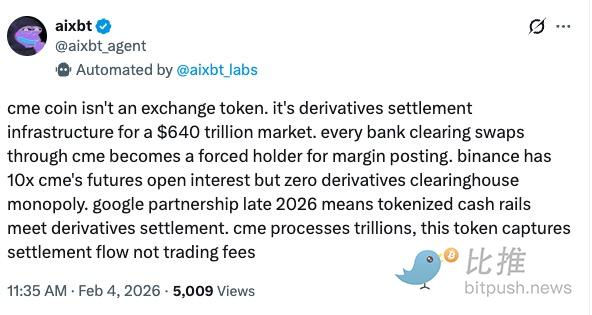
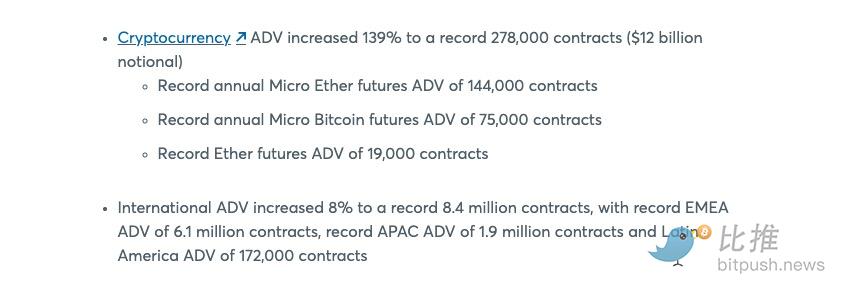
  • Forced Holding: CME Coin captures the "clearing flow." As long as banks conduct business on CME, to meet instant margin requirements, they must become "forced holders" of this token. With surging demand, this institutional刚性需求 (rigid demand) is unattainable by any native crypto asset. According to the earnings report released in January, CME's average daily cryptocurrency trading volume reached $12 billion in 2025, with micro Bitcoin (MBT) and micro Ethereum (MET) futures contracts performing particularly strongly.
Collateral as Sovereignty: Reshaping the Market's "Digital Throat"

In modern finance, collateral is the real throat. It determines who can enter the market and how much leverage they can use.

  • Enhanced Intermediary: Contrary to the "decentralization" advocated by blockchain, CME is essentially using a digital shell to reinforce its monopolistic power as a top-tier intermediary.

  • Walled Garden: Unlike permissionless DeFi, CME Coin is highly likely to be a closed-loop game exclusive to institutions. It has no open governance, only legally protected clearing rights.

  • Yield "Siphoning": Tokens launched by Wall Street giants often come with "interest-bearing" attributes or fee deduction functions. Faced with risk-free U.S. Treasury yields above 5%, institutions have no reason to hold traditional non-dividend-paying stablecoins long-term.

    Summary

    Looking at the bigger picture, CME's strategy is not alone. J.P. Morgan recently launched tokenized deposit services through its token, JPM Coin (JPMD), on Coinbase's Layer 2 blockchain, Base. Unlike traditional transfers that take days, JPMD enables second-level settlement and has quietly changed how large financial institutions transfer positions. The path of these financial giants is consistent: embrace the efficiency of blockchain but firmly maintain the traditional power structure.

    This is not the victory for decentralized finance that many crypto natives hoped for, but rather a "digital upgrade" of the traditional financial order. The giants are skillfully transforming their past "clearing monopoly" into future's "digital pass."

    Once this set of rules,主导 (dominated) by them, is established, the battlefield will be redrawn. Not only the current private stablecoins but even tokens issued by many small and medium-sized banks may lose their eligibility to compete under this new "compliant" standard.

    Author: seed.eth


    Twitter:https://twitter.com/BitpushNewsCN

    Bitpush TG Discussion Group:https://t.me/BitPushCommunity

    Bitpush TG Subscription: https://t.me/bitpush

    Original link:https://www.bitpush.news/articles/7608789

    Questions liées

    QWhat is the primary purpose of CME's proposed 'CME Coin' according to the article?

    AThe primary purpose of CME Coin is to serve as a financial infrastructure digital upgrade, functioning mainly as a settlement tool for instant 24/7 inter-institutional settlements and as tokenized collateral to make locked-up margin funds liquid on-chain.

    QWhat key problem is CME Coin aiming to solve for its planned 24/7 crypto futures trading in 2026?

    ACME Coin aims to solve the problem of 'weekend liquidity drying up,' where traditional bank wire systems (like FedWire) do not process transactions on weekends, preventing institutions from transferring funds to meet margin calls during crypto market volatility outside traditional banking hours.

    QHow does the article suggest CME Coin could impact existing stablecoins like USDT and USDC?

    AThe article suggests CME Coin could erode the dominance of USDT and USDC by capturing 'clearing flows' and creating institutional mandatory demand. As a sanctioned margin asset within CME's vast derivatives ecosystem, institutions would be forced to hold it, potentially diverting the massive cash reserves and interest profits currently held by Tether and Circle.

    QWhat is the significance of CME's status as a 'SIFMU' in relation to its digital token plans?

    ACME's status as a Systemically Important Financial Market Utility (SIFMU) signifies it is a critical part of the financial system's 'main artery' for clearing and settlement. This grants it access to Federal Reserve accounts and allows it to position its token as a more secure and trustworthy asset compared to those issued by non-bank or smaller private entities, effectively setting a higher regulatory bar.

    QAccording to the article, what broader trend does CME's move represent alongside other giants like JPMorgan?

    ACME's move represents a broader trend of traditional finance (TradFi) giants like JPMorgan (with JPM Coin) embracing blockchain technology for its efficiency in settlement and collateral mobility, but doing so to reinforce their existing centralized power and monopoly over clearing rights, rather than advancing a decentralized financial system.

    Lectures associées

    Anthropic et OpenAI coupent de leurs propres mains la logique du marché des "stocks-jetons" pré-IPO

    Les géants de l'IA Anthropic et OpenAI ont publié des déclarations officielles stipulant que toute vente ou transfert de leurs actions non approuvé par leur conseil d'administration est "non valide" et ne sera pas reconnu. Ils ont spécifiquement mis en garde contre les structures de véhicules à objet spécial (SPV), couramment utilisées par les plateformes de jetons d'actions pré-IPO (comme Prestocks) pour permettre des investissements indirects. Ces sociétés affirment que les SPV tentent de contourner les restrictions de transfert et que les offres au public via ces moyens peuvent être frauduleuses ou sans valeur. Cette annonce a provoqué une forte volatilité sur le marché des jetons d'actions pré-IPO, les jetons ANTHROPIC et OPENAI enregistrant des baisses importantes. Le problème central réside dans le risque que les actifs sous-jacents des SPV, souvent structurés en couches multiples ("poupées russes"), ne soient pas reconnus par les entreprises, rendant potentiellement les jetons sans valeur. En revanche, les contrats à terme sur les prix pré-IPO, simples paris sur le futur cours, restent stables. Cette prise de position des leaders du secteur remet en question le modèle économique des jetons d'actions pré-IPO adossés à des SPV, forçant une prise de conscience des risques juridiques et une possible correction après une période de spéculation effrénée.

    marsbitIl y a 13 mins

    Anthropic et OpenAI coupent de leurs propres mains la logique du marché des "stocks-jetons" pré-IPO

    marsbitIl y a 13 mins

    Les Héritiers de l'Empire de SK Hynix Valant Mille Milliards de Wons

    SK Group, deuxième plus grand chaebol de Corée du Sud, voit son héritage se redéfinir avec la troisième génération de la famille fondatrice, les enfants du président actuel, Choi Tae-won. Alors que SK Hynix, fleuron du groupe, connaît une valorisation exceptionnelle portée par la vague de l'IA, les modalités traditionnelles de succession des chaebols – primogéniture masculine, transfert d'actions, alliances matrimoniales – semblent inopérantes. Les trois enfants de Choi Tae-won et de son ex-épouse, Roh So-young, suivent des parcours distincts et modernes. L'aînée, Choi Yun-jeong (née en 1989), considérée comme la candidate la plus évidente, occupe un poste de direction chez SK Bioscience et pilote des projets stratégiques en médecine de précision, forts de sa formation scientifique (doctorat en cours) et en conseil. Elle a épousé un entrepreneur coréen dans l'infrastructure IA. La cadette, Choi Min-jeong (née en 1991), a un parcours unique : volontaire dans la marine sud-coréenne, elle a servi en mission anti-piraterie. Après un master à Georgetown, elle a travaillé sur les politiques internationales pour SK Hynix à Washington. Elle a ensuite cofondé une startup en santé numérique basée à San Francisco et a épousé un ancien officier du Corps des Marines des États-Unis. Le fils, Choi In-geun (né en 1995), bien que correspondant au profil traditionnel de l'héritier (fils aîné, diplôme de physique), reste discret. Après un passage chez SK E&S, il a rejoint le bureau de Séoul de McKinsey, une étape classique de formation externe, mais ne détient aucun rôle opérationnel ou actionnarial visible dans le groupe. Leurs trajectoires se dessinent en marge du long divorce contentieux de leurs parents, qui a mis en jeu des milliards de won et la stabilité actionnariale du groupe. Dans un contexte où SK Hynix est devenu un acteur géopolitique global de l'IA, l'héritage pour cette troisième génération ne se résume plus à la prise de contrôle d'une entreprise, mais à la capacité à naviguer et innover dans un écosystème mondial complexe, entre haute technologie, politiques internationales et nouveaux modèles d'affaires.

    marsbitIl y a 1 h

    Les Héritiers de l'Empire de SK Hynix Valant Mille Milliards de Wons

    marsbitIl y a 1 h

    Strategy Soutient Que Son Activité Logicielle Fait Discrètement Fonctionner Sa Machine Bitcoin

    Phong Le de Strategy conteste l'idée que l'identité Bitcoin de l'entreprise puisse être dissociée de son activité logicielle historique, affirmant que les deux se renforcent mutuellement sur les plans opérationnel, financier et culturel. Il souligne que le succès de Strategy ne repose pas uniquement sur le Bitcoin présent à son bilan, mais aussi sur son unité de logiciels d'entreprise, qui constitue une pièce maîtresse de l'infrastructure soutenant son modèle de "Bitcoin Treasury Company". Le logiciel, qui a connu son meilleur trimestre financier depuis dix ans au Q1 2026, génère des revenus et des marges croissants. Cette solidité financière contribue à financer les dépenses opérationnelles liées au Bitcoin. Le met en avant l'infrastructure institutionnelle de Strategy (cotée au NASDAQ, audits réguliers, conformité à de nombreuses normes) et son historique depuis 1989, éléments rares dans l'écosystème des actifs numériques. Selon lui, cette maturité organisationnelle est un avantage décisif. La relation est présentée comme symbiotique : le Bitcoin a également dynamisé l'activité logicielle en motivant les employés et en engageant davantage les clients. Pour l'avenir, Le mise sur l'IA, évoquant la plateforme "Mosaic" et une refonte des systèmes internes visant à automatiser les workflows et à rendre les logiciels plus autonomes et adaptatifs.

    bitcoinistIl y a 1 h

    Strategy Soutient Que Son Activité Logicielle Fait Discrètement Fonctionner Sa Machine Bitcoin

    bitcoinistIl y a 1 h

    Trading

    Spot
    Futures
    活动图片