Google and Microsoft Battle in the AI PC Arena: Is Local Computing Power an IQ Tax? Is the Cloud PC the Ultimate Form?

marsbitPublié le 2026-05-15Dernière mise à jour le 2026-05-15

Résumé

Google and Microsoft are competing in the AI PC arena, with the article questioning whether powerful local AI hardware is necessary. It argues that current "AI PCs" often rely heavily on cloud AI for complex tasks, making premium local AI silicon potentially less critical. Google recently unveiled "Android PCs," a new high-end productivity-focused product line. Unlike traditional AI PCs that add AI features to existing Windows systems, Android PCs position cloud-based AI, specifically Google's Gemini, as their core. The system deeply integrates AI, allowing context-aware assistance directly where the user is working, regardless of the underlying device hardware (x86 or ARM). The piece suggests that cloud computing might be the future for AI PCs. Unlike cloud gaming, which demands ultra-low latency, AI tasks are more tolerant of network delays, as users already expect some processing time. This makes the cloud-computing model well-suited for AI. Examples like Alibaba's "Wuying AI Cloud Computer" show how cloud services can offer robust AI capabilities without requiring powerful local hardware. This shift challenges the traditional PC model. With rising memory costs and limitations in consumer-grade local AI performance, the "light local, heavy cloud" approach offers an alternative. It could lead to devices that primarily need a good display and network connection, with heavy AI lifting done remotely. However, the transition is just beginning. Traditional players like Micro...

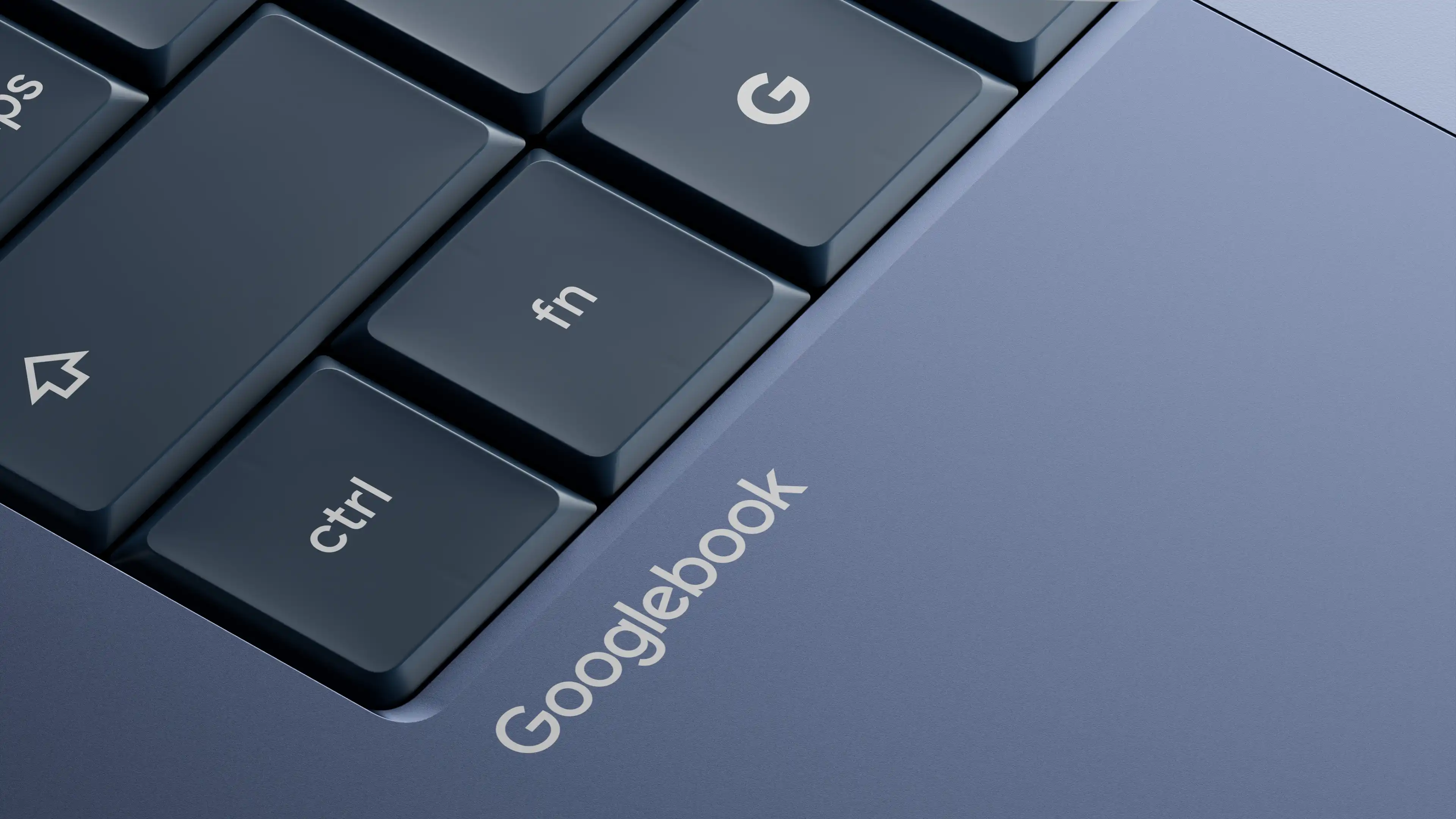
Just before Google I/O, Google held an Android 17 pre-event at 1 AM on May 13. Unexpectedly, Google unveiled an entirely new product series at this event — Android PCs. Different from Chromebooks, Android PCs are positioned higher-end, with productivity as their core selling point. Google is no longer content with just the entry-level market; it aims to capture more territory in the PC space beyond just netbooks.

The concept of AI PCs has been very hot in recent years. Countless PC chip and terminal manufacturers emphasize the AI features of their products, tirelessly touting the new changes AI brings to PC usage scenarios. The sudden emergence of Android PCs, however, shows the world a new AI PC solution: no longer reliant on traditional desktop systems, cloud AI is not an accessory but the core, from which all related functions derive.
(Image Source: Google)

If Android PCs succeed, cloud PCs might very well become the version answer for the AI era.

Current AI PCs Are Still Not "AI" Enough

Currently, AI PCs in the industry are more like putting an AI shell over traditional PCs. Regarding chips, both Intel and AMD have added dedicated AI computing units to their PC processors to enhance on-device AI capabilities. For systems and ecosystems, terminal manufacturers are building their own AI applications into the systems, including their own computer managers, agents, etc., and integrating external large models.

However, these AI PCs are essentially still traditional Windows PCs, with AI merely serving as an add-on feature. Moreover, the vast majority of AI scenarios implemented on AI PCs rely on cloud AI, including document summarization/editing, image generation, and various "lobster" tools.

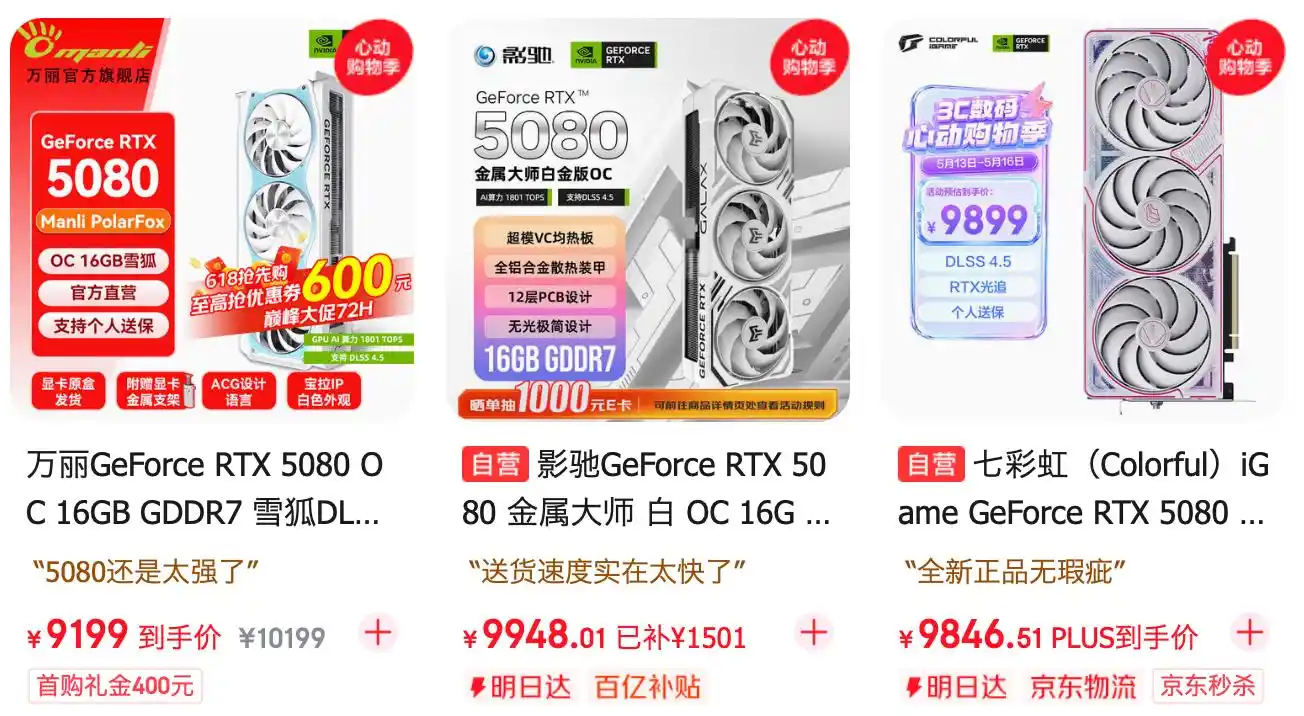
Although chip vendors keep promoting their chips' local AI capabilities and emphasize scenarios deploying open-source models using CPU, GPU, and NPU heterogeneous computing, in reality, consumer-grade PC chips can only provide limited AI computing power. After all, not every consumer has a 5080 graphics card or memory starting at 32GB.
(Image Source: JD.com)

In this situation, an ordinary consumer-grade PC can hardly run large-parameter local models and cannot truly handle slightly more complex AI tasks.

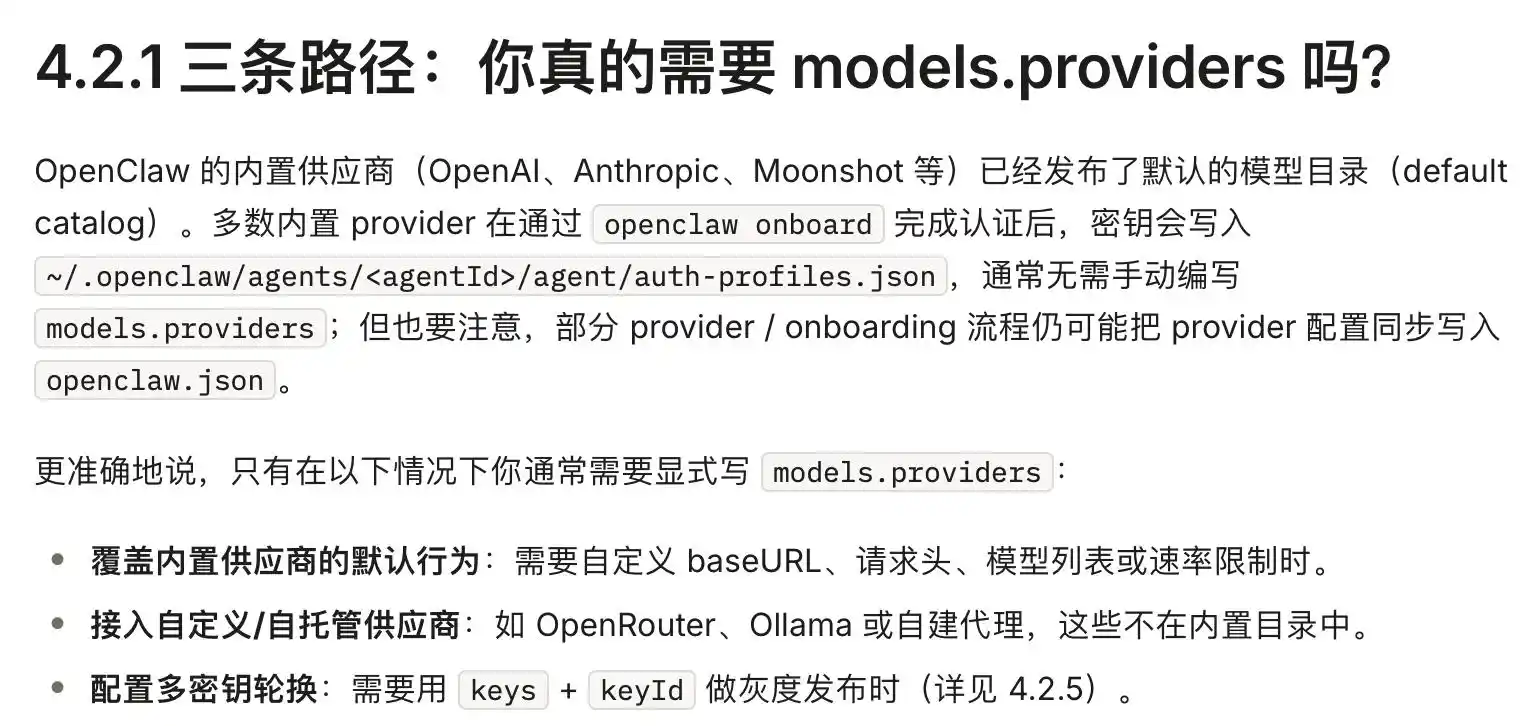
Recently, OpenClaw went viral, directly causing the Mac mini to sell out and prices to rise. But the vast majority of people use cloud models to "raise lobsters," with various lobster deployment tutorials mentioning which AI's tokens are cheap and how to reduce token consumption.
(Image Source: Gitbook)

This leads to a new question: If AI PCs still rely on cloud AI to implement AI scenarios, then what is the value of the AI PC hardware itself?

After all, theoretically, a traditional PC without the AI chip premium, as long as it can connect to the internet and access cloud AI, can also transform into an AI PC.

We could even be more radical: drastically reduce the PC's hardware configuration. As long as it has a screen, keyboard, and internet capability, it can become a cloud AI computer. The rapid development and popularization of AI seem to give the not-so-new species of "cloud PC" a chance to explode.

Cloud PC + AI: The Future of AI PCs?

For us, cloud PCs are not a strange concept. The cloud gaming craze a few years back essentially operated in the form of cloud PCs. At that time, the comprehensive rollout of 5G, with its low latency and high throughput, was seen as a panacea for popularizing cloud PCs.

But reality was harsh; the concept of cloud gaming never really took off. Google's cloud gaming service Stadia, launched in 2019, was shut down in less than three years. According to overseas media reviews and user feedback, for Stadia to achieve a smooth experience close to local gaming platforms, it required extremely high network quality, such as using local high-speed broadband via wired connection. Even using WiFi significantly degraded the experience, let alone using 5G, a more volatile mobile network.
(Image Source: Google)

However, cloud gaming is highly sensitive to network latency, while online AI is much more tolerant. As ordinary users, we've become accustomed to AI taking time to "think" when answering questions or handling tasks; we don't demand the immediacy of results like in games.

Ultimately, the bottleneck for AI response speed is not bandwidth but computing power. Even if you install a local large model, it still requires sufficient inference time to generate answers.

Therefore, we believe that the cloud PC form is naturally suited for AI PCs. And Google's Android PCs are creating AI PCs in a mode distinct from traditional PCs. On Android PCs, AI is not an accessory but a core function. Google stated that currently, most AI tools are standalone apps, requiring users to copy data into the AI interface to use AI functions. Android PCs integrate AI throughout the system. Most visually, the AI appears wherever the mouse cursor moves, capturing and directly processing/operating text, images, code, and other information near the cursor.
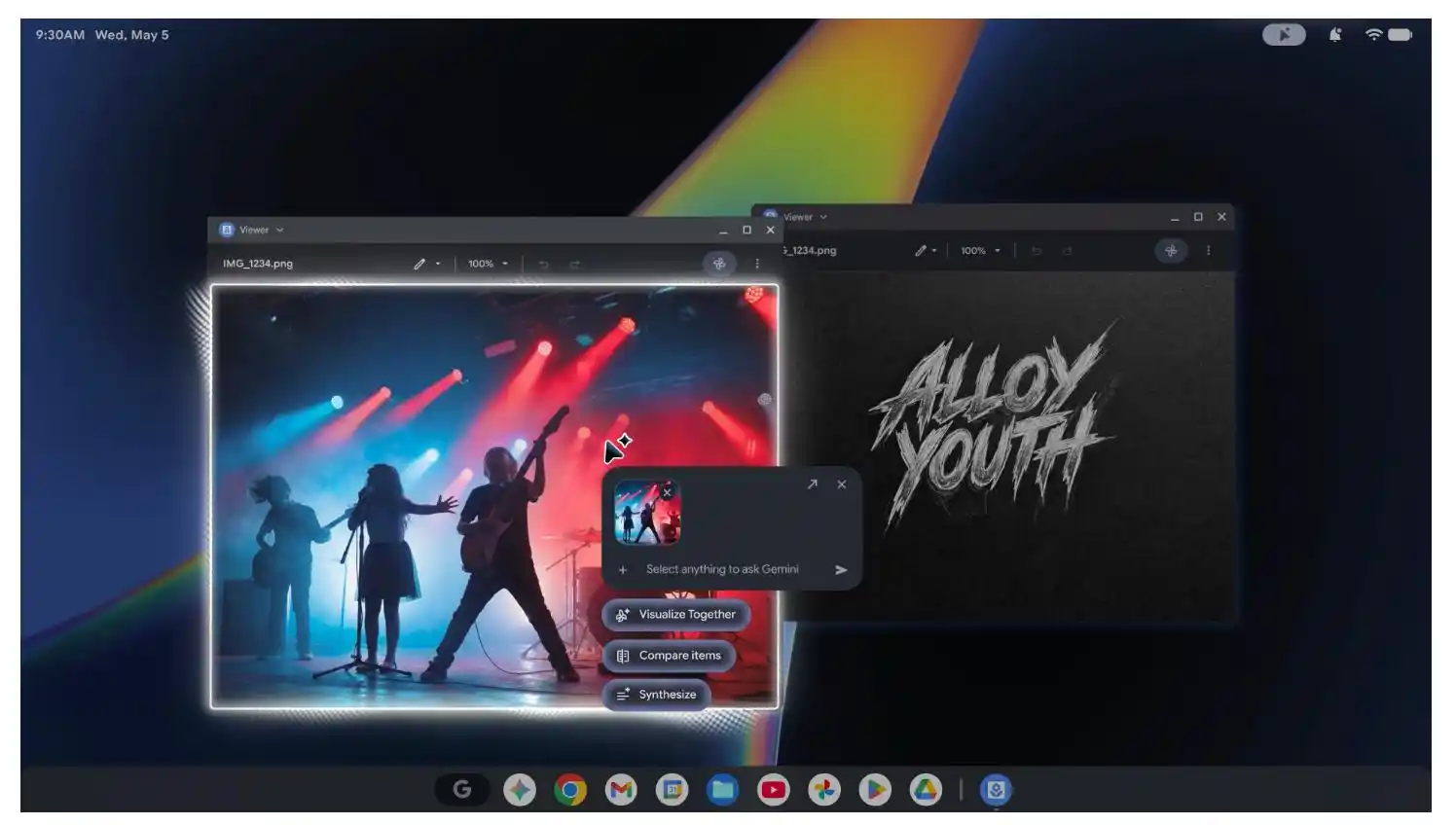
(Image Source: Google)

Furthermore, the implementation plan for Android PCs is very diverse. For Android PCs, Google mainly provides product concepts and implementation forms; the hardware itself still needs to be built by partner manufacturers. According to Google's announced partner brands, they are mainly divided into two categories: chips and terminals. The former includes Intel, Qualcomm, and MediaTek; the latter includes HP, Lenovo, Acer, Asus, and Dell.

Looking at the chip brands, it's clear Google doesn't care what architecture the Android PC uses—X86 is fine, ARM is fine. After all, currently, the implementation of AI scenarios on Android PCs still heavily relies on the cloud Gemini, making local hardware computing power relatively less important.

Additionally, internet and cloud service providers have been offering cloud PC services and are evolving toward AI PCs.

Take Alibaba as an example. In 2024, it launched the Wuying AI Cloud PC, featuring not only powerful cloud hardware configurations but also strong support for large models. By 2026, Wuying AI Cloud PC was further upgraded, providing comprehensive support for raising lobsters with OpenClaw, enabling one-click deployment, direct access to Qianwen, and integration with communication tools like DingTalk, Feishu, and WeChat.
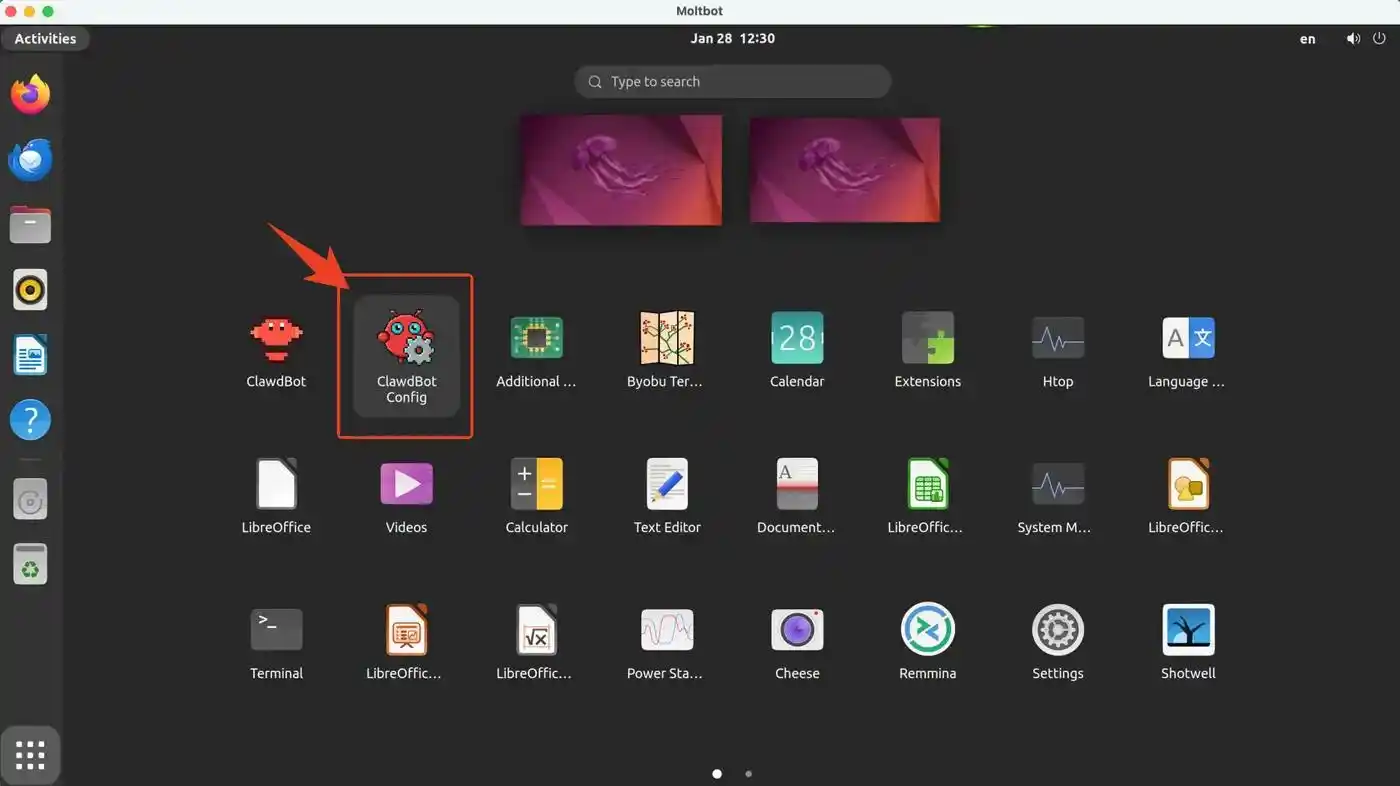
(Image Source: Alibaba Cloud)

Another notable point: AI giants are engaged in a frenzied arms race in AI infrastructure construction, becoming the "culprit" behind storage price hikes. Moreover, there's no sign of storage prices dropping in the short term. This will further curb upgrades to consumer-grade PC configurations. If the traditional PC iteration model is still used to create AI PCs, progress will be difficult. Rather than piling up local AI configurations with high costs and obvious computing power ceilings, it might be better to simply hand over AI tasks directly to the cloud.

The Times Are Changing. How Should PC Manufacturers Respond?

The AI-ification of PCs is an irreversible mega-trend. Players across the PC industry chain are racking their brains on how to board the AI PC ship. Their roles differ, hence their approaches to advancing AI PCs also vary.

First are chip manufacturers. They continue to emphasize the AI computing power of consumer-grade chips and build AI scenarios around it. More importantly, Intel and AMD are constantly making efforts in the server market, continuously vying for orders from AI giants.

After all, as AI companies build AI infrastructure, they naturally need to purchase large quantities of AI chips. Apart from Nvidia, the main players able to fulfill these orders are traditional CPU brands like Intel and AMD.

AMD's latest financial report shows that its "Data Center" business segment contributed $5.8 billion in revenue in Q1, accounting for over half. Moreover, neither Intel nor AMD can meet the order volume with their own capacity; AMD is already seeking assistance from other wafer foundries like Samsung besides TSMC.
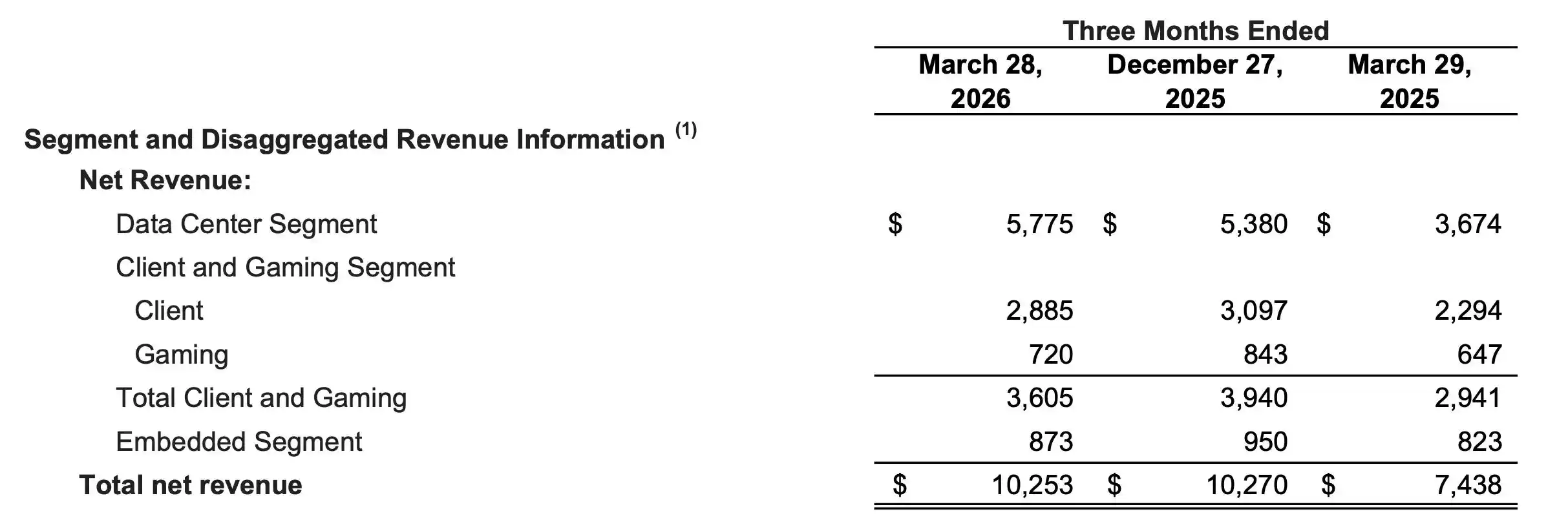
(Image Source: AMD)

Next are terminal manufacturers, including both traditional PC brands like Lenovo, Asus, and HP, as well as emerging brands like Huawei, Xiaomi, and Honor. Currently, their approach to building AI PCs mainly remains based on the traditional architecture of Intel/AMD chips + Windows systems, enhancing PC AI capabilities by embedding software forms like computer managers and agents.

Meanwhile, smartphone brands have an additional advantage in the AI PC field: they can connect PC products with various other form factors within their own hardware ecosystems, such as phones, car infotainment systems, wearables, and smart home devices, enabling seamless AI capability flow across devices. Taking Xiaomi as an example, Super XiaoAI, a tool integrating agent, AI assistant, voice assistant, and other capabilities, can appear on various devices within the Xiaomi ecosystem.
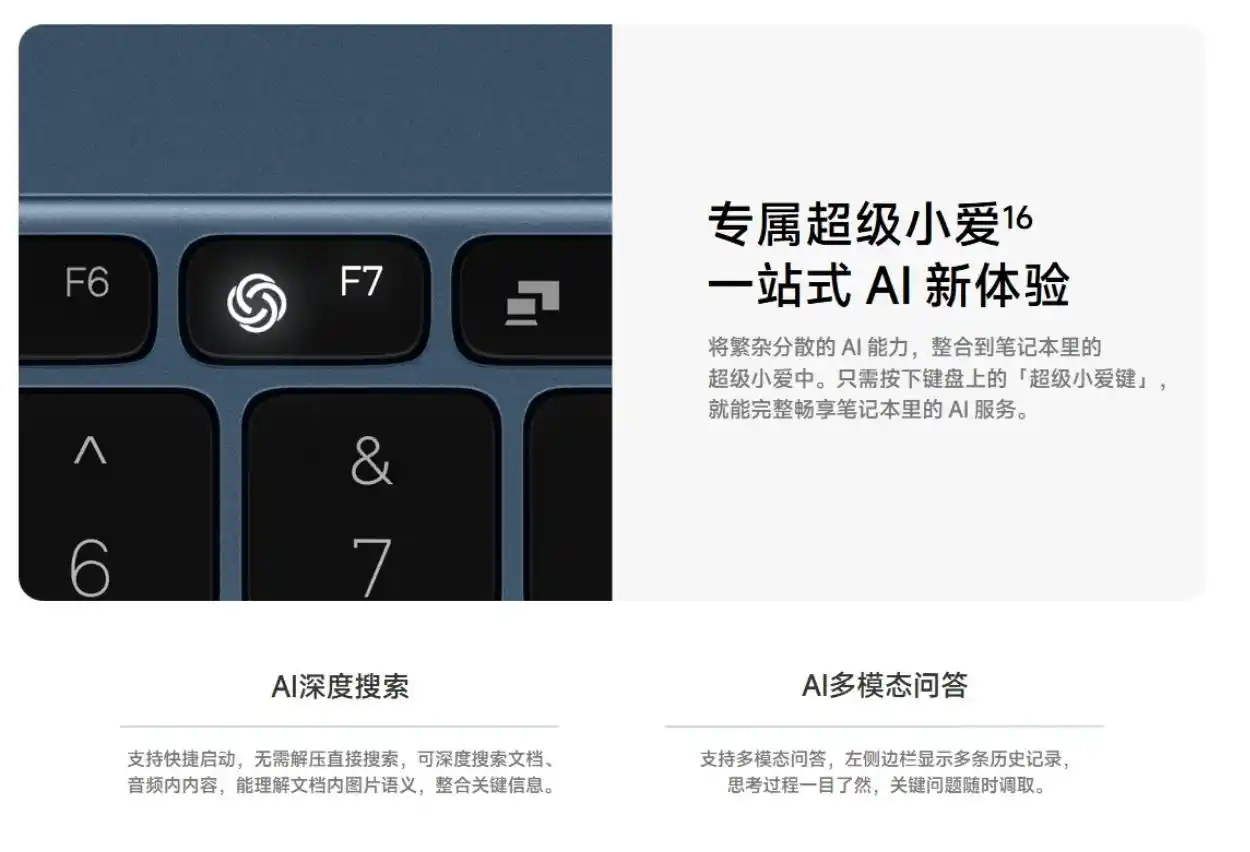
(Image Source: Xiaomi)

Additionally, Apple is a special case in the AI PC field. Apple Intelligence was announced early, but its rollout has been slow, making Mac AI-ification awkward. Apple's advantage in the PC field remains its unparalleled hardware-software integration capability and absolute control over M-series chips and the macOS system.

Recently, Apple increased MacBook Neo production from 5 million to 10 million units and is willing to maintain high-cost production of the A18 Pro chip. Due to this laptop's success, in Q1 online notebook market data released by Luotu, Apple has become the PC brand with the second-largest market share in China, second only to Lenovo.
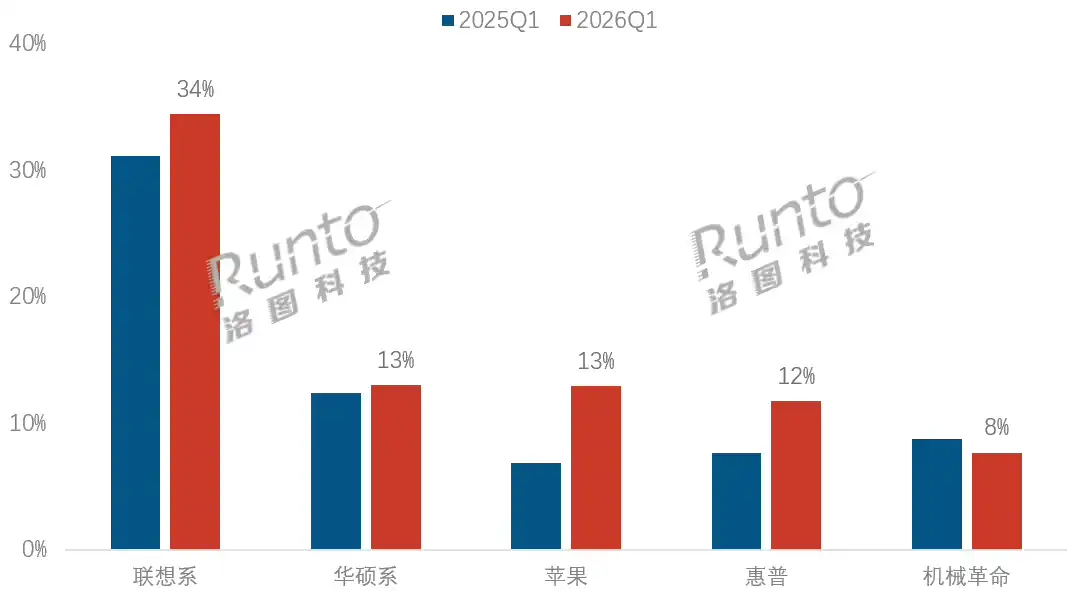
(Image Source: Luotu)

Against the backdrop of soaring storage prices, the low-cost MacBook Neo shows surprising appeal. Frankly, the MacBook Neo wasn't initially viewed favorably; it seemed more like a product to consume A18 Pro inventory. This reflects Apple's ability to make successful budget PCs. Once it has a solid user base, MacBooks powered by Apple Intelligence have the potential to be latecomers in the AI PC era.

Finally, Microsoft, as the dominant player in PC systems, cannot be ignored. Microsoft's actions regarding AI PCs mainly focus on three areas: defining AI PC hardware standards, system reconstruction, and hardware architecture diversification.

Microsoft requires AI PCs to have over 40 TOPS of computing power and at least 16GB of memory. It introduced Windows Copilot Runtime into the Windows底层 (underlying layer), integrating multiple small models. Simultaneously, Windows provides AI features like live captions and Recall.
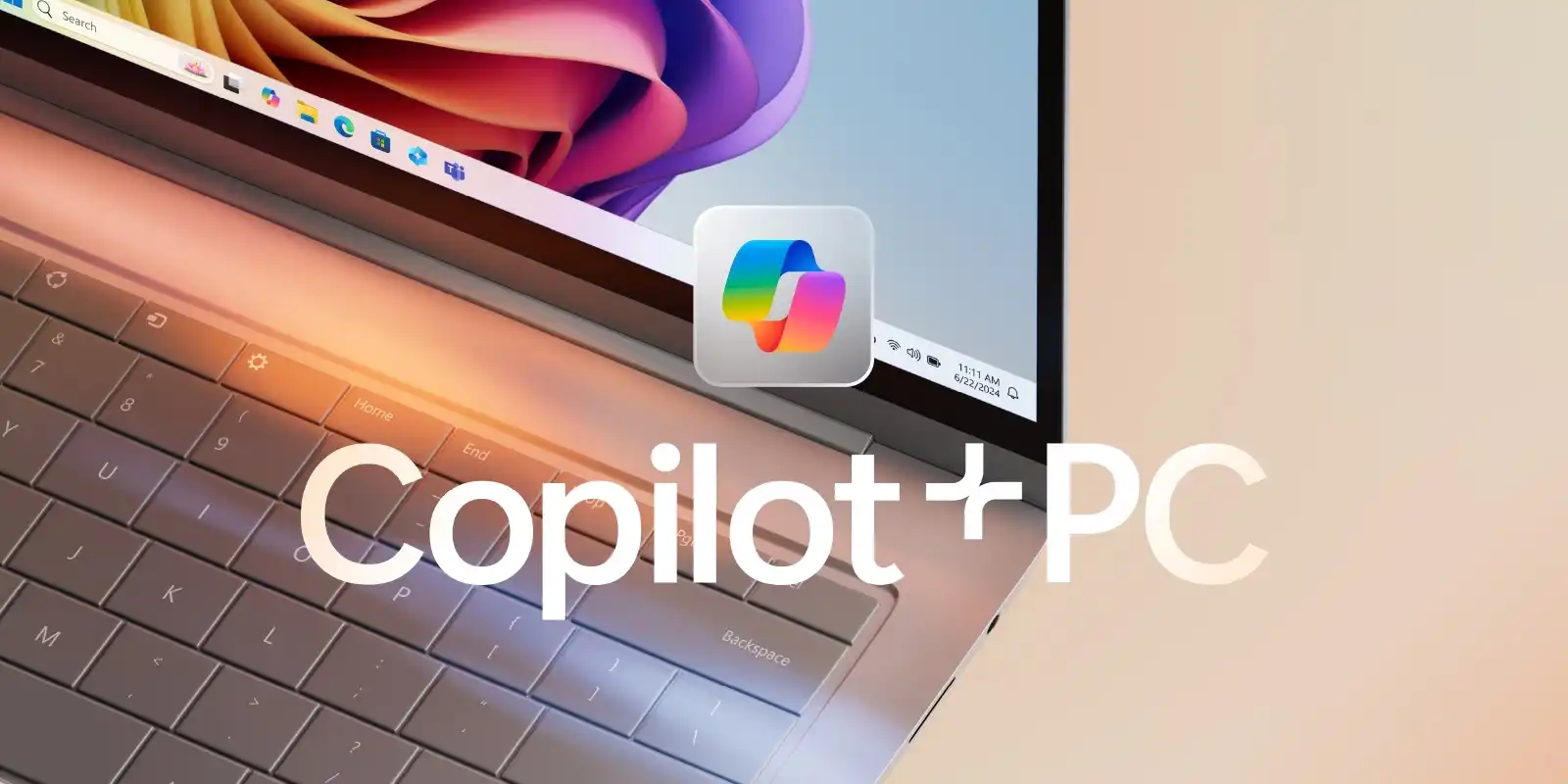
(Image Source: Microsoft)

A crucial point among these is that Copilot utilizes GPT's large model technology and Bing's internet connectivity capability and is deeply integrated into the Windows system, Edge browser, and Office 365, fully leveraging its ecosystem advantage. And this still primarily relies on cloud AI capabilities.

In Conclusion

The emergence of Android PCs challenges the long-solidified traditional PC form. It represents another product philosophy for PC development in the AI era: light on local hardware, heavy on the cloud.

Today, with storage costs remaining high and local consumer-grade computing power hitting bottlenecks, this solution that breaks hardware barriers and hands over core productivity directly to cloud large models is undoubtedly more imaginative.

Of course, this PC form revolution sparked by AI has just begun. Microsoft and traditional PC manufacturers won't just stand by. They still emphasize the importance of on-device computing power but have fully embraced cloud AI. Apple will also continue to grab market share with its integrated hardware-software ecosystem advantage and market penetration strategy. The upcoming PC market won't be a simple battle of hardware specs but a comprehensive competition involving cloud leverage, AI reconstruction at the system底层 (underlying layer), and cross-device ecosystems.

Whether Android PCs become the final version answer still needs to withstand tests like network stability, data privacy, and user habit migration. But one thing is certain: AI has fundamentally reshaped the definition of a PC.

The PC of the future might truly no longer need an expensive graphics card and large memory capacity. Just a screen and a network connection to the cloud could unleash productivity. A whole new era of AI cloud PCs is approaching us.

This article is from "Lei Technology".

Questions liées

QWhat is the core argument of the article regarding the future of AI PC hardware?

AThe article argues that 'AI Cloud PC' is the ultimate future form of AI PCs, where reliance on expensive, high-end local hardware (like powerful GPUs and large memory) is deemphasized. Instead, the core AI processing and productivity tasks are handled by powerful cloud-based AI models, with the local device primarily needing a screen, basic input, and network connectivity.

QHow does Google's new 'Android Computer' product concept differ from current mainstream 'AI PCs' according to the text?

AGoogle's 'Android Computer' differs by making cloud AI its core, not an add-on. Unlike current AI PCs which are essentially traditional Windows PCs with AI features layered on top, the Android Computer integrates AI deeply into the system. For example, AI appears contextually based on the mouse pointer location, processing nearby text or images directly, and it relies heavily on the cloud-based Gemini model rather than local hardware.

QWhat key problem does the article identify with current consumer-grade 'AI PCs' that rely on local AI processing?

AThe article states that consumer-grade PC chips offer very limited AI computing power. Most users do not have high-end hardware (like powerful GPUs and 32GB+ RAM) to run large-parameter AI models locally. Therefore, these PCs cannot handle complex AI tasks locally, making their specialized, often premium-priced, local AI hardware less valuable when most AI tasks are still performed via the cloud.

QWhy does the author believe that a 'cloud computer' model is more suitable for AI tasks than for cloud gaming?

ACloud gaming failed partly due to its extreme sensitivity to network latency and stability. AI tasks, however, have much higher tolerance for latency. Users already expect AI models to take time to 'think' and generate responses, whether local or cloud-based. The bottleneck for AI is computational power, not network speed to the same degree as real-time gaming, making the cloud computer model a more natural fit for AI workloads.

QWhat are the three main areas of action Microsoft is taking in the AI PC space, as mentioned in the article?

AMicrosoft's actions in the AI PC space are: 1. Defining AI PC hardware standards (e.g., requiring 40+ TOPS of AI compute and 16GB+ RAM). 2. System reconstruction by integrating AI deeply into Windows (e.g., Windows Copilot Runtime with embedded small models and features like Recall). 3. Promoting hardware architecture diversity and leveraging its ecosystem by deeply integrating its cloud-powered Copilot (using GPT and Bing) into Windows, Edge, and Office 365.

Lectures associées

Après trois trimestres consécutifs de baisse, le marché des cryptomonnaies pourra-t-il connaître une fenêtre de stabilisation au troisième trimestre ?

Le marché des cryptomonnaies a enregistré son pire trimestre depuis 2022, avec une capitalisation totale chutant de 12,6% à 2 100 milliards de dollars. Tous les indicateurs clés (volume des échanges, valeur des stablecoins) montrent une sortie nette de capitaux. Le Bitcoin a perdu 14,2% et l'Ethereum 25,4% sur le trimestre, rompant sa corrélation antérieure avec les actions technologiques. Les ETF spot américains sur le Bitcoin ont subi des rachats massifs, avec une sortie nette de 4,67 milliards de dollars au Q2, indiquant une pression de vente continue. Le resserrement de la politique de la Fed et les ventes d'entreprises comme Strategy ont accentué la déleveragisation du secteur. L'attention du marché se porte désormais presque exclusivement sur la réunion de la Fed fin juillet. Une position accommodante pourrait stabiliser le Bitcoin entre 68 000 et 84 000 dollars, tandis qu'un ton hawkish pourrait le faire osciller autour de 50 000-56 000 dollars. Parallèlement, la progression du *CLARITY Act*, une loi cruciale pour la clarté réglementaire, est au point mort au Sénat, réduisant les chances d'adoption en 2026 et maintenant une prime de risque élevée sur l'ensemble du secteur. Malgré ce contexte difficile, quelques secteurs résistent : les marchés de prédiction ont vu leur volume nominal augmenter de 48,7% et les biens collectionnables tokenisés ont progressé d'environ 143%. La tokenisation d'actifs du monde réel (RWA) continue également sa croissance régulière, portée par des fondamentaux indépendants du cycle crypto. Les bases d'un effondrement extrême semblent absentes, mais le marché est désormais guidé par les politiques monétaires, les prix et les attentes de taux, plutôt que par le simple récit haussier. La fin des sorties massives des ETF et le retour des achats des détenteurs à long terme pourraient indiquer une phase de stabilisation potentielle.

marsbitIl y a 12 h

Après trois trimestres consécutifs de baisse, le marché des cryptomonnaies pourra-t-il connaître une fenêtre de stabilisation au troisième trimestre ?

marsbitIl y a 12 h

The SpaceX Trade, Unlocked: SPCXON Débarque sur WEEX

En juin 2026, SpaceX a réalisé la plus grande introduction en bourse de l'histoire, mais l'accès à l'action a été limité pour de nombreux investisseurs en raison de restrictions régionales et de frictions liées aux courtiers. La plateforme WEEX propose désormais une solution via SPCXON/USDT, un instrument tokenisé sur le marché au comptant qui permet d'obtenir une exposition au cours de SpaceX en utilisant l'USDT, sans nécessiter de compte de courtage américain. SPCXON est un produit tokenisé construit sur l'infrastructure d'Ondo, conçu pour refléter l'économie de la détention d'actions SpaceX pour les traders éligibles en dehors des États-Unis, avec des dividendes réinvestis. Le cas d'investissement repose sur la croissance des revenus de Starlink et les progrès de Starship, malgré un valorisation déjà élevée et des risques liés à un flottant public réduit et à des déblocages d'actions internes à venir. Il est important de noter que SPCXON offre une exposition, et non la propriété directe d'actions ou de droits de vote. Son prix peut évoluer avec une prime ou une décote par rapport à la valeur liquidative. WEEX propose également d'autres produits tokenisés comme MSTRON et MUON dans un compte unifié, permettant une rotation entre crypto-monnaies et actions traditionnelles sans transfert de fonds. La plateforme souligne ainsi comment les barrières entre la finance traditionnelle et les actifs numériques s'estompent.

TheNewsCryptoIl y a 13 h

The SpaceX Trade, Unlocked: SPCXON Débarque sur WEEX

TheNewsCryptoIl y a 13 h

BIT Trading Moment : Le BTC reste sous la pression de l'EMA 200 hebdomadaire, un rejet pourrait relancer la baisse, les actions de stockage et de semi-conducteurs qui ont bondi cette nuit ont baissé en séance de nuit

**Résumé des marchés : Bitcoin sous pression, actions technologiques en réajustement** Le marché crypto poursuit son rebond, avec Bitcoin évoluant autour de 66 000 $. Il fait face à une résistance clé vers 68 000 $, niveau correspondant au coût moyen des investisseurs sur cinq mois. Les traders surveillent les moyennes mobiles clés (200 MA à ~63 333 $ et 200 EMA à ~68 328 $ en hebdomadaire). Une rupture au-dessus de 68 000 $ ouvrirait la voie à une hausse, tandis qu'un échec pourrait entraîner un retest des 63 000 $. L'analyse suggère que la dynamique actuelle ressemble à un rebond estival à faible liquidité plutôt qu'au début d'un véritable marché haussier. Sur le marché actions américain, après une forte séance mardi portée par les semi-conducteurs et les titres du stockage (Micron, AMD, Intel...), les contrats à terme indiquent une ouverture en baisse. Les secteurs ayant récemment bondi, comme les semi-conducteurs et le stockage, reculent en séance de nuit. Certaines valeurs se démarquent néanmoins, comme Super Micro Computer (SMCI), en hausse après des résultats et des perspectives robustes liées à la demande de serveurs IA. Des vents contraires persistent : les prix du pétrole (Brent >91$) et les rendements des obligations d'État américaines grimpent, ravivant les craintes inflationnistes. En Asie, les marchés ont suivi le rebond technologique américain, mais de manière hésitante. La tension reste forte sur le yen japonais, qui atteint son plus bas niveau depuis des décennies. **Points clés à surveiller :** * **Crypto :** Niveaux techniques de Bitcoin (68k$/63k$), flux des ETF spot. * **Actions :** Saison des résultats (Tesla, Alphabet, Intel...), activité d'AMD sur l'IA. * **Économie :** Données américaines sur l'emploi, décision de la BCE, tensions géopolitiques et prix de l'énergie.

marsbitIl y a 13 h

BIT Trading Moment : Le BTC reste sous la pression de l'EMA 200 hebdomadaire, un rejet pourrait relancer la baisse, les actions de stockage et de semi-conducteurs qui ont bondi cette nuit ont baissé en séance de nuit

marsbitIl y a 13 h

Gate Research Institute : La vague de « Wall Streetisation » des produits financiers cryptographiques, concurrence ou fusion ?

Le titre de l'article est : "Gate Institute : La vague de 'Wall Street-isation' des produits financiers cryptos, est-ce une compétition ou une fusion ?" Résumé en français (environ 1400 caractères) : Il y a dix-sept ans, Bitcoin fut créé avec une vision décentralisée et anti-establishment financier. Aujourd'hui, paradoxalement, son adoption massive passe souvent par des ETF émis par des géants comme BlackRock. Cet article analyse cette "Wall Street-isation" apparente des actifs cryptos : les institutions traditionnelles s'emparent-elles du pouvoir d'émission, de tarification, de garde et de distribution ? La réalité est plus nuancée. C'est une convergence à double sens. D'un côté, les plateformes cryptos comme Gate.io étendent leurs services aux actions traditionnelles (états-uniennes, hongkongaises, sud-coréennes), aux CFD et aux produits tokenisés, offrant un compte unifié. De l'autre, des courtiers traditionnels comme Robinhood intègrent les cryptomonnaies et explorent la tokenisation d'actions sur blockchain. Cette fusion vise à créer le "super-compte" financier de demain, où actions, cryptos, ETF et obligations tokenisées (RWA) coexistent dans une même interface, comblant les faiblesses de chaque écosystème. Les RWA, notamment les obligations d'État tokenisées, agissent comme une couche intermédiaire unificatrice. En conclusion, Wall Street n'a pas conquis la crypto, et la crypto n'a pas contourné Wall Street. Ils construisent ensemble une nouvelle forme de marché des capitaux, plus efficace et mondial, où l'idéal décentralisé persiste dans les protocoles, tandis qu'une expérience utilisateur unifiée émerge à l'interface.

marsbitIl y a 13 h

Gate Research Institute : La vague de « Wall Streetisation » des produits financiers cryptographiques, concurrence ou fusion ?

marsbitIl y a 13 h

Trading

Spot
活动图片





