From Gold to Crude Oil: WEEX Expands Real-World Asset Tokenization to Energy Markets

marsbitPublié le 2026-03-14Dernière mise à jour le 2026-03-14

Résumé

In recent years, the tokenization of real-world assets (RWA) has become a significant trend in the crypto industry, expanding from stablecoins and U.S. Treasuries to include commodities like precious metals. Gold and silver have been among the earliest assets to be tokenized, with products such as PAX Gold and Tether Gold enabling 24/7 trading, lower entry barriers, and seamless integration into the crypto ecosystem. This movement is now extending into energy markets, with crude oil emerging as a new focus. Tokenized oil products, such as XTI, which tracks the NYMEX WTI crude oil spot price, provide digital exposure to global energy markets and overcome limitations of traditional trading like high entry barriers and restricted trading hours. Platforms like WEEX are actively expanding their commodity offerings by including oil tokens like XTI alongside established precious metal tokens. They are also launching incentive programs to boost liquidity and participation in these markets. The RWA sector is evolving from financial assets to include physical commodities, blurring the lines between traditional and digital asset markets and paving the way for a more diverse on-chain economy.

Over the past two years, the tokenization of real-world assets (RWA) has gradually become an important development direction in the cryptocurrency industry. From stablecoins to U.S. Treasury bonds, and then to precious metals like gold, more and more traditional assets are entering the digital market through blockchain.

Now, this trend is expanding further—energy assets are also moving on-chain.
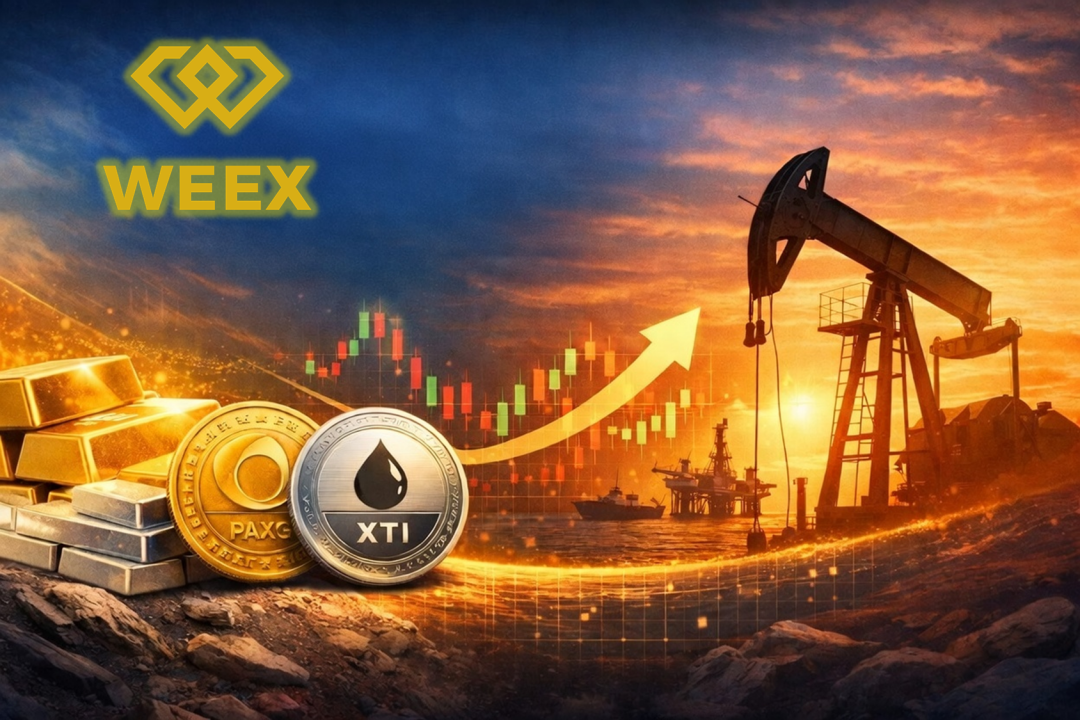
Precious Metals Lead the Way in On-Chain Exploration

In the RWA sector, precious metals are among the earliest traditional assets to enter the cryptocurrency market. Precious metals like gold, with their globally unified pricing system and mature financial markets, are naturally suitable for tokenization.

Currently, the more mature gold tokens on the market include:

PAX Gold

Tether Gold

Additionally, some platforms have begun launching tokens pegged to the price of silver, such as XAG, enabling precious metal assets to circulate in the cryptocurrency market in digital form.

Compared to traditional precious metal trading, these tokenized assets offer several new features:

24/7 trading

Lower barriers to entry

Natural compatibility with the crypto asset ecosystem

As the market matures, precious metal tokens have evolved from initial experimental products into a stable niche segment of the crypto trading market.

Crude Oil Tokenization Emerges as a New Direction

Following precious metals, another important commodity is entering the tokenization landscape—crude oil.

As one of the world's most important energy assets, crude oil has long been traded primarily through futures markets, such as the WTI crude oil contracts on the New York Mercantile Exchange (NYMEX). However, traditional crude oil markets often face issues like high account thresholds and limited trading hours.

Against this backdrop, some digital asset platforms have begun experimenting with introducing crude oil price exposure through blockchain methods.

Among them, XTI is a digital asset that tokenizes the price of WTI U.S. crude oil. By anchoring the NYMEX WTI crude oil spot price in real-time, it enables users to directly track crude oil price fluctuations in the crypto market, thereby gaining digital exposure to the global energy market.

This model allows crude oil assets to break through the trading boundaries of traditional markets to some extent and introduces a new macro asset class to the crypto market.

Platforms Are Expanding the On-Chain Commodity Landscape

As precious metals and energy assets gradually enter the on-chain market, some trading platforms are also strengthening their layouts in related asset sectors.

The digital asset trading platform WEEX recently included the crude oil token XTI in its commodity asset matrix, while continuing to support trading of gold and silver-related tokens, including PAXG, XAUT, and XAG.

Industry insiders believe that such moves reflect platforms' efforts to align with the RWA development trend by introducing more real-world asset categories to enrich the crypto market's asset structure.

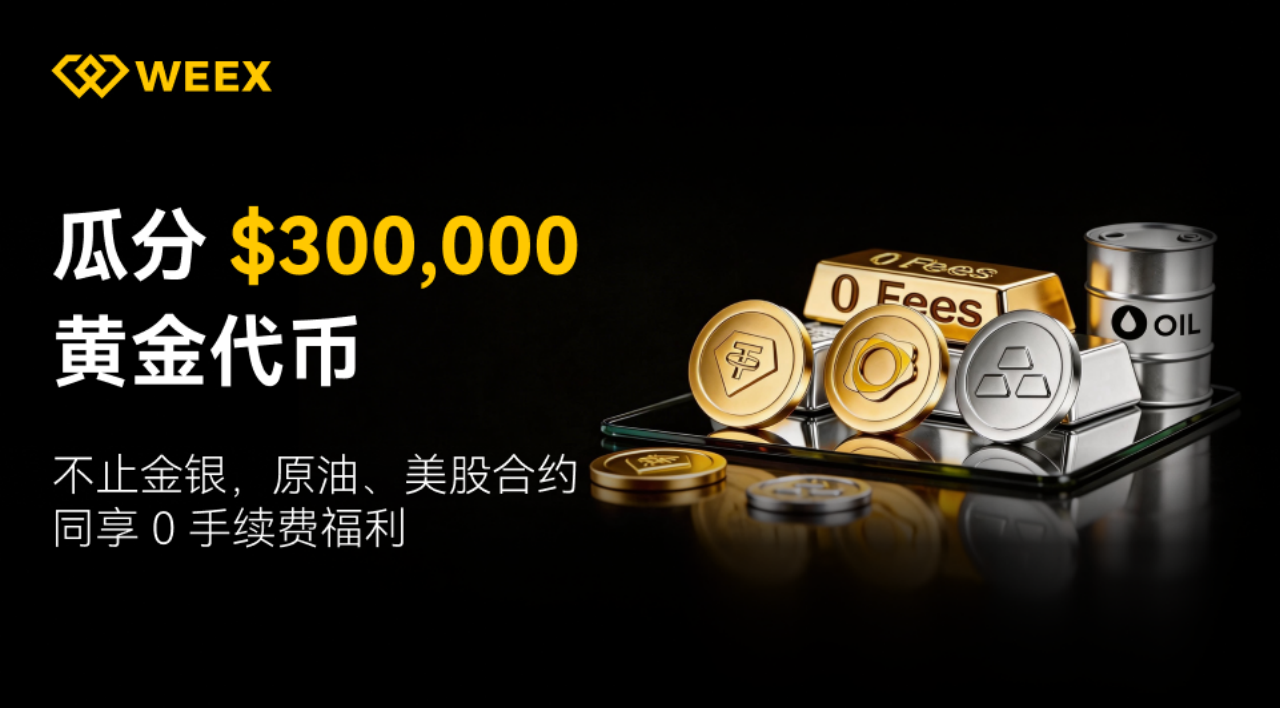
At the same time, WEEX recently launched a phased trading incentive program for commodity assets, covering precious metal tokens, crude oil assets, and some U.S. stock contract products, to further enhance liquidity and participation in related markets.
RWA Sector Is Moving from Financial Assets to Commodities

From an industry development perspective, real-world asset tokenization has gone through several stages:

Initially, stablecoins addressed on-chain pricing issues;

Then, financial assets like U.S. Treasury bonds entered the blockchain;

Now, commodity assets such as precious metals and energy are also becoming an important part of RWA.

As technological infrastructure continues to mature, more traditional assets may be mapped onto the blockchain in the future, forming a more diversified digital asset system.

Under this trend, from gold and silver to crude oil, commodities are gradually achieving digital expression, and the boundary between the crypto market and traditional asset markets is becoming increasingly blurred.

About WEEX

WEEX, founded in 2018, is a global cryptocurrency trading platform dedicated to providing users with secure, stable, and user-friendly trading services. The platform supports spot and contract trading, equipped with multiple risk control systems and a full insurance fund mechanism to safeguard user assets. WEEX has currently entered into an official regional brand partnership with LALIGA for Hong Kong and Taiwan, and is advancing compliance and localization efforts in multiple markets including the Middle East, Europe, Latin America, Africa, and Southeast Asia. As its Web3 ecosystem strategy continues to expand, WEEX is persistently collaborating with global developers and user communities to drive the evolution of digital asset trading toward greater openness and transparency.

For more information, visit: Website | Twitter | Telegram | LinkedIn

Questions liées

QWhat are some examples of tokenized precious metals in the cryptocurrency market?

AExamples of tokenized precious metals include PAX Gold, Tether Gold, and XAG (a silver-pegged token).

QWhich energy asset is mentioned as being tokenized in the article?

ACrude oil, specifically through the token XTI which tracks the NYMEX WTI crude oil spot price.

QWhat platform is expanding its commodity asset matrix to include tokenized crude oil and precious metals?

AWEEX is expanding its commodity asset matrix to include tokenized crude oil (XTI) and precious metals like PAXG, XAUT, and XAG.

QWhat are the advantages of tokenized precious metals compared to traditional trading?

ATokenized precious metals offer advantages such as 24/7 trading, lower participation barriers, and natural compatibility with the crypto asset ecosystem.

QHow has the Real World Asset (RWA) tokenization trend evolved according to the article?

AThe RWA tokenization trend has evolved from stablecoins and financial assets like U.S. Treasuries to include physical commodities such as precious metals and energy assets like crude oil.

Lectures associées

3 personnes, 100 programmeurs IA, 1,3 million de dollars brûlés en un mois ! OpenAI : l’addition, c'est moi

Trois personnes, une centaine d'agents IA, et une facture d'1,3 million de dollars sur un mois : Peter Steinberger, créateur d'OpenClaw, a dévoilé cette dépense faramineuse, entièrement prise en charge par OpenAI. Son équipe de trois développeurs utilise environ 100 instances de Codex pour automatiser les tâches fastidieuses du développement logiciel : revue de code, détection de vulnérabilités, gestion des bogues, surveillance des performances et même génération de requêtes après des réunions. Cette approche transforme le processus de développement en une "chaîne de production IA", où les agents gèrent l'essentiel de la maintenance et de la coordination, libérant les humains pour des travaux de plus haut niveau. Steinberger souligne qu'en désactivant le mode rapide, le coût devient inférieur à celui d'un ingénieur humain, pour une productivité bien supérieure. L'outil CodexBar, qu'il a créé, permet de surveiller en temps réel la consommation de tokens, désormais considérée comme une nouvelle "matière première" de production. Cette expérience pose une question fondamentale : à mesure que le coût des tokens diminue, à quoi ressemblera le développement logiciel lorsque chaque petite équipe pourra déployer une armée d'assistants IA ? L'avenir, où la puissance cognitive devient une ressource abordable et scalable, est déjà en train de s'écrire.

marsbitIl y a 14 mins

3 personnes, 100 programmeurs IA, 1,3 million de dollars brûlés en un mois ! OpenAI : l’addition, c'est moi

marsbitIl y a 14 mins

À l'ère de l'IA, comment ne plus avoir un onboarding « à partir de zéro »

À l'ère de l'IA, l'intégration des nouveaux employés ne devrait plus commencer à partir de zéro. L'article, inspiré des 100 premiers jours de l'auteur chez Ramp, souligne que la vitesse d'une entreprise ne doit pas être ralentie par des processus d'adaptation longs. La solution réside dans la construction d'un « cerveau d'entreprise » – une couche de contexte centralisée et continuellement mise à jour. Ce système agrège automatiquement toutes les connaissances organisationnelles : transcriptions de réunions, documents, discussions Slack, retours clients et décisions. Il sert de base commune à la fois pour les nouveaux employés et les agents IA, leur permettant d'accéder immédiatement au contexte nécessaire. Au lieu d'outils IA isolés (comme des chatbots pour le service client ou les RH), l'avenir appartient à une infrastructure de connaissance unique et partagée. L'auteur décrit la mise en place pratique chez Ramp : un vault Obsidian alimenté par Claude, un enregistrement systématique des réunions, une bibliothèque de compétences pour les agents, et des synthèses quotidiennes. L'objectif est que l'intégration (« ramp-up ») cesse d'être une phase distincte. La victoire organisationnelle, telle une course de relais, combine vitesse et transmission de contexte parfaite pour que chacun, humain ou IA, puisse sprinter dès le premier jour.

marsbitIl y a 30 mins

À l'ère de l'IA, comment ne plus avoir un onboarding « à partir de zéro »

marsbitIl y a 30 mins

Vitalik : Ce que nous devons faire, ce n'est pas lutter contre l'IA, mais créer des sanctuaires

Lors d'un podcast avec a16z, Vitalik Buterin, fondateur d'Ethereum, évoque les défis de l'ère de l'IA. Selon lui, le risque principal n'est pas l'intelligence excessive de l'IA, mais la passivité humaine qui cède son autonomie (agency) et sa vie privée à des systèmes centralisés pour une sécurité illusoire. Il introduit le concept de "sanctuary technologies" (technologies refuges) – comme Ethereum – qui offrent des espaces sûrs où les individus peuvent préserver leur souveraineté et leur liberté de choix, sans être contraints. Vitalik partage son évolution personnelle, passant d'un mode "pilote automatique" à une prise de contrôle active de sa vie. Il souligne que le monde change radicalement tous les 5 à 10 ans, nécessitant une adaptation constante. Face à l'IA, il conseille de conserver un "mode manuel" : s'imposer des tâches sans assistance, privilégier l'apprentissage actif et ne pas externaliser toute réflexion. Pour les bâtisseurs, il recommande de développer des outils qui préservent l'autonomie humaine, de garder le contrôle stratégique et de cultiver la sérendipité. Enfin, il redéfinit la mission de la crypto : non pas réparer l'ancien système, mais créer une nouvelle option librement choisissable. L'ère de l'IA exige plus que jamais des humains actifs, capables de piloter leur destin. La rareté véritable réside dans la volonté de penser et d'agir avec souveraineté.

marsbitIl y a 3 h

Vitalik : Ce que nous devons faire, ce n'est pas lutter contre l'IA, mais créer des sanctuaires

marsbitIl y a 3 h

Trading

Spot
Futures
活动图片