From Gold to Crude Oil: WEEX Expands Real-World Asset Tokenization to Energy Markets

marsbitPublié le 2026-03-14Dernière mise à jour le 2026-03-14

Résumé

In recent years, the tokenization of real-world assets (RWA) has become a significant trend in the crypto industry, expanding from stablecoins and U.S. Treasuries to include commodities like precious metals. Gold and silver have been among the earliest assets to be tokenized, with products such as PAX Gold and Tether Gold enabling 24/7 trading, lower entry barriers, and seamless integration into the crypto ecosystem. This movement is now extending into energy markets, with crude oil emerging as a new focus. Tokenized oil products, such as XTI, which tracks the NYMEX WTI crude oil spot price, provide digital exposure to global energy markets and overcome limitations of traditional trading like high entry barriers and restricted trading hours. Platforms like WEEX are actively expanding their commodity offerings by including oil tokens like XTI alongside established precious metal tokens. They are also launching incentive programs to boost liquidity and participation in these markets. The RWA sector is evolving from financial assets to include physical commodities, blurring the lines between traditional and digital asset markets and paving the way for a more diverse on-chain economy.

Over the past two years, the tokenization of real-world assets (RWA) has gradually become an important development direction in the cryptocurrency industry. From stablecoins to U.S. Treasury bonds, and then to precious metals like gold, more and more traditional assets are entering the digital market through blockchain.

Now, this trend is expanding further—energy assets are also moving on-chain.
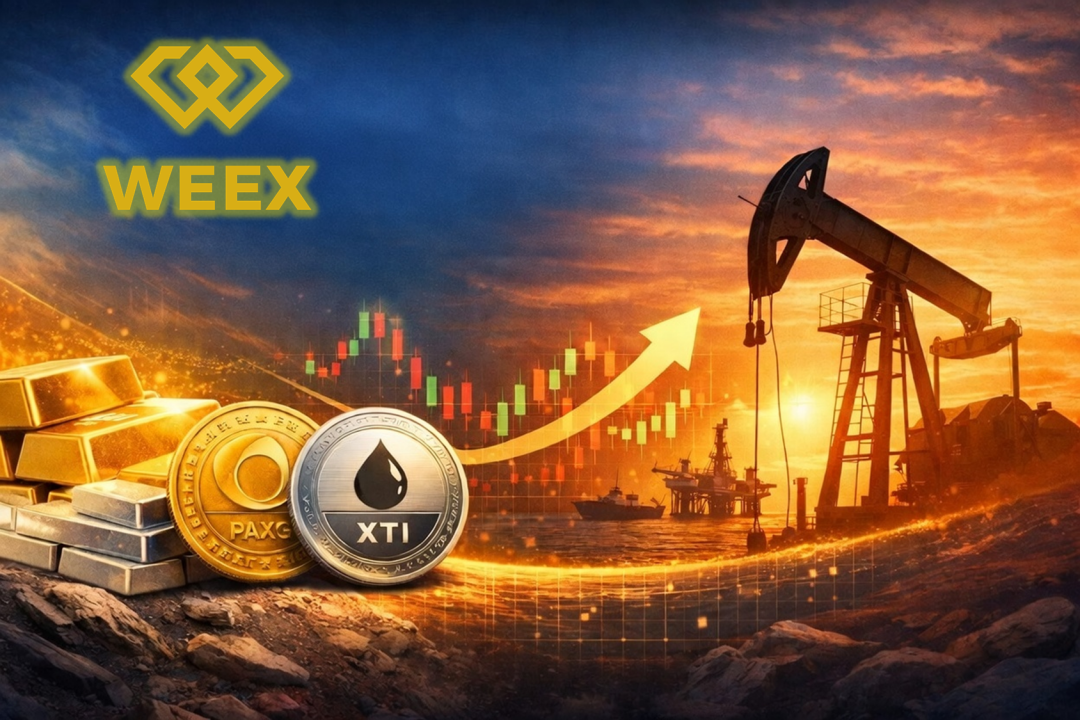
Precious Metals Lead the Way in On-Chain Exploration

In the RWA sector, precious metals are among the earliest traditional assets to enter the cryptocurrency market. Precious metals like gold, with their globally unified pricing system and mature financial markets, are naturally suitable for tokenization.

Currently, the more mature gold tokens on the market include:

PAX Gold

Tether Gold

Additionally, some platforms have begun launching tokens pegged to the price of silver, such as XAG, enabling precious metal assets to circulate in the cryptocurrency market in digital form.

Compared to traditional precious metal trading, these tokenized assets offer several new features:

24/7 trading

Lower barriers to entry

Natural compatibility with the crypto asset ecosystem

As the market matures, precious metal tokens have evolved from initial experimental products into a stable niche segment of the crypto trading market.

Crude Oil Tokenization Emerges as a New Direction

Following precious metals, another important commodity is entering the tokenization landscape—crude oil.

As one of the world's most important energy assets, crude oil has long been traded primarily through futures markets, such as the WTI crude oil contracts on the New York Mercantile Exchange (NYMEX). However, traditional crude oil markets often face issues like high account thresholds and limited trading hours.

Against this backdrop, some digital asset platforms have begun experimenting with introducing crude oil price exposure through blockchain methods.

Among them, XTI is a digital asset that tokenizes the price of WTI U.S. crude oil. By anchoring the NYMEX WTI crude oil spot price in real-time, it enables users to directly track crude oil price fluctuations in the crypto market, thereby gaining digital exposure to the global energy market.

This model allows crude oil assets to break through the trading boundaries of traditional markets to some extent and introduces a new macro asset class to the crypto market.

Platforms Are Expanding the On-Chain Commodity Landscape

As precious metals and energy assets gradually enter the on-chain market, some trading platforms are also strengthening their layouts in related asset sectors.

The digital asset trading platform WEEX recently included the crude oil token XTI in its commodity asset matrix, while continuing to support trading of gold and silver-related tokens, including PAXG, XAUT, and XAG.

Industry insiders believe that such moves reflect platforms' efforts to align with the RWA development trend by introducing more real-world asset categories to enrich the crypto market's asset structure.

At the same time, WEEX recently launched a phased trading incentive program for commodity assets, covering precious metal tokens, crude oil assets, and some U.S. stock contract products, to further enhance liquidity and participation in related markets.
RWA Sector Is Moving from Financial Assets to Commodities

From an industry development perspective, real-world asset tokenization has gone through several stages:

Initially, stablecoins addressed on-chain pricing issues;

Then, financial assets like U.S. Treasury bonds entered the blockchain;

Now, commodity assets such as precious metals and energy are also becoming an important part of RWA.

As technological infrastructure continues to mature, more traditional assets may be mapped onto the blockchain in the future, forming a more diversified digital asset system.

Under this trend, from gold and silver to crude oil, commodities are gradually achieving digital expression, and the boundary between the crypto market and traditional asset markets is becoming increasingly blurred.

About WEEX

WEEX, founded in 2018, is a global cryptocurrency trading platform dedicated to providing users with secure, stable, and user-friendly trading services. The platform supports spot and contract trading, equipped with multiple risk control systems and a full insurance fund mechanism to safeguard user assets. WEEX has currently entered into an official regional brand partnership with LALIGA for Hong Kong and Taiwan, and is advancing compliance and localization efforts in multiple markets including the Middle East, Europe, Latin America, Africa, and Southeast Asia. As its Web3 ecosystem strategy continues to expand, WEEX is persistently collaborating with global developers and user communities to drive the evolution of digital asset trading toward greater openness and transparency.

For more information, visit: Website | Twitter | Telegram | LinkedIn

Questions liées

QWhat are some examples of tokenized precious metals in the cryptocurrency market?

AExamples of tokenized precious metals include PAX Gold, Tether Gold, and XAG (a silver-pegged token).

QWhich energy asset is mentioned as being tokenized in the article?

ACrude oil, specifically through the token XTI which tracks the NYMEX WTI crude oil spot price.

QWhat platform is expanding its commodity asset matrix to include tokenized crude oil and precious metals?

AWEEX is expanding its commodity asset matrix to include tokenized crude oil (XTI) and precious metals like PAXG, XAUT, and XAG.

QWhat are the advantages of tokenized precious metals compared to traditional trading?

ATokenized precious metals offer advantages such as 24/7 trading, lower participation barriers, and natural compatibility with the crypto asset ecosystem.

QHow has the Real World Asset (RWA) tokenization trend evolved according to the article?

AThe RWA tokenization trend has evolved from stablecoins and financial assets like U.S. Treasuries to include physical commodities such as precious metals and energy assets like crude oil.

Lectures associées

La répression des crimes cryptographiques s'intensifie alors que le Myanmar cible les escrocs avec l'exécution

D’après un rapport du FBI, les Américains ont perdu plus de 11 milliards de dollars à cause de fraudes liées aux crypto-monnaies l’année dernière, augmentant la pression sur les gouvernements d’Asie du Sud-Est pour réagir. Le gouvernement militaire du Myanmar a proposé l’une des lois les plus sévères au monde contre la fraude en ligne. Le projet de loi rendu public jeudi prévoit des peines de prison de dix ans à perpétuité pour toute personne reconnue coupable de fraude financière numérique, la peine de mort étant applicable dans les cas les plus graves, notamment lorsque des centres de fraude causent la mort de travailleurs forcés. Le parlement birman justifie ce texte par la nécessité de protéger la souveraineté et la stabilité du pays. Le Myanmar n’est pas isolé dans sa répression : la Chine a exécuté 11 personnes en janvier pour des activités frauduleuses basées au Myanmar, et les États-Unis ont intensifié leurs opérations, collaborant avec plusieurs pays pour arrêter des centaines de suspects et fermer des centres de fraude. Ces centres, souvent liés au crime organisé, prolifèrent en Asie du Sud-Est et utilisent les crypto-monnaies pour des escroqueries variées (arnaques sentimentales, investissements fictifs, etc.). Le contexte politique au Myanmar reste complexe, le gouvernement militaire ayant pris le pouvoir par un coup d’État en 2021. Le parlement, qui ne s’est réuni qu’en mars 2026 après des élections contestées, pourrait examiner le projet de loi en juin. Au-delà des crypto-monnaies, les fraudes en ligne ont coûté plus de 20 milliards de dollars aux Américains en 2025, selon le FBI, qui poursuit ses efforts pour démanteler les réseaux criminels les plus dangereux.

bitcoinistIl y a 5 h

La répression des crimes cryptographiques s'intensifie alors que le Myanmar cible les escrocs avec l'exécution

bitcoinistIl y a 5 h

Ne codez pas, créez votre premier Agent IA en 2 jours (tutoriel complet)

**Résumé : Construisez votre premier Agent IA en un week-end, sans écrire une ligne de code** Cet article est un guide pratique pour les débutants, démontrant qu'il est possible de créer un Agent IA fonctionnel sans compétences en programmation. Il suffit d'une vision claire et d'instructions précises. **Samedi matin : Comprendre l'Agent IA** Un Agent IA n'est pas un simple chatbot. Alors qu'un chatbot répond passivement à des questions, un Agent reçoit un objectif, planifie les étapes, utilise des outils (recherche web, fichiers...) et exécute la tâche de manière autonome jusqu'à livrer un résultat concret. **Samedi après-midi : Construire le premier Agent avec Claude** La clé est de rédiger un "plan directeur" (blueprint) répondant à cinq questions : l'objectif spécifique, les étapes numérotées, les outils nécessaires, le format de sortie attendu et les règles de secours en cas de problème. Ce blueprint est ensuite donné à Claude (via l'application desktop Cowork ou les Projects web) pour exécution. **Dimanche matin : Déboguer et optimiser** La première exécution est rarement parfaite. Le processus consiste à : exécuter l'Agent, examiner le résultat, identifier les erreurs, mettre à jour le blueprint avec des instructions plus précises, et répéter. En 3 à 4 itérations, la fiabilité passe généralement de 60% à 90%. **Dimanche après-midi : Étendre et construire un deuxième Agent** Avec l'expérience acquise, construire un second Agent (pour la recherche, la reformulation de contenu, la préparation de réunion, etc.) est beaucoup plus rapide. La compétence est cumulative. **Conclusion** En un week-end, vous pouvez automatiser des tâches répétitives et multi-étapes. L'avenir du travail passe par ces Agents, déjà suffisamment performants pour gérer 80% du travail ne nécessitant pas le jugement humain. L'essentiel est de commencer, d'itérer et de ne plus tout faire manuellement.

marsbitIl y a 5 h

Ne codez pas, créez votre premier Agent IA en 2 jours (tutoriel complet)

marsbitIl y a 5 h

Trading

Spot
Futures
活动图片





