Chainlink Founder Sergey Nazarov Identifies 3 Trends That Will Define the Cryptosphere as Hyper Token Soars

bitcoinistPublié le 2026-02-10Dernière mise à jour le 2026-02-10

Résumé

Chainlink co-founder Sergey Nazarov identifies three key trends shaping the crypto industry: real-world asset (RWA) tokenization, cross-chain interoperability, and high-performance infrastructure. These shifts signal a move from speculation to practical, institutional-grade applications. Bitcoin Hyper ($HYPER) emerges as a solution addressing Bitcoin’s scalability and utility limitations. By integrating the Solana Virtual Machine (SVM) as a Bitcoin Layer 2, it enables high-speed, low-cost smart contracts while leveraging Bitcoin’s security. The project has raised over $31.3M in its presale, with significant whale activity, indicating strong institutional interest. Bitcoin Hyper aims to unlock Bitcoin’s dormant capital through DeFi applications, staking rewards, and a decentralized bridge for seamless BTC transfers. This aligns with Nazarov’s vision of a verifiable, interconnected financial ecosystem.

Trusted Editorial content, reviewed by leading industry experts and seasoned editors. Ad Disclosure

Quick Facts:

  • ➡️ Chainlink’s Sergey Nazarov identifies RWA tokenization, cross-chain interoperability, and high-performance infrastructure as the three pillars of the next crypto cycle.
  • ➡️ Bitcoin Hyper addresses the liquidity gap by bringing the Solana Virtual Machine (SVM) to Bitcoin, enabling high-speed smart contracts on the world’s most secure chain.
  • ➡️ Institutional interest in Bitcoin Layer 2s is rising, evidenced by over $31M raised in the Bitcoin Hyper presale and verified whale accumulation.
  • ➡️ Whales join the race with over $1M raised across three transactions-only; FOMO is real.

The crypto market is undergoing a structural transformation that extends far beyond daily price tickers.

In recent keynotes, Chainlink co-founder Sergey Nazarov outlined three critical trends signaling the industry’s shift from speculative experimentation to critical global infrastructure.

It’s a bold claim, but his analysis suggests the next bull cycle won’t be defined by hype, it’ll be defined by the collision of traditional finance (TradFi) and decentralized protocols.

First, Nazarov points to the inevitability of Real-World Assets (RWAs) migrating on-chain. Major institutions aren’t just testing the waters anymore; they’re actively building tokenization platforms. This isn’t just about efficiency, it’s about creating a ‘verifiable web’ where asset ownership is mathematically guaranteed rather than legally promised.

Then there’s the collapse of cross-chain friction. The future isn’t a winner-take-all single chain, but an interconnected ecosystem where liquidity flows seamlessly between networks via protocols like CCIP.

The third trend is perhaps the most immediate: the demand for high-performance infrastructure capable of handling ‘internet-scale’ transactions. As DeFi matures, users are rejecting high latency and exorbitant gas fees.

This sentiment shift is driving capital away from legacy Layer 1s that refuse to scale and toward specialized execution layers. That’s exactly where new solutions are emerging to unlock the dormant capital on the world’s largest blockchain: Bitcoin Hyper ($HYPER).

$HYPER is available here.

Bitcoin Hyper Integrates SVM To Solve The Liquidity Fragmentation Crisis

While Nazarov emphasizes cross-chain standards, a glaring inefficiency remains: Bitcoin holds over 50% of the industry’s market cap but lacks the native programmability to participate in this new ‘verifiable web.’

Enter Bitcoin Hyper ($HYPER). By integrating the Solana Virtual Machine (SVM) directly as a Bitcoin Layer 2, the project introduces high-speed, low-cost transaction execution to the Bitcoin network.

The architecture here is distinct. Rather than relying on slow settlement times, Bitcoin Hyper utilizes a modular setup: Bitcoin L1 handles final settlement and security, while the SVM L2 handles real-time execution.
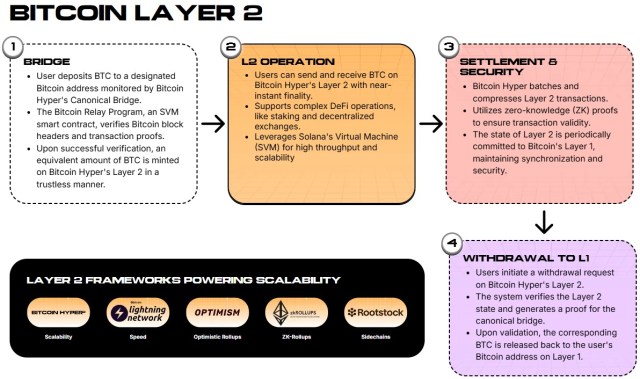
The result? A network capable of sub-second finality and negligible fees, outperforming even Solana in specific latency benchmarks. For developers, this means the ability to build high-performance DeFi applications using Rust, finally bridging the gap between Bitcoin’s liquidity and modern smart contract utility.

Smart money seems to be watching this setup. On-chain data from Etherscan indicates that two whale wallets accumulated $1M+ in recent transactions, with the largest single purchase of $500K occurring on Jan 15, 2026.

This accumulation suggests traders are betting on Layer 2s that can unlock Bitcoin’s yield-bearing potential without compromising its security.

Read more about $HYPER here.

Presale Momentum Accelerates As Capital Rotates Into Bitcoin Layer 2s

The narrative shift toward infrastructure that Nazarov predicts is already reflecting in capital flows. Investors are hunting for protocols offering immediate utility rather than vague roadmap promises.

Bitcoin Hyper ($HYPER) has tapped into this demand, raising over $31.3M in its ongoing presale. With tokens currently priced at $0.0136754, the project is drawing liquidity from traders hedging against Ethereum’s congestion and Solana’s occasional instability.
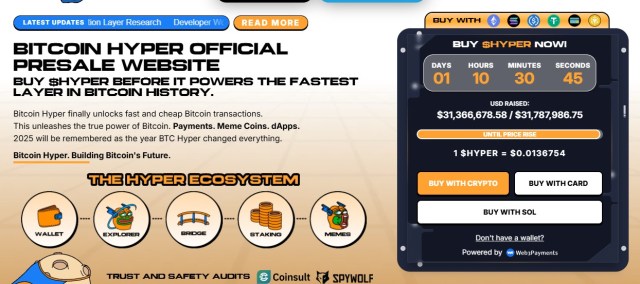
Plus, the economic model is driving interest. Bitcoin Hyper introduces a high-yield staking protocol available immediately after the Token Generation Event (TGE). Unlike traditional mining (which requires hardware), $HYPER staking rewards community participation and governance with a short 7-day vesting period for presale stakers.

It’s a setup designed for both exposure to a high-growth infrastructure token and yield generation on a Bitcoin-native layer.

The project’s Decentralized Canonical Bridge aligns with the industry’s push for interoperability. By allowing trustless transfers of $BTC into the L2 ecosystem, it enables Bitcoin to be used as collateral in lending and derivatives markets previously accessible only to $ETH or $SOL holders.

As the market moves toward the ‘verifiable web’ Nazarov describes, protocols that make Bitcoin actually usable could be positioned to capture significant value.

Buy $HYPER here.

This article is for informational purposes only and does not constitute financial advice. Cryptocurrencies are high-risk assets with significant volatility. The presale data and technical claims regarding Bitcoin Hyper are based on information provided by the project team. Always perform your own due diligence before investing.

Editorial Process for bitcoinist is centered on delivering thoroughly researched, accurate, and unbiased content. We uphold strict sourcing standards, and each page undergoes diligent review by our team of top technology experts and seasoned editors. This process ensures the integrity, relevance, and value of our content for our readers.

patrubogdan

Follow

Full Profile

Related Posts

Russian Lawmaker Predicts Bitcoin Collapse While Smart Money Rotates into Layer 2 Utility

Solana’s Low Fees Create Strong Competition for Base, BNB, and Polygon and Fuel SUBBD Token

Bitcoin Demand Plunges Per CryptoQuant, Yet Maxi Doge Endures

Crypto Markets Catch A Breather As Outflows Begin To Slow: Analysts

SUBBD Token’s Massive Projected Impact on the Content Creation Market in 2026

Government Shutdown Fears Trigger 2% Crypto Dip, But Bitcoin Hyper Remains Unshaken

Questions liées

QWhat are the three critical trends identified by Chainlink's Sergey Nazarov that will define the next crypto cycle?

AThe three trends are Real-World Assets (RWA) tokenization, cross-chain interoperability, and high-performance infrastructure capable of handling internet-scale transactions.

QHow does Bitcoin Hyper ($HYPER) address the liquidity fragmentation problem on the Bitcoin network?

ABitcoin Hyper integrates the Solana Virtual Machine (SVM) as a Bitcoin Layer 2, enabling high-speed smart contracts and low-cost transactions while using Bitcoin L1 for final settlement and security.

QWhat evidence suggests institutional interest in Bitcoin Hyper's presale?

AThe project raised over $31.3 million in its presale, with on-chain data showing whale transactions including a single purchase of $500,000 on January 15, 2026.

QWhat technical advantage does Bitcoin Hyper claim over other networks?

AIt claims sub-second finality and negligible fees, outperforming even Solana in specific latency benchmarks, while maintaining Bitcoin's security through its modular architecture.

QHow does Bitcoin Hyper's staking model differ from traditional Bitcoin mining?

AIt offers a high-yield staking protocol with immediate vesting after Token Generation Event (TGE), requiring no hardware and featuring a 7-day vesting period for presale participants, unlike hardware-dependent mining.

Lectures associées

Attirer les capitaux mondiaux, l’Asie vit un nouveau « super cycle »

Les investisseurs se tournent vers l'Asie, voyant dans la région le prochain moteur de la croissance boursière mondiale, porté par une vague d'investissements dans l'IA. Morgan Stanley anticipe un « super-cycle » asiatique, avec des dépenses en capital fixes devant passer d'environ 11 000 milliards de dollars en 2025 à 16 000 milliards en 2030, soit une croissance annuelle de 7%. Le cœur de ce cycle est l'expansion massive des infrastructures liées à l'IA (puces, serveurs, centres de données, énergie). L'Asie, au centre des chaînes d'approvisionnement, en bénéficiera pleinement. La Chine développe son écosystème de puces et de plateformes cloud pour une plus grande autonomie. Parallèlement, ses exportations pourraient évoluer des véhicules électriques vers la robotique, notamment les robots humanoïdes, reproduisant une trajectoire de croissance similaire. Deux autres moteurs se conjuguent : la sécurité énergétique, avec d'importants besoins en infrastructures renouvelables et en stockage, et l'augmentation structurelle des dépenses de défense dans la région. La Chine, la Corée du Sud et le Japon, dotés d'industries manufacturières et technologiques solides, sont bien positionnés pour capter ces investissements. Cependant, des risques persistent : surcapacités potentielles, pression sur les marges, restrictions technologiques persistantes et impacts de l'IA sur l'emploi. La divergence des anticipations des marchés pourrait également accroître la volatilité.

marsbitIl y a 53 mins

Attirer les capitaux mondiaux, l’Asie vit un nouveau « super cycle »

marsbitIl y a 53 mins

Le marché obligataire japonais passe en masse à la technologie « blockchain »

En août 2025, une transaction de pensions livrées (repo) sur bons du Trésor américain a été réglée de manière atomique et en temps réel sur une blockchain en deh des heures de marché, par des institutions majeures comme Bank of America et Citadel Securities. Cela a marqué un tournant pour l'infrastructure financière. En avril 2026, le Japon a lancé un projet pilote pour migrer les obligations d'État japonaises (JGB), une garantie clé de 9 000 milliards de dollars en Asie, vers le Canton Network. Cette initiative vise à remédier aux inefficacités du système actuel, où le transfert de garanties est lent, limité aux heures d'ouverture de Tokyo, et immobilise des milliards. La pression vient des États-Unis, où des acteurs comme la DTCC utilisent déjà Canton pour tokeniser les Treasuries, les rendant disponibles 24h/24. Pour éviter de perdre son statut de garantie privilégiée, le Japon doit moderniser son système. Canton Network a été choisi car son architecture permet un règlement atomique, respecte les exigences juridiques de confidentialité (comme la loi japonaise sur le transfert d'écritures) et synchronise les données avec les registres officiels. Il devient ainsi le réseau de référence pour le mouvement transfrontalier des principales garanties souveraines. Le règlement tokenisé 24h/24 change la donne : il permet de répondre directement aux appels de marge avec des obligations, réduisant les ventes forcées en période de stress. Il élimine aussi le risque de crédit dans les repo grâce au règlement atomique (l'actif et le cash échangés simultanément). Enfin, l'intégration de dépôts bancaires tokenisés, et non de stablecoins privés, résout le problème du règlement en cash pour les institutions. En somme, Canton est en passe de devenir une infrastructure essentielle, comme SWIFT, pour le mouvement des garanties souveraines. Cette évolution représente une révolution d'efficacité pour les marchés financiers, même si elle renforce le rôle des acteurs traditionnels plutôt que de les déloger.

marsbitIl y a 1 h

Le marché obligataire japonais passe en masse à la technologie « blockchain »

marsbitIl y a 1 h

Rapport hebdomadaire sur le financement | 14 événements de financement publics, Kalshi achève un nouveau tour de financement de 10 milliards de dollars avec une valorisation de 220 milliards de dollars, dirigé par Coatue Management

**Résumé des levées de fonds hebdomadaires (4-10 mai) : 14 événements, plus de 1.049 milliard de dollars levés** **Points clés par secteur :** * **DeFi (4 deals) :** L'assureur-réassureur OnRe a levé 5 millions de dollars. Le protocole de crédit Saturn Credit a obtenu 2 millions. La plateforme de trading institutionnelle Ekiden a levé 2 millions. Coinbase a investi stratégiquement dans Centrifuge (infrastructure de tokenisation RWA). * **Infrastructure & Outils (4 deals) :** OpenTrade (produits de rendement pour stablecoins) a levé 17 millions. La plateforme RWA Balcony a levé 12,7 millions. Antier Solutions a levé 3 millions pour son infrastructure blockchain d'entreprise. Coinbase investit également dans Kemet pour intégrer ses produits dérivés. * **Marchés de prédiction (3 deals) :** Le leader Kalshi a réalisé un tour de table de 1 milliard de dollars (évaluation : 22 milliards). Les plateformes AI Elastics et Sportix ont levé respectivement 2 et 3,2 millions. * **Finance Centralisée (1 deal) :** La plateforme de trading AI Stockcoin.ai a bouclé un tour d'amorçage mené par Amber Group. * **Autres applications Web3 (2 deals) :** SC Ventures (Standard Chartered) a investi stratégiquement dans le market-maker crypto GSR. La société de réserve bitcoin Capital B a levé 1,1 million d'euros. * **Fonds d'investissement :** Haun Ventures a levé 1 milliard pour un nouveau fonds. Multi Investment a levé ~616 millions. Le fonds de Global Millennial a levé 100 millions pour cibler les opportunités pré-IPO dans la DeFi et l'IA.

marsbitIl y a 2 h

Rapport hebdomadaire sur le financement | 14 événements de financement publics, Kalshi achève un nouveau tour de financement de 10 milliards de dollars avec une valorisation de 220 milliards de dollars, dirigé par Coatue Management

marsbitIl y a 2 h

Trading

Spot
Futures

Articles tendance

Comment acheter LINK

Bienvenue sur HTX.com ! Nous vous permettons d'acheter ChainLink (LINK) de manière simple et pratique. Suivez notre guide étape par étape pour commencer votre parcours crypto.Étape 1 : Création de votre compte HTXUtilisez votre adresse e-mail ou votre numéro de téléphone pour ouvrir un compte sur HTX gratuitement. L'inscription se fait en toute simplicité et débloque toutes les fonctionnalités.Créer mon compteÉtape 2 : Choix du mode de paiement (rubrique Acheter des cryptosCarte de crédit/débit : utilisez votre carte Visa ou Mastercard pour acheter instantanément ChainLink (LINK).Solde :utilisez les fonds du solde de votre compte HTX pour trader en toute simplicité.Prestataire tiers :pour accroître la commodité d'utilisation, nous avons ajouté des modes de paiement populaires tels que Google Pay et Apple Pay.P2P :tradez directement avec d'autres utilisateurs sur HTX.OTC (de gré à gré) : nous offrons des services personnalisés et des taux de change compétitifs aux traders.Étape 3 : stockage de vos ChainLink (LINK)Après avoir acheté vos ChainLink (LINK), stockez-les sur votre compte HTX. Vous pouvez également les envoyer ailleurs via un transfert sur la blockchain ou les utiliser pour trader d'autres cryptos.Étape 4 : tradez des ChainLink (LINK)Tradez facilement ChainLink (LINK) sur le marché Spot de HTX. Il vous suffit d'accéder à votre compte, de sélectionner la paire de trading, d'exécuter vos trades et de les suivre en temps réel. Nous offrons une expérience conviviale aux débutants comme aux traders chevronnés.

881 vues totalesPublié le 2024.12.13Mis à jour le 2025.03.21

Comment acheter LINK

Discussions

Bienvenue dans la Communauté HTX. Ici, vous pouvez vous tenir informé(e) des derniers développements de la plateforme et accéder à des analyses de marché professionnelles. Les opinions des utilisateurs sur le prix de LINK (LINK) sont présentées ci-dessous.

活动图片