A 2.85% Minor Deviation, $27 Million in Liquidations: The Full Story of the Aave Price Oracle Incident

marsbitPublié le 2026-03-17Dernière mise à jour le 2026-03-17

Résumé

A brief 2.85% pricing deviation in wstETH collateral on Aave triggered approximately $27 million in liquidations. The incident occurred because Aave's risk oracle module (CAPO) used outdated parameters, temporarily valuing wstETH at around 1.19 ETH instead of its market price of ~1.23 ETH. This made some borrowing positions appear under-collateralized, activating the protocol's automatic liquidation system. While the event highlighted the fragility of DeFi oracle systems and how minor technical misconfigurations can lead to significant financial consequences, no bad debt was incurred by the Aave protocol itself. The core issue was not a failure of the primary price oracle or the wstETH token, but an internal configuration error within Aave's additional risk management layer. The incident underscores the critical importance of reliable oracle infrastructure and precise parameter synchronization in decentralized finance.

Written by: Cointelegraph

Compiled by: AididiaoJP, Foresight News

Key Summary

  • A brief 2.85% pricing deviation in wstETH collateral triggered approximately $27 million in liquidations on Aave. This event demonstrates that even minor technical issues in automated DeFi lending systems can lead to significant financial impacts.
  • This wave of liquidations occurred because the Aave system briefly valued wstETH at approximately 1.19 ETH, while its market value was near 1.23 ETH, causing some borrowing positions to be mistakenly judged as undercollateralized.
  • Price oracles are critical DeFi infrastructure, responsible for transmitting external market data to smart contracts to determine collateral value, assess loan health, and trigger automatic liquidations.
  • The root cause was not a failure of the price data source, but a misconfiguration of Aave's CAPO risk oracle module. Outdated smart contract parameters within this module set a temporary cap on the token's exchange rate.

DeFi protocols rely on automated logic to handle everything from collateral management to risk assessment. While this mechanism builds a truly open, permissionless financial system, it also means that minor technical problems can quickly escalate, causing severe financial turmoil.

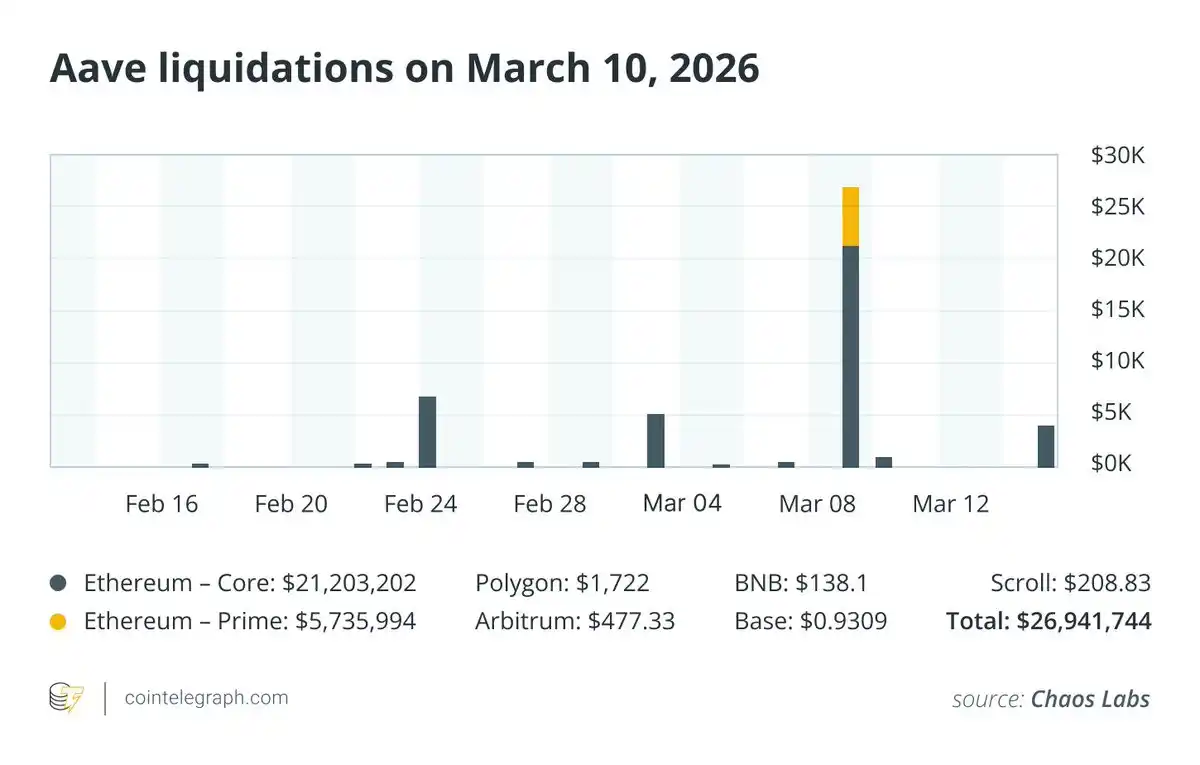
As reported by risk monitoring firm Chaos Labs, the market downturn on March 10, 2026, triggered approximately $27 million in borrower position liquidations on Aave, clearly demonstrating this fragility. Within 24 hours, user positions worth about $27 million were liquidated. Surprisingly, this event was not caused by a large-scale market sell-off but by a brief 2.85% price deviation in wrapped staked ETH (wstETH) collateral.

This event is a powerful reminder that the reliability of price oracles and a robust risk management framework are crucial for maintaining the stability of the DeFi ecosystem.

This article explains how a 2.85% pricing deviation in wstETH collateral triggered approximately $27 million in liquidations on the Aave lending protocol. It focuses on analyzing how oracle configuration, smart contract parameters, and automatic liquidation mechanisms amplified a minor pricing error in the DeFi market.

The Sudden Surge in Liquidations

When a wave of liquidations appeared on the Aave market, Chaos Labs, which closely monitors abnormal activity on lending protocols, quickly identified and reported the situation. Initially, market observers speculated that a price oracle failure might have caused the mispricing of collateral assets on the platform.

Price oracles play a key bridging role, providing external market prices for on-chain applications. In lending protocols like Aave, this price data directly determines whether a borrower's collateral is sufficient to cover their loan. Once the collateral value falls below the required safety threshold, the system automatically liquidates the position.

The core asset in this event was wstETH, a token widely used as collateral in the DeFi lending ecosystem.

Liquidation speeds on lending protocols like Aave are typically much faster than traditional margin calls. Because DeFi markets operate 24/7 through automated smart contracts, once the collateral ratio falls below the specified threshold, positions can be liquidated within seconds.

What is wstETH?

wstETH (wrapped staked Ether) is a token issued by the liquid staking protocol Lido.

When users stake Ether through Lido, they first receive stETH, a token representing their staked ETH principal and accumulated staking rewards. To enhance compatibility with various DeFi applications, stETH can be "wrapped" into wstETH.

Due to the continuous accumulation of staking rewards, the value of 1 wstETH is typically slightly higher than 1 ETH. This characteristic makes it an attractive and widely adopted type of collateral in the DeFi lending market.

The Pricing Deviation Event

During this liquidation wave, a deviation emerged between the actual market value of wstETH and the valuation used by Aave's risk system. Aave's algorithm priced wstETH at approximately 1.19 ETH, while the broader market valuation at the time was around 1.23 ETH.

The valuation difference of about 2.85% made positions collateralized with wstETH appear more undercollateralized than they actually were.

Consequently, some borrowing positions fell below the required safety threshold, triggering Aave's automatic liquidation process.
Why Price Oracles are Crucial in DeFi

Price oracles are the underlying infrastructure of DeFi. Because blockchains themselves cannot access real-world market data, they must rely on oracle services to provide external price information for assets. This price data directly impacts:

  • Valuation of collateral
  • Health of borrowing positions
  • Decision-making basis for triggering liquidations

Once a reported drop in collateral price occurs, the protocol may judge the loan as undercollateralized and automatically liquidate the relevant position.

Because this mechanism is entirely algorithm-driven, even minor pricing deviations can trigger serious chain reactions.

In the DeFi space, minor price deviations can also have huge impacts. Brief fluctuations in oracle prices or market prices, even by just a few percentage points, can trigger cascading liquidations. This risk is particularly pronounced when a large number of borrowers use highly leveraged positions collateralized by volatile cryptocurrencies.

The Real Cause: CAPO Risk Oracle Misconfiguration

In-depth investigation confirmed that Aave's main price oracle was functioning normally.

The problem actually lay in the "Correlated Asset Price Oracle" (CAPO) risk module, an additional protection layer for specific assets.

The primary function of CAPO is to set a rate cap on the value increase of yield-bearing tokens like wstETH, aiming to guard against sudden price spikes or potential oracle attack risks.

However, in this event, inconsistent configuration within the CAPO module led to the problem.

Technical Analysis of the Error

Chaos Labs disclosed that the problem stemmed from outdated parameters stored in the smart contract.

Two key parameters failed to update synchronously:

  • Reference exchange rate
  • Timestamp associated with that rate

Because these two parameters were not refreshed in sync, the CAPO calculated an allowed exchange rate cap that was temporarily lower than the actual market rate at the time.

This caused the protocol to value wstETH approximately 2.85% lower than the market price.

Aave relies on price oracles, which are data sources that provide real-time asset prices to smart contracts. If these data sources briefly reflect anomalous market prices from exchanges, the protocol automatically recalculates collateral values and may trigger liquidations.

The Chain Reaction of Liquidations

Once the collateral ratio fell below the safety threshold, Aave's automatic liquidation engine immediately activated.

Liquidators (typically high-speed trading bots) quickly stepped in, repaying part of the borrower's debt in exchange for the corresponding collateral at a predetermined discount.

In this event, a total of approximately $27 million in borrowing positions were liquidated.

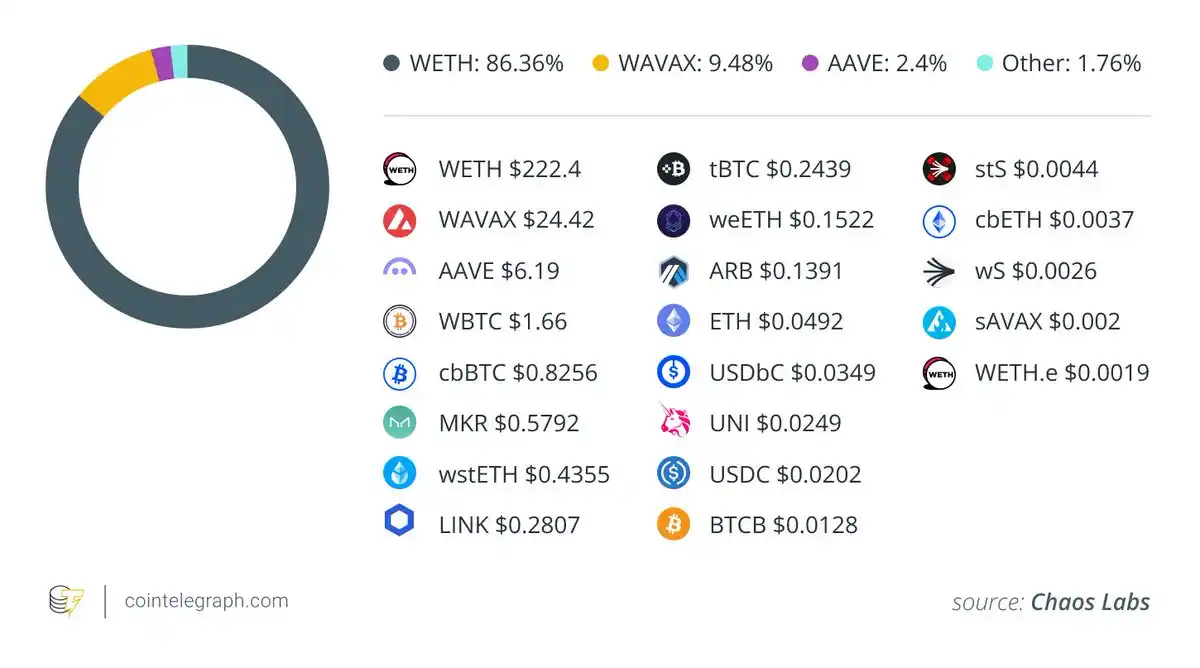
Liquidators exploited this brief price misalignment, collectively profiting about 499 ETH (including liquidation bonuses).
No Bad Debt Incurred by the Protocol

Despite the large scale of liquidations, the Aave protocol itself did not incur any bad debt. Aave founder Stani Kulechov stated, "No impact on the Aave protocol."

Chaos Labs pointed out that once positions breached the safety threshold, the platform's core risk control and liquidation mechanisms all operated as designed. Therefore, the impact of this event was limited to the relevant borrowers and did not threaten the overall solvency and stability of the Aave protocol. It was the brief, artificial depression of the collateral value that caused some borrowing positions to fall below the liquidation line.

The Aave governance layer subsequently proposed compensating affected users by utilizing recovered funds and the Decentralized Autonomous Organization (DAO) treasury. This approach reflects a new trend in DeFi governance: protocols are beginning to view such technical events as systemic infrastructure risks and tend to compensate受损 users rather than having them bear the full loss.

Another Warning on DeFi Oracle Risks

This event highlights that oracle mechanism design is both one of the most critical links in DeFi infrastructure and one of its most vulnerable weak points.

When automated mechanisms manage tens of billions of dollars in collateral value, even minor configuration errors can trigger consequences far exceeding expectations.

Similar events have occurred on other DeFi platforms. For example, one platform once briefly valued Coinbase's wrapped staked ETH (cbETH) at approximately $1 (actual value ~$2200) due to an oracle configuration error, causing widespread chaos.

These cases all indicate that maintaining reliable, accurate price data sources remains an ongoing challenge in decentralized financial systems.

wstETH and Lido Itself Are Not Responsible

Contributors related to the Lido ecosystem clearly stated that these liquidations were not caused by any failure or defect in the wstETH token itself.

The token functioned normally throughout the event, and the underlying Lido staking protocol remained fully available and unaffected.

The core of the problem lay in how the Aave lending protocol, through its own risk management configuration, processed and interpreted the price data, which deviated.

Implications for the Development of DeFi

As decentralized finance continues to develop, protocols are deploying increasingly sophisticated risk management systems to accommodate yield-bearing assets like wstETH.

These assets present unique pricing challenges because their value continuously grows with the accumulation of staking rewards.

Therefore, effective risk models must properly handle the following elements:

  • Dynamically changing exchange rates
  • Continuously accumulating staking rewards
  • Time-dependent parameter updates
  • Precise synchronization of various smart contract parameters

Even minor inconsistencies between these elements can escalate into large-scale liquidation events.


Questions liées

QWhat was the primary cause of the $27 million liquidation event on Aave, and what specific asset was involved?

AThe primary cause was a 2.85% pricing discrepancy in the wstETH (wrapped staked ETH) collateral valuation. Aave's risk oracle module, CAPO, temporarily valued wstETH at approximately 1.19 ETH, while its actual market value was around 1.23 ETH. This mispricing caused some borrowing positions to be incorrectly flagged as under-collateralized and subsequently liquidated.

QWhat is the role of a price oracle in a DeFi lending protocol like Aave?

AA price oracle is critical infrastructure that provides external market data to on-chain applications. In lending protocols, these price feeds are used to determine the value of collateral, assess the health of loans, and trigger automatic liquidations if the collateral value falls below a required safety threshold.

QWhat specific technical failure within Aave's system led to the wstETH mispricing, and what module was responsible?

AThe failure was not in the main price oracle but in the CAPO (Correlated Asset Price Oracle) risk module. The issue was caused by outdated smart contract parameters—specifically, a reference exchange rate and its associated timestamp that were not updated in sync. This configuration error caused the CAPO module to calculate a temporary cap on the wstETH exchange rate that was lower than the actual market rate.

QDespite the large-scale liquidations, what was the impact on the Aave protocol's financial health?

AThe Aave protocol itself did not incur any bad debt from this event. The core risk management and liquidation mechanisms functioned as designed once positions were deemed under-collateralized. The financial impact was limited to the affected borrowers, and the overall solvency and stability of the Aave protocol were not threatened.

QWhat does this incident reveal about the broader challenges and future development of DeFi?

AThe incident highlights that oracle reliability and robust risk management frameworks are paramount in DeFi. It demonstrates that even minor technical misconfigurations can be amplified by automated systems, leading to significant financial consequences. For future development, it underscores the need for sophisticated risk models that can accurately handle dynamic exchange rates, staking rewards, time-dependent parameter updates, and precise synchronization of all smart contract parameters, especially for yield-bearing assets like wstETH.

Lectures associées

Near fait son retour sur la scène de l'IA : Transformation en blockchain publique après des difficultés de paie, les Agents et la confidentialité deviennent les nouvelles opportunités de croissance

Near, fondé en 2017 par Illia Polosukhin (co-auteur de l'article Transformer) et Alexander Skidanov, est né d'un problème pratique : une startup IA ne pouvait pas payer ses développeurs internationaux en raison des limites des systèmes de paiement transfrontalier. Cette contrainte a conduit à la création d'une blockchain performante. Après des débuts difficiles dans un paysage concurrentiel, Near a trouvé un nouvel élan en 2024, recentrant sa stratégie sur l'IA et l'abstraction inter-chaînes via son système "Near Intents". Ce mécanisme permet aux utilisateurs (ou aux agents IA) d'exprimer simplement leur intention de transaction (ex: échanger du BTC contre de l'ETH sur une autre chaîne), tandis qu'un réseau de "solveurs" calcule et exécute le meilleur parcours. Cette innovation a généré plus de 200 milliards de dollars de volume transfrontalier et plus de 33 millions de dollars de frais. Parallèlement, Near a introduit des "Intentions Confidentielles" pour les échanges privés, répondant à la demande croissante de confidentialité en DeFi. Ces transactions, qui masquent les montants et les directions avant règlement, représentent déjà plus de 40% du volume récent sur le réseau, attirant les gros investisseurs mais soulevant aussi des questions potentielles de régulation. Ainsi, Near revient à ses racines liées à l'IA, en combinant abstraction des chaînes, intents et confidentialité pour se positionner dans l'économie des agents intelligents et construire un nouvel écosystème.

marsbitIl y a 1 h

Near fait son retour sur la scène de l'IA : Transformation en blockchain publique après des difficultés de paie, les Agents et la confidentialité deviennent les nouvelles opportunités de croissance

marsbitIl y a 1 h

Des "CROPS" d'Ethereum à l'IA : ce que Vitalik souligne sans cesse, ces "variables lentes", qu'est-ce que c'est ?

Ces dernières semaines, Vitalik Buterin a introduit et mis en avant le concept de **CROPS**. Il s'agit d'un cadre de valeurs fondamentales pour Ethereum, défini dans un document de l'Ethereum Foundation (EF Mandate), qui guide le développement à long terme du protocole. CROPS est l'acronyme de : * **C**ensorship Resistance (Résistance à la censure) * **C**apture Resistance (Résistance à la capture) * **O**pen Source (Open source) * **P**rivacy (Vie privée) * **S**ecurity (Sécurité) Pour Ethereum, il ne s'agit pas seulement d'être rapide et peu coûteux, mais de fournir une infrastructure où les utilisateurs peuvent détenir des actifs, interagir et se coordonner sans dépendre d'une plateforme unique, sans céder le contrôle final et sans être arbitrairement bloqués. L'intérêt de CROPS s'amplifie avec l'essor de l'**IA**, en particulier des agents autonomes. Ces derniers risquent de devenir le principal intermédiaire pour les opérations numériques des utilisateurs, y compris la gestion d'actifs sur la blockchain. Si ces agents fonctionnent dans des "boîtes noires" centralisées, ils pourraient compromettre la vie privée, la sécurité et le contrôle des utilisateurs. C'est pourquoi Vitalik évoque désormais la convergence entre le **"CROPS Ethereum access layer"** et le **"CROPS AI"**. L'objectif est de développer des outils où l'accès aux données de la blockchain (via des RPC) et l'utilisation de modèles d'IA (comme les LLM) puissent se faire de manière **privée, vérifiable et décentralisée**. Des technologies comme les preuves à connaissance nulle (ZK) pourraient permettre d'utiliser des services distants sans révéler ses informations personnelles ou ses intentions. En résumé, CROPS n'est pas un simple slogan mais un principe directeur crucial. Il pose une question essentielle pour l'ère de l'IA : alors que les systèmes numériques deviennent plus puissants et autonomes, **les utilisateurs peuvent-ils conserver la souveraineté sur leurs actifs, leurs données et leurs actions ?** La réponse, pour Ethereum et l'écosystème Web3, passe par la construction d'infrastructures et d'expériences utilisateur alignées sur ces valeurs de résistance, d'ouverture, de vie privée et de sécurité.

marsbitIl y a 1 h

Des "CROPS" d'Ethereum à l'IA : ce que Vitalik souligne sans cesse, ces "variables lentes", qu'est-ce que c'est ?

marsbitIl y a 1 h

Token pas économique, Économie pas Token

L'industrie de l'IA traverse une transformation profonde, marquée par deux tendances : un besoin massif de financement et la scission des actifs d'IA au sein des grandes entreprises. La course aux capacités de calcul (compute) est devenue un concours d'actifs lourds, où la croissance des utilisateurs alourdit les coûts plutôt que de générer des profits, créant une pression intense sur les flux de trésorerie. Des pratiques comme la "comptabilité circulaire" (où les investissements sont échangés contre des services cloud) masquent les défis sous-jacents. Parallèlement, la scission d'unités d'IA (comme Kling de Kuaishou ou Kunlunxin de Baidu) permet une réévaluation spectaculaire. D'un "centre de coûts" au sein d'un groupe, elles deviennent des "centres de valeur" indépendants, évaluées sur leur potentiel de croissance et leur rareté plutôt que sur leur rentabilité immédiate, multipliant parfois leur valorisation par trois. Le récit de l'industrie évolue structurellement : on passe d'une "vénération des modèles" à une exigence de "matérialisation de la valeur". La contradiction entre des investissements énormes et un retour sur investissement encore limité signale la douloureuse transition vers une phase de commercialisation. Le centre de gravité se déplace également de la seule puissance des GPU vers l'efficacité systémique (CPU, orchestration), déterminante pour la profitabilité. En somme, 2026 est l'année où l'industrie de l'IA, confrontée aux limites du financement par la croissance, doit répondre à une question fondamentale : quelle est la valeur économique réelle de cette technologie ? La réponse définira le paysage de puissance pour la décennie à venir.

marsbitIl y a 2 h

Token pas économique, Économie pas Token

marsbitIl y a 2 h

Le « rebond » du Bitcoin est-il terminé, marquant le début de la phase tardive d'un marché baissier ?

Bitcoin a chuté de 13% cette semaine, confirmant des caractéristiques typiques d'une phase tardive de marché baissier. Le prix est retombé en dessous de la moyenne du marché réel (77,8k $), un niveau historique de séparation entre tendances haussières et baissières, et la base de coût des détenteurs à court terme a franchi ce seuil pour la première fois depuis janvier 2022. Le ratio réalisé profit/pertes s'est effondré à 0.29, indiquant une domination des ventes à perte. Les pertes réalisées quotidiennes ont bondi à 1,35 milliard de dollars, dont 770 millions proviennent de détenteurs à long terme vendant au prix coûtant, signe d'une redistribution active des bitcoins. Le rallye s'est arrêté net au niveau du prix moyen d'acquisition des ETF spot américains (83k $), transformant ce soutien précédent en une forte résistance et replongeant les investisseurs ETF dans la perte latente. Sur le marché au comptant, les flux se sont nettement détériorés, avec un delta de volume négatif atteignant son niveau le plus faible depuis février, montrant que les vendeurs dominent à nouveau. Les marchés d'options continuent de tarifer une volatilité future élevée et une prime de risque pour les puts (options de vente), reflétant une demande persistante de protection contre les baisses, sans panique extrême cependant. Dans l'ensemble, malgré un événement de liquidation de levier important, l'absence de demande d'achat au comptant durable et la pression de vente continue des investisseurs en perte suggèrent que le marché reste vulnérable et pourrait connaître davantage de corrections ou de consolidation dans le cadre du marché baissier actuel.

marsbitIl y a 2 h

Le « rebond » du Bitcoin est-il terminé, marquant le début de la phase tardive d'un marché baissier ?

marsbitIl y a 2 h

Trading

Spot
Futures
活动图片




