Gemini 3.5 Pro Top Secret Leak, Front-end Capabilities Surpass Fable 5

marsbitPublié le 2026-07-06Dernière mise à jour le 2026-07-06

Résumé

"Gemini 3.5 Pro Leak: Frontend Surpasses Fable 5, Official Launch Expected July 17th. After a two-month silence, Google's Gemini 3.5 Pro appears poised for release. Leaks highlight its significant leap in frontend and visual code generation, reportedly surpassing competitor Fable 5. Key improvements include better design aesthetics, cleaner UI, enhanced SVG generation, and higher completion rates for full-page generation from single prompts. Tests show capabilities like creating detailed SVG portraits, complex UI elements, and 3D scenes with Three.js. However, the model reportedly still lags behind Fable 5 and GPT-5.6 in hardcore reasoning, agentic tasks, and long-range software engineering. The delay is attributed to Google reportedly conducting a new pre-training run with a fresh base model, rather than simply scaling up Gemini 3.5 Flash. Rumors also suggest this new base is being used for an image model, 'Nano Banana Pro,' targeting GPT-Image 2. The AI race intensifies as the industry awaits the potential July 17th reveal."

【Guide】After a full two months of anticipation, Gemini 3.5 Pro is finally coming! Front-end code generated in one go, rumored to officially debut on July 17th.

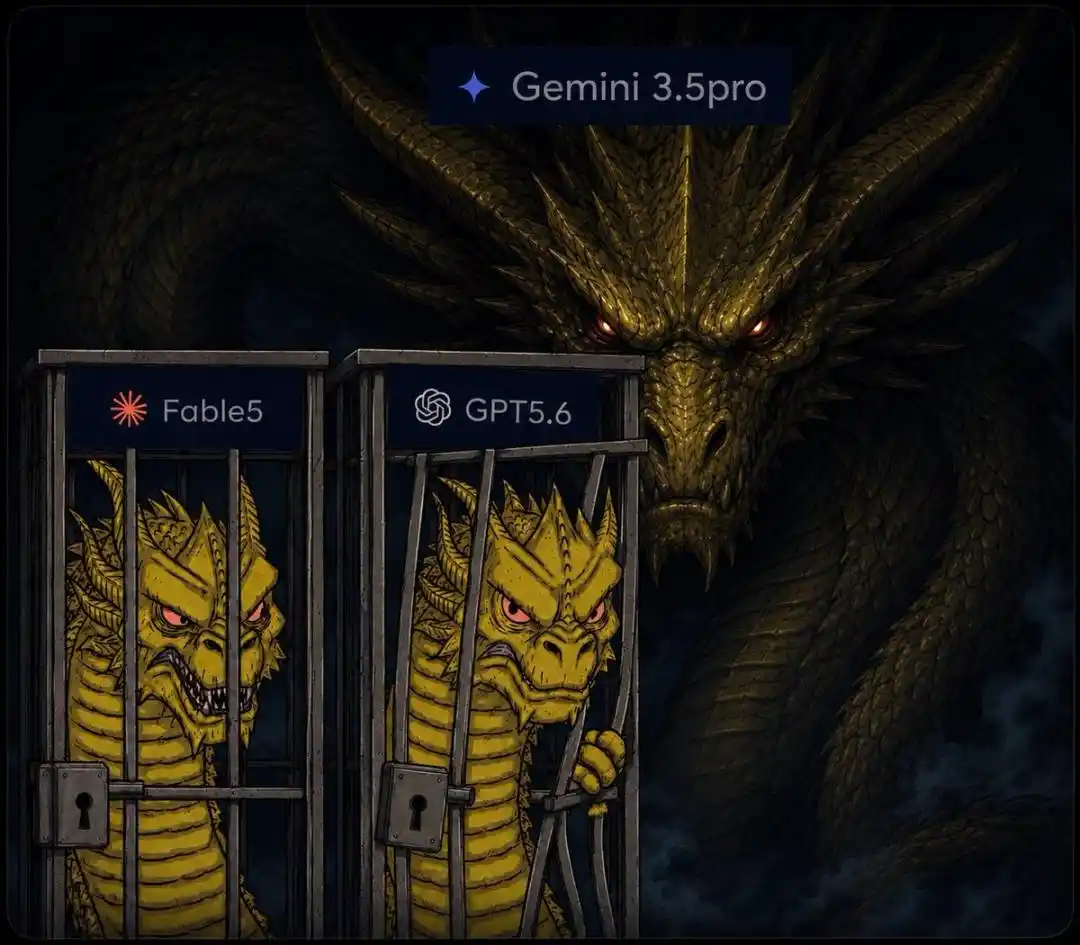
What might overturn Fable 5 could be Google's trump card!

Today, the internet was flooded with leaks about Gemini 3.5 Pro. Rumored to be officially released on July 17th.
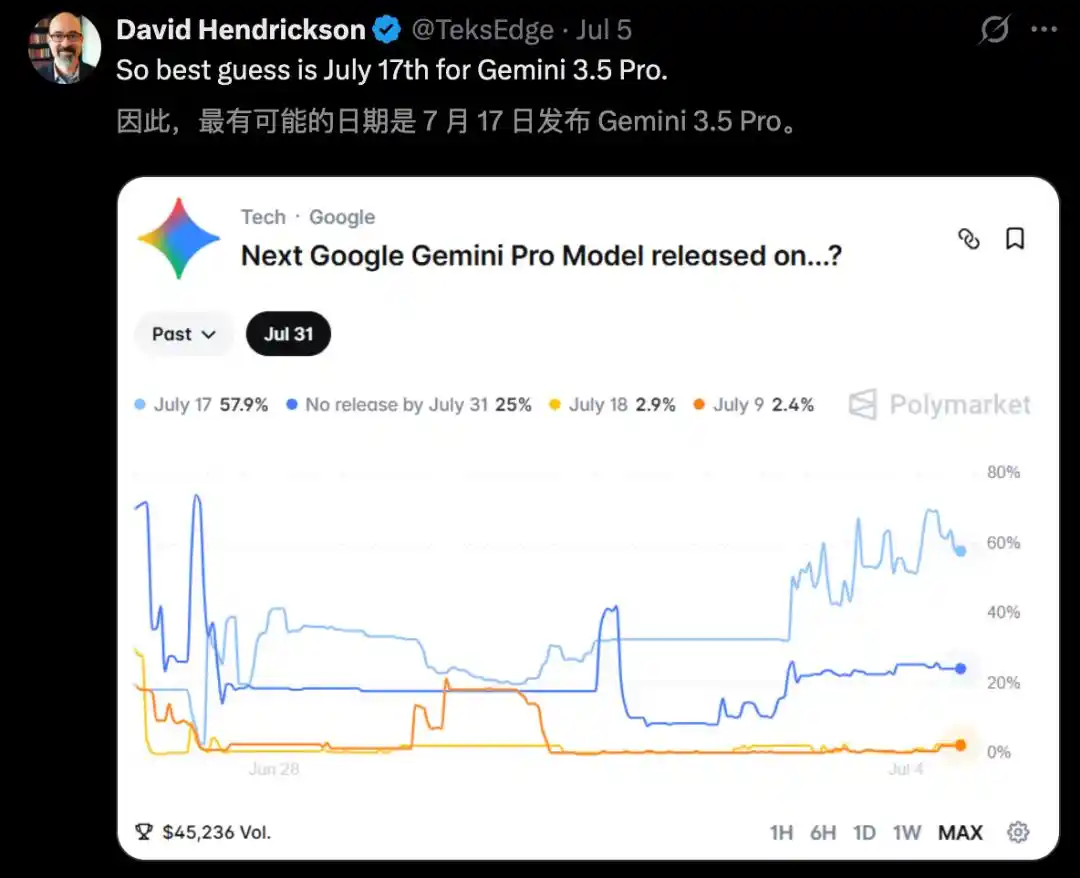
What truly makes people sit up is its performance in front-end generation: one-shot generation, pixel-perfect accuracy, zero errors.

Most crucially, leaked performance data shows Gemini 3.5 Pro has surpassed Fable 5.
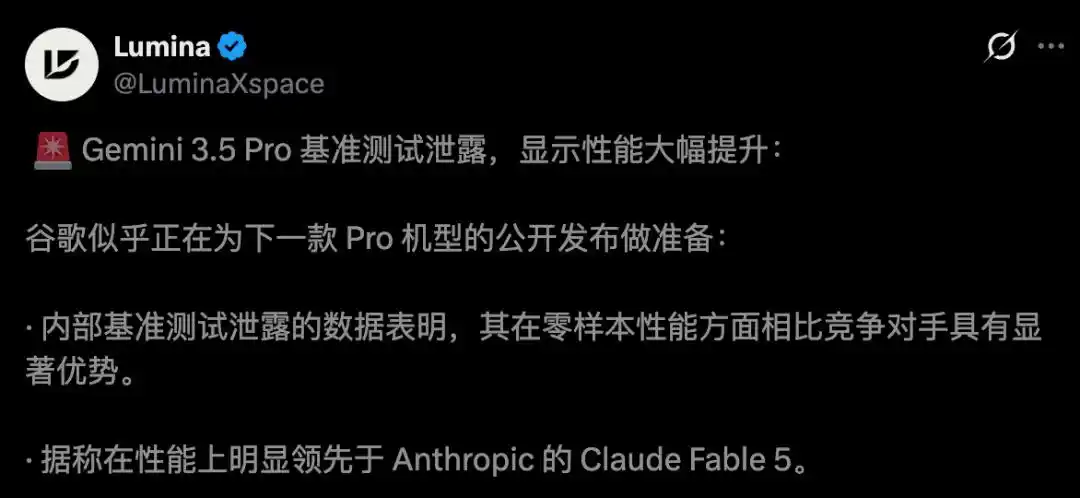
Gemini 3.5 Pro's Front-end Prowess Surpasses Fable 5

After a full two months of holding back, Google's ace card, which they've been reluctant to release, is finally about to be born.

At the I/O conference, they unveiled the Gemini 3.5 series in one go:

But on the day itself, only the lightweight Gemini 3.5 Flash went live; the "premium" Pro was kept in the background.

Sundar Pichai promised on stage, "Give us another month."
June passed, and Pro didn't arrive; now Google has changed their timeline to "July," but still hasn't given a specific calendar date.

Thus, during this information vacuum of official silence, leaks became the sole source of information.

And the Gemini 3.5 Pro pieced together from these fragments presents a rather distinct and somewhat "specialized" picture.

Let's start with the conclusion, which is the strongest and most consistent signal in this round of leaks:

Gemini 3.5 Pro has shown a clear capability leap in "front-end and visual code generation."
Based on feedback from multiple developers on X, the leaked version has visibly improved in these areas—

  • Better Design Taste: Generated interfaces are no longer "programmer aesthetic"; color schemes, whitespace, and hierarchy are closer to a professional designer's touch;
  • Cleaner UI: One-shot generated front-end pages have clearer structures and less redundancy;
  • Significant Enhancement in SVG Generation: This is a repeatedly highlighted area of improvement; complex vector graphics can be drawn correctly in one go with fewer missing pixels;
  • Higher "Completion Degree" for Front-end: A single prompt can generate a decent-looking page, not a half-finished product.

During testing, developer QASIM-livelifewithai couldn't help but exclaim:

Gemini 3.5 Pro actually generated an SVG image identical to Gemini lead Logan Kilpatrick himself!

A comparison image between Gemini 3.5 Pro and Fable 5 shows the former slightly superior in artistic conception and atmosphere.


For example, generating a UI with just one sentence.

A hand-drawn SVG mechanical orrery was also achieved by Gemini 3.5 Pro with just one prompt.

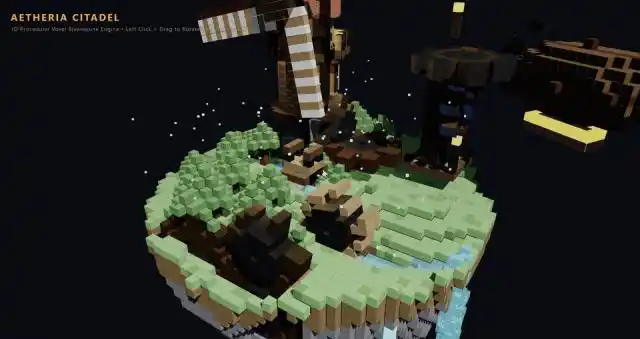
Gemini 3.5 Pro can also use Three.js to generate a floating steampunk island.
In developer circles, a slightly jesting term has even started circulating to describe Gemini 3.5 Pro's front-end performance—

"mogging" (completely dominating).

Hardcore Reasoning: Inferior to Fable 5, GPT-5.6

Dominating in front-end doesn't mean dominating in all areas.

In LM Arena's stealth testing, Gemini 3.5 Pro indeed suppressed a host of opponents on these tasks.

However, on the hardest Agent tasks, repository-level software engineering, and long-range tasks, 3.5 Pro still can't beat Fable 5, nor catch up to GPT-5.6.

Fable 5 is an absolute beast on heavy engineering tasks like "repository-level, deep debugging, high-ceiling architectural refactoring," scoring quite well on benchmarks like SWE-Bench Pro;

GPT-5.6 similarly holds a steady lead on the most challenging multi-step reasoning tasks.

And what level is Gemini 3.5 Pro on this line?

Even the leaker themselves stated frankly that even with a new foundation, it "still can't beat Fable 5 or GPT-5.6 on the hardest agent and long-chain tasks."

Earlier last month, a leaked benchmark was even less polite, directly ranking it behind Fable 5 and GPT-5.6.

Its weaknesses are concentrated in reasoning, coding, and long-term task execution.

Old Foundation Swapped, Retrained from Scratch

More intriguing than the front-end performance is why Gemini 3.5 Pro is delayed.

According to the leak, the reason Google is dragging into July is not that they spent the extra time on "parameter tuning and fine-tuning," but rather on doing something much heavier—

Conducting another round of "pre-training," no longer relying on the older foundation.

In other words, Pro is not a simple scaled-up version of Flash, but a rebuild on a new foundation.

Apart from the model itself, the leak also contains an easter egg:

Google is preparing an image model called Nano Banana Pro based on this new Gemini 3.5 Pro foundation, aiming to directly compete with OpenAI's GPT-Image 2.

If true, this means Google wants to strengthen simultaneously on both the "text + image" fronts.

One round of retraining, feeding two product lines: one to tackle front-end code, one to tackle image generation.

Google's plan is quite clever—using the same foundation to open fire on two battlefields at once. Now, the entire internet is waiting for July 17th.

And this is precisely the reality of the 2026 large model arms race. Everyone is desperately accelerating, yet no one has managed to completely overturn their opponent in one go.

Looking back at the past six months, the buzz in the AI circle has had little to do with Google, with OpenAI and Anthropic taking turns stealing the spotlight.
But those familiar with Google know they love to hold back, accumulate a wave, and then release everything in one go.

This time with Gemini 3.5 Pro, it's likely the same strategy: using a flagship model retrained on a new foundation to reclaim lost ground in one fell swoop.

Whether July 17th will actually happen, and if it does, whether it will be as the leaks say, the answer can only come from Google itself.

But one thing is already certain: in this war of the gods, no one dares to stop to catch their breath.

References:

https://x.com/ggg78g89/status/2073783990646149488?s=20

https://x.com/HarshithLucky3/status/2073767413494284754?s=20

https://x.com/ggg78g89/status/2073852747049517231?s=20

This article is from WeChat public account "New Zhiyuan" (新智元), author: ASI Apocalypse; Editor: Peach (桃子)

Questions liées

QWhat is the main topic of the leaked information about Gemini 3.5 Pro?

AThe main topic is Gemini 3.5 Pro's significant leap in front-end and visual code generation capabilities, reportedly surpassing Fable 5 in this area. It is also mentioned to be scheduled for release on July 17th.

QAccording to the article, in which specific area does Gemini 3.5 Pro outperform Fable 5?

AAccording to the article, Gemini 3.5 Pro outperforms Fable 5 specifically in front-end and visual code generation, including generating cleaner UI, better design aesthetics, improved SVG generation, and higher completion rates for front-end pages.

QWhat are the key weaknesses or areas where Gemini 3.5 Pro is said to still lag behind competitors like Fable 5 and GPT-5.6?

AGemini 3.5 Pro's key weaknesses are in hardcore reasoning, long-context task execution, agent tasks, and large-scale, complex software engineering tasks. It reportedly still cannot beat Fable 5 or GPT-5.6 in these areas.

QWhat major change did Google reportedly make to Gemini 3.5 Pro that caused its delayed release?

AGoogle reportedly conducted a new 'pre-training' run for Gemini 3.5 Pro, rebuilding it on a new base foundation instead of just scaling up the Gemini 3.5 Flash model. This fundamental retraining is cited as the reason for the delay.

QWhat future model based on the Gemini 3.5 Pro base is mentioned in the leaks, and what is its target?

AThe leaks mention a future model called 'Nano Banana Pro,' an image model based on the new Gemini 3.5 Pro foundation. Its target is to more directly compete with OpenAI's GPT-Image 2.

Lectures associées

Q-Day : Le compte à rebours avant que l'informatique quantique ne mette fin aux cryptomonnaies ?

**Q-Day et la Cryptographie : La Menace Quantique sur les Cryptomonnaies** L'avènement de l'ordinateur quantique tolérant aux fautes (CRQC) représente une menace existentielle pour les cryptomonnaies en raison de sa capacité à casser les algorithmes de chiffrement asymétrique actuels (comme ECDSA) via l'algorithme de Shor. Le "Q-Day", point critique où cette capacité devient pratique, est estimé entre 2035 et 2045. Les blockchains, par leur nature immuable et décentralisée, sont particulièrement vulnérables. Le risque est immédiat pour les actifs dont la clé publique est déjà exposée sur la chaîne (ex : certaines anciennes adresses Bitcoin). La migration vers la cryptographie post-quantique (PQC), comme les algorithmes basés sur les réseaux (ML-KEM/DSA) ou les hachages (SLH-DSA), est donc urgente. Cependant, cette transition est extrêmement complexe : * **Pour Bitcoin** : Le défi principal est la gouvernance et la gestion sociale des UTXO historiques à risque. Une mise à jour progressive par soft fork est privilégiée, mais elle se heurte à l'inflation de la taille des signatures PQC et à un dilemme éthique sur le gel éventuel des actifs non migrés. * **Pour Ethereum** : La migration nécessite une refonte à plusieurs niveaux (comptes, consensus, couche de données). La stratégie repose sur l'agilité cryptographique, l'abstraction de compte pour les utilisateurs et des solutions techniques comme leanXMSS couplé à un zkVM pour compresser les grandes signatures. La fenêtre d'action confortable est estimée à 5-8 ans. L'industrie doit se coordonner à l'échelle de l'écosystème (protocoles, portefeuilles, bourses). La menace quantique n'anéantira pas la blockchain, mais force une reconfiguration fondamentale de ses bases cryptographiques, testant sa résilience technique et sociale.

marsbitIl y a 30 mins

Q-Day : Le compte à rebours avant que l'informatique quantique ne mette fin aux cryptomonnaies ?

marsbitIl y a 30 mins

Compte à rebours pour Q-Day : L'informatique quantique va-t-elle mettre fin aux cryptomonnaies ?

La cryptographie moderne est vulnérable face aux ordinateurs quantiques, en particulier l'algorithme de Shor, menaçant les systèmes actuels comme RSA et ECC. Le « Q-Day », moment où les ordinateurs quantiques pourront casser ces cryptosystèmes, est estimé entre 2035 et 2045. La cryptographie post-quantique (PQC) se développe, avec des algorithmes comme ML-KEM, ML-DSA et SLH-DSA normalisés par le NIST, pour garantir une sécurité durable. Dans le domaine de la blockchain, le Bitcoin et l'Ethereum sont particulièrement exposés. Pour Bitcoin, le risque principal concerne les UTXO dont la clé publique est déjà exposée sur la chaîne. La migration vers des algorithmes PQC se heurte à des défis techniques (signatures plus volumineuses) et à un dilemme de gouvernance concernant les fonds dormants. Ethereum, grâce à son agilité cryptographique et à l'abstraction de compte, pourrait adopter une approche plus graduelle, notamment via ses L2. La transition ne sera pas uniquement technique, mais nécessitera un large consensus social et une coordination à l'échelle de l'écosystème. Le véritable enjeu n'est pas l'absence de solutions, mais la capacité de l'écosystème à migrer de manière coordonnée avant que les risques quantiques ne deviennent une réalité économique. La fenêtre d'action confortable est estimée à 5-8 ans.

链捕手Il y a 44 mins

Compte à rebours pour Q-Day : L'informatique quantique va-t-elle mettre fin aux cryptomonnaies ?

链捕手Il y a 44 mins

550 millions de dollars de pertes pour vendre des cryptos, le jour où la foi de Strategy est venue à échéance

Le 6 juillet, Michael Saylor a annoncé que MicroStrategy avait vendu 3 588 BTC pour environ 216 millions de dollars, afin de payer les dividendes de ses titres de crédit numérique. Cette vente, réalisée entre le 29 juin et le 5 juillet à un prix moyen de 60 197 dollars par BTC, a généré une perte réalisée d'environ 55 millions de dollars, le coût d'acquisition moyen étant de 75 651 dollars. Cette décision marque un tournant pour la société, qui n'avait pratiquement pas vendu de BTC depuis 2022. Début juin, une vente test de 32 BTC avait déjà provoqué une réaction négative du marché. Fin juin, le conseil d'administration a officialisé cette nouvelle stratégie, autorisant la vente de jusqu'à 1,25 milliard de dollars de Bitcoin pour couvrir les obligations financières. La mécanique de croissance de MicroStrategy, qui reposait sur l'émission d'actions à prime pour acheter plus de Bitcoin, est actuellement bloquée. Avec la prime de ses actions (mNAV) proche d'un seuil critique (1,22x), émettre de nouvelles actions diluerait les actionnaires existants. Les canaux de financement par actions privilégiées (STRC) et obligations convertibles sont également difficiles d'accès actuellement. Face à des obligations annuelles de dividendes et d'intérêts estimées entre 1,7 et 1,76 milliard de dollars, la vente d'une partie du Bitcoin est devenue la solution rationnelle pour respecter ses engagements. MicroStrategy détient encore environ 843 775 BTC et 2,55 milliards de dollars de réserve de trésorerie, pouvant couvrir environ 17 mois de dépenses obligatoires. Cependant, si cette pression de vente pour payer les intérêts devenait régulière (potentiellement 29 000 BTC par an), elle pourrait peser sur le marché et remettre en cause le modèle des entreprises du secteur des actifs numériques (DAT). Le redémarrage du cycle de croissance de MicroStrategy dépend désormais d'une remontée durable du prix du Bitcoin, qui permettrait à ses titres de financement de retrouver leur valeur nominale.

链捕手Il y a 1 h

550 millions de dollars de pertes pour vendre des cryptos, le jour où la foi de Strategy est venue à échéance

链捕手Il y a 1 h

Trading

Spot
活动图片