AMD Stock Price Forecast 2026 to 2030: Wall Street Signals a Major $657 Target!

marsbitPublié le 2026-06-02Dernière mise à jour le 2026-06-02

Résumé

AMD's stock has seen a dramatic rally, rising over 130% year-to-date to around $510 as of mid-2026. This surge is driven by a fundamental shift in the company's business, with its Data Center segment now the core contributor, posting a record $5.8 billion in Q1 2026 revenue (up 57% YoY) and exceeding 50% of total revenue for the first time. CEO Dr. Lisa Su raised the long-term server CPU Total Addressable Market (TAM) forecast to over $120 billion annually by 2030. Analyst sentiment is bullish. The consensus rating is a "Strong Buy" with a 12-month average price target of $472.17, though several firms have recently set higher targets, with Barclays issuing a street-high target of $665. Long-term models project a 2030 price range of approximately $493 to $822, with a baseline scenario near $657, anchored to AMD's expanded TAM guidance. Key growth catalysts include strong demand for EPYC server CPUs and Instinct AI GPUs, partnerships with OpenAI and Meta, and the upcoming MI450 series and Helios rack-scale platform. However, significant risks remain, including a high forward P/E ratio exceeding 169x and increased competition, notably from NVIDIA's planned entry into the server CPU market. Investors must weigh the strong execution and growth trajectory against these substantial valuation and competitive pressures.

AMD has delivered one of the most dramatic stock performances in the semiconductor industry in recent years.

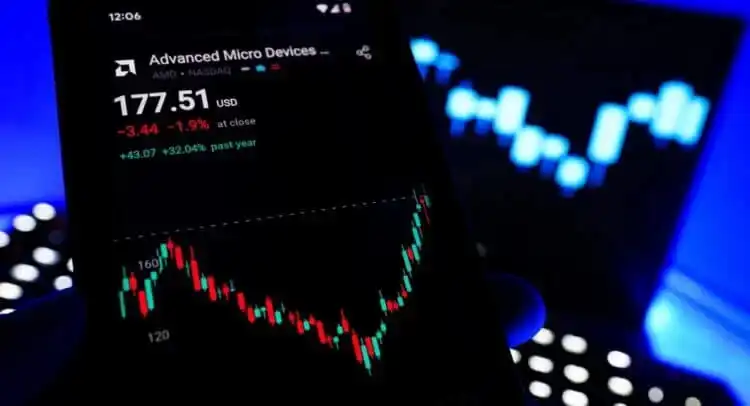
As of June 2026, the stock has surged over 130% year-to-date, trading near $510, with its 52-week range fully illustrating the scale of this turnaround—climbing from a low of $108.62 to a high of $527.20.

Such a robust rally raises a central question for investors searching for "AMD stock price forecast": Has the best of the move already been priced in, or does Wall Street still see substantial upside potential ahead?

This article will answer directly, citing specific numbers from analyst consensus data and AMD's official forward-looking guidance.

Key Takeaways

  • AMD's stock price has risen over 130% year-to-date as of June 2026, trading near $510, with a 52-week range from a low of $108.62 to a high of $527.20.
  • Q1 2026 revenue reached $10.3 billion, up 38% year-over-year, with the Data Center segment growing 57% to $5.8 billion—the first time in AMD's history that Data Center contributed more than half of total revenue.
  • AMD CEO Dr. Lisa Su revised the server CPU Total Addressable Market (TAM) forecast from $60 billion annually to over $120 billion by 2030 during the Q1 earnings call, calling this shift a "structural transformation for our business."
  • S&P Global Market Intelligence's consensus rating, aggregating 51 analysts, is a "Strong Buy," with a 12-month average price target of $472.17; the highest Wall Street target reached $665 following a Barclays upgrade on June 1, 2026.
  • Long-term analyst models forecast AMD's stock price could range between $493 and $822 by 2030, with a base-case mean near $657, anchored to AMD's official $120 billion server CPU market prediction.
  • A P/E ratio exceeding 169x and NVIDIA's announced entry into the server CPU market are two specific risks investors must seriously weigh before taking any action.

The Driver Behind AMD's AI Wave

AMD's powerful 2026 rebound is not built on narrative alone.

It reflects a genuine structural transformation at the company's core—understanding this shift is the starting point for evaluating any credible AMD stock price forecast.

In short: AMD crossed a critical threshold in 2026—Data Center is no longer just a growth story adjacent to the core business.

Data Center is now the core business itself.

A $5.8B Quarter: AMD Data Center Sets a New Record

According to the Q1 2026 earnings press release from AMD's official Investor Relations page, AMD reported Q1 2026 revenue of $10.3 billion, up 38% year-over-year, beating analyst expectations of approximately $9.9 billion.

Non-GAAP EPS was $1.37, a 43% increase from the prior year, exceeding the Wall Street consensus estimate of $1.27 by $0.10.

While the overall beat was strong, that wasn't the most critical part.

The Data Center segment generated record revenue of $5.8 billion in Q1 2026, a 57% year-over-year increase, primarily driven by enterprise and hyperscale cloud provider demand for AMD EPYC server CPUs and Instinct AI GPUs.

Lisa Su informed investors on the Q1 2026 earnings call: "These results mark a definitive inflection point in our growth trajectory and a fundamental transformation in the structure of our business."

AMD's Q1 free cash flow also hit a quarterly record of $2.6 billion, more than triple the prior year's figure. This number is crucial as it indicates the AI infrastructure cycle is translating into real profitability, not just top-line momentum.

AMD Instinct GPU Lineup and What Q2 2026 Guidance Signals

Management expects Q2 2026 revenue of approximately $11.2 billion, representing 46% year-over-year growth, with the midpoint about $700 million above prior market expectations.

This guidance gap is significant: AMD isn't just clearing a low bar; it's continuously raising the bar as AI infrastructure demand accelerates.

During the same earnings call, Lisa Su also raised AMD's long-term server CPU TAM forecast from about $60 billion annually (growing 18% per year) to over $120 billion (growing over 35% per year) by 2030.

This isn't a tactical adjustment; it's a structural growth thesis that changes how analysts model AMD's long-term revenue ceiling.

AMD also has clear GPU deployment partnerships with OpenAI and Meta, both anchored by multi-gigawatt Instinct GPU commitments, extending revenue visibility into the second half of 2026 and beyond.

The MI450 series, expected to ramp in larger volumes in H2 2026, and the Helios rack-scale platform are the next concrete catalysts institutional investors are closely watching.

AMD Stock Price Forecast: Analyst Targets from Now to 2030

This is the part most investors want to know: the specific numbers.

It's worth noting upfront that AMD's stock price has surpassed many analysts' average targets following the post-Q1 surge—this means the consensus reflects a coverage group still catching up to the move, not an impenetrable ceiling.

AMD Stock Price Forecast: 2026 Wall Street Analyst Consensus

According to S&P Global Market Intelligence, aggregating 51 analyst ratings, AMD holds a "Strong Buy" consensus rating as of mid-2026, with a 12-month average price target of $472.17.

The current highest single-stock target on Wall Street is $665, set by Barclays analyst Tom O'Malley on June 1, 2026, implying roughly 30% potential upside from AMD's current ~$510 stock price.

TradingView's aggregated consensus price target from 58 underwriters is $481.22; as of early June 2026, the highest single-stock targets on Wall Street—including Barclays' $665, Mizuho's $615, and TD Cowen's $600—reflect a consensus rapidly moving upward.

Bernstein upgraded AMD to "Outperform" with a $525 price target, citing its model forecasting EPS exceeding $14 in 2027 and nearing $20 in 2028.

Evercore ISI's AMD price target is $579, making it one of the most bullish institutional investors on AMD within weeks of the Q1 2026 earnings report.

According to TIKR's post-earnings analyst report tracking, over 20 brokerages raised their AMD price targets after the Q1 earnings release.

This breadth is significant: when over 20 institutions reassess in sync, it represents a shift in the broader institutional consensus, not just amplification of a few bullish voices.

AMD 2030 Stock Price Forecast: What Long-Term Models Say

For investors with a time horizon beyond 12 months, the picture is deliberately broader—five-year stock models carry inherent uncertainty, and AMD's 2030 range candidly reflects that.

24/7 Wall St.'s proprietary forecasting model projects an average AMD stock price around $657 by 2030, with a potential range from approximately $493 to $822, depending on AMD's execution of its AI and Data Center roadmap.

The base-case scenario (near $657) assumes AMD successfully ramps the MI450 series and Helios rack-scale platform, expands gross margins as the Data Center mix grows, and maintains the revenue momentum demonstrated in Q1 and Q2 earnings.

The bullish scenario (near the upper end around $822) requires AMD to secure more hyperscale cloud provider rack-scale orders, normalize its China revenue base, and maintain competitive positioning against a fast-moving NVIDIA product roadmap.

The conservative floor (around $493) reflects a scenario where the macro environment slows enterprise IT budgets, export controls tighten further, or NVIDIA more aggressively consolidates AI accelerator market share than current analyst models assume.

The most important anchoring data for any AMD 2030 stock price forecast comes from AMD management itself: Lisa Su's revised server CPU TAM to over $120 billion annually by 2030 is the structural revenue ceiling long-term models are based upon.

If AMD can capture a meaningful share of this market at current gross margin levels, the EPS growth trajectories underpinning Bernstein's and Evercore ISI's price targets carry considerable credibility.
AMD Stock: Bull and Bear Case

Any complete AMD stock price forecast must candidly examine both sides of the trade.

Here lies the real tension.

AMD Bull Case: How MI450, OpenAI, and Meta Could Drive the Next Leg Up

The structural bull case begins with a Data Center segment showing no signs of stalling.

AMD Data Center revenue grew 57% year-over-year in Q1 2026, and Q2 guidance implies 46% year-over-year growth, with management explicitly stating on the earnings call that key customer forecasts for MI450 and Helios rack-scale platforms now exceed AMD's initial plans.

The GPU partnerships with OpenAI and Meta—both anchored by 6-gigawatt Instinct GPU deployment agreements—extend revenue visibility into the second half of 2026 and beyond.

AMD's quarterly free cash flow also hit a record $2.566 billion, giving the company the financial strength to invest in next-generation chip development without relying on external capital.

Bernstein's price target model, forecasting EPS over $14 in 2027 and near $20 in 2028, is predicated on AMD's Data Center AI revenue beginning to compound at scale—a scenario receiving positive reinforcement from Q1 numbers.

If AMD executes the MI450 ramp successfully and generates "tens of billions" of dollars in annual Data Center AI revenue by 2027, as management guided on the Q1 call, the current distribution of analyst price targets could very well shift significantly upward again.

AMD Bear Case: 169x P/E, NVIDIA's CPU Move, and Why Timing is Everything

Valuation is the most immediate headwind, and worth stating upfront.

At the current stock price around $510, AMD's P/E ratio exceeds 169x, leaving virtually no room for execution missteps, guidance revisions, or a deterioration in AI capex cycles from its largest partners.

On the competition front, Wolfe Research noted in late May 2026 that NVIDIA is actively planning to enter the discrete server CPU market—which would pit it directly against AMD's fastest-growing business segment, the very category Lisa Su's $120 billion TAM target relies on.

TSMC's advanced node capacity remains a physical constraint, limiting AMD's ability to rapidly scale Instinct GPU shipments even with strong hyperscale cloud demand signals.

China export control risks also haven't disappeared.

Any tightening of semiconductor trade restrictions would slice into AMD's international revenue base, requiring significant guidance cuts to reflect reality—and at a 169x P/E, any downward revision carries an outsized downside risk for the stock price.

Wall Street's consensus forecast for AMD stock is "Buy," but the valuation premium embedded in that consensus demands near-flawless quarterly execution from the company.

Frequently Asked Questions

What is the AMD stock price forecast for 2026?

According to the consensus aggregated by S&P Global Market Intelligence from 51 analysts, as of mid-2026, the 12-month average AMD price target is $472.17, with the highest target at $625.

What is the AMD stock price forecast for 2030?

24/7 Wall St.'s long-term model forecasts a core AMD stock price prediction of approximately $657 for 2030, with a potential range of $493 to $822, depending on AI execution progress and competitive dynamics.

What are analyst price targets for AMD in 2026?

Notable AMD price targets to watch include Bernstein's $525, Evercore ISI's $579, and a high target of $625, all citing accelerating Data Center revenue and MI450 GPU ramp as justification.

What is the AMD stock price forecast for tomorrow?

Short-term AMD stock price forecasts are highly uncertain—AMD's recent average daily volatility is around 5%, making any single-day prediction highly speculative and should not be used for trading decisions.

What is AMD's future stock price forecast based on its own guidance?

AMD CEO Lisa Su expects the server CPU market to exceed $120 billion annually by 2030, serving as the primary growth foundation upon which long-term AMD future stock price prediction models are built.
Conclusion

AMD's transformation from a PC-era chipmaker into a data-center-centric semiconductor company is no longer just a proposition—it's showing up in the quarterly revenue numbers.

Data Center segment growth of 57% year-over-year, Q2 2026 revenue guidance of $11.2 billion, record free cash flow of $2.566 billion, and recent analyst AMD price targets ranging from $472 to $665, with Barclays setting a new Wall Street high on June 1, 2026.

That said, a P/E ratio above 169x and an increasingly competitive landscape mean the margin of safety is quite thin—any investor acting on an AMD stock price forecast should weigh these risks with equal seriousness.


Questions liées

QWhat is the analyst consensus rating and average 12-month target price for AMD as of mid-2026, according to the article?

AAccording to S&P Global Market Intelligence, AMD has a 'Strong Buy' consensus rating from 51 analysts, with an average 12-month target price of $472.17.

QWhat key milestone did AMD's Data Center segment achieve in Q1 2026, and what was its revenue?

AIn Q1 2026, AMD's Data Center segment revenue exceeded 50% of total company revenue for the first time, generating $5.8 billion, which represents a 57% year-over-year increase.

QWhat is the primary long-term anchor for AMD's 2030 stock price predictions mentioned in the article?

AThe primary anchor is CEO Dr. Lisa Su's revised projection that the server CPU Total Addressable Market (TAM) will exceed $120 billion annually by 2030, up from a previous estimate of about $60 billion.

QWhat are the main bearish (or risk) arguments for AMD stock presented in the article?

AThe main bearish arguments are: 1) A high forward P/E ratio exceeding 169x, leaving little room for execution errors. 2) Increased competition, notably from NVIDIA's reported plans to enter the discrete server CPU market. 3) Potential constraints from TSMC's advanced node capacity and risks from tighter export controls to China.

QWhat is the long-term price prediction range for AMD stock by 2030 according to the 24/7 Wall St. model cited?

AThe 24/7 Wall St. model predicts an average AMD stock price of approximately $657 by 2030, with a potential range from around $493 to $822, depending on execution of its AI roadmap and competitive dynamics.

Lectures associées

硬氪独家首发 | La société d'intelligence corporelle marine « Shihang Intelligent » obtient un financement record de 10 milliards de yuans, avec des investissements de Zhu Xiaohu et Temasek

La société d'intelligence incarnée océanique « Shihang Intelligent » a levé un financement record de plus de 10 milliards de yuans en série A, marquant la plus importante levée de fonds unique dans le domaine des robots océaniques mondial. Les investisseurs incluent des fonds de capital-investissement tels que Shanghe Momentum, Vertex Growth, ainsi que des actionnaires existants comme la société cotée en bourse Dayang Motor. Le fondateur et PDG, Chen Xiaobo, lauréat du premier prix national de progrès scientifique et technologique de la défense, dirige l'entreprise. Le financement sera principalement utilisé pour la R&D technologique, l'expansion mondiale et la construction de l'écosystème industriel. La société a développé des capacités fondamentales dans six systèmes clés pour les robots marins, permettant des opérations à pleine profondeur (0-10 000 mètres) et dans des scénarios comme le nettoyage de navires, la sécurité sous-marine, l'éolien offshore et l'inspection des fonds marins. Rien qu'au premier semestre 2026, le montant des commandes a dépassé 10 milliards de yuans. En avril de cette année, Shihang Intelligent a lancé le grand modèle d'intelligence incarnée océanique « Cangqiong CEORION ». Ce modèle intégré de bout en bout permet aux robots de réaliser de manière autonome 12 catégories de tâches sous-marines, avec un taux de réussite supérieur à 90 % dans les tests de simulation et une capacité d'adaptation à zéro échantillon dépassant 70 %. Il intègre un module de raisonnement physique pour réduire les risques de collision de 80 %. La société a également été sélectionnée comme partenaire clé pour le projet national singapourien d'inspection et de nettoyage des coques de navires.

marsbitIl y a 16 mins

硬氪独家首发 | La société d'intelligence corporelle marine « Shihang Intelligent » obtient un financement record de 10 milliards de yuans, avec des investissements de Zhu Xiaohu et Temasek

marsbitIl y a 16 mins

En trois mois, 35 milliards de yuans, les investisseurs se disputent l'"OpenAI du monde physique"

Une course effrénée des investisseurs s'engage vers l'AGI physique. La start-up chinoise Jijia Shijie (Excellent Vision) vient de boucler un financement de 3,5 milliards de yuans en seulement trois mois, portant sa valorisation à plus de 10 milliards. Dirigée par Huang Guan, un docteur de 30 ans de l'Université Tsinghua, l'entreprise attire un large éventail de fonds d'investissement nationaux et internationaux. La stratégie de Jijia Shijie repose sur un système en « double pyramide » combinant algorithmes et données, et centré sur un « modèle du monde » pour comprendre et interagir avec l'environnement physique. Ses modèles phares, GigaBrain et GigaWorld, ont obtenu des premières places dans des benchmarks mondiaux. La société vise le « moment GPT-3 » de l'AGI physique, où des capacités émergentes se manifesteront. Concrètement, Jijia Shijie déploie sa technologie sur deux fronts : grand public (robot domestique polyvalent « Shiguang S1 ») et industriel (robots « Maker » pour l'automatisation des usines et modèle de conduite autonome « DriveDreamer »). Ces déploiements génèrent des données et des revenus essentiels pour alimenter la boucle d'amélioration de ses modèles. L'objectif ultime est de dépasser l'AGI purement numérique pour créer une intelligence capable d'agir dans le monde physique, remodelant potentiellement les modes de production et la vie quotidienne. Les investisseurs parient que ce futur est proche.

marsbitIl y a 41 mins

En trois mois, 35 milliards de yuans, les investisseurs se disputent l'"OpenAI du monde physique"

marsbitIl y a 41 mins

Quel lien existe entre Huang Zheng, le fondateur de Pinduoduo, et la blockchain ?

L'auteur de l'article explore le lien entre Huang Zheng, fondateur de Pinduoduo, et la technologie blockchain, à travers une réflexion inspirée par l'essai de Huang « Inverser le capitalisme ». L'article explique que le modèle économique fondamental de Pinduoduo est une « affaire d'assurance » basée sur la gestion de l'« incertitude ». Huang Zheng observe que les capitaux tendent à s'accumuler chez les riches car ils peuvent absorber les incertitudes (comme les risques de maladie ou de perte d'emploi) que les plus pauvres paient pour éviter via des assurances ou des achats sécurisés. Le concept de Pinduoduo, le « group buying » (achat groupé), fonctionne comme une « assurance inversée ». Il agrège la demande préalable d'un grand nombre de consommateurs pour créer une commande certaine et massive, permettant aux usines de réduire le risque de surproduction. Cette certitude permet aux fabricants de baisser leurs prix, faisant ainsi refluer une partie de la valeur vers les consommateurs. Le lien avec la blockchain apparaît comme la pièce manquante pour perfectionner ce modèle. Le principal défi de « l'assurance inversée » est que l'engagement individuel d'un consommateur n'est pas crédible ou coûteux à faire respecter. La blockchain, via ses contrats intelligents (smart contracts), pourrait résoudre ce problème en rendant les engagements (comme une intention d'achat) contraignants, vérifiables et exécutables automatiquement, sans intermédiaire. Huang Zheng lui-même s'interroge : la blockchain n'est-elle pas idéalement conçue pour ce type d'« assurance inversée » ? En conclusion, l'article compare deux voies pour créer de la certitude : la voie « Pinduoduo », qui utilise la masse pour aplanir l'incertitude, et la voie « Bitcoin », qui verrouille les règles par un code inviolable, remplaçant la confiance en une institution par la confiance en un protocole.

链捕手Il y a 2 h

Quel lien existe entre Huang Zheng, le fondateur de Pinduoduo, et la blockchain ?

链捕手Il y a 2 h

Le magnat du stockage qui a conquis des milliers de milliards de territoire ne deviendra jamais l'homme le plus riche

Fondateur de GigaDevice et ChangXin Technology, Zhu Yiming est une figure majeure de l'industrie chinoise des puces mémoire. Malgré la valeur boursière potentielle de ses entreprises (ChangXin visant les 1 000 milliards de yuans, GigaDevice valant 340 milliards), sa fortune personnelle reste limitée en raison de sa faible participation directe (moins de 3% dans ChangXin). GigaDevice (兆易创新), créée en 2005, a débuté avec des NOR Flash, profitant du désengagement des géants comme Samsung pour capturer des parts de marché (20% mondial en 2025). L'entreprise a diversifié ses activités vers les microcontrôleurs (MCU), les capteurs et les puces analogiques, mais les mémoires et MCU représentent 92% de son chiffre d'affaires. Son modèle économique Fabless (sans usine) et sa focalisation sur les segments de moyenne et basse gamme lui ont permis de maintenir une rentabilité solide, avec des marges brutes autour de 40%. Cependant, l'industrie des semi-conducteurs mémoire est très cyclique, comme en témoignent les fluctuations de ses bénéfices nets. L'article souligne que le modèle Fabless présente une vulnérabilité face aux cycles sévères du secteur. C'est pourquoi Zhu Yiming a cofondé ChangXin Technology en 2016 avec le gouvernement de Hefei, adoptant un modèle IDM (intégré) nécessitant des investissements massifs (équipements évalués à 169,3 milliards de yuans fin 2025). Son engagement personnel – renoncement au salaire, partage des incitations actions, verrouillage prolongé de ses parts – a été crucial pour sécuriser le financement public. En définitive, bien que Zhu Yiming ait "bâti un empire" dans le stockage, sa stratégie de dilution du capital pour assurer le développement de ses entreprises le place loin des tout premiers rangs des fortunes individuelles chinoises.

marsbitIl y a 2 h

Le magnat du stockage qui a conquis des milliers de milliards de territoire ne deviendra jamais l'homme le plus riche

marsbitIl y a 2 h

Une faille de gouvernance sur Token Of Power a drainé 1,58 million de dollars en WETH, selon TRM

La société d'intelligence blockchain TRM Labs a détaillé une attaque par prise de contrôle de gouvernance contre le protocole Token of Power, drainant environ 1,58 million de dollars en WETH. Selon l'analyse, l'attaquant a exploité une faille dans la configuration DAO Aragon du protocole : l'absence de délai d'exécution (timelock). Cela lui a permis de proposer, voter et exécuter une action de gouvernance malveillante en un seul bloc. L'opération aurait été financée avec 662 ETH retirés de Tornado Cash. L'attaquant a acheté suffisamment de jetons TOP pour obtenir le pouvoir de vote majoritaire, a frappé 10 milliards de nouveaux TOP et les a échangés contre du WETH via un pool Balancer avant de blanchir les fonds via Tornado Cash. Cette attaque illustre comment la conception de la gouvernance peut devenir un risque de sécurité direct. Sans timelock pour donner aux utilisateurs et aux équipes de sécurité un temps de réaction, un vote hostile peut être exécuté instantanément. Pour les utilisateurs de la DeFi, cet incident rappelle que les risques ne se limitent pas aux bugs de code smart-contract. Les paramètres de gouvernance, les contrôles des trésoreries et les seuils de vote sont tout aussi critiques. L'affaire montre également comment les mixers et les pools de liquidités peuvent être utilisés dans le sillage d'une exploitation. La suite à surveiller concerne les mouvements potentiels des fonds volés et d'éventuels détails de correction de la part du protocole, d'Aragon ou des fournisseurs de liquidités affectés.

bitcoinistIl y a 4 h

Une faille de gouvernance sur Token Of Power a drainé 1,58 million de dollars en WETH, selon TRM

bitcoinistIl y a 4 h

Trading

Spot
Futures

Articles tendance

Comment acheter ONE

Bienvenue sur HTX.com ! Nous vous permettons d'acheter Harmony (ONE) de manière simple et pratique. Suivez notre guide étape par étape pour commencer votre parcours crypto.Étape 1 : Création de votre compte HTXUtilisez votre adresse e-mail ou votre numéro de téléphone pour ouvrir un compte sur HTX gratuitement. L'inscription se fait en toute simplicité et débloque toutes les fonctionnalités.Créer mon compteÉtape 2 : Choix du mode de paiement (rubrique Acheter des cryptosCarte de crédit/débit : utilisez votre carte Visa ou Mastercard pour acheter instantanément Harmony (ONE).Solde :utilisez les fonds du solde de votre compte HTX pour trader en toute simplicité.Prestataire tiers :pour accroître la commodité d'utilisation, nous avons ajouté des modes de paiement populaires tels que Google Pay et Apple Pay.P2P :tradez directement avec d'autres utilisateurs sur HTX.OTC (de gré à gré) : nous offrons des services personnalisés et des taux de change compétitifs aux traders.Étape 3 : stockage de vos Harmony (ONE)Après avoir acheté vos Harmony (ONE), stockez-les sur votre compte HTX. Vous pouvez également les envoyer ailleurs via un transfert sur la blockchain ou les utiliser pour trader d'autres cryptos.Étape 4 : tradez des Harmony (ONE)Tradez facilement Harmony (ONE) sur le marché Spot de HTX. Il vous suffit d'accéder à votre compte, de sélectionner la paire de trading, d'exécuter vos trades et de les suivre en temps réel. Nous offrons une expérience conviviale aux débutants comme aux traders chevronnés.

411 vues totalesPublié le 2024.12.12Mis à jour le 2026.06.02

Comment acheter ONE

Discussions

Bienvenue dans la Communauté HTX. Ici, vous pouvez vous tenir informé(e) des derniers développements de la plateforme et accéder à des analyses de marché professionnelles. Les opinions des utilisateurs sur le prix de ONE (ONE) sont présentées ci-dessous.

活动图片