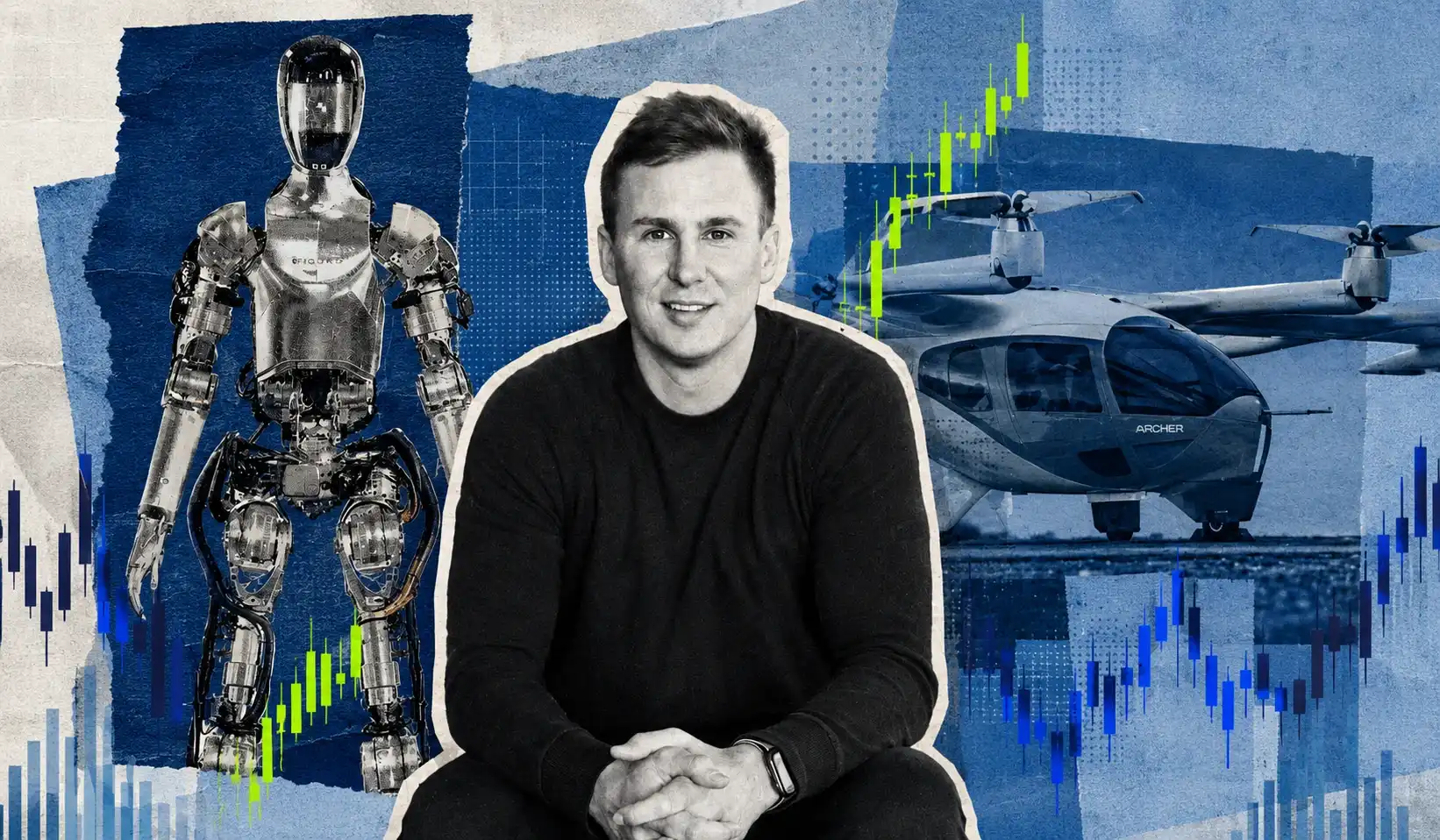
From Farm to Entrepreneur: After Building Flying Cars, He Bet on the Robot Sector and Created a $39 Billion Giant

marsbitPublié le 2026-05-20Dernière mise à jour le 2026-05-20

Résumé

From Farm to Tech Tycoon: Brett Adcock's Journey to a $39B Robot Giant Brett Adcock, a serial entrepreneur from an Illinois farm, has built his third major venture, humanoid robotics company Figure AI, into a $39 billion behemoth backed by NVIDIA, Intel, and others. His path began with the sale of his recruiting platform Vettery for $110 million in 2018. He then co-founded and took electric air taxi company Archer Aviation public in 2021 before departing over strategic differences. Adcock founded Figure AI in 2022 with a 30-year vision to create general-purpose humanoid robots that can work in human-designed environments, aiming to address labor shortages in manufacturing, logistics, and retail. The company gained attention through live-streamed robot sorting challenges and a viral demo, though it faces skepticism over its high valuation versus early commercial progress. A key moment was Figure's split from OpenAI in 2024 after a brief collaboration, with Adcock claiming OpenAI provided limited value and deciding to develop AI models internally—a move OpenAI contested. Adcock's pattern is tackling capital-intensive, long-term tech frontiers, moving from software to aviation to robotics, betting on AI and automation as the future of labor.

Author: Zen, PANews

Humanoid robotics company Figure AI recently initiated a "Human vs. Robot" parcel sorting challenge, attracting global attention. This competition, narrowly won by humans, led many to conclude that "humans won the present but lost the future." This statement is not baseless. Before the competition began, Figure had already started a live stream of robot sorting, which has now been broadcasting continuously for seven days. In terms of tireless endurance and continuous work capability, robots far surpass humans.

This sorting challenge live stream, along with the earlier heavyweight promotional video for a home robot, has also earned Figure the label of being a showman. However, there is no doubt that Figure AI is becoming one of Silicon Valley's most-watched humanoid robotics companies. This company, founded just three years ago, saw its valuation soar to $39 billion after a new round of financing, with investors including top-tier corporations and capital such as NVIDIA, Intel Capital, Salesforce, LG, and Qualcomm.

Standing behind this company is serial entrepreneur Brett Adcock, who hails from a farm. Before founding Figure, he had already had two distinct entrepreneurial experiences. First, he built the recruitment platform Vettery, selling it to the Adecco Group for $110 million in 2018. Subsequently, he co-founded electric vertical takeoff and landing (eVTOL) aircraft company Archer Aviation, driving its listing on the New York Stock Exchange in 2021.

Brett Adcock is not a founder who has dug deep in one industry over a long period. Instead, he continuously ventures into more complex, capital-intensive, and harder-to-validate fields. Figure is his most high-profile bet to date, placing him at the center of the AI robotics boom.

Surrounding this company, there are grand visions about a general-purpose robotic workforce, as well as skepticism regarding overvaluation, premature commercialization, safety risks, and technological approaches. To understand Figure, one must first understand how its founder has progressed step by step to reach this point.

Serial Entrepreneur from a Corn and Soybean Farm

Brett Adcock was born in 1986 on a corn and soybean farm in central Illinois. Growing up in this multi-generational farming family environment instilled in Adcock a strong emphasis on "how to create value for the world from scratch." He began starting internet companies at the age of 16. By the time he graduated as valedictorian of his high school class, his family clearly understood that he should perhaps leave the farm and venture into the world of entrepreneurship and business.
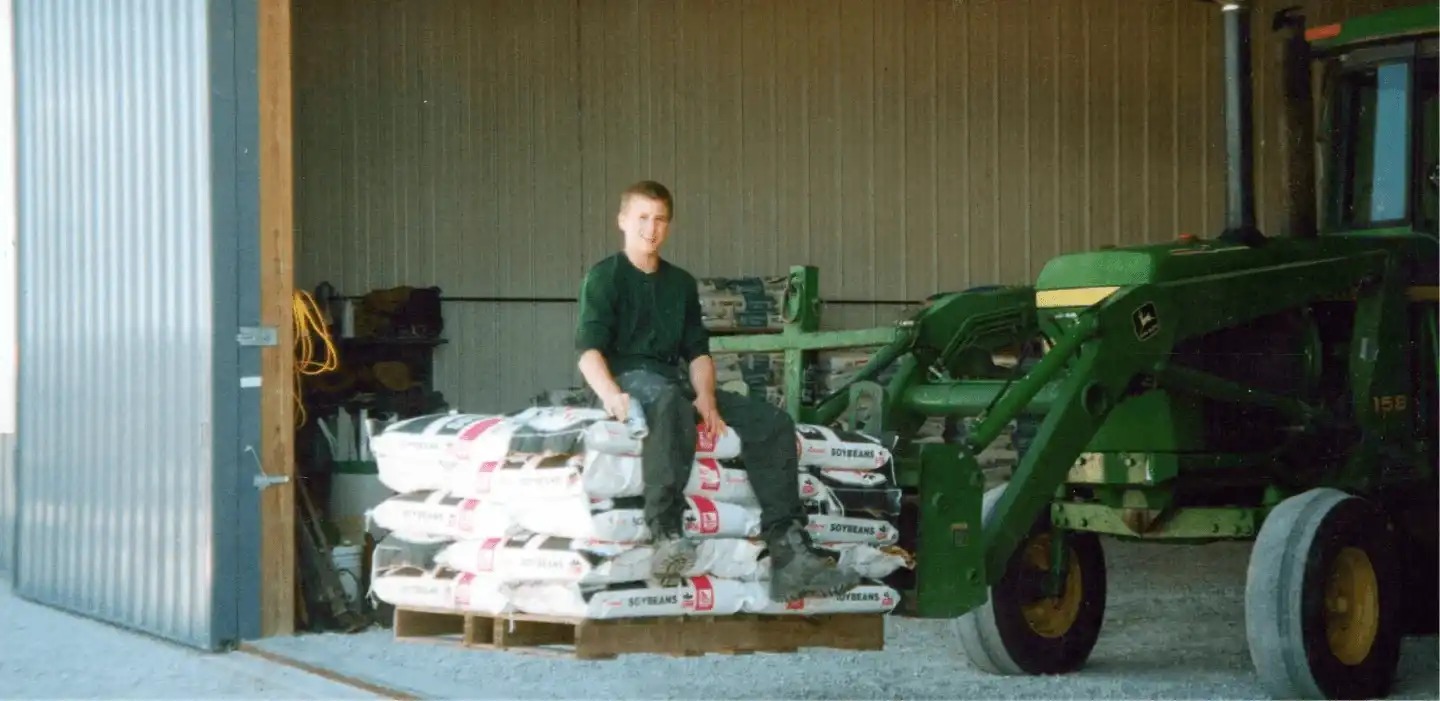
Brett Adcock during childhood

During university, Adcock continued to independently develop various software, initially creating a website selling outdoor electronics. Later, he focused his efforts on the job recruitment sector, developing content websites to help job seekers prepare for interviews in fields like finance ("Street of Walls"), a mobile job search app ("Working App"), and a video interview website. These projects were not successful and resembled early, immature entrepreneurial experiments.

In 2012, while striving in New York, Adcock turned his attention back to the recruitment market. He co-founded Vettery with Adam Goldstein. Initially, Vettery was a platform targeting third-party recruitment agencies, but this model was quickly proven uncompetitive. After several adjustments, Adcock and the team decided to pivot, placing job seekers and companies directly on the same platform and improving matching efficiency through software and machine learning.
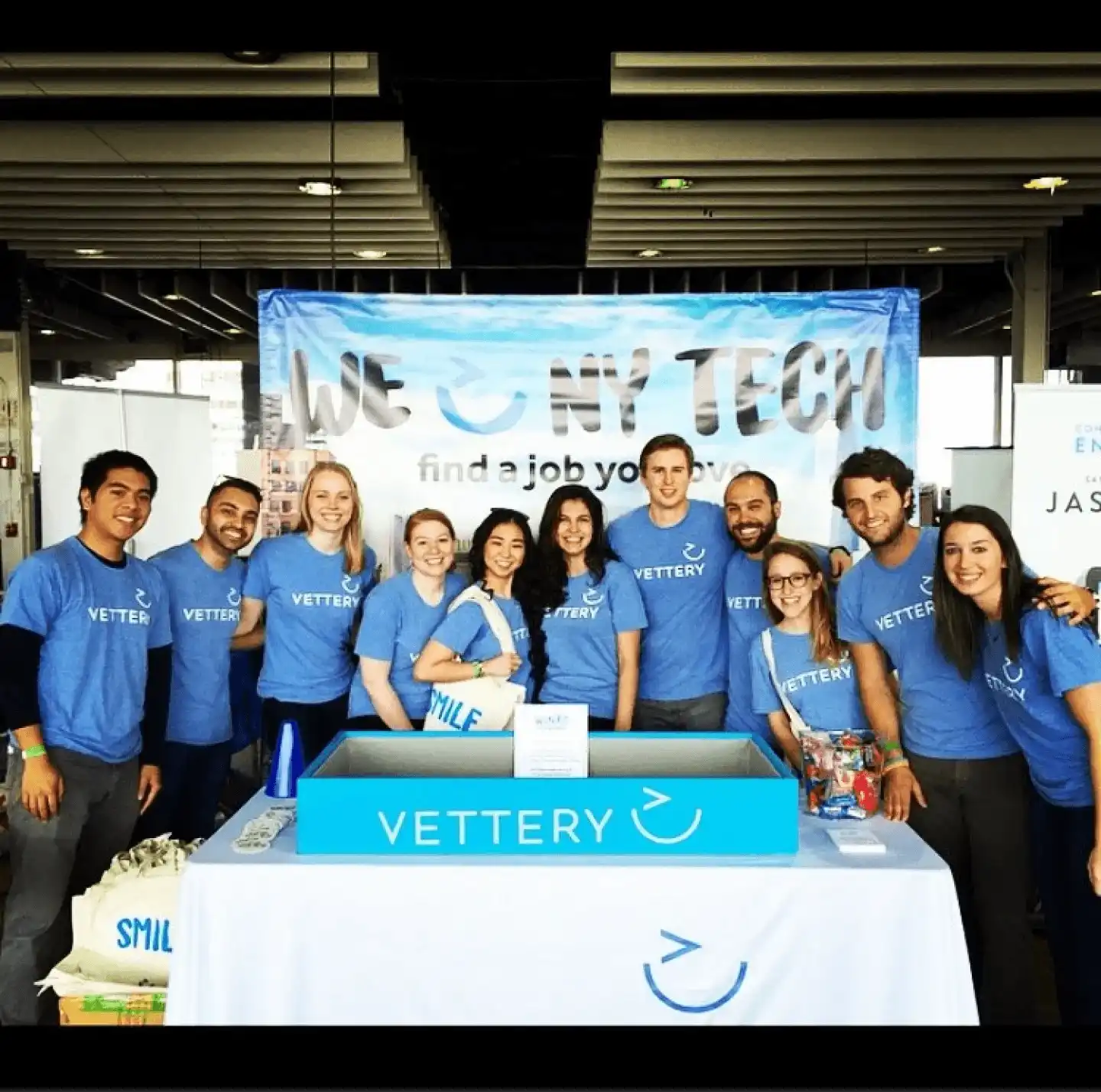
Brett Adcock (5th from right) with his team

After the Vettery platform launched, growth accelerated. Adcock later recalled that platform users experienced consecutive weeks of doubling growth. By 2017, Vettery's employee count had grown to 300, with about 20,000 clients and approximately 30,000 interviews conducted monthly through the system. The company also caught the attention of the world's largest recruitment company, the Adecco Group, and was acquired by the latter for $110 million in 2018.

This transaction provided Adcock, just past his thirties, with a substantial personal fortune. He began looking for more complex, longer-cycle problems that also required capital and engineering prowess, specifically in hardware and sustainable development. Thus, he moved west to California, heading to Silicon Valley to seek the next opportunity.

In Three Years, Building a Flying Car Startup into a Public Company

Aiming to tackle more challenging problems, Adcock could no longer randomly throw out ideas and conduct low-cost experiments like he did in university. After careful consideration, he chose to focus on solving transportation problems by entering the three-dimensional airspace. Adcock wanted to try creating the flying cars seen in sci-fi movies, making electric vertical takeoff and landing (eVTOL) aircraft the most suitable choice.

In 2018, Adcock teamed up with Adam Goldstein again to co-found Archer Aviation. Compared to Vettery, Archer was an entirely different world. It required a top-tier engineering team, hardware R&D, supply chain management, engineering manufacturing, aviation certification, public safety, and long-term patience from capital markets.

The founding of Archer Aviation also involved a fortuitous opportunity. At the time, French aviation giant Airbus was relocating all its flying car "Vahana" business to France, and flight car company Kitty Hawk's cost-cutting measures due to its partnership with Boeing caused dissatisfaction among some engineering team members (Kitty Hawk later dissolved in 2022). Seizing the opportunity, Adcock absorbed a large number of personnel from these two projects, rapidly assembling a seasoned team.

In 2021, Adcock and his team successfully conducted the maiden flight of the full-scale, two-seat, autonomous prototype aircraft "Maker." They also partnered with automotive giant Fiat Chrysler on supply chain, advanced composite materials, and engineering, design, and production aspects, and secured a $1 billion order from United Airlines. That same year, Archer Aviation went public on the New York Stock Exchange via a SPAC merger, valued at approximately $2.7 billion. Today, the company's market capitalization stands at $4.5 billion and it is part of Cathie Wood's Ark Invest portfolio.
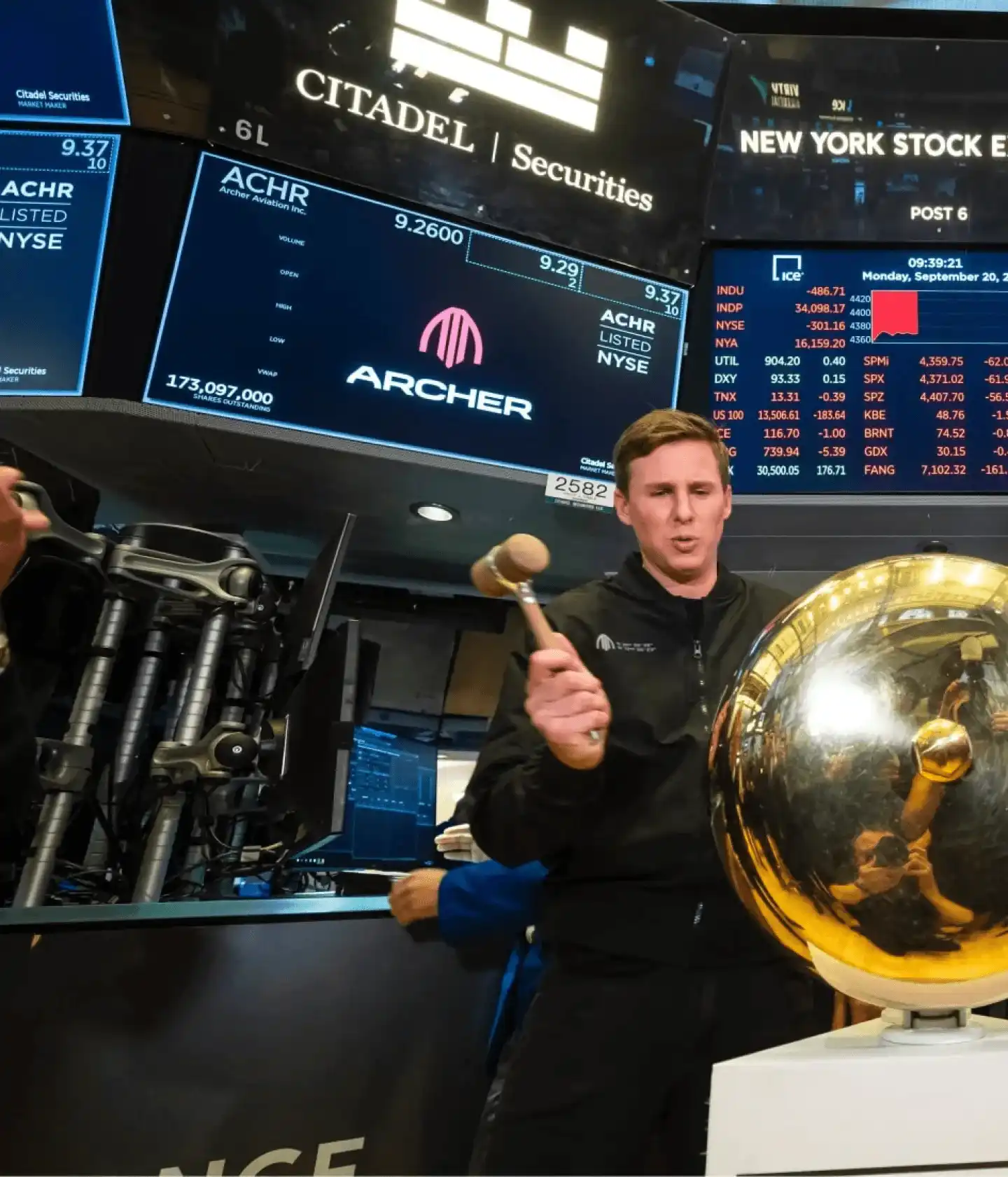
Brett Adcock rings the opening bell at the NYSE

Despite entering the market relatively late, Archer Aviation's rapid rise has made it a major contender in the emerging eVTOL industry. In November 2022, Archer's five-seater "Midnight" aircraft made a stunning debut. Once it receives type certification from the Federal Aviation Administration (FAA), it will become the company's first air taxi product.

However, Adcock quietly left the company shortly after its IPO. In April 2022, Archer announced that Adam Goldstein would serve as the sole CEO, with Adcock stepping down as co-CEO but remaining on the board. The company explained at the time that the move was to simplify the operating structure and advance flight testing, certification, and commercialization.

The real reason for his departure may be more complex and is unknown to the public. Judging by the company's stock performance, it was indeed in a post-IPO slump. Adcock later stated that he left Archer due to "differences" with the board, especially after the company went public, regarding what he wanted to do versus what the team wanted to do.

Perhaps for him, the governance of a public company, the regulatory path, and the pace of commercialization no longer suited a founder who always wanted to leap into the next technological revolution.

Final Venture? Adcock Plans to Build Figure with a 30-Year Vision

After leaving Archer, Adcock quickly entered the next equally sci-fi and currently even larger bet. In 2022, he founded Figure AI, entering the field of general-purpose humanoid robotics. In Figure's Master Plan, he wrote that his goal is to build the company with a 30-year vision, investing time and resources into "maximizing utility impact on humanity."

Regarding team composition, Adcock adopted a strategy similar to when he founded Archer. He rapidly assembled a team of 60 people, with members primarily hailing from renowned companies and projects such as Boston Dynamics, Tesla, Apple's autonomous vehicle project, and Google DeepMind.
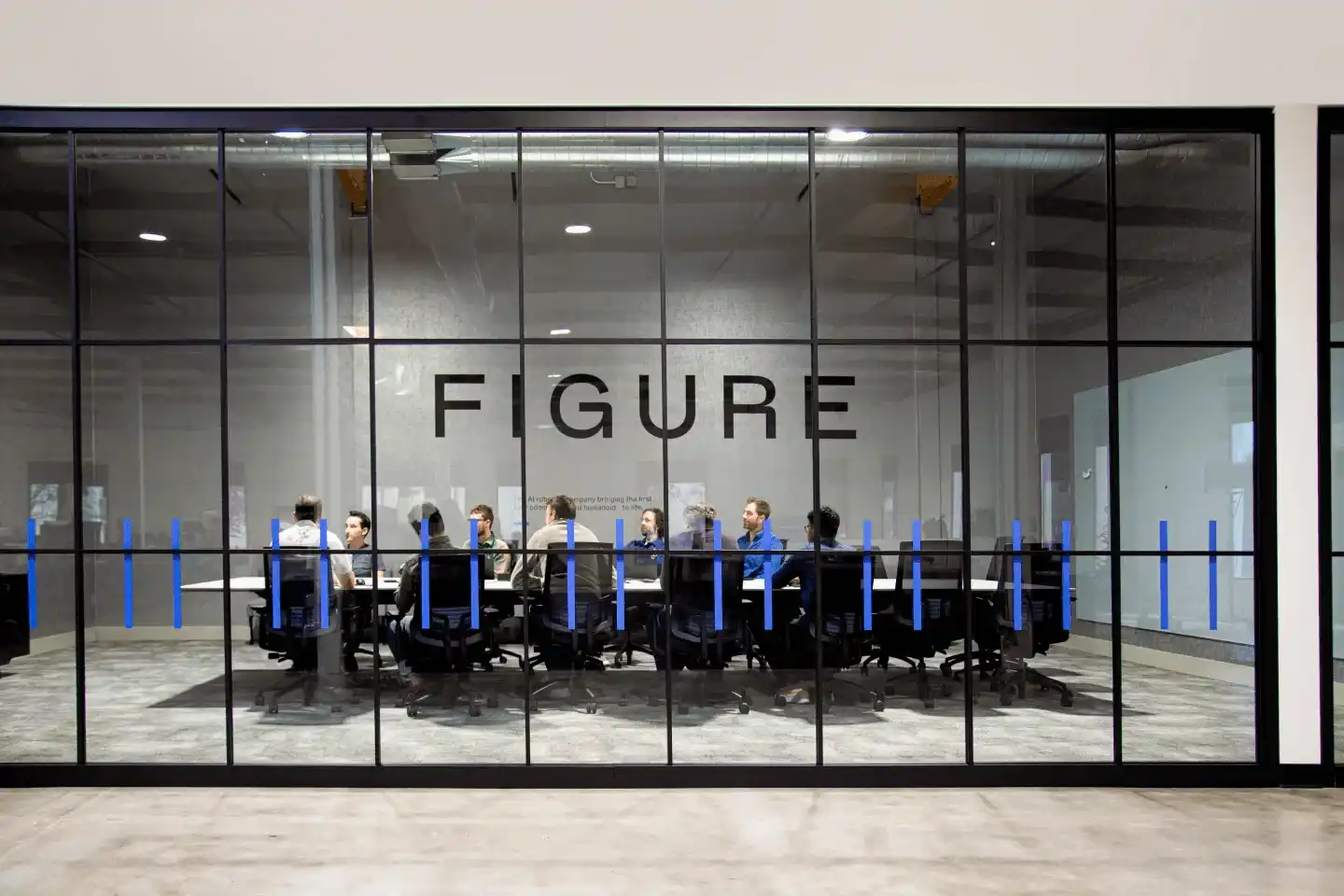
Giving AI a physical body is the proposition Adcock set for Figure. Figure aims not to create industrial robotic arms or service robots, but rather general-purpose humanoid robots capable of entering human environments, using human tools, and performing a variety of tasks. Adcock believes that the world is inherently designed for the human body; therefore, creating robots that interact with the world in a similar way can automate a vast amount of work.

The underlying rationale for this vision is Adcock's assessment of the labor market. In Figure's Master Plan, he writes that the United States has over 10 million "unsafe or undesirable" jobs, and an aging population will further exacerbate the difficulty for businesses to expand their workforce. If the economy is to continue growing, it requires more productivity, which in turn demands more automation. Consequently, Figure has identified manufacturing, logistics, warehousing, retail, and home scenarios as its long-term directions.

As Figure's valuation rises, the skepticism directed at Adcock intensifies. The first category of doubt centers on the vast gap between commercialization and valuation. Essentially, the market is buying a distant future expectation. While Figure has attracted market enthusiasm with a valuation nearing $40 billion, its revenue scale and mass production capabilities remain limited. Its future revenue projections heavily rely on the ability to deploy a large number of robots before 2029.

Furthermore, Figure's split with OpenAI has attracted significant attention and controversy. In 2024, Figure partnered with OpenAI to develop next-generation robot AI models and received investment support from OpenAI, Microsoft, NVIDIA, Jeff Bezos, and others. However, less than a year later, Adcock decided to terminate the partnership and instead develop the models internally.

According to Business Insider, Adcock later stated that OpenAI brought little value to Figure beyond its brand, and that robot AI requires a different technical approach than chatbots. He also mentioned that when OpenAI indicated it wanted to build its own humanoid robots, he considered the partnership over. The report also noted that a technical employee from OpenAI shared a related clip, calling Adcock's claims "untrue."

"Preference" for More Difficult Problems and Larger Narratives

Looking back at Adcock's three main entrepreneurial ventures, Vettery, Archer, and Figure appear unrelated on the surface—one is a recruitment platform, one is a flying car company, and one is a humanoid robot company. However, they share the same entrepreneurial philosophy: targeting a massive, inefficient market where a technological inflection point is emerging, and advancing simultaneously with capital, engineering teams, and bold narratives.

With Vettery, he bet that machine learning could improve recruitment matching efficiency. With Archer, he bet that batteries, motors, and aerospace engineering could unlock urban air mobility. With Figure, he is betting that AI models, robotic hardware, and manufacturing capabilities can fuse into a new type of labor force. Adcock's thinking does not start from a single-point product but works backward from "how the future world should operate" to determine what kind of company to build today.

Brett Adcock's career resembles a curve of increasing asset intensity: from software platforms to aircraft, and then to humanoid robots. He is not a technical expert who has dug deep in a single field for decades. He is more like an "entrepreneurial hunter," sensing opportunities, organizing resources, recruiting teams, amplifying the narrative, and then moving on.

Now, standing under the spotlight of Figure AI, he faces skepticism as loud as the applause. But regardless of the outcome, he has already etched his name into the first chapter of AI robotics business history.

Questions liées

QWhat is Figure AI and why has it attracted significant attention recently?

AFigure AI is a humanoid robotics company. It recently gained global attention by hosting a 'Human vs. Robot' parcel sorting challenge and conducting a 7-day live stream of its robots performing sorting tasks. The company, founded just three years ago, reached a valuation of $390 billion after a new funding round, attracting investments from top-tier firms like NVIDIA, Intel Capital, Salesforce, LG, and Qualcomm.

QWho is Brett Adcock and what are his previous entrepreneurial ventures?

ABrett Adcock is a serial entrepreneur and the founder of Figure AI. His previous ventures include co-founding Vettery, a recruitment platform sold to the Adecco Group for $110 million in 2018, and co-founding Archer Aviation, an electric vertical takeoff and landing (eVTOL) aircraft company that went public on the NYSE in 2021.

QWhat is the core mission and long-term vision Brett Adcock has for Figure AI?

ABrett Adcock's mission for Figure AI is to build general-purpose humanoid robots that can operate in human environments, use human tools, and perform a variety of tasks. He views this as a 30-year project aimed at maximizing utility for humanity by automating labor in sectors like manufacturing, logistics, warehousing, retail, and eventually homes, to address workforce shortages and boost productivity.

QWhy did Brett Adcock leave Archer Aviation shortly after it went public?

AAdcock left his co-CEO role at Archer Aviation due to what he later described as a 'misalignment' with the board. After the company went public, he felt that what he wanted to do differed from what the team wanted to do. This suggests disagreements over the company's direction, governance, and commercialization pace post-IPO.

QWhat are some of the major challenges and criticisms facing Figure AI?

AFigure AI faces several criticisms: 1) Its $390 billion valuation is seen as extremely high compared to its current commercial scale and production capabilities. 2) Its revenue projections depend heavily on deploying large numbers of robots by 2029, which is uncertain. 3) It ended a high-profile partnership with OpenAI on robot AI models, citing a divergence in technical needs and OpenAI's own robotics ambitions, a move that was publicly disputed.

Lectures associées

小鹏 et Nio misent sur la puissance de calcul, Li Auto change d’architecture

Le 15 juin, Li Auto a dévoilé en détail sa puce d'intelligence artificielle auto-développée, le Mahe M100, conçue pour sa nouvelle berline de luxe L9 Livis. Le CTO Xie Yan a souligné que l'objectif n'était pas seulement de créer une puce plus rapide, mais une puce fondamentalement différente dans son architecture, s'écartant de l'approche concurrente axée sur les TOPS. Dans un contexte où les constructeurs automobiles chinois (Nio, Xpeng, Huawei) développent leurs propres puces, Li Auto choisit de repenser l'architecture sous-jacente. Le Mahe M100 adopte une architecture à flux de données dynamiques, visant à réduire les goulots d'étranglement liés à la bande passante mémoire des architectures von Neumann classiques pour le traitement des grands modèles d'IA. Cela permettrait, selon Li Auto, une puissance de calcul effective triplée et une latence réduite de 40% par rapport à des solutions existantes pour ses propres algorithmes. L'architecture du M100, publiée et acceptée à l'ISCA 2026, est conçue pour être étroitement couplée avec les modèles d'IA de Li Auto, formant une chaîne d'innovation complète (puce, compilateur, OS, algorithmes, contrôleur de domaine) visant l'autonomie technologique et une optimisation poussée. Parallèlement, Li Auto a présenté sa vision de la "voiture à intelligence incarnée", redéfinissant le véhicule comme un assistant personnel intelligent. Pour soutenir cette vision, la marque s'est engagée à aligner son modèle de conduite autonome, Mahe VLA, avec Tesla FSD V14 d'ici le quatrième trimestre 2024, avec des mises à jour OTA progressives tout au long du second semestre. Cette stratégie technologique ambitieuse intervient alors que Li Auto fait face à des pressions financières et commerciales, avec un objectif de ventes de 550 000 unités pour 2026. L'efficacité de cette nouvelle approche, notamment la réussite de la puce M100 et les prochaines mises à jour logicielles, sera déterminante pour son avenir compétitif.

marsbitIl y a 23 mins

小鹏 et Nio misent sur la puissance de calcul, Li Auto change d’architecture

marsbitIl y a 23 mins

Année charnière de l'IA appliquée : Se contenter de dire oui en ignorant les risques ? Le journal de bord du développement logiciel devient open source

L'ère des applications d'IA est là, mais ses risques se cachent dans un code apparemment correct, menaçant de provoquer des fuites de données ou des pertes financières. Le projet open source **Narwhal AI Code Risks**, issu de l'Université de Pékin, compile ces dangers en un journal de navigation pour le développement logiciel. Il catégorise les incidents en trois niveaux : des **cas réels** (comme l'erreur de configuration d'un oracle Moonwell ayant causé une perte de 1,7 million de dollars), des **signaux précoces** à surveiller, et des **scénarios typiques** de risques. Le danger ne réside pas dans un code erroné, mais dans un code syntaxiquement parfait qui introduit des failles sémantiques, des dépendances inexistantes, des permissions excessives ou des configurations cloud vulnérables. Les agents IA, en enchaînant les actions, complexifient encore la traçabilité. Le projet identifie **7 grandes catégories de risques** : la chaîne d'approvisionnement, les vulnérabilités du code, les configurations cloud/infrastructure, les risques liés aux agents, les risques sectoriels (fintech, santé...), la propriété intellectuelle/conformité, et les facteurs humains. L'objectif est de transformer des expériences dispersées en une connaissance réutilisable, aidant les développeurs à anticiper les pièges, les chercheurs à constituer des bases d'analyse et les éditeurs d'outils à renforcer leurs détections. Il s'agit de créer une mémoire collective pour naviguer de manière plus sûre dans l'ère du code généré par l'IA.

marsbitIl y a 24 mins

Année charnière de l'IA appliquée : Se contenter de dire oui en ignorant les risques ? Le journal de bord du développement logiciel devient open source

marsbitIl y a 24 mins

La base de la valorisation de SpaceX à mille milliards de dollars : Qui se partage les dépenses annuelles de centaines de millions de Musk ?

Avec l'introduction en bourse de SpaceX, l'attention se porte sur sa chaîne d'approvisionnement, présentée comme la prochaine grande opportunité d'investissement, comparable aux chaînes logistiques d'Apple, Tesla ou Nvidia par le passé. L'article argumente qu'investir directement dans SpaceX, dont l'évaluation est élevée, peut être risqué, tandis que ses fournisseurs pourraient bénéficier durablement de ses dépenses d'investissement annuelles de plusieurs dizaines de milliards de dollars. Le modèle économique de SpaceX repose sur trois piliers : Starlink (rentable), les lanceurs (pour réduire les coûts) et l'IA (en développement). Les revenus de Starlink financent la réduction des coûts de lancement, qui à leur tour doivent permettre le déploiement rentable d'infrastructures d'IA dans l'espace. Les fournisseurs sont classés en trois catégories selon leur degré de remplaçabilité : 1. **Difficilement remplaçables** : Nvidia (GPU et écosystème CUDA), Eutelsat (spectre radiofréquence), Filtronic (amplificateurs millimétriques), Materion (métal béryllium), STMicroelectronics (puces pour antennes). 2. **Remplaçables mais à un coût élevé** : Honeywell (systèmes de vol), Carpenter Technology (alliages pour moteurs), Hexcel (fibre de carbone), Broadcom (échange de données), Linde (gaz industriels). 3. **Spécialistes de la production de masse à bas coût** : Principalement pour les terminaux Starlink. Sont cités Wistron NeWeb (Taiwan), ainsi que des sociétés chinoises (Xinwei Communications, Paixin New Materials, Western Superconducting, Yingliu Shares, Tianyin Electromechanical, Tongyu Communication) et d'autres (Trimble, Astronics, CTS Corporation). L'article souligne que le moment est propice car les volumes d'achat de SpaceX vont augmenter (objectifs de lancements, terminaux Starlink), la transparence financière s'améliore avec l'introduction en bourse, et la chaîne d'approvisionnement en est à un stade précoce, similaire à celui de Tesla en 2018. La conclusion suggère que, plutôt que d'investir directement dans l'action SpaceX, il pourrait être plus judicieux d'examiner ses fournisseurs, dont les revenus sont liés à des commandes concrètes et récurrentes, indépendamment de la volatilité du cours de l'action. Des mises en garde sont émises concernant les cycles des matières premières, les risques géopolitiques et l'évolution technologique.

marsbitIl y a 1 h

La base de la valorisation de SpaceX à mille milliards de dollars : Qui se partage les dépenses annuelles de centaines de millions de Musk ?

marsbitIl y a 1 h

La base de la valorisation à mille milliards de dollars de SpaceX : Qui se partage les dépenses en capital annuelles de Musk de dix milliards de dollars ?

L'article examine les fournisseurs qui bénéficient des dépenses d'investissement annuelles massives de SpaceX (estimées à plusieurs milliards de dollars), plutôt que d'investir directement dans l'action SpaceX elle-même, considérée comme surévaluée lors de son introduction en bourse. Le modèle de SpaceX repose sur un cycle : les bénéfices de Starlink financent le développement de fusées (Falcon, Starship) pour réduire les coûts de lancement, qui à leur tour permettent de déployer une infrastructure AI en orbite. Ce cycle génère d'énormes commandes d'achat pour les fournisseurs. Les fournisseurs sont classés en trois catégories : 1. **Indispensables à court terme** : Nvidia (GPU, écosystème CUDA), Eutelsat (SATS, spectre radiofréquence), Filtronic (FTC, amplificateurs millimétriques), Materion (MTRN, béryllium), STMicroelectronics (STM, puces pour antennes). 2. **Remplaçables mais à un coût élevé** : Honeywell (HON, systèmes de vol), Carpenter Technology (CRS, alliages d'acier), Hexcel (HXL, fibres de carbone), Broadcom (AVGO, échange de données), Linde (gaz industriels). 3. **Fabricants à volume et bas coût** : Wistron NeWeb (6285, assemblage des terminaux), ainsi que plusieurs sociétés chinoises (Xinxin, PX, etc.) fournissant des connecteurs, des pièces forgées, des alliages. D'autres comme Trimble (TRMB) ou Astronics (ATRO) fournissent des composants critiques. L'article soutient que le moment est propice car les volumes d'achat de SpaceX augmentent, la transparence s'améliore avec l'introduction en bourse, et la chaîne d'approvisionnement en est à un stade précoce, similaire à Tesla en 2018. L'idée est de miser sur les fournisseurs qui recevront des revenus récurrents grâce aux commandes de SpaceX, indépendamment de l'évolution de son cours de bourse.

链捕手Il y a 1 h

La base de la valorisation à mille milliards de dollars de SpaceX : Qui se partage les dépenses en capital annuelles de Musk de dix milliards de dollars ?

链捕手Il y a 1 h

Trading

Spot
Futures

Articles tendance

Comment acheter ZEN

Bienvenue sur HTX.com ! Nous vous permettons d'acheter Horizen (ZEN) de manière simple et pratique. Suivez notre guide étape par étape pour commencer votre parcours crypto.Étape 1 : Création de votre compte HTXUtilisez votre adresse e-mail ou votre numéro de téléphone pour ouvrir un compte sur HTX gratuitement. L'inscription se fait en toute simplicité et débloque toutes les fonctionnalités.Créer mon compteÉtape 2 : Choix du mode de paiement (rubrique Acheter des cryptosCarte de crédit/débit : utilisez votre carte Visa ou Mastercard pour acheter instantanément Horizen (ZEN).Solde :utilisez les fonds du solde de votre compte HTX pour trader en toute simplicité.Prestataire tiers :pour accroître la commodité d'utilisation, nous avons ajouté des modes de paiement populaires tels que Google Pay et Apple Pay.P2P :tradez directement avec d'autres utilisateurs sur HTX.OTC (de gré à gré) : nous offrons des services personnalisés et des taux de change compétitifs aux traders.Étape 3 : stockage de vos Horizen (ZEN)Après avoir acheté vos Horizen (ZEN), stockez-les sur votre compte HTX. Vous pouvez également les envoyer ailleurs via un transfert sur la blockchain ou les utiliser pour trader d'autres cryptos.Étape 4 : tradez des Horizen (ZEN)Tradez facilement Horizen (ZEN) sur le marché Spot de HTX. Il vous suffit d'accéder à votre compte, de sélectionner la paire de trading, d'exécuter vos trades et de les suivre en temps réel. Nous offrons une expérience conviviale aux débutants comme aux traders chevronnés.

242 vues totalesPublié le 2024.12.12Mis à jour le 2026.06.02

Comment acheter ZEN

Discussions

Bienvenue dans la Communauté HTX. Ici, vous pouvez vous tenir informé(e) des derniers développements de la plateforme et accéder à des analyses de marché professionnelles. Les opinions des utilisateurs sur le prix de ZEN (ZEN) sont présentées ci-dessous.

活动图片