2 Days, 20x: A Quick Look at the Automated Market Making Mechanism of the New Gem Snowball

marsbitPublié le 2025-12-22Dernière mise à jour le 2025-12-22

Résumé

The meme token Snowball" launched on pump.fun on December 18 and gained significant traction in the English-speaking crypto community, reaching a $10 million market cap within four days while largely flying under the radar in Chinese crypto circles. Its core innovation is an automated market-making mechanism: instead of the typical "creator fee" (usually 0.5%–1% per transaction) going to the developer’s wallet—a common setup that often leads to rug pulls—Snowball directs 100% of this fee to an on-chain bot. This bot periodically: 1. Buys back tokens to create buy pressure, 2. Adds the purchased tokens and corresponding SOL to the liquidity pool to improve depth, 3. Burns 0.1% of tokens to induce deflation. The fee rate also adjusts dynamically based on market cap (0.05%–0.95%) to balance accumulation and transaction friction. The idea is a "snowball effect": trading generates fees → fees fuel buybacks → buybacks may push price up → higher prices attract more trading. On-chain data shows 7,270 holders, with the top 10 holding ~20% of supply. Trading volume has been relatively balanced between buys and sells. However, the token remains highly speculative. While the structure reduces dev exit risk, it doesn’t eliminate other meme coin risks like low liquidity, narrative fatigue, or large holder dumps. Similar projects like FIREBALL are emerging, suggesting a trend toward "mechanism-driven memes." But as past examples like OlympusDAO and Safemoon show, complex t...

The crypto market in December is as cold as the weather.

On-chain transactions have been dormant for a long time, and new narratives are hard to come by. Just look at the drama and gossip circulating in the Chinese CT (Crypto Twitter) these past few days, and you'll know hardly anyone is playing in this market anymore.

But the English-speaking community has been discussing something new.

A meme coin called Snowball launched on pump.fun on December 18th. In four days, its market cap surged to $10 million and is still hitting new highs; yet it's barely mentioned in Chinese circles.
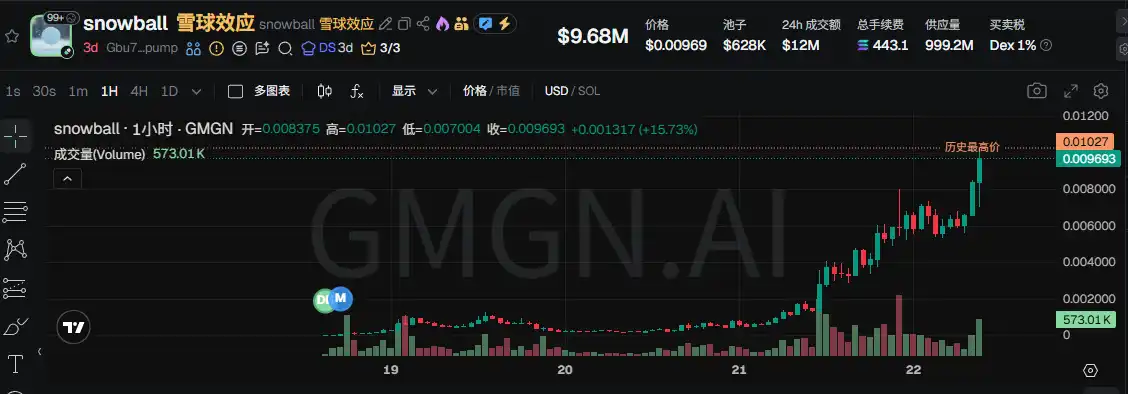
In the current environment, lacking new narratives and where even memes are considered unplayable, this is one of the few things that catches the eye and shows some localized wealth effect.

And the name Snowball itself tells the story it wants to convey:

A mechanism that allows the token to "roll and grow bigger by itself."

Turning Transaction Fees into Buying Pressure, Rolling the Snowball for Market Making

To understand what Snowball is doing, you first need to know how pump.fun tokens typically make money.

On pump.fun, anyone can create a token in minutes. The token creator can set a "creator fee," essentially taking a cut of every transaction into their own wallet, usually between 0.5% and 1%.

This money could theoretically be used for community building and marketing, but in practice, most Devs choose to: accumulate enough and then rug.

This is part of the typical life cycle of a shitcoin. Launch, pump, harvest fees, rug. Investors aren't betting on the token itself, but on the developer's conscience.

Snowball's approach is to not take this creator fee money.

To be precise, 100% of the creator fees do not go to anyone's wallet but are automatically transferred to an on-chain market-making bot.

This bot performs three actions at regular intervals:

First, it uses the accumulated funds to buy tokens on the market, creating buying support;

Second, it adds the bought tokens and the corresponding SOL to the liquidity pool, improving trading depth;

Third, it burns 0.1% of the tokens with each operation, creating deflation.
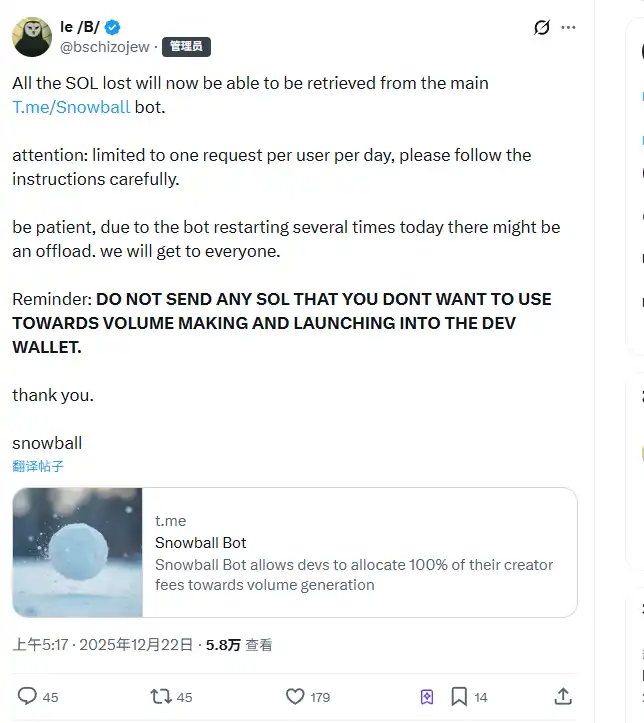
Additionally, the percentage of creator fees this coin charges is not fixed; it fluctuates between 0.05% and 0.95% based on market cap.

It takes a higher percentage when the market cap is low, allowing the bot to accumulate ammunition faster; it reduces the fee when the market cap is high, decreasing transaction friction.

In one sentence, the logic of this mechanism is: every time you trade, a portion of the money automatically becomes buying pressure and liquidity, instead of going into the developer's pocket.

Therefore, you can easily understand this snowball effect:

Transactions generate fees → Fees become buying pressure → Buying pressure pushes up the price → Higher price attracts more transactions → More fees... theoretically, it can roll on by itself.

On-Chain Data Situation

Now that we've covered the mechanism, let's look at the on-chain data.

Snowball launched on December 18th, four days ago. Its market cap grew from zero to $10 million, with a 24-hour trading volume exceeding $11 million.

For a shitcoin on pump.fun, this performance is considered relatively long-lasting in the current environment.

In terms of token distribution, there are currently 7,270 holder addresses. The top ten holders combined account for about 20% of the total supply, with the single largest holder holding 4.65%.
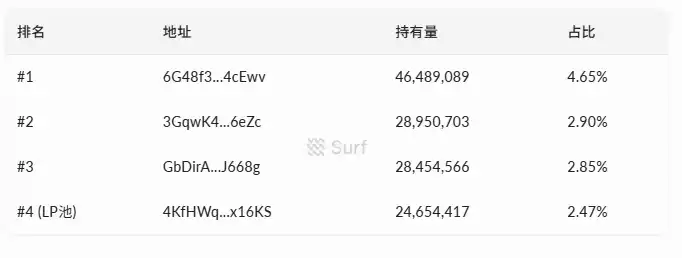
(Data source: surf.ai)

There's no address holding 20-30% of the supply; the distribution is relatively decentralized.

Regarding transaction data, there have been over 58,000 transactions since launch, with 33,000 buys and 24,000 sells. The total buy volume is $4.4 million, and the sell volume is $4.3 million, resulting in a net inflow of about $100,000. Buying and selling are basically balanced, with no one-sided selling pressure.

The liquidity pool holds about $380,000, half in tokens and half in SOL. For a market cap of this size, the depth isn't very thick, and large orders would still experience significant slippage.

Another noteworthy point is that Bybit Alpha announced listing the token less than 96 hours after launch, which to some extent confirms the short-term hype.

Perpetual Motion Meets a Cold Market

After looking around, you can see that the English community's discussion about Snowball mainly focuses on the mechanism itself. Supporters' logic is straightforward:

This is the first meme coin that locks 100% of the creator fees into the protocol, preventing developers from rugging, making it structurally safer than other shitcoins, at least.

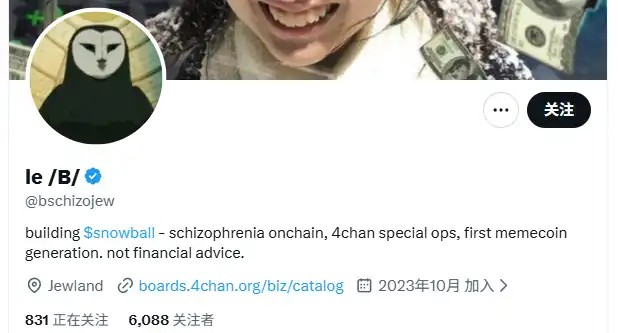
The Dev is also playing into this narrative. The developer wallet, market-making bot wallet, and transaction logs are all public, emphasizing "verifiable on-chain."

@bschizojew labels himself as "on-chain schizophrenic, 4chan special forces, first-generation meme coin veteran," radiating a self-deprecating degen vibe that strongly appeals to the crypto-native community.
But a safe mechanism and making money are two different things.

The snowball effect relies on the premise that there is sufficient trading volume to continuously generate fees to feed the bot for buybacks. More trades mean more ammunition for the bot, stronger buying pressure, higher prices, attracting more people to trade...

This is the ideal state where any meme coin's so-called buyback flywheel spins up in a bull market.

The problem is, the flywheel needs external force to start.

What is the current crypto market environment? On-chain activity is sluggish, overall meme coin hype is down, and there's already little capital willing to chase shitcoins. In this context, if new buying pressure doesn't keep up and trading volume shrinks, the fees the bot receives will become less and fewer, buybacks will weaken, price support will diminish, and trading willingness will decline further.

The flywheel can spin forward, but it can also spin in reverse.

A more realistic problem is that the mechanism solves only one risk point—"developers taking the money and running"—but meme coins face far more risks than that.

Whales dumping, insufficient liquidity, narratives going out of style—any one of these happening would render the 100% fee buyback largely ineffective.

Everyone is tired of being rugged. A Chinese crypto brother summarized it quite well:

Play if you want, but don't get in over your head.

More Than One Snowball is Rolling

Snowball isn't the only project telling this automated market-making story.

Within the pump.fun ecosystem, a token called FIREBALL is doing something similar: automatic buybacks and burns, packaged as a protocol other tokens can plug into. But its market cap is much smaller than Snowball's.
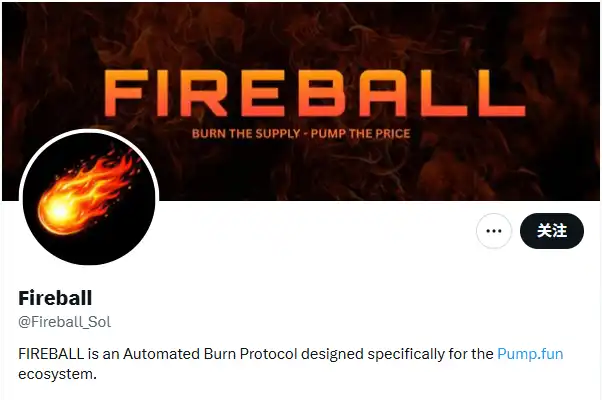
This indicates the market is currently responsive to the direction of "mechanism-based meme coins."

The traditional玩法 of shilling, pumping, and community hype is finding it harder to attract capital. Using mechanism design to tell a "structurally safe" story might be one of the recent trends for meme coins.

That said, artificially creating a specific mechanism isn't a new玩法.

The most typical case in 2021 was OlympusDAO's (3,3), which used game theory to package a staking mechanism, telling the story "if everyone holds, everyone profits," reaching a peak market cap of billions of dollars. The ending, as everyone knows, was a death spiral, dropping over 90%.

Even earlier, there was Safemoon's玩法 of "taxing every transaction and distributing it to holders," also a narrative of mechanism innovation, which ended with the SEC suing and charging the founders with fraud.

Mechanisms can be great narrative hooks, capable of gathering capital and attention in the short term, but the mechanism itself does not create value.

When external capital stops flowing in, even the most精巧designed flywheel will stop turning.

Finally, let's recap what this little gem is actually doing:

Turning the meme coin's creator fees into an "automated market-making bot." The mechanism itself isn't complicated, and the problem it solves is very clear: preventing developers from directly taking the money and running.

The developer not being able to rug doesn't mean you will make money.

If after reading this you find the mechanism interesting and want to participate, remember one thing: it is first and foremost a meme coin, and only secondly an experiment with a new mechanism.


Cryptos en tendance

Questions liées

QWhat is the core mechanism that Snowball uses to create a 'self-rolling' effect?

ASnowball uses a mechanism where 100% of the creator fees from each transaction are automatically sent to an on-chain market-making bot. This bot periodically uses the accumulated funds to buy tokens (creating buy pressure), adds the purchased tokens and corresponding SOL to the liquidity pool, and burns 0.1% of the tokens to create deflation.

QHow does the creator fee in Snowball differ from a typical pump.fun token?

AIn a typical pump.fun token, the creator fee (usually 0.5% to 1%) goes directly into the developer's wallet, which they can withdraw and potentially abandon the project with. In Snowball, 100% of this fee is automatically sent to an on-chain market-making bot instead of going to any individual, making it structurally harder for the developer to 'rug pull'.

QWhat are the potential risks of investing in a meme coin like Snowball, according to the article?

AThe risks include a general decline in market activity and meme coin hype, which could lead to reduced trading volume. If new buying pressure doesn't materialize, the bot's funding from fees decreases, weakening buy support and price stability. Other risks not solved by the mechanism include large holders (whales) dumping, insufficient liquidity, and the narrative simply falling out of fashion.

QWhat precedent does the article mention for meme coins with innovative mechanisms, and what was their outcome?

AThe article mentions OlympusDAO's (3,3) staking mechanism, which promised mutual gains if holders sold, but its市值 eventually fell over 90%. It also references Safemoon, which used a transaction tax redistribution mechanism and whose founders were later charged with fraud by the SEC. These examples show that mechanisms can be a good narrative but don't inherently create value if external capital stops flowing in.

QWhat key piece of advice does the article give to potential participants interested in Snowball's mechanism?

AThe key advice is to remember that Snowball is first and foremost a meme coin, and only secondly an experiment with a new mechanism. While the mechanism addresses developer rug pulls, it does not guarantee profits. Participants are advised to 'play but don't get too carried away' or 'don't go overboard'.

Lectures associées

Après trois trimestres consécutifs de baisse, le marché des cryptomonnaies pourra-t-il connaître une fenêtre de stabilisation au troisième trimestre ?

Le marché des cryptomonnaies a enregistré son pire trimestre depuis 2022, avec une capitalisation totale chutant de 12,6% à 2 100 milliards de dollars. Tous les indicateurs clés (volume des échanges, valeur des stablecoins) montrent une sortie nette de capitaux. Le Bitcoin a perdu 14,2% et l'Ethereum 25,4% sur le trimestre, rompant sa corrélation antérieure avec les actions technologiques. Les ETF spot américains sur le Bitcoin ont subi des rachats massifs, avec une sortie nette de 4,67 milliards de dollars au Q2, indiquant une pression de vente continue. Le resserrement de la politique de la Fed et les ventes d'entreprises comme Strategy ont accentué la déleveragisation du secteur. L'attention du marché se porte désormais presque exclusivement sur la réunion de la Fed fin juillet. Une position accommodante pourrait stabiliser le Bitcoin entre 68 000 et 84 000 dollars, tandis qu'un ton hawkish pourrait le faire osciller autour de 50 000-56 000 dollars. Parallèlement, la progression du *CLARITY Act*, une loi cruciale pour la clarté réglementaire, est au point mort au Sénat, réduisant les chances d'adoption en 2026 et maintenant une prime de risque élevée sur l'ensemble du secteur. Malgré ce contexte difficile, quelques secteurs résistent : les marchés de prédiction ont vu leur volume nominal augmenter de 48,7% et les biens collectionnables tokenisés ont progressé d'environ 143%. La tokenisation d'actifs du monde réel (RWA) continue également sa croissance régulière, portée par des fondamentaux indépendants du cycle crypto. Les bases d'un effondrement extrême semblent absentes, mais le marché est désormais guidé par les politiques monétaires, les prix et les attentes de taux, plutôt que par le simple récit haussier. La fin des sorties massives des ETF et le retour des achats des détenteurs à long terme pourraient indiquer une phase de stabilisation potentielle.

marsbitIl y a 11 h

Après trois trimestres consécutifs de baisse, le marché des cryptomonnaies pourra-t-il connaître une fenêtre de stabilisation au troisième trimestre ?

marsbitIl y a 11 h

The SpaceX Trade, Unlocked: SPCXON Débarque sur WEEX

En juin 2026, SpaceX a réalisé la plus grande introduction en bourse de l'histoire, mais l'accès à l'action a été limité pour de nombreux investisseurs en raison de restrictions régionales et de frictions liées aux courtiers. La plateforme WEEX propose désormais une solution via SPCXON/USDT, un instrument tokenisé sur le marché au comptant qui permet d'obtenir une exposition au cours de SpaceX en utilisant l'USDT, sans nécessiter de compte de courtage américain. SPCXON est un produit tokenisé construit sur l'infrastructure d'Ondo, conçu pour refléter l'économie de la détention d'actions SpaceX pour les traders éligibles en dehors des États-Unis, avec des dividendes réinvestis. Le cas d'investissement repose sur la croissance des revenus de Starlink et les progrès de Starship, malgré un valorisation déjà élevée et des risques liés à un flottant public réduit et à des déblocages d'actions internes à venir. Il est important de noter que SPCXON offre une exposition, et non la propriété directe d'actions ou de droits de vote. Son prix peut évoluer avec une prime ou une décote par rapport à la valeur liquidative. WEEX propose également d'autres produits tokenisés comme MSTRON et MUON dans un compte unifié, permettant une rotation entre crypto-monnaies et actions traditionnelles sans transfert de fonds. La plateforme souligne ainsi comment les barrières entre la finance traditionnelle et les actifs numériques s'estompent.

TheNewsCryptoIl y a 11 h

The SpaceX Trade, Unlocked: SPCXON Débarque sur WEEX

TheNewsCryptoIl y a 11 h

BIT Trading Moment : Le BTC reste sous la pression de l'EMA 200 hebdomadaire, un rejet pourrait relancer la baisse, les actions de stockage et de semi-conducteurs qui ont bondi cette nuit ont baissé en séance de nuit

**Résumé des marchés : Bitcoin sous pression, actions technologiques en réajustement** Le marché crypto poursuit son rebond, avec Bitcoin évoluant autour de 66 000 $. Il fait face à une résistance clé vers 68 000 $, niveau correspondant au coût moyen des investisseurs sur cinq mois. Les traders surveillent les moyennes mobiles clés (200 MA à ~63 333 $ et 200 EMA à ~68 328 $ en hebdomadaire). Une rupture au-dessus de 68 000 $ ouvrirait la voie à une hausse, tandis qu'un échec pourrait entraîner un retest des 63 000 $. L'analyse suggère que la dynamique actuelle ressemble à un rebond estival à faible liquidité plutôt qu'au début d'un véritable marché haussier. Sur le marché actions américain, après une forte séance mardi portée par les semi-conducteurs et les titres du stockage (Micron, AMD, Intel...), les contrats à terme indiquent une ouverture en baisse. Les secteurs ayant récemment bondi, comme les semi-conducteurs et le stockage, reculent en séance de nuit. Certaines valeurs se démarquent néanmoins, comme Super Micro Computer (SMCI), en hausse après des résultats et des perspectives robustes liées à la demande de serveurs IA. Des vents contraires persistent : les prix du pétrole (Brent >91$) et les rendements des obligations d'État américaines grimpent, ravivant les craintes inflationnistes. En Asie, les marchés ont suivi le rebond technologique américain, mais de manière hésitante. La tension reste forte sur le yen japonais, qui atteint son plus bas niveau depuis des décennies. **Points clés à surveiller :** * **Crypto :** Niveaux techniques de Bitcoin (68k$/63k$), flux des ETF spot. * **Actions :** Saison des résultats (Tesla, Alphabet, Intel...), activité d'AMD sur l'IA. * **Économie :** Données américaines sur l'emploi, décision de la BCE, tensions géopolitiques et prix de l'énergie.

marsbitIl y a 11 h

BIT Trading Moment : Le BTC reste sous la pression de l'EMA 200 hebdomadaire, un rejet pourrait relancer la baisse, les actions de stockage et de semi-conducteurs qui ont bondi cette nuit ont baissé en séance de nuit

marsbitIl y a 11 h

Gate Research Institute : La vague de « Wall Streetisation » des produits financiers cryptographiques, concurrence ou fusion ?

Le titre de l'article est : "Gate Institute : La vague de 'Wall Street-isation' des produits financiers cryptos, est-ce une compétition ou une fusion ?" Résumé en français (environ 1400 caractères) : Il y a dix-sept ans, Bitcoin fut créé avec une vision décentralisée et anti-establishment financier. Aujourd'hui, paradoxalement, son adoption massive passe souvent par des ETF émis par des géants comme BlackRock. Cet article analyse cette "Wall Street-isation" apparente des actifs cryptos : les institutions traditionnelles s'emparent-elles du pouvoir d'émission, de tarification, de garde et de distribution ? La réalité est plus nuancée. C'est une convergence à double sens. D'un côté, les plateformes cryptos comme Gate.io étendent leurs services aux actions traditionnelles (états-uniennes, hongkongaises, sud-coréennes), aux CFD et aux produits tokenisés, offrant un compte unifié. De l'autre, des courtiers traditionnels comme Robinhood intègrent les cryptomonnaies et explorent la tokenisation d'actions sur blockchain. Cette fusion vise à créer le "super-compte" financier de demain, où actions, cryptos, ETF et obligations tokenisées (RWA) coexistent dans une même interface, comblant les faiblesses de chaque écosystème. Les RWA, notamment les obligations d'État tokenisées, agissent comme une couche intermédiaire unificatrice. En conclusion, Wall Street n'a pas conquis la crypto, et la crypto n'a pas contourné Wall Street. Ils construisent ensemble une nouvelle forme de marché des capitaux, plus efficace et mondial, où l'idéal décentralisé persiste dans les protocoles, tandis qu'une expérience utilisateur unifiée émerge à l'interface.

marsbitIl y a 12 h

Gate Research Institute : La vague de « Wall Streetisation » des produits financiers cryptographiques, concurrence ou fusion ?

marsbitIl y a 12 h

Trading

Spot

Articles tendance

Comment acheter QUICK

Bienvenue sur HTX.com ! Nous vous permettons d'acheter Quickswap (QUICK) de manière simple et pratique. Suivez notre guide étape par étape pour commencer votre parcours crypto.Étape 1 : Création de votre compte HTXUtilisez votre adresse e-mail ou votre numéro de téléphone pour ouvrir un compte sur HTX gratuitement. L'inscription se fait en toute simplicité et débloque toutes les fonctionnalités.Créer mon compteÉtape 2 : Choix du mode de paiement (rubrique Acheter des cryptosCarte de crédit/débit : utilisez votre carte Visa ou Mastercard pour acheter instantanément Quickswap (QUICK).Solde :utilisez les fonds du solde de votre compte HTX pour trader en toute simplicité.Prestataire tiers :pour accroître la commodité d'utilisation, nous avons ajouté des modes de paiement populaires tels que Google Pay et Apple Pay.P2P :tradez directement avec d'autres utilisateurs sur HTX.OTC (de gré à gré) : nous offrons des services personnalisés et des taux de change compétitifs aux traders.Étape 3 : stockage de vos Quickswap (QUICK)Après avoir acheté vos Quickswap (QUICK), stockez-les sur votre compte HTX. Vous pouvez également les envoyer ailleurs via un transfert sur la blockchain ou les utiliser pour trader d'autres cryptos.Étape 4 : tradez des Quickswap (QUICK)Tradez facilement Quickswap (QUICK) sur le marché Spot de HTX. Il vous suffit d'accéder à votre compte, de sélectionner la paire de trading, d'exécuter vos trades et de les suivre en temps réel. Nous offrons une expérience conviviale aux débutants comme aux traders chevronnés.

214 vues totalesPublié le 2024.12.11Mis à jour le 2026.06.02

Comment acheter QUICK

Discussions

Bienvenue dans la Communauté HTX. Ici, vous pouvez vous tenir informé(e) des derniers développements de la plateforme et accéder à des analyses de marché professionnelles. Les opinions des utilisateurs sur le prix de QUICK (QUICK) sont présentées ci-dessous.

活动图片











