Here’s what made Splinterlands the most active blockchain game

cryptoslatePublié le 2022-04-24Dernière mise à jour le 2022-04-24

Résumé

Since its launch in 2018, Splinterlands’ success demonstrates the game’s potential and its huge appeal to gamers.

Since its launch in 2018, Splinterlands’ success demonstrates the game’s potential and its huge appeal to gamers. As of April 12, Splinterlands ranked first in daily active users and averaged over 350,000 daily users, about 100,000 users ahead of the second place Alien Worlds.

In Splinterlands, players can participate in the game for only $10, which is a low barrier to entry compared to similar games. Players can earn income by playing games, trading cards, leasing and staking, and can quickly compete with other players to produce scarce and valuable NFTs. 

Here’s how Splinterlands became so active in an industry where most projects struggle for regular users. 

About Splinterlands

Splinterlands is a turn-based card battling game on the Hive chain. 

Players have their own series of cards with different attributes and abilities, and they can combine different decks to play against other players, with each match taking only 2 to 3 minutes. After winning a battle, users are rewarded with cards and $DEC.

Cards can be used in battle, upgraded, sold or rented to other players, and rare cards have greater collector value.
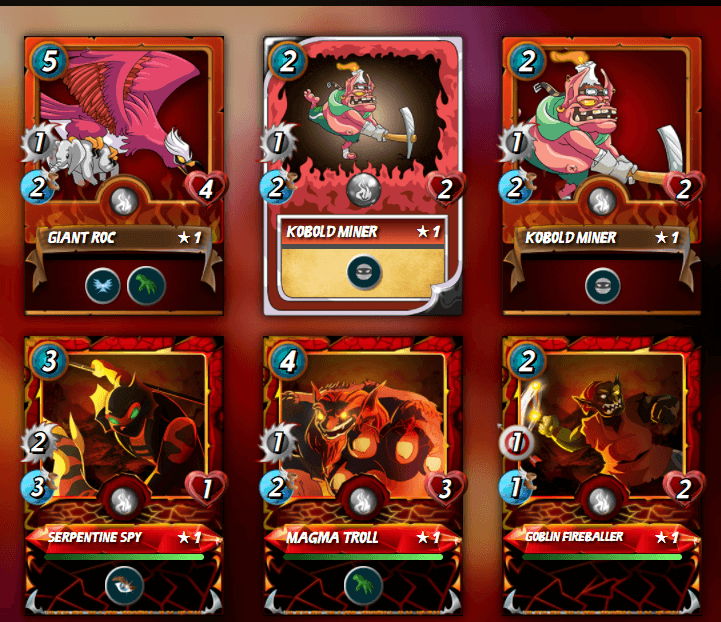
Screenshot Source - Splinterlands Website

Screenshot Source – Splinterlands Website

According to Footprint Analytics, as of April 12, Splinterlands ranks number one with more than 350,000 daily active users, leaving the second, third titles far behind.
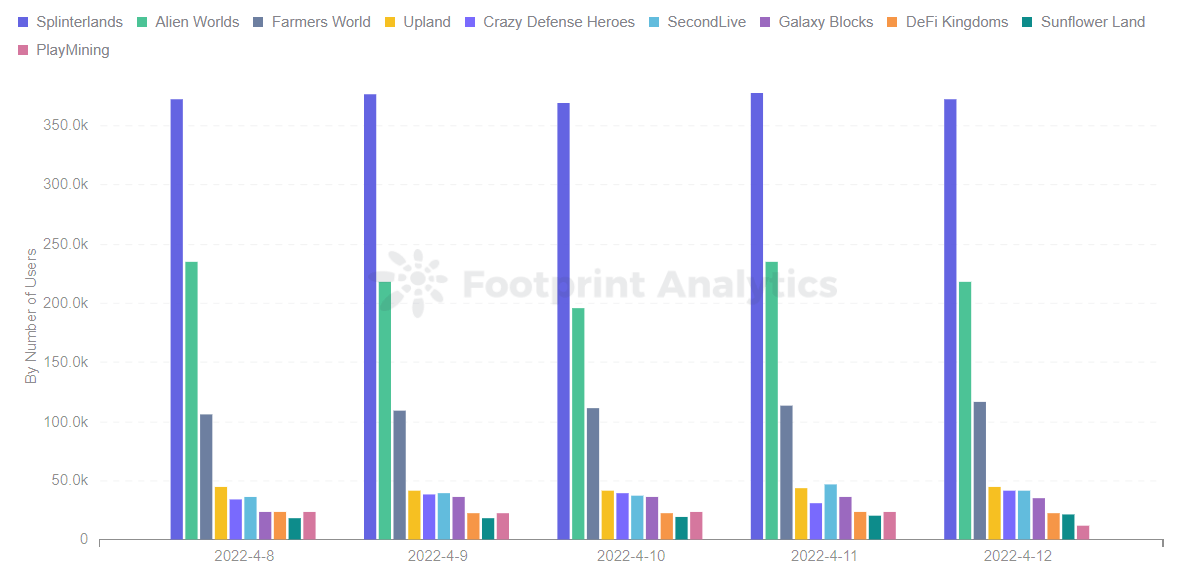
Footprint Analytics - Top 10 Games Ranking by Players(Latest 5 days)

Footprint Analytics – Top 10 Games Ranking by Players(Latest 5 days)

Why is Spinterlands so Playable?

After July 2021, witness the unprecedented growth of Splinterlands as the trading card game becomes popular in the Metaverse. According to Footprint Analytics data, the number of users and transactions has gradually increased and stabilized.
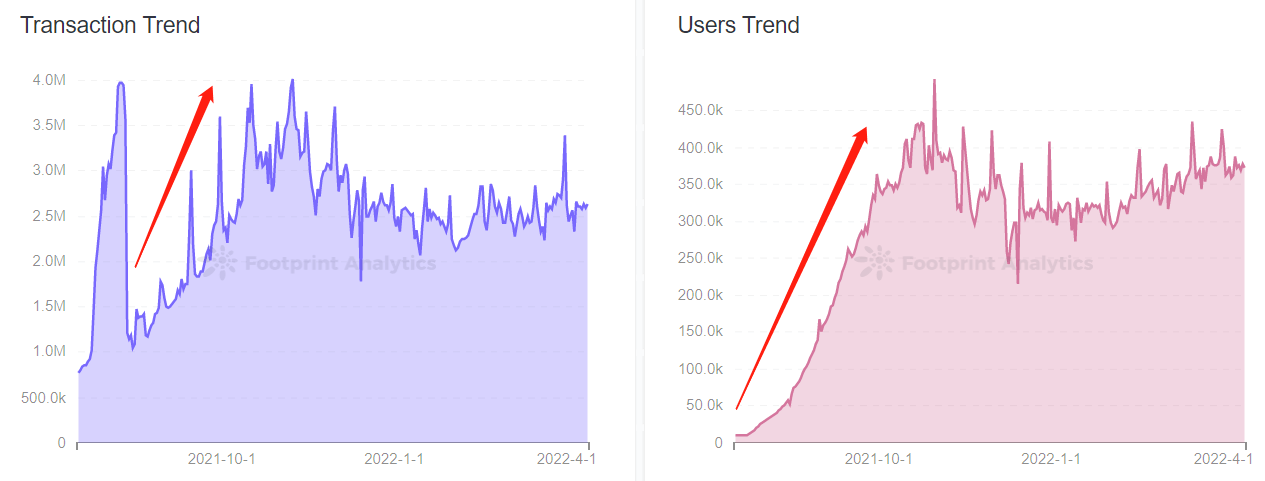
Footprint Analytics -  Splinterlands Transaction Trend & Users Trend

Footprint Analytics –  Splinterlands Transaction Trend & Users Trend

Splinterlands single-handedly promoted the development of Hive, mainly due to the following factors: 

Simple and varied gameplay 

Splinterlands’ gameplay is simple and varied. The game has a low barrier to entry, with players needing only $10 to participate and the ability to earn in the game. Here’s how:

  • Complete daily tasks to earn rewards. Winning five games as required will give you a chance to open a treasure chest with random rewards such as $DEC or cards. Currently, bronze (there are 6 league levels in the game, Bronze is the second level in the game league and the highest is the 6th championship level) can only open one treasure chest per day. The higher the level, the more rewards you can open to complete the task.
  • Participate in qualifying. Players can get Dark Energy Crystals ($DEC) rewards by participating in ranked matches. But entry requires paying some $DEC as a ticket, and even beginners and seasoned players can improve their skills in qualifying.
  • Sell cards. Each card is unique and can be traded on the marketplace. The higher the level of the card, the better the stats obtained; when the maximum value is reached, the card can gain special abilities.
  • Card rental. After collecting a large number of cards, players can rent them out to other players to earn revenue, while still maintaining ownership of the cards.
  • Pledge $SPS for proceeds.
  • There are also land sales and land leases.

Therefore, every player who enters the game has a different goal, it can be earning money, entering a championship, league, collecting cards or just for fun.

Card NFTization

Splinterlands NFTs various cards to increase card liquidity, solving the problem that some card games do not allow players to trade or sell game assets to other players.

Fast battle speed, at only 2 to 3 minutes per game

Splinterlands has more room for innovation, such as the land-based metaverse world, supporting players to create guilds (the threshold for entering guilds is currently high, and you need to reach a certain point ranking to enter), building castles, and creating a more innovative metaverse space.

Splinterlands of Tokenomics

Splinterlands uses a dual coin model, with $SPS as the governance token and $DEC as the game token.

$SPS

$SPS is used as a governance token, whose value represents the value of the game. The role of $SPS is mainly for community governance voting, in-game rewards, and obtaining pledge rewards. The most influential one is the governance vote, where the holder pledges the $SPS token to participate in the vote and decide changes in the project.

According to Footprint Analytics data, the overall price of $SPS has not changed much in the past 3 months, hovering above $0.1. 
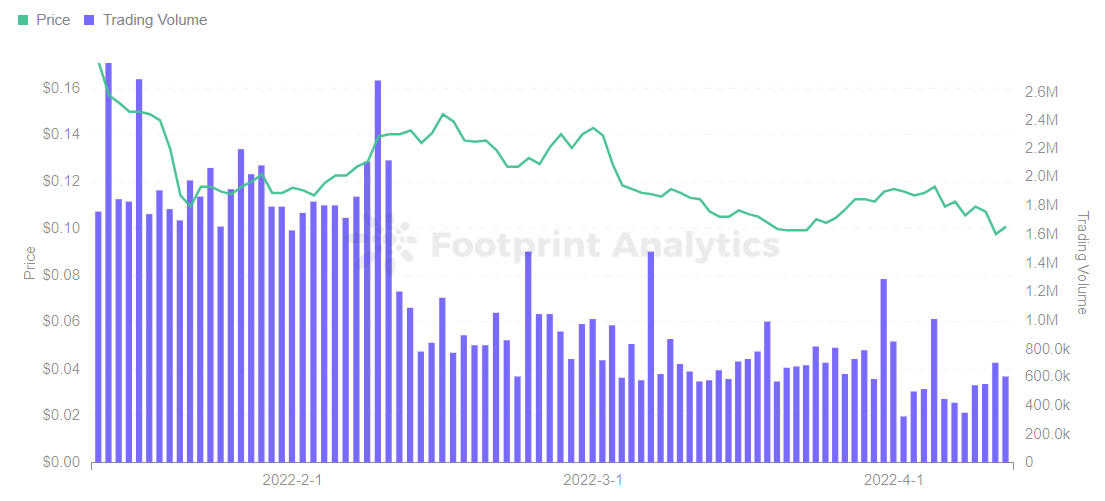
Footprint Analytics - $SPS Token Price & Trading Volume

Footprint Analytics – $SPS Token Price & Trading Volume

From the market cap trend of $SPS, price fluctuations help the total market value of all its cards to increase or decrease.
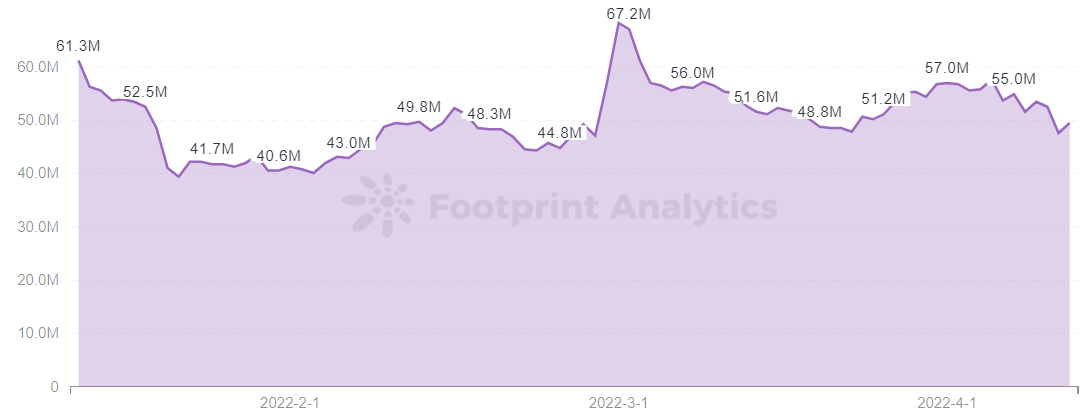
Footprint Analytics - $SPS Market Cap

Footprint Analytics – $SPS Market Cap

$DEC

$DEC is mainly used for in-game purchases of various card packs, props, lands, improving personal rankings, etc. It is similar to Axie Infinity’s token $SLP. It can be obtained in the following two ways:

  • By winning matches and completing missions. 
  • By purchasing it outside the game.

With $DEC, more cards can be purchased, thus increasing the player’s win rate in battle and gaining more rare cards and battle rewards.

Summary

Splinterlands has become the game project with the most active users in GameFi, having a low barrier to entry, simple gameplay, fast combat speed, and a unique reward system.
Lectures associées

Anthropic lance son IPO : miracle commercial ou bulle d'évaluation ?

Anthropic, l'une des principales entreprises d'IA, a déposé une demande d'introduction en bourse (IPO) secrète, visant une introduction dès octobre. Sa valorisation pré-IPO est estimée à 965 milliards de dollars, approchant le seuil des 1 000 milliards. Contrairement à la bulle Internet des années 2000, les investisseurs soulignent que sa valorisation repose sur des fondamentaux commerciaux solides et une croissance des revenus sans précédent. Le chiffre d'affaires annuel récurrent (ARR) d'Anthropic est passé de 1 milliard de dollars début 2025 à 47 milliards en mai 2026, avec un objectif de 100 milliards d'ici fin d'année. L'entreprise a atteint sa première rentabilité opérationnelle au deuxième trimestre 2026. Avec environ 3 000 employés, sa productivité par tête dépasse 10 millions de dollars. Sa clientèle comprend de grandes entreprises telles que Netflix, Spotify et Salesforce, et son produit Claude Code domine le marché de la programmation assistée par IA. L'auteur soutient que cette valorisation élevée reflète une transition économique plus profonde : le passage d'une économie basée sur le "carbone" (ressources humaines) à une économie mixte "carbone-silicium", où la puissance de calcul et l'intelligence artificielle deviennent des moteurs essentiels de productivité et de compétitivité. L'IPO d'Anthropic symboliserait donc l'ancrage de ce nouveau paradigme.

链捕手Il y a 1 h

Anthropic lance son IPO : miracle commercial ou bulle d'évaluation ?

链捕手Il y a 1 h

Near fait son retour sur la scène de l'IA : Transformation en blockchain publique après des difficultés de paie, les Agents et la confidentialité deviennent les nouvelles opportunités de croissance

Near, fondé en 2017 par Illia Polosukhin (co-auteur de l'article Transformer) et Alexander Skidanov, est né d'un problème pratique : une startup IA ne pouvait pas payer ses développeurs internationaux en raison des limites des systèmes de paiement transfrontalier. Cette contrainte a conduit à la création d'une blockchain performante. Après des débuts difficiles dans un paysage concurrentiel, Near a trouvé un nouvel élan en 2024, recentrant sa stratégie sur l'IA et l'abstraction inter-chaînes via son système "Near Intents". Ce mécanisme permet aux utilisateurs (ou aux agents IA) d'exprimer simplement leur intention de transaction (ex: échanger du BTC contre de l'ETH sur une autre chaîne), tandis qu'un réseau de "solveurs" calcule et exécute le meilleur parcours. Cette innovation a généré plus de 200 milliards de dollars de volume transfrontalier et plus de 33 millions de dollars de frais. Parallèlement, Near a introduit des "Intentions Confidentielles" pour les échanges privés, répondant à la demande croissante de confidentialité en DeFi. Ces transactions, qui masquent les montants et les directions avant règlement, représentent déjà plus de 40% du volume récent sur le réseau, attirant les gros investisseurs mais soulevant aussi des questions potentielles de régulation. Ainsi, Near revient à ses racines liées à l'IA, en combinant abstraction des chaînes, intents et confidentialité pour se positionner dans l'économie des agents intelligents et construire un nouvel écosystème.

marsbitIl y a 4 h

Near fait son retour sur la scène de l'IA : Transformation en blockchain publique après des difficultés de paie, les Agents et la confidentialité deviennent les nouvelles opportunités de croissance

marsbitIl y a 4 h

Des "CROPS" d'Ethereum à l'IA : ce que Vitalik souligne sans cesse, ces "variables lentes", qu'est-ce que c'est ?

Ces dernières semaines, Vitalik Buterin a introduit et mis en avant le concept de **CROPS**. Il s'agit d'un cadre de valeurs fondamentales pour Ethereum, défini dans un document de l'Ethereum Foundation (EF Mandate), qui guide le développement à long terme du protocole. CROPS est l'acronyme de : * **C**ensorship Resistance (Résistance à la censure) * **C**apture Resistance (Résistance à la capture) * **O**pen Source (Open source) * **P**rivacy (Vie privée) * **S**ecurity (Sécurité) Pour Ethereum, il ne s'agit pas seulement d'être rapide et peu coûteux, mais de fournir une infrastructure où les utilisateurs peuvent détenir des actifs, interagir et se coordonner sans dépendre d'une plateforme unique, sans céder le contrôle final et sans être arbitrairement bloqués. L'intérêt de CROPS s'amplifie avec l'essor de l'**IA**, en particulier des agents autonomes. Ces derniers risquent de devenir le principal intermédiaire pour les opérations numériques des utilisateurs, y compris la gestion d'actifs sur la blockchain. Si ces agents fonctionnent dans des "boîtes noires" centralisées, ils pourraient compromettre la vie privée, la sécurité et le contrôle des utilisateurs. C'est pourquoi Vitalik évoque désormais la convergence entre le **"CROPS Ethereum access layer"** et le **"CROPS AI"**. L'objectif est de développer des outils où l'accès aux données de la blockchain (via des RPC) et l'utilisation de modèles d'IA (comme les LLM) puissent se faire de manière **privée, vérifiable et décentralisée**. Des technologies comme les preuves à connaissance nulle (ZK) pourraient permettre d'utiliser des services distants sans révéler ses informations personnelles ou ses intentions. En résumé, CROPS n'est pas un simple slogan mais un principe directeur crucial. Il pose une question essentielle pour l'ère de l'IA : alors que les systèmes numériques deviennent plus puissants et autonomes, **les utilisateurs peuvent-ils conserver la souveraineté sur leurs actifs, leurs données et leurs actions ?** La réponse, pour Ethereum et l'écosystème Web3, passe par la construction d'infrastructures et d'expériences utilisateur alignées sur ces valeurs de résistance, d'ouverture, de vie privée et de sécurité.

marsbitIl y a 4 h

Des "CROPS" d'Ethereum à l'IA : ce que Vitalik souligne sans cesse, ces "variables lentes", qu'est-ce que c'est ?

marsbitIl y a 4 h

Trading

Spot
Futures
活动图片